Your new post is loading...
Clear definitions and research on education technology, including history, theories, equity issues, and practical insights for educators and researchers.
Via EDTECH@UTRGV
Most people would agree there is more to learning than performance on tests, but we need to formalise that definition to make sure it drives policy and practice, says Bernard Andrews
Via EDTECH@UTRGV
The report shows how violence appears in AI chats, when roleplay takes hold, what causes digital stress, and why device rules spark conflict at home.
Via Dr. Tom D'Amico (@TDOttawa)
"Traditional grading systems face significant criticism due to their inherent inequities and subjectivity [1–5]. Grades often benefit students with greater access to resources and support, while disadvantaging those from marginalized backgrounds, perpetuating educational inequality."
Via EDTECH@UTRGV
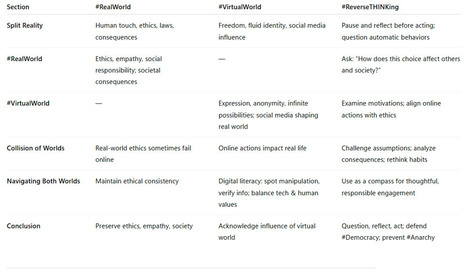
Understanding, comparing, and navigating two worlds without losing ethics and democracy Image created by ChatGPT, click please to enlarge. Understanding, comparing, and navigating two worlds without losing ethics, responsibility, and democracy We live in an era where reality itself feels split. On one side is the tangible, messy, beautiful #RealWorld—shaped by human touch, emotions, laws,… Learn more / En savoir plus / Mehr erfahren: https://www.scoop.it/topic/21st-century-learning-and-teaching?tag=Gust-MEES https://gustmees.wordpress.com/
Via Gust MEES
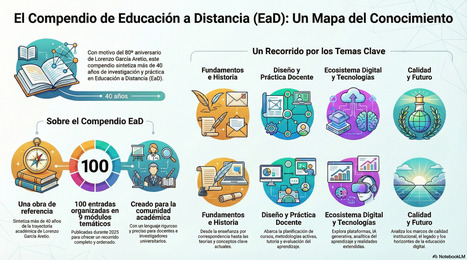
AUDIO – VÍDEO Todas las entradas de la serie “80 años. Compendio EaD”, VER AQU Estas líneas ven la luz en este blog el 29 de diciembre de 2025. Con ellas se cierra el proyecto “80 años. Compendio EaD” compuesto por cien entradas, un año entero de trabajo sostenido, y un recorrido que comenzó el 8 […]
Via LGA
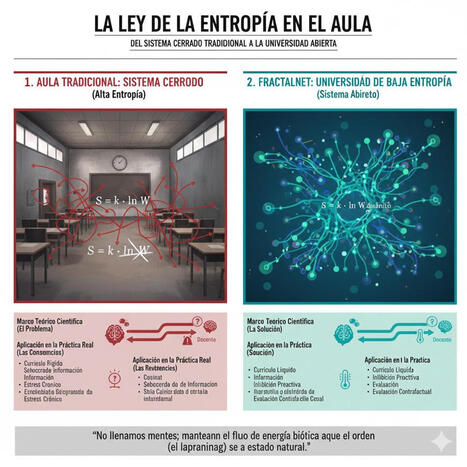
Juan Domingo Farnos English: Abstract This research establishes the "Farnos Low Entropy" not as a student state, but as a critical software design metric within Artificial Intelligence Engineering. By implementing the Continuous Reasoning Agent (ARC CT), we transition from predictive to causal models in disruptive education. The framework utilizes $do-calculus$ and structural invariance to minimize…
Via juandoming
As schools and universities take varying stances on AI, some teachers believe the tech can democratize tutoring. Here's how - and where the drawbacks lie.
Via EDTECH@UTRGV
Revista Iberoamericana de Educación a Distancia”>
Via LGA
Exclusive new data finds that companies value certificates, skills, and real-world experience over traditional academic pedigrees.
Via EDTECH@UTRGV
"In late 2022, when generative AI tools landed in students’ hands, classrooms changed almost overnight. Essays written by algorithms appeared in inboxes. Lesson plans suddenly felt outdated. And across the country, schools asked the same questions: How do we respond — and what comes next?"
Via EDTECH@UTRGV
|
Por Carlos Bravo Reyes y Mercedes Leticia Sánchez Ambriz No dejes de escuchar el pódcast , con ejemplos que ilustran el artículo. Tre
Via LGA
Starting next fall semester, Purdue University will require all of its incoming students to meet a new AI competency standard.
Via EDTECH@UTRGV
Blog de la "RIED. Revista Iberoamericana de Educación a Distancia". La Revista Iberoamericana de la Educación Digital.
Via LGA
Juan Domingo Farnós Para que aprender sea natural, sin esfuerzo innecesario y al ritmo de cada persona. La Arquitectura de la Resonancia es una métrica de diseño que utiliza la IA Causal (ARC CT) para sincronizar la tecnología con el ritmo biológico del alumno, eliminando el estrés y el agotamiento mental innecesario. Convierte la educación…
Via juandoming
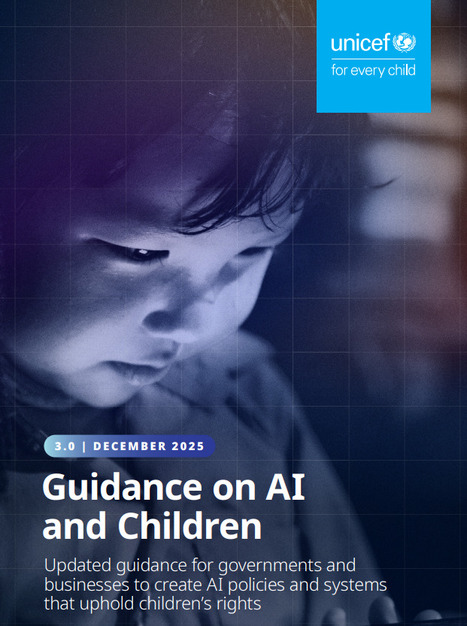
Considerations for the School Districts in Considering Large Scale AI Model DealsAs Artificial Intelligence (AI) and frontier AI models rapidly reshape the educational landscape, school systems face a dual challenge: harnessing these tools' transformative potential while rigorously safeguarding student data, privacy, and well-being. Procurement is no longer just about purchasing; along with AI literacy, it is the first line of defense in responsible AI governance.For years, Project Unicorn has c
Via Dr. Tom D'Amico (@TDOttawa)
Our book, Teaching and Learning in the Age of Generative AI, was featured by Forbes in an article by Dan Fitzpatrick titled “8 AI Books Published in 2025 That Every Educator Needs on Their Shelf.” The article highlights the book’s value in bringing together diverse scholarly and practical perspectives on generative AI in education. In particular, Professor Jason Gulya of Berkeley College (a contributor to the book) noted the strength of the volume’s range of voices and approaches, emphasizing its balance of theoretical and applied perspectives, as well as its thoughtful treatment of both the promise and the potential perils of AI technologies in teaching and learning.
Via EDTECH@UTRGV
"Imagine you had an unlimited budget for individual tutors offering hyper-personalised courses that maximised learners’ productivity and skills development. This summer I previewed this idea – with a ridiculous and solipsistic test. I asked an AI tutor agent to play the role of me, an Oxford lecturer on media and AI, and teach me a personal master’s course, based entirely on my own work."
Via EDTECH@UTRGV
"A student reflects on how generative artificial intelligence is reshaping learning and cognitive development, urging colleges and universities to guide students toward responsible uses of AI to preserve critical thinking skills."
Via EDTECH@UTRGV
"Accessible artificial intelligence (AI) tools can help educators streamline course development, integrate evidence-based teaching strategies, and optimize workflows for more efficient, individualized instruction."
Via EDTECH@UTRGV
Our students don’t write to impress a rubric--they write to be heard, and using AI to grade student writing misses the mark.
Via EDTECH@UTRGV
|