If you’re new to eLearning, then understanding and following instructional design best practices from the beginning is crucial to your success. The eLearning niche is vast, and you will find numerous theories, models, and resources that have worked for different experts.
Leave them for later.
Begin with the basic, most widely used models that eLearning designers acknowledge and use to structure and plan their training:
ADDIE ModelMerrill’s Principles of InstructionGagne’s Nine Events of InstructionsBloom’s Taxonomy Note: This overview doesn't intend to evaluate the models. Each framework has its own advantages and disadvantages, and the choice of which to use will depend on which model works best for you, your company, and your learners.
Over the years I have collected a large list of EdTech blogs that I read. To make this process manageable, I use Feedly to pull all of the blog posts together so I can visit one single location to see everything that is new. For more details on how to use Feedly, see my earlier post on the topic.
In case you are looking for some new EdTech blogs to follow, below is a list of 50 of my favorites.
Google Sheets: Rotate Text Google has been on a roll adding new features to G Suite and Google Apps that you’ve been desperate for! First, you can add videos to Google Slides from Google Drive and now you can rotate your text in Google Sheets. Formatting Text rotation formats the text. You will find options …
"Online education is transforming the way students learn. One 2016 survey found that online undergraduate students are an average of 29 years old and online graduate students are an average of 33, reflecting both the popularity and effectiveness of online programs to help adults meet educational and career goals."
"When they originally appeared on Twitter, Twitter Moments were only for things of national or global importance. Stuff like celebrities making bad decisions, famous people tweeting foolishness (yes those first two are mostly the same, and yes they were still most of what moments were about), and also things like actual news (but only rarely)."
su2.be is a simple URL-shortening service that allows you to make long URLs shorter and easier to share. The service also allows you to collect and review access statistics for the links you've shortened.
su2.be offers a simple API. Use the API to shorten new URLs, generate a shortened URLs list, and retrieve access statistics for your URLs. Authentication is provided via API key.
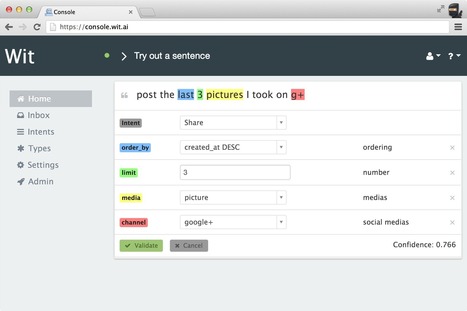
In the era of Siri, there are situations where your users expect a hands-free interface: while they drive, work out, wear Google Glass or the new generation of smart devices.
However for us developers, voice interfaces often mean frustration and bad UX.
Today, with the combination of the best voice-to-text engines and Wit, you can finally bring the power of voice to your app.
Learning technology is just about everywhere in education. Universities are replete with lecture capture tools, interactive media, web based content and person…
while this presentation is really quite in depth (74 slides) it covers some important points. Semms like something that would be interesting to share with colleagues as it really covers a number of topics that apply to modern learners.
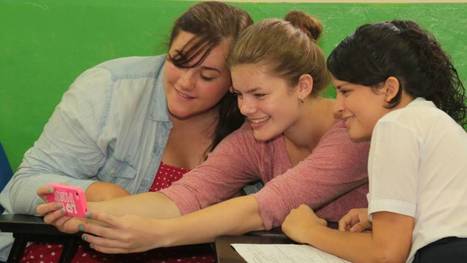
As teachers, we’ve all seen it in our classrooms: A student in the back of the room discreetly takes a selfie. We’ve probably all been frustrated by it at some point too. And many of us have probably wondered why our students are taking hundreds of pictures of themselves everyday.
Our students are using Snapchat, and what many educators fail to understand about the app is that students are not just taking a picture. They are having a conversation. They are telling a story.
Rather than being reactive about new technology in our classrooms, we should look for ways to be proactive and utilize Snapchat as a learning tool instead of viewing it as a distraction.
Over time I have created quite a few help guides, presentations, and other training resources for Google-related topics and other educational technology topics. Although these resources can be found elsewhere on this site and other locations, I have pulled them all together in one place to make it easy for people to find a needed resource, as well as to be sure you are accessing the most recent version (rather than an older copy made by someone else).
Jim Lerman's insight:
I have not encountered Curts and his work previously. He has assembled quite an impressive collection of help guides and training resources. Chances are you will find numerous helpful resources here.
As long as teachers promote independence and other life skills in learners, technology becomes useful and practical. The fact of encouraging learners to be active participators and critical thinkers depend on teachers (how we teach and how we take advantage of the available materials); besides, it is important to highlight that our teaching styles and their efficiency are reflected on learners' outcomes. If a methodology is not longer functional in class, it will be necessary to implement other options.
In this century, technology must be as functional as our teaching style. Electronic devices, virtual tools, social networks, etc. are playing an important role in global education; our job is being able to employ those offered tools by making them useful and innovating; therefore, our learners will be engaged in their own learning process.
Looking to learn web design? This list of 50 best hand-picked websites will be your guide in filtering the good from the bad of learning web design online.
To get content containing either thought or leadership enter:
To get content containing both thought and leadership enter:
To get content containing the expression thought leadership enter:
You can enter several keywords and you can refine them whenever you want. Our suggestion engine uses more signals but entering a few keywords here will rapidly give you great content to curate.


 Your new post is loading...