 Your new post is loading...

|
Rescooped by
Dennis Swender
from Learning & Technology News
March 6, 2017 8:39 PM
|
While ubiquitous in everyday use, in reality, social media usage within higher education teaching has expanded quite slowly. Analysis of social media usage of students and instructors for teaching, learning, and research purposes across four countries (Russia, Turkey, Germany, and Switzerland) showed that many higher education instructors actively use social media for private purposes. However, although they understand that their students also use it for learning purposes, and instructors sense the potential of social media in teaching, they mostly refrain from doing so due to various barriers.
Via Nik Peachey
Any university teacher who does not harbour a painful recollection of a failed lecture is a liar. On one such occasion, I felt early on that I had lost the students entirely: those who hadn’t sunk into comatose oblivion were listless and anxious. Ungracefully, I threw myself even deeper into my PowerPoint presentation to save me from total ruin. Years later, I can still hear myself reading aloud the bullet points from the overhead and see myself turning around to the students to sell these points to them.
Via Peter Mellow
|
|
Scooped by
Dennis Swender
March 6, 2017 8:36 PM
|
YouTube's new live TV service will make TV mobile, flexible, easy, competitive and super profitable for Google.
|
|
Rescooped by
Dennis Swender
from Effective Education
March 4, 2017 8:49 AM
|
|
|
Rescooped by
Dennis Swender
from Learning Trends
March 4, 2017 8:46 AM
|
"Until recently, we thought of learning, working, and living as separate parts of our lives. In our younger years we went to school. We spent our adult years working, and wove in personal events into the time that remained. Now imagine a world where all of this has changed. In the not so distant future, working, learning, and living will become increasingly inseparable, not by choice, but in order to thrive in a rapidly evolving learning economy."
Via Edumorfosis, Sabrina M. BUDEL, Educational Peaks
|
|
Rescooped by
Dennis Swender
from Learning Trends
March 4, 2017 8:44 AM
|
|
|
Rescooped by
Dennis Swender
from Learning Trends
March 4, 2017 8:43 AM
|
|
|
Rescooped by
Dennis Swender
from Learning Trends
March 4, 2017 8:42 AM
|
This paper reports the findings of a small-scale study that documented the use of information technology for learning by a small group of postgraduate students. Our findings support current knowledge about characteristics displayed by effective e-learners, but also highlight a less researched but potentially important issue in developing e-learning expertise: the ability of students to manage the combination of learning and non-learning activities online.
Via THE OFFICIAL ANDREASCY, Educational Peaks
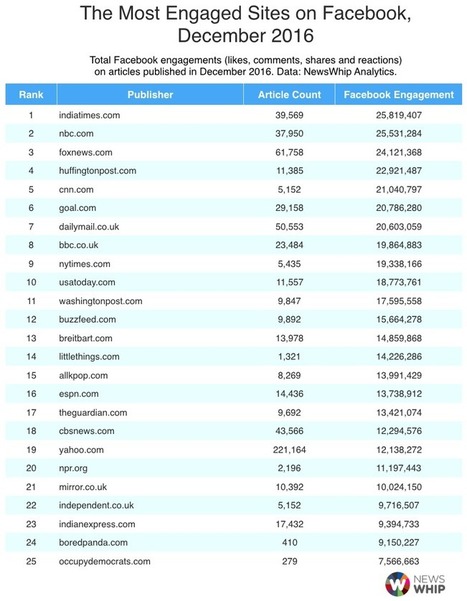
We rank the biggest sites on Facebook in December 2016, ranked by how much engagements their articles attracted in December 2016.
Via massimo facchinetti
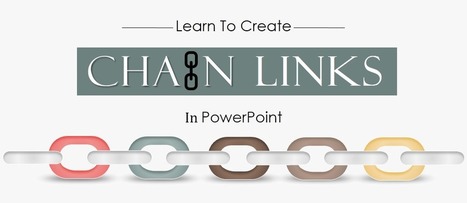
Learn to create Chain Links in PowerPoint. Add stunning chain links PowerPoint Templates in your presentation and leave your audience stunned.
Via Baiba Svenca
|
|
Rescooped by
Dennis Swender
from Educational Technology News
February 27, 2017 8:51 PM
|
Education 3.0 is characterized by rich, cross-institutional, cross-cultural educational opportunities within which the learners themselves play a key role as creators of knowledge artifacts that are shared, and where social networking and social benefits outside the immediate scope of activity...
Via EDTECH@UTRGV
|
|
Rescooped by
Dennis Swender
from TEFL & Ed Tech
February 25, 2017 8:22 PM
|
|
|
Rescooped by
Dennis Swender
from Educational Technology News
February 25, 2017 11:32 AM
|
New study reveals that collaboration is still not a prevalent online learning habit; mobile phones have yet to be used for serious learning.
Via EDTECH@UTRGV
|
|
|
Rescooped by
Dennis Swender
from Educational Technology News
March 6, 2017 8:38 PM
|
Starting March 15, the university will begin removing more than 20,000 video and audio lectures from public view as a result of a Justice Department accessibility order.
Via EDTECH@UTRGV
|
|
Rescooped by
Dennis Swender
from Into the Driver's Seat
March 6, 2017 8:36 PM
|
YouTube is popular. How popular?
More than 1 billion unique users visit YouTube each month
Over 6 billion hours of video are watched each month on YouTube—that’s almost an hour for every person on Earth
100 hours of video are uploaded to YouTube every minute
Over 3 billion videos are viewed each day. Each month, YouTube will see approaching a billion unique visitors. And projected estimates for 2015 includes over a trillion video playbacks.
A trillion.
Whatever mechanisms YouTube uses to deploy content works. Clearly the learning process is far more complicated than digital media hosting. What might happen if education experimented with some of the lessons YouTube’s staggering success has taught us? What might those lessons be? What works for YouTube?
Via Jim Lerman
|
|
Rescooped by
Dennis Swender
from Presentation Tools
March 5, 2017 2:08 AM
|
|
|
Rescooped by
Dennis Swender
from Effective Education
March 4, 2017 8:48 AM
|
Now that social learning is a hot topic, many organizations are beginning to consider how they can implement or operationalize it. However, “social learning” is a very different type of learning from traditional training, because it is natural phenomenon (that takes place when people share and collaborate with one another) rather than something that is implemented by an organization. However, as the use of social technologies are changing the definition of social learning, the issue is rather more about how to implement tools to underpin social and collaborative learning within an organization. The traditional way of implementing any new trend or technology – we have seen it with e-learning and the LMS – is to do this top-down. Someone or some people decide what tools/platforms are best for use within the organization and these are then purchased, installed and set up for employees to use. They then have to get the employees to use the tools, perhaps even train them to how to do so. Those who are implementing social learning in this way, ask questions like this:
Via juandoming, Edumorfosis, Mark E. Deschaine, PhD
|
|
Rescooped by
Dennis Swender
from Learning Trends
March 4, 2017 8:45 AM
|
|
|
Rescooped by
Dennis Swender
from Learning Trends
March 4, 2017 8:43 AM
|
|
|
Rescooped by
Dennis Swender
from Learning Trends
March 4, 2017 8:42 AM
|
Many educators advocate, promote and encourage the dreams of agency, control, ownership and choice amongst students whilst educational institutions take the responsibility for provision, equity, access, participation and standards. The institutions traditionally procure, provide and control the technology for learning but now students are acquiring their own personal technologies for learning and institutions are challenged to keep pace. These allow students to produce, store, transmit and consume information, images and ideas; this potentially realises the educators’ dream but for institutions is potentially a nightmare, one of loss of control and loss of the quality, consistency, uniformity and stability that delivered the dreams of equity, access and participation. This paper traces the conflicting dreams and responsibilities.
Via THE OFFICIAL ANDREASCY, Educational Peaks
|
|
Rescooped by
Dennis Swender
from Learning Trends
March 4, 2017 8:41 AM
|
In this study, participation in Massive Open Online Course (MOOC) comment forums was evaluated using four different analytical approaches: the Digital Artefacts for Learning Engagement (DiAL-e) framework, Bloom’s Taxonomy, Structure of Observed Learning Outcomes (SOLO) and Community of Inquiry (CoI).
Via THE OFFICIAL ANDREASCY, Educational Peaks
|
|
Rescooped by
Dennis Swender
from Media Literacy
March 2, 2017 9:25 AM
|
Common Core State Standards are calling for more focus on students reading charts and graphics, but new research shows engaging graphics can reduce students' understanding of chart data.
Via Mary Reilley Clark
|
|
Rescooped by
Dennis Swender
from Learning & Technology News
February 27, 2017 8:53 PM
|
This paper captures the evolution of the Mozilla Web Literacy Map to reach and meet the growing number of diverse audiences using the web. The paper represents the thinking, research findings, and next iteration of the Web Literacy Map that embraces 21st Century Skills (21C Skills) as key to leadership development.
Via Nik Peachey
|
|
Rescooped by
Dennis Swender
from Into the Driver's Seat
February 25, 2017 8:22 PM
|
Free resource of educational web tools, 21st century skills, tips and tutorials on how teachers and students integrate technology into education
Via Dr. Tom D'Amico (@TDOttawa) , Jim Lerman
|
|
Rescooped by
Dennis Swender
from E-learning
February 25, 2017 8:21 PM
|
Check out this curated list (with descriptions) of Google Expeditions!
Via paul rayner
|















Useful research. Check out the toolkit too.