Your new post is loading...

|
Rescooped by
Dennis Swender
from News for Discussion
February 12, 2018 10:23 AM
|
A forecast 700,000 teenagers and young adults will leave the social media site in 2018
Via David M
Every day, we speak to universities that are looking to launch new online-learning initiatives, and many of these conversations start with the same question: “How do we put these courses online?”
By asking a few initial questions of our own, we’ve found that most institutions tend to anchor their thinking to their existing on-campus courses. This approach is limiting at best, and a recipe for mediocrity in many cases.
Instead of thinking about your new online initiative—whether it’s a single course or an entire degree program—as a generic rework of your on-campus courses, we recommend thinking of it as an entirely new educational experience. A new product. One that demands that you carefully evaluate all your requirements and ensure the program is designed specifically with your target audience of current students and prospective students in mind.
In other words, approach the process as a product company would when planning to launch a new offering.
Via Kim Flintoff
|
|
Rescooped by
Dennis Swender
from E-learning
February 11, 2018 11:37 PM
|
Last September, Google announced that the Google Drive app was being shut down in March 2018. Let’s look at what this mean to you as end user.
Via paul rayner
|
|
Rescooped by
Dennis Swender
from Zeitmanagement für Lehrer
February 11, 2018 3:37 PM
|
"Reclipped is an excellent educational tool to use to annotate and create video snippets. It allows you to collect relevant parts from videos, add your comments and notes to them and then share them with others ..."
Via Leona Ungerer, Ines Bieler
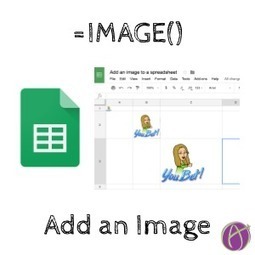
Embed an Image into a Spreadsheet You can insert an image onto a Google Sheets spreadsheet by using the Insert menu, but what if you want the image in a cell instead? This is a little trickier. Image URL The first thing you need is an image URL. This means it needs to be uploaded …
Via WebTeachers, Elizabeth E Charles
|
|
Rescooped by
Dennis Swender
from Digital Delights
February 11, 2018 3:31 PM
|
eLearn Magazine is a leading source of high-quality information on the uses of online learning and training strategies in a variety of contexts for K-12, higher education, and the corporate workforce.eLearn Magazine presents new technologies and approaches for creating, delivering, and supporting online instruction and workplace performance.
Via Ana Cristina Pratas
|
|
Scooped by
Dennis Swender
February 10, 2018 8:12 PM
|
A 2014 project report in conjunction with the League for Innovation in the Community Colleges "...[S]ocial media has been offered as a solution to improve student engagement because of its capacity to connect with thousands of students in a relatively short amount of time. In fact, the 2009 Community College Survey of Student Engagement found the more students use social networking tools to communicate with other students, instructors, and college staff regarding coursework and other academic purposes, the higher their levels of engagement." [Saenz, V., Hatch, D., Bukoski, B., Kim, S., Lee, K., & Valdez, P. (2011). Community college student engagement patterns: A typology revealed through exploratory factor analysis. Community College Review, 39(3), 235-267. V]
|
|
Scooped by
Dennis Swender
February 10, 2018 6:25 PM
|
"Supporters of open academic content have long touted its ability to widen the impact and productivity of scholarship while relieving cost pressures in academia. While the development of open access (OA) publishing and Massive Open Online Courses (MOOCs) have been labeled a disruption to publishing and the academic community, this study finds that OA has a more tempered impact on scholarship while the impact of MOOCs on teaching is more severe.Click here to edit the content." [SAGE Open]
|
|
Rescooped by
Dennis Swender
from Digital Delights for Learners
February 10, 2018 12:58 PM
|
Using technology to enhance feedback. How technology can be used to create media rich feedback that can greatly support teaching and learning
Via Ana Cristina Pratas
|
|
Rescooped by
Dennis Swender
from Edumorfosis.it
February 10, 2018 12:14 PM
|
According to Getting Smart’s “Ask About AI” report, the notion behind AI is that machines can exhibit human intelligence. The concept of “machine learning” started in 1956 and is when algorithms are used to interpret data and take some action or to complete a task. As a foreign language teacher, I became aware of machine learning years ago, in the form of language translators. AI, at its base, is computer code that displays some form of intelligence, learning, and problem solving in what has been referred to as a “super intelligence.” It is the development of computers that can complete tasks which normally require “human intelligence” however it learns on its own and continues to improve on past iterations. AI becomes smarter, knowledge grows, and it expands the realm of possibilities for society. Machine learning is actually a subset of artificial intelligence. It is said that all Machine Learning is AI, but not all AI is Machine Learning.
Via Edumorfosis
|
|
Rescooped by
Dennis Swender
from E-learning
February 10, 2018 12:09 PM
|
Holly Clark is an award-winning educator and speaker based in San Diego. She is both a National Board Certified Teacher and Google Certified Innovator. A longtime teacher and administrator, Holly consults globally with schools to help them successfully and purposefully innovate instruction through the use of learning theory, technology integration, and design thinking strategies.
Via paul rayner
|
|
Scooped by
Dennis Swender
February 9, 2018 1:09 PM
|
To make the process of assigning students to groups and getting them going on editing the group’s template easier I coded an Add-on script: Group Docs Maker. This allows you to copy and paste your roster of students into the spreadsheet and automatically create a copy of a template for each group. Each group members name is automagically appended to the document title.
|
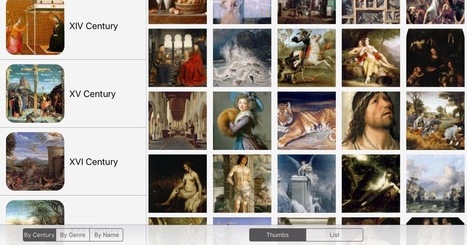
The popular Louvre HD app is free today and only for a limited period of time. The app provides you access to a huge library of some of the most popular works of art and paintings stored in the Louvre museum . After I downloaded the app this morning I spent sometime browsing through the collections there and found them really amazing. If you love modern art, this app is definitely for you.
Via John Evans
|
|
Rescooped by
Dennis Swender
from E-learning
February 11, 2018 11:37 PM
|
Most will agree that technology cannot and will not replace the role of a teacher, and we should never strive for that outcome. However, that does not mean classrooms must be void of technology in order to preserve the impact of teachers. Rather, strategic integration of technology can empower a teacher to do more while being efficient.
Via paul rayner
|
|
Scooped by
Dennis Swender
February 11, 2018 3:37 PM
|
Designing digital posters can provide a quick, creative, and engaging way for students to show what they know. DesignCap is free and easy to use.
|
|
Rescooped by
Dennis Swender
from Edumorfosis.it
February 11, 2018 3:32 PM
|
We’ve looked at the cost of learning time, and now we are turning to the optimal length of a piece of elearning. Should it be short and sweet, or in-depth and involved? Of course it depends on the type of content, context and audience. However, there are some rules of thumb you can apply to help assess what could have the biggest impact.
Via Marta Torán, Edumorfosis
eLearn Magazine is a leading source of high-quality information on the uses of online learning and training strategies in a variety of contexts for K-12, higher education, and the corporate workforce.eLearn Magazine presents new technologies and approaches for creating, delivering, and supporting online instruction and workplace performance.
Via Ana Cristina Pratas
|
|
Rescooped by
Dennis Swender
from Into the Driver's Seat
February 11, 2018 3:31 PM
|
Merrill’s five principles are:
1. Learning is promoted when learners are engaged in solving real-world problems
2. Learning is promoted when existing knowledge [and skill] is activated as a foundation for new knowledge [and skill]
3. Learning is promoted when new knowledge is demonstrated to the learner
4. Learning is promoted when new knowledge is applied by the learner
5. Learning is promoted when new knowledge is integrated into the learner’s world "Too often, instructional programs focus only on the demonstration phase and ignore the other phases in this cycle of learning. These principles will be expanded below." Links to discussions of each of the 5 principles and to Merrill's original paper on the topic are provided on the webpage. Simply click on the headline or the graphic above to access the webpage. -JL
Via Jim Lerman
|
|
Scooped by
Dennis Swender
February 10, 2018 6:42 PM
|
"This analysis of Georgetown’s first six MOOCs (massive open online courses) comprises three parts, moving from general to specific in scope. I begin with a discussion of demographic factors across all six courses, seeking to answer the following question: “Who takes, and succeeds in these courses?” Next, I discuss the relationship between stated intention and course performance with survey data from a pre-course survey for Georgetown’s very first MOOC, an economics course. I end by examining the gender achievement gap in the same economics course. [Healy, P. A. (2017). Undergraduate Economic Review, 14(1)]
|
|
Rescooped by
Dennis Swender
from Digital Delights for Learners
February 10, 2018 12:59 PM
|
Give your students fast, high quality feedback on their work. Record voice comments to convey emotion, embed videos to explain complex concepts, and track skills.
Via Ana Cristina Pratas
|
|
Rescooped by
Dennis Swender
from Edumorfosis.it
February 10, 2018 12:15 PM
|
As an eLearning developer, having a public portfolio is a necessity. A portfolio can change your life. It can land you the job of your dreams, empower you to develop your skills, and it will inspire others. Creating a great portfolio doesn’t need to be a lot "work" or cost tons of money. Here are a few ways to get started in creating an amazing eLearning portfolio:
Via Edumorfosis
|
|
Rescooped by
Dennis Swender
from Edumorfosis.it
February 10, 2018 12:13 PM
|
As the need for greater work-learning integration increases, the context of learning becomes ever more important. Context shapes the learning experience. By examining the multi-layered world of people at work, we can begin to understand the constraints of a person’s situation as well as its hidden opportunities. This may lead us to design more holistic and effective solutions for performance improvement.
An examination of context allows us to address the fact that learning is not just a mental activity that occurs in a vacuum. Rather, many interacting factors affect workplace learning and performance.
Via Edumorfosis
|
|
Scooped by
Dennis Swender
February 9, 2018 1:09 PM
|
I’ve been asked about the podcasting equipment setup and software that we use on the 10-Minute Teacher Podcast. After 220 episodes in one year and over 430K downloads, we’ve settled on a configuration we like. In this post, I’ll share the setup and help you get started.
|


 Scoop.it!