Your new post is loading...

|
Rescooped by
Dennis Swender
from Social Media and Healthcare
April 1, 2018 1:06 PM
|
Stay Engaged
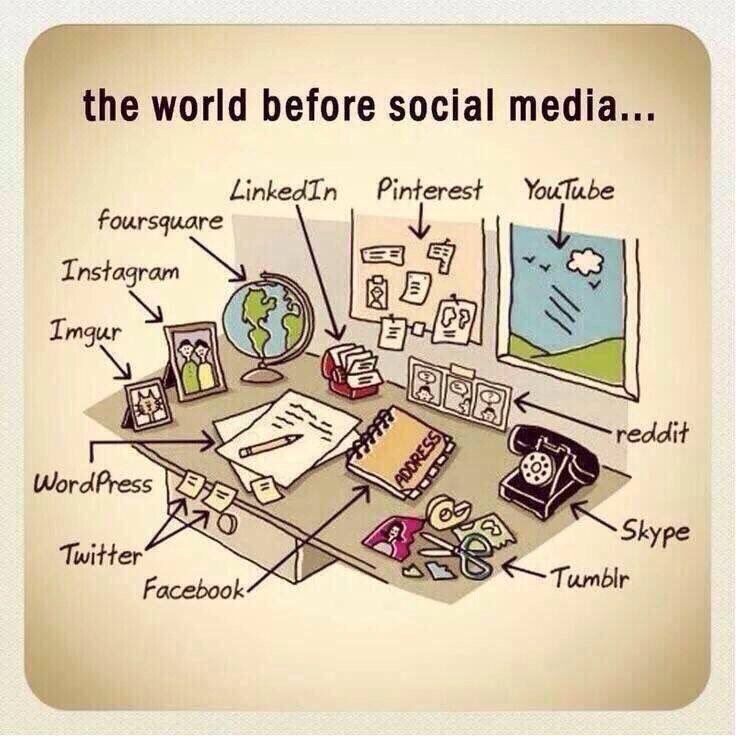
As an independent practice owner, I strive to differentiate my services from large corporate practices by actively engaging patients on social media. I often run ads targeting fans of our pages and their friends. Sharing posts on social media has become the new word of mouth. Many of our referrals come through social media, and patients who read good reviews about us online are always eager to start treatment. Step It Up
Social media posts (i.e., content you publish), likes (from patients, prospective patients and others), and tags are a good start, but you’ll eventually have to step up your media efforts to maintain a steady flow of patients and referrals. Consider adding email marketing and targeted ad campaigns to your media mix. Facebook ads allow you to target specific demographics, and they have a pixel tracking function that shows which ads drive traffic to your website. We use the Facebook pixel tracking tool every day to track new leads, and then I follow through with great content.
Via Plus91
|
|
Rescooped by
Dennis Swender
from News for Discussion
April 1, 2018 4:37 AM
|
Clementine but not as you know it! Matthew Sweet and his Saloneers in full cry.
Via David M
|
|
Rescooped by
Dennis Swender
from Learning & Technology News
March 31, 2018 1:28 PM
|
Having a free browser based tool Kapwing can help you to create interesting and engaging materials for students, but it can also allow students to get some hands on experience of editing video and so help to build their digital literacies.
Via Nik Peachey
Are you running Facebook Ads, but struggling to make them work? Perhaps you’re facing a low conversion rate, not enough audience interest, or even a poor Facebook Advertising campaign altogether. If you’re worried about your ads not performing well, rest easy. There are plenty of ways to get them up and running in a manner …
Via Peg Corwin
"Social media has evolved into a tool for creating and promoting the "self," creating a tension between encouraging individual expression and overemphasizing the self in a collaborative setting ...." ©
Via Leona Ungerer
Add slide numbers to Google Slides presentations in G Suite by using the insert menu.
Via Skip Zalneraitis
The capacity of Massive Open Online Courses (MOOCs) to deliver a socially interactive learning environment is at the heart of ongoing debate around the pedagogical effectiveness of the platform. MOOCs rely on the connectivist model of learning, where learners form connections based on shared interests, and learning outcomes are not pre-defined by a facilitator. Making connections in MOOCs is critical to learner success, and yet little is known about how learners build social capital (investment in social relations for future return) in open large-scale courses.
In this study, researchers used two connectivist MOOCs to investigate how learners leverage access to social capital, and the factors associated with a successful learning experience. The goal of the study was to understand the influence of language, media, time, and learners' activeness in the development of social capital in a connectivist MOOC.
Via Kim Flintoff
|
|
Rescooped by
Dennis Swender
from MiniTool Software Solution
March 30, 2018 3:37 PM
|
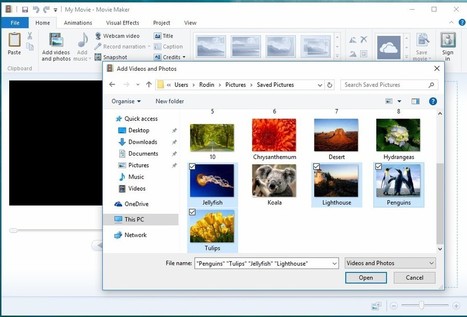
Don't miss Windows Movie Maker! Download Windows Movie Maker to easily and quickly create your video and share it with friends and family.
Via MiniTool Software
|
|
Rescooped by
Dennis Swender
from All digital
March 28, 2018 9:44 PM
|
With the recent publicity about unauthorised use of personal data on Facebook to manipulate elections in the USA and the U.K., and the above report about Iranians hacking universities for research results and intellectual property, everyone now has to take as much responsibility as possible for making sure personal data is secure and used only for authorised purposes.
This is particularly true for those of us working in online learning, where most of our interaction with students is online. Most institutions using learning management systems provide a secure area for student-instructor interactions – security is one reason why universities and colleges pay big bucks for IT systems, and making sure our student data and interactions are kept secure is a major reason for using a learning management system.
Via Miloš Bajčetić, Stephania Savva, Ph.D
In this episode of the TechEducator Podcast, we tackle the tough topic of teacher/student communication and together learn how to use Google Docs to create effective learning environments.
Via Dr. Tom D'Amico (@TDOttawa)
Every year since 2001 we’ve picked what we call the 10 Breakthrough Technologies. People often ask, what exactly do you mean by “breakthrough”? It’s a reasonable question—some of our picks haven’t yet reached widespread use, while others may be on the cusp of becoming commercially available. What we’re really looking for is a technology, or perhaps even a collection of technologies, that will have a profound effect on our lives.
For this year, a new technique in artificial intelligence called GANs is giving machines imagination; artificial embryos, despite some thorny ethical constraints, are redefining how life can be created and are opening a research window into the early moments of a human life; and a pilot plant in the heart of Texas’s petrochemical industry is attempting to create completely clean power from natural gas—probably a major energy source for the foreseeable future. These and the rest of our list will be worth keeping an eye on. —The Editors
Via John Evans
|
|
Scooped by
Dennis Swender
March 28, 2018 7:37 PM
|
Discover who is studying online. “Online College Students 2017: Comprehensive Data on Demands and Preferences” explores a survey of 1,500 online students.
|
A Few of Our Favorite Hidden Google Gems The More You Share The More You Learn - #GoogleEDU “The Smartest Person in the Room is the Room” - David Weinberger Please open this Padlet and LOG IN using your Google Credentials or with your existing Padlet Account before starting thi
Via Skip Zalneraitis
|
|
Rescooped by
Dennis Swender
from Educational Technology News
April 1, 2018 4:36 AM
|
SummarizeThis is a free tool that will quickly create a summary of long passages of text. To use SummarizeThis you just copy and past
Via Skip Zalneraitis
|
|
Rescooped by
Dennis Swender
from Learning & Technology News
March 31, 2018 1:27 PM
|
The world of Instructional Design has evolved over the years. Influences from various learning theory movements like behaviorism, cognitivism, and social learning have constructed a foundation which acts as pillars of successful approaches. While each theory includes specific focal points with regards to how learning occurs—either by behavioral response or knowledge acquisition—they have contributed unique perspectives on learning as a whole and are responsible for how the field of Instructional Design has changed over time.
Via Nik Peachey
|
|
Rescooped by
Dennis Swender
from Islamic community
March 31, 2018 12:50 PM
|
Colleges and universities need student engagement, that's why the ones that are achieving social media success are obviously doing something right. To understand the creativity of a social strategy in a busy field, we found the best university social feeds. Check it.
Via Raheelakhan
|
|
Rescooped by
Dennis Swender
from consumer psychology
March 31, 2018 1:09 AM
|
"How we communicate with each other over the Internet has changed significantly from the early days in 1973 ..."
Via Leona Ungerer
|
|
Rescooped by
Dennis Swender
from Into the Driver's Seat
March 31, 2018 1:00 AM
|
"When your laptop is lost or stolen, you aren’t just out $800 (or more). Your personal information is also accessible to whoever takes it, even if you have a password.
"Thankfully, you can protect your data against both of these types of attacks with encryption. “Encryption is a mathematical process used to jumble up data. If important files or whole devices are encrypted, there is no way to make sense of them without the key,” Mr. Stewart said. That means if thieves try to access your information, they’ll find only a jumbled mess unless they have your password, and they won’t be able to simply reset that password if the device is encrypted.
"Encrypting your hard drive isn’t some super-technical process that only security experts can perform, either — anyone can do it on his or her computer at home, and it should take only a few minutes to get up and running."
Via Jim Lerman
For some people, artificial intelligence still makes them feel a little…uneasy. It’s often depicted as sinister-looking robots who will take over our lives and our jobs, or even replace humanity.
The reality is, we are already in an age in which AI is infused into our everyday lives in ways that augment rather than replace people. Digital assistants such as Cortana can find you the closest restaurant, dictate a text to your friend, manage your email inbox and even help you create more beautiful PowerPoint presentations. Whether you realise it or not, AI is an integral part of all these interactions. And while it’s not something you can often see or touch, I bet you’re already experiencing the benefits of AI every day.
So, how does AI technology actually work? AI is a machine’s ability to recognise images and words, learn and reason in ways that are similar to people. Data is the fuel for AI, and our world is awash with data as our daily interactions are increasingly digital. AI uses sophisticated algorithms to sort through piles of data, spot patterns and make predictions – tasks that would be repetitive and time-consuming, if not practically impossible, for people to do manually. AI can do this work on our behalf and give us back more of life’s most precious commodity - time. Learn more / En savoir plus / Mehr erfahren: https://www.scoop.it/t/21st-century-learning-and-teaching/?&tag=AI
Via Gust MEES
|
|
Scooped by
Dennis Swender
March 28, 2018 10:26 PM
|
BOULDER, CO (March 27, 2018) - The National Education Policy Center (NEPC) will delete its Facebook account on Wednesday March 28. We have already removed social sharing via Facebook from the NEPC website and our other communication tools.
"For most of us, a large part of our day requires us to look at a screen of some description. Excessive screen time can cause eye damage as well as affect our posture and mood.
Unfortunately, many of our leisure activities such as video games, film and TV also add to the amount of time we are passively watching a display. While it is impossible to completely escape the screen, there are ways to reduce the time you place your eyes and brain under the screen strain.
Here are 11 easy ways to reduce your screen time."
Via John Evans
4 Fab Text Generators
for Web or Blog headers....or Just for Fun Geeky Stuff!
Via John Evans
|