

When student work looked like McKinsey memos, an NYU business school professor used AI oral exams to test real learning.
Via EDTECH@UTRGV


|
Rescooped by
Dennis Swender
from Educational Technology News
onto Distance Learning, mLearning, Digital Education, Technology January 8, 12:58 AM
|
 Scoop.it!
When student work looked like McKinsey memos, an NYU business school professor used AI oral exams to test real learning.
 Your new post is loading...
 Your new post is loading...
Your new post is loading...
Scoop.it!

This article shows how to use AI assessment guardrails to responsibly use AI-generated assessments while protecting quality and trust. Via EDTECH@UTRGV 
EDTECH@UTRGV's curator insight,
April 23, 8:37 AM
"AI can speed up assessment creation, but without guardrails it can also introduce errors, bias, and weak alignment."
Scoop.it!

From
teachquill

TeachQuill delivers 60+ AI tools that help educators plan, teach, assess, and communicate faster. Generate standards-aligned lesson plans, worksheets, quizzes, rubrics, IEP goals, and parent emails in seconds while keeping student data private. https://teachquill.com/ Via Nik Peachey, Yashy Tohsaku 
Nik Peachey's curator insight,
April 24, 7:49 AM
TeachQuill delivers 60+ AI tools that help educators plan, teach, assess, and communicate faster. Generate standards-aligned lesson plans, worksheets, quizzes, rubrics, IEP goals, and parent emails in seconds while keeping student data private. https://teachquill.com/ 
Daniel Conway's curator insight,
May 14, 8:21 AM
This article highlights how AI tools are becoming increasingly useful for teachers in K–12 classrooms. The article explains how AI can support lesson planning, assessment creation, communication, and organization while saving teachers valuable time. I think resources like these can help educators focus more on student engagement and personalized learning, rather than spending excessive time on administrative tasks. As educational technology continues to evolve, AI tools may become an important part of connected learning environments and classroom collaboration.
Scoop.it!

From
www
Artificial intelligence is causing college instructors to move more meaningful examinations back to the classroom, and connect the dots with students on why learning matters. Via EDTECH@UTRGV
EDTECH@UTRGV's curator insight,
March 10, 1:57 PM
"In addition to showing students why learning matters, the professors said it is essential to teach students how to use AI tools to augment their learning, just as they will be expected to use AI tools to augment their work upon graduation."
Scoop.it!
The Next Layer of AI-Resistant Learning: What the Research Says (and What It Looks Like in Practice)
When you look closely at the science of learning (constructivism, cognitive psychology, and social learning theory) you realize something that most effective learning experiences were already AI-resistant. Via EDTECH@UTRGV
EDTECH@UTRGV's curator insight,
March 10, 1:53 PM
"AI-resistant learning isn’t just a reaction to ChatGPT or generative AI.
Scoop.it!

Explore how AI boosts speed and clarity in learning design, yet the insight and judgment of instructional designers remain essential. Via EDTECH@UTRGV
EDTECH@UTRGV's curator insight,
February 19, 10:17 AM
"[A]midst all this speed and automation, one question keeps resurfacing: If AI can do so much, what role remains for the instructional designer?"
Scoop.it!
From
uxdesign
"I showed my team an AI-generated design. Two senior designers called it ‘solid.’ None of them questioned where it came from." Via EDTECH@UTRGV
EDTECH@UTRGV's curator insight,
February 19, 10:32 AM
"[T]his design follows every single best practice in the SaaS landing page playbook. Clear headline. Social proof. Benefit-driven copy. Visual hierarchy. It checks every box. And it’s completely forgettable."
Scoop.it!
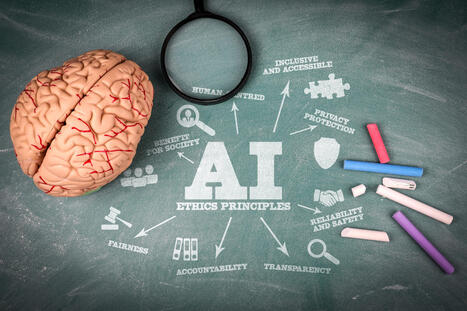
Why banning AI won’t fix higher education—and how redesigning teaching, assessment, and integrity can prepare students to learn and lead in an AI-driven world. Via EDTECH@UTRGV
EDTECH@UTRGV's curator insight,
February 19, 10:38 AM
"The most profound problems in higher education are structural and pedagogical, not technological. Prohibition doesn’t fix these problems; it hides them." 
Claudia Hernandez's curator insight,
May 24, 8:47 PM
This article argues that banning AI in education will not solve deeper issues in teaching and assessment. Instead, educators should redesign assignments to focus on process, critical thinking, reflection, and ethical AI use so students learn how to work responsibly with technology rather than depend on it.
Scoop.it!

“At a high level, what the school districts are saying is, ‘You targeted kids. You knew that your product was potentially dangerous because it wa Via EDTECH@UTRGV
EDTECH@UTRGV's curator insight,
February 20, 9:44 AM
"School districts are among a wave of plaintiffs who claim that the platforms’ design, not the content, poses the real threat to kids’ mental health."
Scoop.it!

"In recent years, a growing chorus of critics has argued that laptops and digital devices are undermining student learning. Headlines warn of distraction, declining attention spans, and deteriorating academic performance. In response, some schools have moved to restrict or even eliminate laptop use in classrooms altogether. Yet this framing—technology as the culprit—rests on a flawed assumption. A closer reading of contemporary research suggests a different conclusion:" Via EDTECH@UTRGV
EDTECH@UTRGV's curator insight,
February 23, 12:51 PM
"Laptops do not inherently degrade cognition or learning. Poorly designed instructional systems using laptops do."
Scoop.it!

Today's students are future innovators in a landscape where powerful new tools of creation--AI--are sitting right in front of them. Via EDTECH@UTRGV
EDTECH@UTRGV's curator insight,
January 28, 11:09 AM
"AI is about to pull the labor market in two directions at once: inward, as firms need fewer employees; and outward, as more individuals gain the tools to act like firms."
Scoop.it!

States laid the groundwork for cellphone bans in the classroom — and now new federal efforts look to take that one step further. Via EDTECH@UTRGV
EDTECH@UTRGV's curator insight,
January 28, 11:11 AM
"Edtech proponents defend the value of instructional tools as no-phones policies gain momentum in schools — and in Congress."
Scoop.it!

AI's value depends on the educators and leaders who wield it with intention and a commitment to equity, fairness, responsibility, and balance. Via EDTECH@UTRGV
EDTECH@UTRGV's curator insight,
January 29, 11:13 AM
"AI amplifies educators rather than replacing them: In K–12 settings, AI is most effective when used to reduce administrative burden, support better decision-making, and free educators to focus more time on students and relationships." 
Valeria Davila's curator insight,
January 30, 2:03 PM
This article presents a clear and optimistic argument that AI, when used intentionally, can enhance teaching, engagement, and equity in K–12 education rather than undermine it. I appreciate the authors’ consistent emphasis on AI as a tool that amplifies educators by reducing administrative burdens and strengthening human relationships, especially through improved communication with multilingual families. The concrete examples—such as translation tools increasing parent engagement and AI-supported data analysis helping identify at-risk students—make the case feel practical rather than theoretical. I also strongly agree with the focus on AI literacy for both teachers and students, particularly the idea of teaching critical skills like identifying bias and remixing AI output with human judgment from an early age. Overall, the article makes a compelling case that AI’s true value in K–12 lies not in automation for its own sake, but in advancing equity, supporting educators, and refocusing schools on the human-centered work that matters most.
Scoop.it!

The digital learning landscape is entering a new phase defined by rapid advances in artificial intelligence, rising expectations for the student experience, and increasing pressure to demonstrate quality and accountability in online education. Via EDTECH@UTRGV
EDTECH@UTRGV's curator insight,
January 30, 2:29 PM
"Artificial intelligence is expected to renew institutional focus on instructional design, as AI-generated content increases the need for structured, pedagogy-informed course design aligned with accessibility, inclusion, and quality standards."
|
Scoop.it!

School leaders must move beyond experimentation and build AI systems that prioritize governance, purpose, and data integrity. Via EDTECH@UTRGV
EDTECH@UTRGV's curator insight,
April 24, 9:39 AM
"Becoming “AI-ready” isn’t about chasing the newest shiny platform; it requires districts to build intentional systems that guide how AI is evaluated, implemented, and governed."
Scoop.it!

From
payhip
This groundbreaking book flips the script, showing how AI, when used wisely, can enhance rather than replace our students' thinking. Written by award-winning teacher trainer Nik Peachey, Developing Critical Thinking Skills With AI is your complete task-based guide to using AI tools like ChatGPT to cultivate logic, curiosity, and independent thought in your classroom. Via Nik Peachey
Scoop.it!

Classroom Technology Bans: How Better Learning Design Will Improve Classrooms, Not Removing Devices Via EDTECH@UTRGV
EDTECH@UTRGV's curator insight,
March 10, 1:59 PM
"Making technology the scapegoat for declining educational outcomes distracts from the real issue and risks removing one of the most powerful tools students have to explore ideas, create knowledge, and pursue their goals."
Scoop.it!

Students will use AI. Here’s what it takes to ensure it strengthens their thinking instead of replacing it. Via EDTECH@UTRGV
EDTECH@UTRGV's curator insight,
March 9, 5:40 PM
"[I]f we integrate AI thoughtfully — anchored in pedagogy, aligned with course content and designed to promote cognitive effort — we can help students build the skills that will matter most in an AI-integrated world: critical thinking, problem-solving and the ability to verify and challenge AI itself."
Claudia Hernandez's curator insight,
May 24, 8:45 PM
This article explains that AI should be used to support student learning rather than replace critical thinking and problem-solving. The author argues that when AI tools are designed thoughtfully and aligned with course goals, they can improve engagement, accessibility, and personalized learning while still encouraging students to think independently.
Scoop.it!

"The battle between bots and brains has already begun, and educators can see how it might end" Via EDTECH@UTRGV
EDTECH@UTRGV's curator insight,
February 19, 10:36 AM
"Reading closely, thinking critically, and writing with logic and evidence are precisely the skills people need to realise the bona fide potential of AI to support lifelong learning.”
Scoop.it!

As generative artificial intelligence supercharges phishing and deepfakes, schools must adapt to protect a culture built on openness and trust. Via EDTECH@UTRGV
EDTECH@UTRGV's curator insight,
February 20, 9:45 AM
“Phishing messages that used to be sloppy and easy to spot can now be tailored, timely and written in a way that feels completely legitimate.”
Scoop.it!

An AI agent is relational. It functions through ongoing access to your student's digital ecosystem. Via EDTECH@UTRGV
EDTECH@UTRGV's curator insight,
February 23, 12:55 PM
"[E]very expansion of AI capability in the agentic era is, simultaneously, an expansion of data exposure. These aren’t separable. You don’t get the powerful AI assistant without giving it access. You don’t open the doors without accepting what flows through them."
Scoop.it!

In an AI era where homework can be generated instantly, the most valuable evidence of learning is human reasoning behind the finished product Via EDTECH@UTRGV
EDTECH@UTRGV's curator insight,
February 23, 1:01 PM
"Long before generative AI entered the classroom, homework relied on a quiet, fragile assumption that what was submitted reflected independent understanding."
Scoop.it!
From
phys
"The head of the International Monetary Fund, Kristalina Georgieva, has warned young people will suffer the most as an AI "tsunami" wipes out many entry-level roles in coming years." Via EDTECH@UTRGV
EDTECH@UTRGV's curator insight,
February 23, 1:00 PM
"Tasks that are eliminated are usually what entry-level jobs do at present, so young people searching for jobs find it harder to get to a good placement."
Scoop.it!

As higher education reaches a point of transformation, AI's insights offer a different look at what path learning could take. Via EDTECH@UTRGV
EDTECH@UTRGV's curator insight,
January 28, 11:10 AM
"Will colleges and universities remain sites of human development, or become credentialing platforms optimized for efficiency alone?"
Valeria Davila's curator insight,
January 30, 1:53 PM
This article offers a sobering and insightful analysis of higher education at a moment of deep transformation, emphasizing how long-standing assumptions about institutional stability, autonomy, and purpose are rapidly eroding. I found the discussion of accountability and political pressure particularly compelling, as it shows how universities are increasingly judged by economic outcomes rather than educational mission, forcing leaders into defensive and often austerity-driven decisions. The author’s framing of AI as a shift from experimentation to infrastructural dependence resonated with me, especially the concern that governance, ethics, and academic judgment are lagging behind technological adoption. What stands out most is the warning that the true risk is not AI itself, but the quiet reshaping of authority, labor, and learning without intentional oversight. Overall, the article persuasively argues that higher education’s future depends on whether institutions choose thoughtful, values-driven transformation over reactive efficiency, a choice that will ultimately redefine trust, faculty roles, and the social contract of the academy.
Scoop.it!

As school districts embrace artificial intelligence to improve IT systems, a well-considered strategy can ensure a seamless transition. Via EDTECH@UTRGV
EDTECH@UTRGV's curator insight,
January 29, 11:11 AM
"Artificial intelligence and machine learning have the potential to transform K–12 operations, increase efficiency and improve responsiveness. But AI and ML adoption in education is not without its challenges. Here are three obstacles that K–12 districts need to overcome."
Scoop.it!

EDTECH@UTRGV's curator insight,
January 30, 2:09 PM
"[T]here’s no single AI tool that “does instructional design best.” There is, however, an optimal AI stack for Instructional Design work." |







"The assignments looked brilliant. The understanding didn't. That's when an NYU business school professor decided to fight AI-assisted coursework with AI-powered oral exams."