

Explore how AI boosts speed and clarity in learning design, yet the insight and judgment of instructional designers remain essential.


|
Scooped by
EDTECH@UTRGV
onto Educational Technology News February 19, 10:17 AM
|
 Scoop.it!
Explore how AI boosts speed and clarity in learning design, yet the insight and judgment of instructional designers remain essential.

 Your new post is loading...
 Your new post is loading...
Your new post is loading...
Scoop.it!
|
|
|
Scooped by
EDTECH@UTRGV
Today, 11:10 AM
|
Scoop.it!

Geoffrey Hinton, known as the “Godfather of AI” due to his pioneering work in the field, has a new, bold idea to regulate AI systems.
"Hinton’s call for greater oversight arrives as AI industry insiders raise alarms about the technology they are helping build."
|
|
Scooped by
EDTECH@UTRGV
Today, 11:08 AM
|
Scoop.it!

According to the McKinsey Global Institute, the importance of people skills will likely be emphasized by generative AI.
"Emerging research suggests that the skills the future job market will demand most are skills that technology cannot replace or replicate: people skills."
|
|
Scooped by
EDTECH@UTRGV
October 16, 10:36 AM
|
Scoop.it!
"OpenAI recently brought ChatGPT for Teachers to 55 more school systems, giving over 100,000 educators access. Leah Belsky, OpenAI’s vice president of education, warns that AI risks enfeebling the next generation without proper implementation. Data shows that students with stronger prior knowledge and curiosity benefit the most from AI tools. To combat this stratification, educators must cultivate student purpose and shift away from simply grading finished products. Instead, schools are exploring live demonstrations and AI-driven analysis of student interactions to evaluate the learning process. Ultimately, technology cannot replace human motivation, leaving teachers responsible for inspiring curiosity."
"As AI agents become ever more capable of doing intellectual work, the awkward question students inevitably face is 'Why bother doing anything at all, when I can just have the machine do it for me?'”
|
|
Scooped by
EDTECH@UTRGV
October 16, 10:30 AM
|
Scoop.it!

Curriculum must evolve beyond AI tools and teach learner agency, judgment, verification, and critical thinking for true digital literacy.
"The task is no longer simply to restrict AI, but to build curricula that address its risks while recognizing its growing presence in education and daily life."
|
|
Scooped by
EDTECH@UTRGV
October 16, 10:24 AM
|
Scoop.it!

A three-year longitudinal study of Nigerian computer science students found that AI ethics awareness, reflection, and perceived responsible use all grew substantially but developed independently rather than as a coordinated progression from knowledge to action.
"[E]ethical engagement with AI is multidimensional, asynchronous, and shaped by institutional conditions... it requires educational environments deliberately designed to make responsible practice possible, visible, and rewarded."
|
|
Scooped by
EDTECH@UTRGV
October 15, 9:59 AM
|
Scoop.it!

Learn how teacher preparation programs can teach responsible AI use while protecting student privacy, confidentiality, dignity, and trust in K-12 education.
"The conversation surrounding AI in education cannot focus solely on efficiency or innovation, it must also center on professional responsibility."
|
|
Scooped by
EDTECH@UTRGV
October 15, 9:55 AM
|
Scoop.it!


Read this report for timely statistics about U.S.-based online higher education, student outcomes, ROI, and more.
"75% of students said online learning is better than or equal to in-person learning, and 98% of all survey respondents said they would recommend online education to others."
|
|
Scooped by
EDTECH@UTRGV
October 15, 9:48 AM
|
Scoop.it!

The moving AI frontier in instructional design, and what it means for our roles & jobs
"When we’re reviewing AI’s outputs, we need to check both what’s there and whether it’s true: recalculate the key figures, trace each claim back to its source, and read learner feedback line by line."
|
|
Scooped by
EDTECH@UTRGV
October 12, 3:11 PM
|
Scoop.it!

The goal isn't to keep AI out but to control how it gets in and what rules it must follow.
"AI has developed something of a Dr. Jekyll and Mr. Hyde problem. The same technology that is delivering extraordinary productivity is raising very real questions about access, control and unintended actions."
|
|
Scooped by
EDTECH@UTRGV
October 12, 3:04 PM
|
Scoop.it!

To move beyond discrete tactical gains, organizations must integrate AI with robust systems of record, clean data and flexible software partnerships.
"[W]inning with AI isn’t about adopting AI for its own sake. It’s about building the capabilities, operating models and culture needed to turn this rapidly evolving technology into a real business advantage."
|
|
Scooped by
EDTECH@UTRGV
October 9, 2:57 PM
|
Scoop.it!

"Muse hit 5 million downloads in just 3 weeks, even faster than long-established AI apps like OpenAI's ChatGPT, Anthropic's Claude, and Elon Musk's Grok. ChatGPT took 56 days to reach 5 million downloads; Claude hit the mark at 103 days; and Grok needed 492 days to reach the milestone."
"The AI assistant from Meta did it faster than ChatGPT, Claude, and Grok."
|
|
Scooped by
EDTECH@UTRGV
October 9, 2:50 PM
|
Scoop.it!
"Early generative AI models, circa 2017-2022, were “stochastic parrots.” That is, they generated language by choosing the statistically most likely next word based on patterns in their training data, rather than truly understanding what they were saying.
Beginning in 2023, artificial intelligence labs began releasing large language models (LLMs) that had evolved beyond autoregressive next-token prediction, as researchers call it.
For many people, the stochastic parrot definition stuck."
"Thinking of frontier AI models as glorified autocorrect could give a false sense of security during discussions about the serious risks these models pose."
|
|
Scooped by
EDTECH@UTRGV
Today, 11:12 AM
|
Scoop.it!
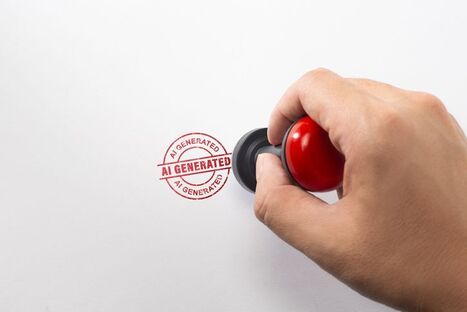
A new European Union ruling is forcing giant AI companies to start using AI watermarks. This could have positive implications for AI detection efforts by teachers.
"Some critics of AI watermarking worry that since it won’t be perfect, it will lead society to a false sense of security and could potentially make it more likely to fall for AI-generated content"
|
|
Scooped by
EDTECH@UTRGV
Today, 11:09 AM
|
Scoop.it!
"As the world increasingly recognizes the need for safer and more secure AI, U.S. colleges and universities are trying to meet a growing demand for AI security education that prepares future workers to safeguard businesses’ and governments’ powerful AI systems.
AI cybersecurity education programs, from undergraduate and graduate classes to professional certificates, are sprouting up all over the country, as experts warn that young people need to understand how to manage AI risks as they enter a workforce teeming with algorithms, models and agents. The recent autonomous-hacking incidents involving frontier AI models have further underscored the need for cybersecurity education."
"Student interest in AI safety is growing rapidly, and schools are rushing to prepare for new career paths."
|
|
Scooped by
EDTECH@UTRGV
Today, 11:06 AM
|
Scoop.it!

"As you start the school year, have you thought about what is missing, or more precisely, who might be missing? Are you aware that technologies, even so-called advanced ones, especially instructional materials provided through web-based applications and programs, do not always meet standards and guidelines for accessibility for all students? By accessibility, we mean that students should be able to access, use, and learn with those web-based programs and applications with relatively the same ease as their peers."
"[S]tudents with various disabilities, exceptionalities, and/or challenges do not find web-based instructional materials accessible."
|
|
Scooped by
EDTECH@UTRGV
October 16, 10:34 AM
|
Scoop.it!

"Students were mostly supportive of the policy, saying that banning electronic devices from the classroom improved their learning."
"The three main themes...include: 1) increased engagement with the class (on an individual and collective level), 2) appreciation for a break from distractions, and 3) improvement in focus and learning."
|
|
Scooped by
EDTECH@UTRGV
October 16, 10:28 AM
|
Scoop.it!

"Remember when the initial wave of generative AI tools hit our screens, and the immediate reaction across higher education was a collective gasp, followed by a scramble for detection software? It felt like the academic world was bracing for an apocalypse of plagiarism, ready to unleash digital bloodhounds on any suspicious-looking essay. The promise of these AI detection tools was clear: they would be the ultimate arbiters of academic integrity, swiftly identifying any text not born of a human mind. But as is often the case with rapidly evolving technology, the reality has proven far more nuanced, and frankly, a good deal more complicated."
"Universities are increasingly moving away from relying solely on AI detection tools as definitive, ironclad evidence for academic misconduct. It’s a shift that acknowledges the limitations of the technology and, perhaps more importantly, the impracticality of a purely punitive approach in an era where AI is simply part of the digital landscape."
|
|
Scooped by
EDTECH@UTRGV
October 15, 10:01 AM
|
Scoop.it!

By understanding the historic rhythm of technology panics, education leaders can more effectively guide their institutions as AI continues to evolve
"By contextualizing the modern media panic within the history of drama and panic over technological change, leaders can help to guide their institutions though the rough and fluid waters as generative AI grows to maturity within the educational arena."
|
|
Scooped by
EDTECH@UTRGV
October 15, 9:57 AM
|
Scoop.it!

In a recent Gallup Inc poll, 79 percent of Americans believe that artificial intelligence will reduce the number of jobs over the next 10 years.
"Questions about the relationship between AI, higher education and the job market have become increasingly relevant to students preparing to enter the workforce."
|
|
Scooped by
EDTECH@UTRGV
October 15, 9:52 AM
|
Scoop.it!
"No one is going to save your career from AI. That’s the most useful thing anyone can tell you about your job, and the sooner you believe it, the sooner you start building a version of yourself the next economy will actually need."
"The new jobs will come, the way they always have. The real question is who gets you from the job you have now to the one that doesn’t exist yet."
|
|
Scooped by
EDTECH@UTRGV
October 12, 3:12 PM
|
Scoop.it!

"Where to start is its own question. The honest answer is where the value concentrates, not where the automation is easiest."
"The first mistake is treating the job as the unit. A job is a bundle of tasks, and the tasks inside one job vary wildly. Some are routine. Some carry judgment. One or two carry the trust the whole role exists for. So you cut roles by task."
|
|
Scooped by
EDTECH@UTRGV
October 12, 3:08 PM
|
Scoop.it!

The most useful question is: What is the customer trying to accomplish in the limited time and attention they are willing to give us?
"When technology is the primary way a student experiences the institution, technology maturity becomes part of the institution’s value proposition."
|
|
Scooped by
EDTECH@UTRGV
October 12, 3:01 PM
|
Scoop.it!
"Resistance to AI is not a barrier to innovation in higher education. It is a necessary force for asking hard questions, protecting core values, and ensuring that technology adoption remains purposeful and mission-driven."
|
|
Scooped by
EDTECH@UTRGV
October 9, 2:53 PM
|
Scoop.it!
"A generation from now, the mathematician may no longer be anyone’s idea of a hero. In our era, physicists and mathematicians have had a certain hero charm. AI is taking it away, and fast. I should know. I’m one of those heroes."
"AI is solving problems that have defeated mathematicians for decades."
|
|
Scooped by
EDTECH@UTRGV
October 9, 2:41 PM
|
Scoop.it!
As AI disrupts recruitment and enrollment, institutions must adapt to build trust and visibility.
"Universities...need to monitor not only whether they appear in AI-generated searches but why particular institutions are recommended and which dimensions of value are considered."





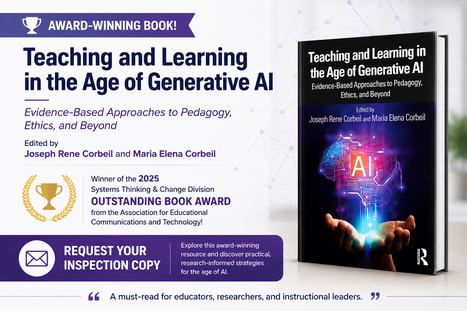




"[A]midst all this speed and automation, one question keeps resurfacing: If AI can do so much, what role remains for the instructional designer?"