 Your new post is loading...

|
Rescooped by
Dennis Swender
from Learning & Technology News
June 3, 2013 9:47 AM
|
While much has been written about the use of learning technologies generally and about ePortfolios in particular, there has been a lack of robust evidence about their added value for enhancing student learning opportunities. A case study of the integration of ePortfolios into a professional development master’s program in a Higher Education Institution in Ireland is presented, and added value in terms of the creative learning process is explored.
Via Nik Peachey
|
|
Rescooped by
Dennis Swender
from Learning & Technology News
June 3, 2013 9:45 AM
|
Recently, I've been noticing that a lot of instructors are under the impression that they are successfully integrating technology, when in fact they are simply using technology. Although this might...
Via Nik Peachey
|
|
Rescooped by
Dennis Swender
from Learning & Technology News
June 3, 2013 9:38 AM
|
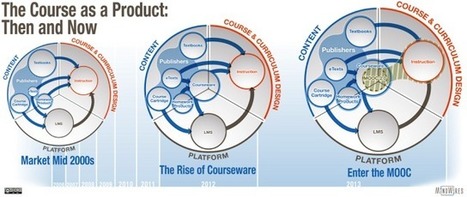
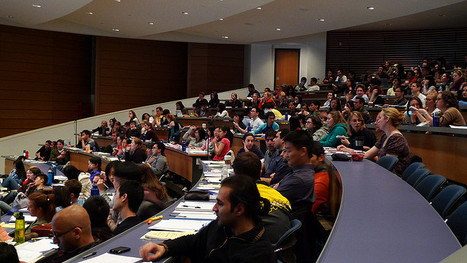
These arguments miss the point of the MOOC, and that point is, precisely, to make education available to people who cannot afford pay the cost to travel to and attend these small in-person events. Having one instructor for 20-50 people is expensive, and most of the world cannot afford that cost. That's *why* the institutions - from which the attendees of this conference were uniquely selected - charge thousands of dollars of tuition every year.
Via Vance Stevens, Nik Peachey
|
|
Rescooped by
Dennis Swender
from Learning & Technology News
June 3, 2013 9:32 AM
|
As teachers, when we assign a research project, we often focus on the end product: the research essay, presentation, etc. However, students (especially young students) do not automatically know how to conduct meaningful research. Our modern students are used to Googling answers. They have grown accustomed to information being readily available. However, as academics, we know that research isn’t a fast process. It’s slow and deliberate. As a teacher, I need to intentionally slow my students down during this exercise. I do this by breaking down a larger project into more manageable chunks and focusing on the process.
Via Nik Peachey
|
|
Rescooped by
Dennis Swender
from Learning & Technology News
June 3, 2013 9:31 AM
|
In 2010, the UNESCO Institute for Information Technologies in Education (UNESCO IITE) and the European Agency for Development in Special Needs Education agreed to collaborate on a joint project to develop a Review of Innovative Practice – a report presenting concrete examples of practice of the use of Information and Communication Technology (ICT) with people with disabilities in different educational contexts and settings. In particular, the Review was targeted at considering examples of practice that can be considered to be ‘innovative’ within the specific educational setting and wider societal context they were situated within.
Via Nik Peachey
|
|
Scooped by
Dennis Swender
June 3, 2013 12:30 AM
|
Does your learners prefer acquiring and processing information via images, pictures, maps, graphs, charts, illustrations, and other visual aids? Since they are visual learners have you though of using infographics at your course?
It’s time to share your presentation! Whether you’re delivering a business proposal to a client, an academic presentation to your professor, or even showing a personal photo slide to your grandmother, you have to ensure that your visuals can be clearly seen by your audience.
Via Baiba Svenca
|
|
Scooped by
Dennis Swender
May 30, 2013 7:41 PM
|
I really like Symbaloo! A place where you can organize and share your favorite websites. How do you like Symbaloo?
|
|
Scooped by
Dennis Swender
May 22, 2013 5:47 AM
|
Here's a rundown of the best s'cool tools from the first quarter of 2013. These are the tools that had you clicking, sharing, and tweeting away.
|
|
Scooped by
Dennis Swender
May 20, 2013 12:18 PM
|
Rather than eliminating technology entirely, a recent article in Slate suggests that parents use screen time as a shared family activity.
|
|
Rescooped by
Dennis Swender
from Learning & Technology News
May 11, 2013 2:16 PM
|
These arguments miss the point of the MOOC, and that point is, precisely, to make education available to people who cannot afford pay the cost to travel to and attend these small in-person events. Having one instructor for 20-50 people is expensive, and most of the world cannot afford that cost. That's *why* the institutions - from which the attendees of this conference were uniquely selected - charge thousands of dollars of tuition every year.
Via Vance Stevens, Nik Peachey
"Using data from 29 MOOCs, Jordan found the average completion rate to be only 6.8%. However, there was disparity between the completion rates for auto-graded and peer-assessed MOOCs, with auto-graded MOOCs' completion rates (7.7%) better than peer-assessed MOOCs completion rates (4.8%)."
Via EDTECH@UTRGV
|
|
|
Rescooped by
Dennis Swender
from Learning & Technology News
June 3, 2013 9:46 AM
|
The fact that we now look to the Silicon Valley to “democratize” education indicates how successful that project has been: even those who care about public goods like universal access to education are willing to let the world of hi-tech entrepreneurship take up the burden.
Via Nik Peachey
|
|
Rescooped by
Dennis Swender
from Learning & Technology News
June 3, 2013 9:39 AM
|
First and foremost, student writing is improving by leaps and bounds. When I read their blogs (which, by the way, are mature, insightful, funny and engaging), I don't find myself pulling my hair out over the careless mistakes they make in formal papers. Not every post is perfect, but the majority are well written and free of grammar and usage issues that I am so familiar with seeing in their other work. If they become sloppy, all I need to do is politely comment about it on their blog, and I don't see it again.
Via Nik Peachey
|
|
Rescooped by
Dennis Swender
from Learning & Technology News
June 3, 2013 9:34 AM
|
I developed this quiz with members of my personal learning network (found at end of post) to get students thinking about their digital footprint. The quiz was created at the request of high school students I spoke with who thought the creation of a such a quiz could lead to a smart conversation about ways students can update their digital footprint so that it is one that leads to college and career success.
Via Nik Peachey
|
|
Rescooped by
Dennis Swender
from Learning & Technology News
June 3, 2013 9:32 AM
|
This book, initiated by the UNESCO/COL Chair in OER, is one in a series of publications by the Commonwealth of Learning (COL) examining OER. It describes the movement in detail, providing readers with insight into OER’s significant benefits, its theory and practice, and its achievements and challenges. The 16 chapters, written by some of the leading international experts on the subject, are organised into four parts by theme
Via Nik Peachey
|
|
Rescooped by
Dennis Swender
from Learning & Technology News
June 3, 2013 9:25 AM
|
The technology they use in their personal lives just makes sense for use in their learning as well. If a student badly wanted a new tablet or app for his or her own personal use but wanted nothing to do with it for any kind of learning whatsoever, we may need to look at the disconnect. But there are other reasons why education consistently turns to technology
Via Nik Peachey
|
|
Rescooped by
Dennis Swender
from Learning & Technology News
June 2, 2013 3:49 AM
|
With more and more schools going paperless or migrating to the "cloud" (storing files on the Internet), student work has become more easily shareable, accessible by many, and more easily organized. Many teachers have turned to digital portfolios -- or "e-portfolios" -- for their students. These digital portfolios have caused a huge shift in how teachers assign, collect and assess student classwork and projects.
Via Nik Peachey
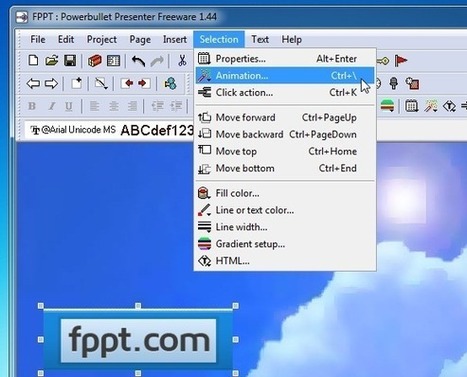
Powerbullet Presenter is a desktop application for creating Flash animations and presentations. This tool can help you easily create Flash animations, even if you have no knowledge of making professional animations in Flash. Powerbullet Presenter comes with many easy to use options that allow users to add effects to still images to turn them into Flash based animations.
Via Baiba Svenca
|
|
Scooped by
Dennis Swender
May 23, 2013 9:45 AM
|
Just by reading the title, someone might think that this is a joke. It’s not.
|
|
Scooped by
Dennis Swender
May 20, 2013 12:21 PM
|
The Slides editor is available right in your browser. All of your work is stored securely on our servers, accessible wherever you are. Presentations can be viewed in any modern browser, including mobile. There's a wide variety of themes and transitions to pick from to make sure things look and move the way you want them. Decks are stored as HTML documents, so you can always edit the markup and customize to your needs.
Via Baiba Svenca
|
|
Rescooped by
Dennis Swender
from SEO Tips, Advice, Help
May 11, 2013 2:18 PM
|
Duplicate content is a really bad thing.
Any links you get will be split between the different versions of the page.
Via Bonnie Burns
|
|
Scooped by
Dennis Swender
May 11, 2013 2:16 PM
|
Here we go. A 2012 list, though. Anyone know of one for 2013?
|























Looks like a useful read.
Evaluation Forms for CALL from ICT4lt:
Evaluating CALL Software, Websites and Multimedia Software