Establishing corporate culture has always been a management duty but that is changing as employees take to the streets to protest company policies and sales strategies. Establishing corporate culture has always been a management duty but that is changing as employees take to the streets to protest...
Sitting in traffic, or enduring interminable Red Line delays, only to get to the office and do pretty much the same thing you could do at home — only with more people around. And better lunch options.
At a time when technology seamlessly connects people around the globe, and work can be done from almost anywhere, companies are realizing that employees who sit at computers all day don’t necessarily need to be in the same place to get their jobs done.
An estimated 100-odd companies with at least 10 employees, including a handful in the Boston area, have ditched their physical offices or never opened any to begin with, according to FlexJobs, a job-search site whose workforce is fully remote. And workplace analysts expect the trend to grow, especially as executives realize they can stop shelling out big bucks for office space and start attracting employees with no geographic boundaries.
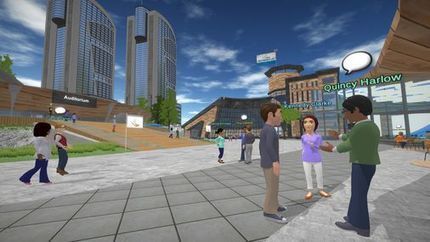
With sky-high housing prices driving people out of expensive cities and everyone clamoring for more time with their families, many employees are thrilled to hunker down at home. Some companies even have virtual offices where employees’ avatars can attend meetings in video-game-like worlds.
But putting the entire office in the cloud takes some getting used to.
Zapier, a Web-services company with a San Francisco mailing address and 250 employees scattered around the globe, including several in Boston, faced skepticism when it started raising funds in 2012. Investors would say, “So this remote thing, that seems weird,” recalls chief executive Wade Foster. “Do you really think you can be successful that way?”
Today, he said, it’s a “total 180.”
“Some of those same people are, like, ‘This is the future . . . can I invest?’”
Less than 5 percent of the US labor force works remotely full time, according to census data, But nearly 50 percent of all workers do so occasionally, up from just 9 percent in 2007. In Massachusetts, the concept could become even more popular if Governor Charlie Baker’s proposed telework tax credit goes through.
Some companies are dipping a toe in the all-remote waters, trying it out one department at a time. But cutting all ties to a particular location, especially an expensive one, is a game changer, executives say.
“When your workers can’t afford to live in the city you’re headquartered in, that really makes it hard when you’re trying to grow a company,” Foster said.
For employers, going virtual can save an estimated $22,000 per employee per year in an average US city, according to the consultancy Global Workplace Analytics, based on real estate and transit subsidy savings, increased productivity, and reduced turnover and absenteeism.
Hiring time also decreases when people can work from anywhere, and job performance jumps. A recent Stanford study found that employees who worked from home four days a week were 13 percent more productive than their onsite counterparts.
Of course, this arrangement can be a double-edged sword: When you work from home, you’re always at work.
The cloud services provider Egenera recently moved its engineering team out of its Boxborough office and made its workforce 100 percent remote.
“I take calls after dinner; I take calls after the kids are in bed,” said chief executive Scott Harris, who has worked from home for six years. “If you hire the right type of people . . . you’ll get as much work out of them, if not more.”
There was some resistance when Egenera announced the change, Harris said — mostly from managers. “There’s always that fear of: How do you keep track of your workers?” he said.
Having no headquarters to report to also gives employees the flexibility to relocate without missing a beat. One employee for an all-remote Boston-area company is working from Seoul while her husband teaches there. When Kate Criniti, the Lexington-based chief legal officer for the all-remote health care technology company Redox, visits her mother in Connecticut, the only co-workers who notice are the ones she video-conferences with regularly. They might say: ‘That’s a different painting behind you’, ” she said.
These frequent video calls can give remote workers a uniquely intimate window into one another’s lives. Doug Gaff, vice president of engineering for Zapier, works out of his Milton home, sometimes with his cat, Ginger, staring into the webcam beside him.
“Somebody’s kid will pop their head in the window,” he said. “People kind of like it, actually.”
Not everyone is cut out for remote work, however. It can be isolating. And there are no random moments of inspiration when you bump into someone at the printer.
Robert Glazer, the Needham-based founder and chief executive of the marketing agency Acceleration Partners, is careful about hiring “raging extrovert” types who say they work better around other people. Most of his 160 employees are located within an hour of one of 10 hub cities to make it easier to gather employees together — though there are no offices. This means less gossip, but also little word-of-mouth communication.
“It’s always forced us to be super intentional about everything we do,” said Glazer, including a weekly newsletter he writes to keep employees connected.
This hyper-focus on communication can bring co-workers closer together than they ever were at traditional companies, said Becca Van Nederynen, head of people operations at Help Scout, a fully remote software company founded in Boston that pairs up employees for “intentional water cooler talk” via video calls.
At Zapier, workers are encouraged to get involved in their community. Join a sports team. Volunteer. Whatever it takes to combat the isolation office-less workers can experience.
The real estate firm eXp Realty, with more than 21,000 agents around the world, regularly brings its workers together in virtual reality. The company has its own campus in the cloud-based world VirBELA, a program created by Dartmouth native Alex Howland on top of a video game platform.
The agents’ avatars get together there, while in real life the agents — including Tom Truong, a Southborough resident who runs a team of 300 — are miked together at their home computers. Some staffers spend their whole day there, working side by side. If they want to change things up, they can jump on a virtual power boat.
“It’s always forced us to be super intentional about everything we do,” said Glazer, including a weekly newsletter he writes to keep employees connected.
This hyper-focus on communication can bring co-workers closer together than they ever were at traditional companies, said Becca Van Nederynen, head of people operations at Help Scout, a fully remote software company founded in Boston that pairs up employees for “intentional water cooler talk” via video calls.
At Zapier, workers are encouraged to get involved in their community. Join a sports team. Volunteer. Whatever it takes to combat the isolation office-less workers can experience.
The real estate firm eXp Realty, with more than 21,000 agents around the world, regularly brings its workers together in virtual reality. The company has its own campus in the cloud-based world VirBELA, a program created by Dartmouth native Alex Howland on top of a video game platform.
The agents’ avatars get together there, while in real life the agents — including Tom Truong, a Southborough resident who runs a team of 300 — are miked together at their home computers. Some staffers spend their whole day there, working side by side. If they want to change things up, they can jump on a virtual power boat.
People feel so present in the space that at a recent meeting someone complained that his avatar didn’t have a chair.
Advertisement
At a time when many companies have a mix of onsite and remote work, some far-flung employees note there is a “proximity bias” favoring co-workers in the office. Having no physical location can be a great equalizer.
Criniti, the Lexington lawyer, previously worked from home for such a hybrid operation. “It’s almost like we worked for two different companies,” she said.
Now, with all of her colleagues working remotely, she said: “It doesn’t matter where you are; you’re in the same circle.”
Technology has unchained a generation of office workers from their desks, allowing them to work, collaborate and communicate from anywhere. Remote working arrangements are increasingly seen as a “new normal,” and for many professionals, remote arrangements offer unprecedented flexibility. Increasingly, remote work means employing tools like Slack, Zoom and SharePoint to make communication and workflows more efficient.
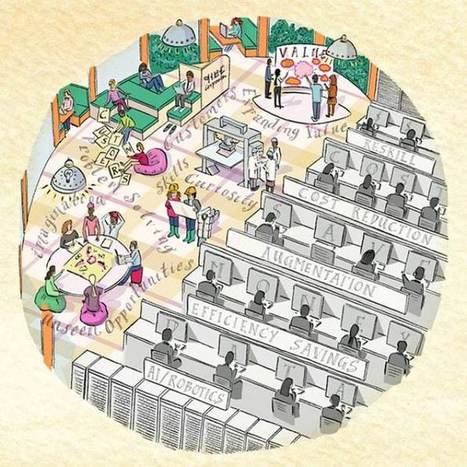
"In the age of artificial intelligence, the answer to a more optimistic future may lie in redefining work itself.
WORK, as an idea, is both familiar and frustratingly abstract. We go to work, we finish our work, we work at something. It’s a place, an entity, tasks to be done or output to achieve. It’s how we spend our time and expend our mental and physical resources. It’s something to pay the bills, or something that defines us. But what, really is work? And from a company’s perspective, what is the work that needs to be done? In an age of artificial intelligence, that’s not merely a philosophical question. If we can creatively answer it, we have the potential to create incredible value. And, paradoxically, these gains could come from people, not from new technology."
"The presence of a westward-moving frontier of settlement shaped early U.S. history. In 1893, the historian Frederick Jackson Turner famously argued that the American frontier fostered individualism. We investigate the Frontier Thesis and identify its long-run implications for culture and politics. We track the frontier throughout the 1790–1890 period and construct a novel, county-level measure of total frontier experience (TFE). Historically, frontier locations had distinctive demographics and greater individualism. Long after the closing of the frontier, counties with greater TFE exhibit more pervasive individualism and opposition to redistribution. This pattern cuts across known divides in the U.S., including urban–rural and north–south. We provide suggestive evidence on the roots of frontier culture: selective migration, an adaptive advantage of self-reliance, and perceived opportunities for upward mobility through effort. Overall, our findings shed new light on the frontier’s persistent legacy of rugged individualism." [Abstract]
How we see the world influences the real or perceived needs that inform our intentions. If I see the world as a place dominated by fierce competition for limited resources, I will fight others to get…
"There’s no room for argument about whether hate-filled internet message boards encourage real-world violence: they do, and none more so than 8chan. It normalises racism, misogyny, and extremism – and helps turn nightmarish, loud-mouthed talk of action into reality.” —Destroyer of Worlds
This examination of the 8chan online community shows how anonymity can breed a very dark social structure that is impossible to control, even for the founder. It seems that even if this community was shut down, a new one will be created, as evidenced by the rapid migration of the Gamergate harassment group from 4chan to 8chan. The disruption of civil society becomes the raison d’être of these types of communities.
The global economy is in crisis. The exponential exhaustion of natural resources, declining productivity, slow growth, rising unemployment, and steep inequal...
The 4th Industrial Revolution (4IR) is a way of describing the blurring of boundaries between the physical, digital, and biological worlds. It’s a fusion of advances in artificial intelligence (AI), robotics, the Internet of Things (IoT), 3D printing, genetic engineering, quantum computing, and other technologies.
No kid ever dreamed of growing up and driving for Uber or styling for Stitch Fix. In part, that’s because none of those companies existed when most of today’s adults were young. It’s also because, besides its much-touted “flexibility,” the gig economy isn’t much of a place to build a career. Instead, over the course of less than a decade, the self-described “tech companies” that connect people to gig work have managed to erode hard-fought labor protections in place for a century.
In Hustle and Gig, to be published in March by University of California Press, sociologist Alexandrea Ravenelle interviews 80 gig workers who are struggling, striving, and succeeding. She analyzes their stories in the context of US employment history and concludes that “for all its app-enabled modernity, the gig economy resembles the early industrial age…the sharing economy is truly a movement forward to the past.”
The United States has always been a largely Protestant country so it is no surprise that many Americans know little about the history of the Catholic Church. For example, did you know that the term “Roman Catholic” is rarely used in most Catholic countries, since the term was originally a Protestant slur? Or did you know that “Catholic” actually means universal, all-inclusive? In fact, the term implies a level of internationalism, even globalism that Protestants have long been uncomfortable with. The universality of the Church is an important part of Catholic identity and that universality has long scared the secular state, including Catholic states like France. The separation of church and state is often reinterpreted by secularists as freedom from religion when it really has always been primarily about religion’s freedom from state control, i.e. the Catholic Church’s fight for independence from secular control. The state, whether secular or simply seeking to control religion, has long tried to blur the line between the spiritual and the temporal. In Catholic history, it goes back to the Council of Nicaea in 325 AD when Emperor Constantine used his fame from legalizing Christianity to preside over the first formulation of the core doctrines of what would become Catholic and Eastern Orthodox Christianity. Many clerics died because soldiers of the Byzantine Empire attempted to force clerics to give religious power to the State. In fact, the breach between Catholicism and Eastern Orthodoxy was more about the separation of the Church and state then about cultural differences, unlike what is commonly taught. After the Byzantine (Eastern Roman) Empire recaptured Italy from the Germanic invaders that had captured it after the fall of the Western Roman Empire in the sixth century, its emperors tried to force the Pope, who in the interim had become the chief spiritual official in the western part of the old empire, to be as obsequious to secular power as the Patriarch of Constantinople. Pope Martin I was actually abducted by high-ranking Byzantine officials in 653 because he refused to kowtow to secular power. Clerics were killed and the public order disrupted because any separation of Church and state was anathema to the secular power. The local resistance to the Empire’s demands led to an awakening of a primordial form of identity that became the core of the Catholic culture, particularly giving rise to the identity of the Italian Catholics, my ancestors. In the end, the Empire forced Pope Stephen II in the 750’s to decide between being a stooge of what was increasingly viewed as a foreign power or the vassal of a new power, the Franks. The Pope chose the latter, since the Franks recognized his autonomy and spiritual independence to some extent, unlike the Byzantines. Of course, the Byzantines took away all the land under their effective control in Southern Italy and Sicily from his spiritual control because he defied their absolutist secular control. And people say that the State has so much to fear from the Church! The Franks proved to be a little less controlling than the Byzantines, but not by much. The Franks had the Pope declare their king to be Emperor, equal to the Byzantines, which was not in the circumstances unwelcome but after this, it became clear that the Emperor considered himself the overlord of the Pope. When the Frankish Empire became fragmented, the various claimants to the Empire put even more pressure of the Popes. One Pope, Formosus, was even exhumed after his death and put on trial on trumped charges by the supporters of one of these later Frankish rivals, in what became known as the infamous Cadaver Synod of 897. The Church’s most unique rules like clerical celibacy were created in an attempt to untangle the church from secular power and temporal concerns. To stop bishops from passing their position onto their sons and prevent a Pope from creating a dynasty, clerical celibacy was firmly established and the Church created a Conclave that elects the Pope. Further, the Church worried that local counts would install family members to be Pope and important bishopsand pass it on generationally. The Church acquired territory not as a planned contrivance, but because it was forced upon the Church by necessity. When the Western Roman Empire collapsed and the Byzantines reconquered Italy, the Byzantine Empire actually ignored the day-to-day governance of central Italy by the 7th-century. This forced the Pope to take up the effective governance of the area around Rome. Under pressure from groups like the Lombards and Franks, it became necessary in the 8th-century toacquireterritory in order to raise and manage resources that would create some autonomy from the direct authority of powerful secular rulers. Today, the Pope only controls a small piece of land called Vatican City, but having territorial sovereignty even at this small scale is essential due to the constant threat of secular control. In the United States, there are groups like Americans United for the separation of Church and State, led in large part by Protestant (Unitarian) clerics that claim that the church is a threat to the secular order. Yet, history shows that the State is more of a threat to the Church than vice-versa. In fact, James Madison wrote separation of church and state in order to protect Catholics from discrimination because his slave-owning friend from Maryland could not vote or hold office in his won state because of his religion. So, the next time someone tells you that the State is powerless without legalized discrimination against religion like we have in New Jersey (where the State can give money to rebuild any building from a natural disaster except religious buildings, for example), tell them about the actual history of the separation of Church and State. There are secularists who want to purge the public square of religious values, in order to pave the way for the exclusive purview of their specific set of secular values that are directly contradicted by religious values. It is these secularists who seek to monopolize the marketplace of ideas, not the church, or at least not the Church, which is actually still a minority religion in terms of numbers and power. The separation of Church and state is really about a pluralism of values and is in fact quite liberal.
The legendary trail has carved itself into American history—and, in some places, into the earth itself
[Photo depicts Oregon Trail ruts near Biggs Junction, Oregon.]
Dennis Swender's insight:
Rut locations found in Kansas City, MO, Blue Rapids, KS, Brule, NE. Fairbury, NE, , Guernsey, WY, Caper, WY, Montpelier, ID, Baker City, OR, Biggs and Junction, OR,
If you agree, then thriving in the 4th industrial revolution will require nothing short of restructuring public education at all levels, not just k-12. Even doctors will need to change how they educate their young. How many things can you do with a paperclip?
Many not for profits are directing their efforts to provide equitable access to public education. However, putting more students in a broken, dysfunctional system won’t yield the outcomes and impact we want. Instead, the very structure and process of education will need to change if we are to provide students with the knowledge, skills, abilities and competencies they need for jobs that have yet to be created.
For the purposes of this site, the history of human interaction with information may be divided into 4 eras. The first (spoken) era ended with the invention of writing around 3000-4000 BC. The second era ended with the invention of the printing press in 1440. The third era ended, and the fourth began, with the invention of the Internet (depending how one defines its operational beginning) somewhere between 1969 and 1982. We now exist early, but decidedly, in the fourth era.
All readers may not agree with this interpretation of the history of information, especially with the division and numbering of the eras. That is not the main point. Rather, it is that humankind presently exists in an era distinctly different from the one that preceded it -- that in fact, this new era is accompanied with, and characterized by, a new - and quite different - information landscape. This new Internet information landscape will challenge, disrupt, and overpower the print-oriented one that came before it. It will not completely obliterate that which preceded it, but it will render it to a subsidiary, rather than primary, level of influence.
Just as the printing press altered humanity's relationship with information, thereby resulting in massive restructuring of political, religious, economic, social, educational, cultural, scientific, and other realms of life; so too will the advance of digital technology occasion analogous transformations in the corresponding universe of present and future human activity.
This site will concern itself primarily with how K-20 education in the US, and the people who comprise its constituencies, may be affected by this transformative movement from one era to the next. All ideas considered here appear, to me at least, to impact the learning enterprise in some way. Accordingly, this work looks at the present and the future through a lens that is predominantly, but far from entirely, a digital one. -JL
A narrative has taken hold over the past few years that asserts that the future of work will be dominated by robots, AI programs, and other technological marvels that strip humans entirely away from the workplace. Despite all the hubbub being raised over certain new technologies, however, the future of work is increasingly going to be dominated by remote working, which is quickly taking hold around the globe thanks to the productive results it delivers to business owners.
Here’s why the future of work is remote, and why so many companies around the world are rushing to let their employees work from wherever works best for them.
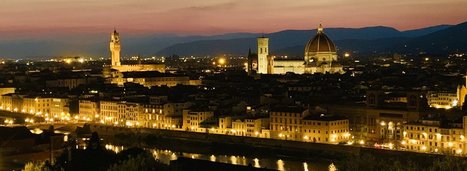
This week I am in Florence having spent two days at “The Future of Education” conference. Visiting this city, which has played such a significant role in western history, is inspiring. It encourages one to not only look back at what was, but also to look ahead at what might be, especially when the t
The American system of higher education appears poised for disruptive change of potentially historic proportions due to massive new political,economic, and educational forces that threaten to undermine its business model, governmental support, and operating mission. These forces include dramatic new types of economic competition, difficulties in growing revenue streams as we had in the past, relative declines in philanthropic and government support, actual and likely future political attacks on universities, and some outdated methods of teaching and learning that have been unchanged for hundreds of years.
Most importantly, technological advances, the Internet,quantitative social science (recently known to the general public as “Big Data”), and the computer revolution have massively reinvented or disrupted travel, music, commerce, sports,newspapers, publishing, and many other information-based businesses. Is higher education next? Remember Newsweek?It was also in the business of creating and distributing knowledge. In 2010, the entire company was sold for $1.00 (Clark2010; Vega and Peters 2010).
Over the last 10 years, the number of family offices around the world has been significantly increased and this trend is expected to continue in the future. Family …
The 500 million-year-old fossils were discovered at Emu Bay Shale in South Australia's Kangaroo Island by researchers from the University of Adelaide, and the South Australian Museum.
Instead of going to college to get a job, students will increasingly be going to a job to get a college degree.
What does this mean exactly? Today, the #1 reason why Americans value and pursue higher education is “to get a good job.” The path has always been assumed as linear: first, go to college and then, get a good job. But what if there was a path to get a good job first – a job that comes with a college degree? In the near future, a substantial number of students (including many of the most talented) will go straight to work for employers that offer a good job along with a college degree and ultimately a path to a great career.
Many of us are doing real work six or even five hours each day, while spending eight-plus hours “at work”, without realising the loss of time spent with family, on hobbies, exercise or energising side projects.
Instead of getting a full-day’s work accomplished, we’re losing productive time to interruptions from co-workers, needless meetings, and especially our perpetually pinging phones. The result is frustration, depression and lost opportunity for workers, and billions lost in profits for our employers.
According to an incisive report issued by online learning platform Udemy, the workplace is filled with distracted, often frustrated employees who aren’t achieving their potential, are simultaneously depressed about it, but unsure what to do.
To get content containing either thought or leadership enter:
To get content containing both thought and leadership enter:
To get content containing the expression thought leadership enter:
You can enter several keywords and you can refine them whenever you want. Our suggestion engine uses more signals but entering a few keywords here will rapidly give you great content to curate.


 Your new post is loading...











![[PDF] The troubled Future of Colleges and Universities | Culture, Civilization, Societal Institutions (Mod 1) | Scoop.it](https://img.scoop.it/OPUrfgTsnnn-qHy65bF1njl72eJkfbmt4t8yenImKBVvK0kTmF0xjctABnaLJIm9)