Your new post is loading...

|
Scooped by
Dr. Stefan Gruenwald
October 10, 2022 4:01 PM
|
Adam Frank, a professor of physics and astronomy at the University of Rochester, has received a grant from NASA that will enable him to begin to answer these questions. The grant will fund his study of techno-signatures—detectable signs of past or present technology used on other planets. This is the first NASA non-radio techno-signature grant ever awarded and represents an exciting new direction for the search for extraterrestrial intelligence (SETI). The grant will allow Frank, along with collaborators Jacob-Haqq Misra from the international non-profit organization Blue Marble Space, Manasvi Lingam from the Florida Institute of Technology, Avi Loeb from Harvard University, and Jason Wright from Pennsylvania State University, to produce the first entries in an online techno-signature library. A civilization, by nature, will need to find a way to produce energy, and, Frank says, “there are only so many forms of energy in the universe. Aliens are not magic. SETI has always faced the challenge of figuring out where to look,” Frank says. “Which stars do you point your telescope at and look for signals? Now we know where to look. We have thousands of exoplanets including planets in the habitable zone where life can form. The game has changed.” The nature of the search for alien life has changed as well. A civilization, by nature, will need to find a way to produce energy, and, Frank says, “there are only so many forms of energy in the universe. Aliens are not magic.” Although life may take many forms, it will always be based on the same physical and chemical principles that underlie the universe. The same connection holds for building a civilization; any technology that an alien civilization uses is going to be based on physics and chemistry. That means researchers can use what they’ve learned in Earth-bound labs to guide their thinking about what may have happened elsewhere in the universe and to answer the question, do aliens exist. “My hope is that, using this grant, we will quantify new ways to probe signs of alien technological civilizations that are similar or much more advanced to our own,” says Loeb, the Frank B. Baird, Jr., Professor of Science at Harvard. The researchers will begin the project by looking at two possible techno-signatures that might indicate technological activity on another planet: - Solar panels. Stars are one of the most powerful energy generators in the universe. On Earth, we harness energy from our star, the sun, so “using solar energy would be a pretty natural thing for other civilizations to do,” Frank says. If a civilization uses a lot of solar panels, the light that is reflected from the planet would have a certain spectral signature—a measurement of the wavelengths of light that are reflected or absorbed—indicating the presence of those solar collectors. The researchers will determine the spectral signatures of large-scale planetary solar energy collection.
- Pollutants. “We have come a long way toward understanding how we might detect life on other worlds from the gases present in those worlds’ atmospheres,” says Wright, a professor of astronomy and astrophysics at Penn State. On Earth, we are able to detect chemicals in our atmosphere by the light the chemicals absorb. Some examples of these chemicals include methane, oxygen, and artificial gases such as the chloroflourocarbons (CFCs) we once used as refrigerants. Biosignature studies focus on chemicals like methane, which simple life will produce. Frank and his colleagues will catalogue the signatures of chemicals, such as CFCs, that indicate the presence of an industrial civilization.
The information will be gathered in an online library of techno-signatures that astrophysicists will be able to use as a comparative tool when gathering data to answer the questions, do aliens exist and are aliens real. “Our job is to say, ‘this wavelength band is where you might see certain types of pollutants, this wavelength band is where you would see sunlight reflected off solar panels,” Frank says. “This way astronomers observing a distant exoplanet will know where and what to look for if they’re searching for techno-signatures.” The work is a continuation of Frank’s previous research on theoretical astrophysics and SETI, including developing a mathematical model to illustrate how a technologically advanced population and its planet might develop or collapse together; classifying hypothetical “exo-civilizations” based on their ability to harness energy; and a thought experiment asking if a previous, long-extinct technological civilization on Earth would still be detectable today.
|
|
Rescooped by
Dr. Stefan Gruenwald
from Virus World
October 8, 2022 5:19 PM
|
A recent experiment tests whether the gene-editing technology CRISPR can stop the virus from replicating, which would ultimately wipe out the HIV infection. In July, an HIV-positive man became the first volunteer in a clinical trial aimed at using the CRISPR gene editing technology to snip the HIV virus out of his cells. For an hour, he was hooked up to an IV-bag that pumped the experimental treatment directly into his bloodstream. The one-time infusion is designed to carry the gene-editing tools to the man’s infected cells to clear the virus. Later this month, the volunteer will stop taking the anti-retroviral drugs he’s been on to keep the virus at undetectable levels. Then, investigators will wait 12 weeks to see if the virus rebounds and becomes detectable again. If not, they’ll consider the experiment a success. “What we’re trying to do is return the cell to a near-normal state,” says Daniel Dornbusch, CEO of Excision BioTherapeutics, the San Francisco-based biotech company that’s running the trial. HIV attacks CD4-positive immune cells in the body and hijacks their machinery to make copies of itself. But some HIV-infected cells can go dormant—sometimes for years—and not actively produce new copies of the virus. These so-called reservoirs are a major barrier to curing HIV. “HIV is a tough foe to fight because it’s able to insert itself into our own DNA, and it’s also able to become silent and reactivate at different points in a person’s life,” says Jonathan Li, a physician at Brigham and Women’s Hospital and HIV researcher at Harvard University who’s not involved with the CRISPR trial. Figuring out how to target these reservoirs—and doing it without harming vital CD4 cells—has proven challenging, Li says. While antiretroviral drugs can halt viral replication and clear the virus from the blood, they can’t reach these hide-out reservoirs, so people have to take medication every day for the rest of their lives. But Excision BioTherapeutics is hoping that this CRISPR-based approach will remove HIV for good. CRISPR is being used in several other studies to treat a handful of conditions that arise from various genetic mutations. In those cases, scientists are using CRISPR to edit peoples’ own cells. But for the HIV trial, Excision researchers are turning the gene-editing tool against the virus. The CRISPR infusion contains gene-editing molecules that target two regions in the HIV genome important for viral replication. The virus can only reproduce if it’s fully intact, so CRISPR disrupts that process by cutting out chunks of the genome. In 2019, researchers at Temple University and the University of Nebraska found that using CRISPR to delete those regions eliminated HIV from the genomes of rats and mice. A year later, the Temple group also showed that the approach safely removed viral DNA from macaques with SIV, the monkey version of HIV. That was an important step toward testing the treatment in people, says Kamel Khalili, a professor of microbiology at Temple University who led the work and is a cofounder of Excision Biotherapeutics. “You don’t want to eliminate the viral genome but at the same time cause any disruption in another part of the human genome and then create another set of problems for the patients,” he says. “We had to make sure that we identified a region within HIV that did not overlap with the human genome.” Dornbusch thinks this strategy will spare patients from serious side effects and “off-target” edits—unintentional cuts elsewhere in the genome that could cause problems such as cancer. The regions targeted by the company’s CRISPR therapy are also in a part of the genome that tends to stay the same even when HIV evolves. That’s important because the virus mutates rapidly, and the researchers don’t want a moving target. This isn’t the first time scientists have tried to use gene editing in the hope of curing people with HIV, but other efforts have focused on a protective mutation in a gene called CCR5. In the 1990s, scientists found that people with this naturally occurring mutation didn’t get HIV even when exposed to it. The mutation—known as delta 32—thwarts the virus’s ability to get inside immune cells. In 2009, California-based Sangamo Therapeutics used an older editing technology involving zinc finger nucleases to add that protective mutation into patients’ T cells—an important part of the immune system. Those trials have had only limited success. In 2017, Chinese scientists combined CRISPR with a bone marrow transplant in an attempt to cure a patient with HIV and leukemia. In a typical transplant, donor stem cells are transferred to a recipient to replace their cancerous blood cells. These cells go on to form new, healthy blood cells. To also address the patient’s HIV, researchers edited the donor stem cells with CRISPR to disable CCR5. But after the transplant, only a small percentage of the patient’s bone marrow cells ended up with the desired edit. Then in 2018, Chinese scientist He Jiankui used CRISPR to edit the CCR5 mutation into the genomes of twin baby girls to make them resistant to HIV during their lives. Fraught with ethical violations, the experiment was widely condemned by scientists. He’s research was suspended by the Chinese government, and he served a three-year prison sentence. While the twins were born healthy, only some of their cells were successfully edited, meaning the girls might in fact not be immune to HIV. As of 2022, two people have now been cured of HIV after receiving bone marrow transplants from donors with the CCR5. Known as the Berlin patient and the London patient, both had cancer and received transplants to treat their disease. But these transplants aren’t a viable option for most people—they’re highly risky, and donors with the delta 32 mutation are scarce. But a third person was declared cured of HIV earlier this year after she received a new type of transplant involving umbilical cord blood. The Excision trial will eventually enroll nine participants and test three dosage amounts to determine which is most effective. Investigators will measure each person’s viral load and CD4 count before receiving the therapy and after they stop taking anti-retroviral drugs. The ultimate goal is to get viral loads down to an undetectable level—that is, less than 200 copies of HIV per milliliter of blood. At this level, HIV can’t be passed on through sex anymore. The challenge for Excision will be getting CRISPR to enough cells to bring HIV down to undetectable levels. The company is using an engineered virus to shuttle the gene-editing components to patients’ HIV-infected CD4 cells. But so far, there’s little human data on how well CRISPR works when it’s delivered directly to the body. “It’s possible that you get the virus to such low levels that if a person’s immune system were intact, they might be able to keep the virus at bay such that they don’t have to take antiretroviral therapy anymore,” says Rowena Johnston, vice president and director of research for amfAR, the Foundation for AIDS Research. And even though these drugs are very effective, Johnston says, many people would rather be completely free of the virus. A single CRISPR infusion—if it works—would eliminate the need for daily pills. “People with HIV still live with a lot of stigma and internalized shame,” she says. “I think a cure is something that addresses that much better than lifelong therapy, regardless of how easy that therapy becomes.”
Via Juan Lama
|
|
Scooped by
Dr. Stefan Gruenwald
October 7, 2022 1:12 PM
|
AlphaTensor, an AI system for discovering novel, efficient, and exact algorithms for matrix multiplication - a building block of modern computations. Original Article Algorithms have helped mathematicians perform fundamental operations for thousands of years. The ancient Egyptians created an algorithm to multiply two numbers without requiring a multiplication table, and Greek mathematician Euclid described an algorithm to compute the greatest common divisor, which is still in use today. During the Islamic Golden Age, Persian mathematician Muhammad Ibn Musa al-Khwarizmi designed new algorithms to solve linear and quadratic equations. In fact, al-Khwarizmi’s name, translated into Latin as Algoritmi, led to the term algorithm. But, despite the familiarity with algorithms today – used throughout society from classroom algebra to cutting edge scientific research – the process of discovering new algorithms is incredibly difficult, and an example of the amazing reasoning abilities of the human mind. In Deepmind's recent paper, published in Nature, they introduce AlphaTensor, the first artificial intelligence (AI) system for discovering novel, efficient, and provably correct algorithms for fundamental tasks such as matrix multiplication. This sheds light on a 50-year-old open question in mathematics about finding the fastest way to multiply two matrices. This paper is a stepping stone in DeepMind’s mission to advance science and unlock the most fundamental problems using AI. AlphaTensor builds upon AlphaZero, an agent that has shown superhuman performance on board games, like chess, Go and shogi, and this work shows the journey of AlphaZero from playing games to tackling unsolved mathematical problems for the first time. Deepmind's AlphaTensor focuses on the fundamental task of matrix multiplication, and use deep reinforcement learning (DRL) to search for provably correct and efficient matrix multiplication algorithms. This algorithm discovery process is particularly amenable to automation because a rich space of matrix multiplication algorithms can be formalized as low-rank decompositions of a specific three-dimensional (3D) tensor2, called the matrix multiplication tensor3,4,5,6,7. This space of algorithms contains the standard matrix multiplication algorithm and recursive algorithms such as Strassen’s2, as well as the (unknown) asymptotically optimal algorithm. Although an important body of work aims at characterizing the complexity of the asymptotically optimal algorithm8,9,10,11,12, this does not yield practical algorithms5. AlphaTensor focus here on practical matrix multiplication algorithms, which correspond to explicit low-rank decompositions of the matrix multiplication tensor. In contrast to two-dimensional matrices, for which efficient polynomial-time algorithms computing the rank have existed for over two centuries13, finding low-rank decompositions of 3D tensors (and beyond) is NP-hard14 and is also hard in practice. In fact, the search space is so large that even the optimal algorithm for multiplying two 3 × 3 matrices is still unknown. Nevertheless, in a longstanding research effort, matrix multiplication algorithms have been discovered by attacking this tensor decomposition problem using human search2,15,16, continuous optimization17,18,19 and combinatorial search20. These approaches often rely on human-designed heuristics, which are probably suboptimal. Deepmind instead use DRL to learn to recognize and generalize over patterns in tensors, and use the learned agent to predict efficient decompositions. They formulate the matrix multiplication algorithm discovery procedure (that is, the tensor decomposition problem) as a single-player game, called TensorGame. At each step of TensorGame, the player selects how to combine different entries of the matrices to multiply. A score is assigned based on the number of selected operations required to reach the correct multiplication result. This is a challenging game with an enormous action space (more than 1012 actions for most interesting cases) that is much larger than that of traditional board games such as chess and Go (hundreds of actions). To solve TensorGame and find efficient matrix multiplication algorithms, we develop a DRL agent, AlphaTensor. AlphaTensor is built on AlphaZero1,21, where a neural network is trained to guide a planning procedure searching for efficient matrix multiplication algorithms. The framework uses a single agent to decompose matrix multiplication tensors of various sizes, yielding transfer of learned decomposition techniques across various tensors. To address the challenging nature of the game, AlphaTensor uses a specialized neural network architecture, exploits symmetries of the problem and makes use of synthetic training games. AlphaTensor scales to a substantially larger algorithm space than what is within reach for either human or combinatorial search. In fact, AlphaTensor discovers from scratch many provably correct matrix multiplication algorithms that improve over existing algorithms in terms of number of scalar multiplications. The developers also adapt the algorithm discovery procedure to finite fields, and improve over Strassen’s two-level algorithm for multiplying 4 × 4 matrices for the first time since its inception in 1969. AlphaTensor also discovers a diverse set of algorithms—up to thousands for each size—showing that the space of matrix multiplication algorithms is richer than previously thought. They also exploit the diversity of discovered factorizations to improve state-of-the-art results for large matrix multiplication sizes. Through different use-cases, Deepmind highlight AlphaTensor’s flexibility and wide applicability: AlphaTensor discovers efficient algorithms for structured matrix multiplication improving over known results, and finds efficient matrix multiplication algorithms tailored to specific hardware, by optimizing for actual runtime. These algorithms multiply large matrices faster than human-designed algorithms on the same hardware.
|
|
Scooped by
Dr. Stefan Gruenwald
October 7, 2022 12:32 PM
|
Some 66 million years ago, a 10-kilometer asteroid hit Earth, triggering a firestorm engulfing most of the North American continent, a tsunami with mountain-sized waves, and an earthquake so massive that it shook the planet for weeks to months after the collision. The amount of energy released in this "mega-earthquake" is estimated at 10^23 joules, which is about 50,000 times more energy than was released in the magnitude 9.1 Sumatra earthquake in 2004 - one of the most powerful earthquakes ever experienced by humankind. Colombian geologist Hermann Bermúdez will present evidence of this "mega-earthquake" at the upcoming Geological Society of America meeting in Denver. Earlier this year, Bermúdez visited outcrops of the infamous end-Cretaceous mass extinction event boundary in Texas, Alabama, and Mississippi to collect data, supplementing his previous work in Colombia and Mexico documenting evidence of the catastrophic impact. In 2014, while doing fieldwork on Colombia's Gorgonilla Island, Bermúdez found spherule deposits—layers of sediment filled with small glass beads and shards known as "tektites" and "microtektites" that were ejected into the atmosphere during an asteroid impact. These glass beads formed when the heat and pressure of the impact melted and scattered the crust of the Earth, ejecting small, melted blobs up into the atmosphere, which then fell back to the surface as glass under the influence of gravity. The rocks exposed on the coast of Gorgonilla Island tell a story from the bottom of the ocean—roughly 2 kilometers down. There, about 3,000 kilometers southwest of the site of the impact, sand, mud, and small ocean creatures were accumulating on the ocean floor when the asteroid hit. Layers of mud and sandstone as far as 10–15 meters below the sea floor experienced soft-sediment deformation that is preserved in the outcrops today, which Bermúdez attributes to the shaking from the impact. Faults and deformation due to shaking continue up through the spherule-rich layer that was deposited post-impact, indicating that the shaking must have continued for the weeks and months it took for these finer-grained deposits to reach the ocean floor. Just above those spherule deposits, preserved fern spores signal the first recovery of plant-life after the impact. Bermúdez explains, "The section I discovered on Gorgonilla Island is a fantastic place to study the Cretaceous–Paleogene boundary, because it is one of the best-preserved and it was located deep in the ocean, so it was not affected by tsunamis." Evidence of deformation from the mega-earthquake is also preserved in Mexico and the United States. At the El Papalote exposure in Mexico, Bermúdez observed evidence of liquefaction—when strong shaking causes water-saturated sediments to flow like a liquid. In Mississippi, Alabama, and Texas, Bermúdez documented faults and cracks likely associated with the mega-quake. He also documented tsunami deposits at several outcrops, left by an enormous wave that was part of the cascading catastrophes resulting from the asteroid collision. Bermúdez will deliver a talk about his team's research at the GSA Connects meeting on Sunday, October 9. He will also present a poster about his observations of tsunami deposits and earthquake-related deformation on Monday, October 10th, 2022.
|
|
Scooped by
Dr. Stefan Gruenwald
October 4, 2022 4:42 PM
|
General relativity is the best theory of gravity — positing that instead of being a ‘pulling’ force, the action of gravity is caused by large bodies like planets bending spacetime, curving the paths of smaller objects towards them. However, this is not compatible with scientists’ best theory of the subatomic world: quantum mechanics. Physicists have long sought a universal theory that ties them together. A number of these candidate theories predict that the equivalence principle would break down when measured very precisely, but MICROSCOPE has shown this is extremely unlikely to be the case. The equivalence principle says that, when two objects are dropped in a vacuum under the same force of gravity, they fall at the same rate, no matter their weight or composition. This principle was demonstrated by Apollo 15 astronaut David Scott, who dropped a hammer and a feather on the Moon and showed them both reaching the ground at the same time. However, dropping household objects on the lunar surface does not allow very precise measurements — it could be that they reach the ground fractions of a second apart. MICROSCOPE contained two pairs of ‘test masses’: blocks of platinum and titanium of different weights with very precisely measured properties. These masses are isolated from any other influence, such as temperature or atmospheric friction, and are monitored as they fall freely in space while orbiting the Earth. Their acceleration due to the freefall is then measured with atomic precision and compared to test the equivalence principle. If two test masses of equal size but different composition are accelerated differently during the freefall, then the equivalence principle is violated. These measurements were taken over 1,642 orbits around the Earth, or for 73 million km, equivalent to half the Earth-Sun distance. The result showed that if any deviation in the acceleration of the test masses exists, it is less than 1 part in 10^15 — or less than tenth of a trillionth of a percent.
|
|
Scooped by
Dr. Stefan Gruenwald
October 4, 2022 4:31 PM
|
Scientists have discovered how a chemical in the cells of marine organisms enables them to survive the high pressures found in the deep oceans. The deeper that sea creatures live, the more inhospitable and extreme the environment they must cope with. In one of the deepest points in the Pacific - the Mariana Trench, 11 kilometers below the sea surface - the pressure is 1.1 kbar or eight tons per square inch. That is a 1,100-fold increase of the pressure experienced at the Earth’s surface. Under normal or atmospheric pressure, water molecules form a tetrahedron-like network. At high pressure, though, the network of water molecules begins to distort and change shape. When this happens to the water inside living cells, it prevents vital bio-chemical processes from taking place - and kills the organism. In reporting their findings, the researchers have for the first time been able to provide an explanation of how a molecule found in the cells of marine organisms counteracts the effect of external pressure on the water molecules. Professor Lorna Dougan, from the School of Physics and Astronomy at Leeds, said: “Life has adapted to survive and thrive in environmental extremes. In the depths of the oceans, organisms live under extreme high pressures that would destroy human life. “These high pressures distort the liquid water that resides in all life, resulting in detrimental impacts to the biomolecules that underpin all biological processes. We need to understand what happens to water under pressure and how pressure-adapted organisms combat these effects. If we can understand how these organisms survive at extreme pressure, we can apply these findings to the wider study of biomolecular stability.” The molecule found in cells that produces the protective effect against high external pressure is called TMAO - trimethylamine N-oxide. Studies have shown that the amount of TMAO in ocean-dwelling organisms increases in line with the depth of their habitat. Led by Dr Harrison Laurent, also from the School of Physics and Astronomy, the study used one of the most advanced analytical facilities in the world to investigate how intense pressure alters the hydrogen bonds between neighboring water molecules. Called the ISIS Neutron and Muon Source, the analytical facility at the STFC Rutherford Appleton Laboratory in Oxfordshire was used to fire a beam of neutrons - which are sub-atomic particles - at samples of water with and without TMAO. The analysis was done at low pressure, 25 bar, and at high pressure, 4 kbar. The test revealed details of the atomic structure of the water molecules. At high pressure, the hydrogen bonds in the pure water sample became distorted and less stable and the overall network of water molecules became compacted. The presence of TMAO, however, strengthened and stabilized the hydrogen bonding and maintained the network structure of the water molecules. Dr Laurent said: “The TMAO provides a structural anchor which results in the water being able to resist the extreme pressure it is under. The findings are important because they help scientists understand the processes by which organisms have adapted to survive the extreme conditions found in the oceans.”
|
|
Scooped by
Dr. Stefan Gruenwald
October 4, 2022 12:42 PM
|
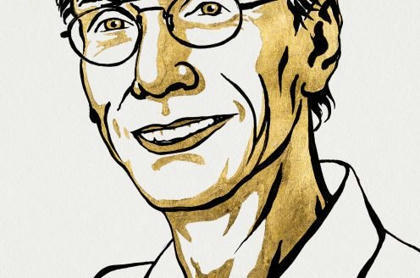
The Nobel Assembly at the Karolinska Institutet has today decided to award the 2022 Nobel Prize in Physiology or Medicine to Svante Pääbo “for his discoveries concerning the genomes of extinct hominins and human evolution.”
Humanity has always been intrigued by its origins. Where do we come from, and how are we related to those who came before us? What makes us, Homo sapiens, different from other hominins?
Through his pioneering research, Svante Pääbo accomplished something seemingly impossible: sequencing the genome of the Neanderthal, an extinct relative of present-day humans. He also made the sensational discovery of a previously unknown hominin, Denisova. Importantly, Pääbo also found that gene transfer had occurred from these now extinct hominins to Homo sapiens following the migration out of Africa around 70,000 years ago. This ancient flow of genes to present-day humans has physiological relevance today, for example affecting how our immune system reacts to infections.
Pääbo’s seminal research gave rise to an entirely new scientific discipline; paleogenomics. By revealing genetic differences that distinguish all living humans from extinct hominins, his discoveries provide the basis for exploring what makes us uniquely human.
|
|
Scooped by
Dr. Stefan Gruenwald
October 4, 2022 11:44 AM
|
Award goes to three experimental physicists whose pioneering research has laid the groundwork for quantum information science. Three quantum physicists have won the 2022 Nobel Prize in Physics for their experiments with entangled photons, in which particles of light become inextricably linked. Such experiments have laid the foundations for a plethora of quantum technologies, including quantum computers and communications. Alain Aspect, John Clauser and Anton Zeilinger will each share one-third of the 10-million-kronor (US$915,000) prize. “I was actually very surprised to get the call,” said Zeilinger, a physicist at the University of Vienna, at the press conference announcing the award. “This prize would not be possible without the work of more than 100 young people over the years.” Quantum ‘spookiness’ passes toughest test yet Aspect, a physicist at the University of Paris-Saclay, received the call during a committee meeting. “I happened to be sitting near Aspect this morning when he got the call,” says Serge Haroche, an experimental physicist at the Collège de France in Paris who shared the 2012 Nobel Prize in Physics for work in quantum physics, adding that when Aspect left the room, his colleagues guessed correctly that it was Stockholm calling. The trio’s experiments proved that connections between quantum particles were not down to local ‘hidden variables’, unknown factors that invisibly tie the two outcomes together. Instead, the phenomenon comes from a genuine association in which manipulating one quantum object affects another far away. German physicist Albert Einstein famously called the phenomenon ‘spooky action at a distance’ — it is now known as quantum entanglement. All three winners are pioneers of the fields of quantum information and quantum communications, says Pan Jianwei, a physicist at the University of Science and Technology of China in Hefei who participated in some of Zeiliger's landmark experiments as a graduate student in the 1990s. The recognition was long overdue, Pan says. “We have been waiting for this for a very, very long time.” The win is “beautiful news” agrees Chiara Marletto, a theoretical physicist at the University of Oxford, UK. The modern versions of the experiments pioneered by the three winners could be central to one of the great open questions of physics today, she says — how to reconcile quantum mechanics with Albert Einstein's general theory of relativity. Particle Pairs Because of the effects of quantum entanglement, measuring the property of one particle in an entangled pair immediately affects the results of measurements on the other. It is what enables quantum computers to function — these machines, which seek to harness quantum particles’ ability to exist in more than one state at once, carry out calculations that would be impossible on a conventional computer. Today, physicists are using entanglement to develop quantum encryption and a quantum internet that would allow for ultra-secure communications and new kinds of sensors and telescopes.
|
|
Scooped by
Dr. Stefan Gruenwald
October 3, 2022 4:36 PM
|
MIT researchers built a battery-free, wireless underwater camera, powered by sound waves, that can take high-quality, color images, even in dark environments. It transmits image data through the open water to a receiver that reconstructs the color image. Scientists estimate that more than 95 percent of Earth's oceans have never been observed, which means we have seen less of our planet's ocean than we have the far side of the moon or the surface of Mars. The high cost of powering an underwater camera for a long time, by tethering it to a research vessel or sending a ship to recharge its batteries, is a steep challenge preventing widespread undersea exploration. MIT researchers have taken a major step to overcome this problem by developing a battery-free, wireless underwater camera that is about 100,000 times more energy-efficient than other undersea cameras. The device takes color photos, even in dark underwater environments, and transmits image data wirelessly through the water. The autonomous camera is powered by sound. It converts mechanical energy from sound waves traveling through water into electrical energy that powers its imaging and communications equipment. After capturing and encoding image data, the camera also uses sound waves to transmit data to a receiver that reconstructs the image. Because it doesn't need a power source, the camera could run for weeks on end before retrieval, enabling scientists to search remote parts of the ocean for new species. It could also be used to capture images of ocean pollution or monitor the health and growth of fish raised in aquaculture farms. "One of the most exciting applications of this camera for me personally is in the context of climate monitoring. We are building climate models, but we are missing data from over 95 percent of the ocean. This technology could help us build more accurate climate models and better understand how climate change impacts the underwater world," says Fadel Adib, associate professor in the Department of Electrical Engineering and Computer Science and director of the Signal Kinetics group in the MIT Media Lab, and senior author of the paper. Going battery-free To build a camera that could operate autonomously for long periods, the researchers needed a device that could harvest energy underwater on its own while consuming very little power. The camera acquires energy using transducers made from piezoelectric materials that are placed around its exterior. Piezoelectric materials produce an electric signal when a mechanical force is applied to them. When a sound wave traveling through the water hits the transducers, they vibrate and convert that mechanical energy into electrical energy. Those sound waves could come from any source, like a passing ship or marine life. The camera stores harvested energy until it has built up enough to power the electronics that take photos and communicate data. To keep power consumption as a low as possible, the researchers used off-the-shelf, ultra-low-power imaging sensors. But these sensors only capture grayscale images. And since most underwater environments lack a light source, they needed to develop a low-power flash, too. "We were trying to minimize the hardware as much as possible, and that creates new constraints on how to build the system, send information, and perform image reconstruction. It took a fair amount of creativity to figure out how to do this," Adib says. They solved both problems simultaneously using red, green, and blue LEDs. When the camera captures an image, it shines a red LED and then uses image sensors to take the photo. It repeats the same process with green and blue LEDs.
|
|
Scooped by
Dr. Stefan Gruenwald
October 3, 2022 12:20 PM
|
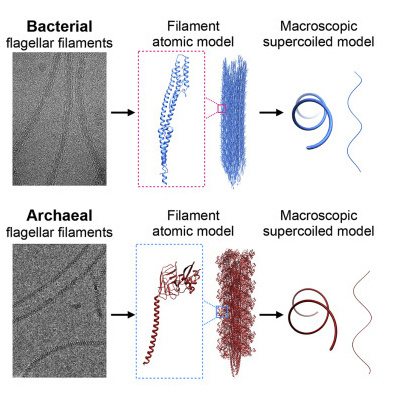
University of Virginia School of Medicine researchers and their collaborators have solved a decades-old mystery about how E. coli and other bacteria are able to move. Bacteria push themselves forward by coiling long, threadlike appendages into corkscrew shapes that act as makeshift propellers. But how exactly they do this has baffled scientists, because the "propellers" are made of a single protein. An international team led by UVA's Edward H. Egelman, PhD, a leader in the field of high-tech cryo-electron microscopy (cryo-EM), has cracked the case. The researchers used cryo-EM and advanced computer modeling to reveal what no traditional light microscope could see: the strange structure of these propellers at the level of individual atoms. "While models have existed for 50 years for how these filaments might form such regular coiled shapes, we have now determined the structure of these filaments in atomic detail," said Egelman, of UVA's Department of Biochemistry and Molecular Genetics. "We can show that these models were wrong, and our new understanding will help pave the way for technologies that could be based upon such miniature propellers." Blueprints for Bacteria's 'Supercoils' Different bacteria have one or many appendages known as a flagellum, or, in the plural, flagella. A flagellum is made of thousands of subunits, but all these subunits are exactly the same. You might think that such a tail would be straight, or at best a bit flexible, but that would leave the bacteria unable to move. That's because such shapes can't generate thrust. It takes a rotating, corkscrew-like propeller to push a bacterium forward. Scientists call the formation of this shape "supercoiling," and now, after more than 50 years, they understand how bacteria do it. Using cryo-EM, Egelman and his team found that the protein that makes up the flagellum can exist in 11 different states. It is the precise mixture of these states that causes the corkscrew shape to form. It has been known that the propeller in bacteria is quite different than similar propellers used by hearty one-celled organisms called archaea. Archaea are found in some of the most extreme environments on Earth, such as in nearly boiling pools of acid, the very bottom of the ocean and in petroleum deposits deep in the ground. Egelman and colleagues used cryo-EM to examine the flagella of one form of archaea, Saccharolobus islandicus, and found that the protein forming its flagellum exists in 10 different states. While the details were quite different than what the researchers saw in bacteria, the result was the same, with the filaments forming regular corkscrews. They conclude that this is an example of "convergent evolution" -- when nature arrives at similar solutions via very different means. This shows that even though bacteria and archaea's propellers are similar in form and function, the organisms evolved those traits independently. "As with birds, bats and bees, which have all independently evolved wings for flying, the evolution of bacteria and archaea has converged on a similar solution for swimming in both," said Egelman, whose prior imaging work saw him inducted into the National Academy of Sciences, one of the highest honors a scientist can receive. "Since these biological structures emerged on Earth billions of years ago, the 50 years that it has taken to understand them may not seem that long."
|
|
Scooped by
Dr. Stefan Gruenwald
October 3, 2022 12:07 PM
|
Most linguistics scholars today agree that many of the world’s modern languages share a common forebear. Indeed, this notion lines up perfectly with the sudden appearance of behaviorally modern humans, as they are referred to by geneticists and archaeologists, some 50,000 years ago. Where experts disagree, however, is how language has developed since then.
While many linguists posit that development of sentence structure has been a relatively haphazard process, an unlikely collaboration between a Stanford linguist and a Nobel Prize-winning physicist provides proof of a more linear evolution of language. Merritt Ruhlen, a lecturer in Anthropology at Stanford, and his longtime collaborator Murray Gell-Mann, a founder and Distinguished Professor of the Santa Fe Institute, have mapped the evolution of word order in a paper titled "The Origin and Evolution of Word Order," published in the Proceedings of the National Academy of Sciences (PNAS).
Drawing on a sample of 2,135 of the world’s known languages, they have created a phylogenetic Language Tree, and through it show that sentence structure in the first modern languages followed a subject-object-verb (SOV) order, still evident in many modern languages such as Japanese. With groundbreaking evidence that points to a continuous evolution of language, the scholars provide new insight into how our ancestors may have communicated.
To highlight the significance of such findings, it is first necessary to demonstrate word order in action: In the English language, the common sentence will see the verb follow the subject, and the object follow the verb. Thus, the sentence: “The man reads the book” would be described as having a SVO (subject-verb-object) order. In Japanese, however, the verb follows the object, which itself follows the subject, to produce an SOV word order. It is for this reason that if we were to use Google Translate to decipher the Japanese for: “The man reads the book”, our screen would show us something resembling: “The man the book reads”.
The work of Ruhlen and Gell-Mann demonstrates that such differences did not occur by chance. Using their Language Tree, the authors show not only that SOV was the original word order but, moreover, that word order evolution has since been a largely unidirectional process whenever it has occurred.
Tying Sentence Structure To Migration Patterns
Modern humans first appeared 200,000 years ago, Ruhlen explains, but their social, technological and linguistic capabilities were largely evocative of their predecessors, the Neanderthals. “It was only about 50,000 years ago that major changes occurred by which these humans became not just anatomically modern, but behaviorally modern.” Detail of the geographical distribution of the 12 language families of the world, in an illustration produced by Gell-Mann and Ruhlen.Along with technological innovations, such as the creation of tools from materials other than rock, art and fishing, came the development of fully modern language.
“We can trace the source of all modern languages today to this period,” says Ruhlen. “And it is our argument that the languages of this period were characterized by an SOV word order.” Changes that saw the emergence of other word orders only truly began about 20,000 years ago, says the scholar, as a result of human global migration out of Africa. These migrations allowed the original SOV word order to change into the other five possible word orders at different times in different places.
|
|
Rescooped by
Dr. Stefan Gruenwald
from Mucosal Immunity
October 3, 2022 11:47 AM
|
For an antiviral agent to act as an effective biological barrier on nasal mucosal surface, the formulation preferably has to be maintained on the site of action for several hours, and the nasal spray dispenser can be utilized for administering the solution to the upper respiratory tract. A "first-in-man" clinical study of the nasal spray containing anti-SARS-CoV-2 antibodies derived from bovine colostrum was conducted. The study on healthy volunteers was undertaken to evaluate how long the bovine antibodies would be maintained on the nasopharyngeal surface after administration of nasal spray. In addition, the study enabled to determine which of the two concentrations of antibodies should be used in the final nasal-spray formulation. The volunteers were followed up for 4h after administration of antibody spray and sampling was done at different time-points during this period. The concentration of antibodies from patient samples was measured using ELISA analysis. In addition, as this was a "first-in-man" study any adverse events following the administration of spray were also monitored. More details
Via Gilbert C FAURE
|
|
Scooped by
Dr. Stefan Gruenwald
September 30, 2022 2:19 PM
|
An astonishing new plane could cut the time of transatlantic flights by more than five times, claims Spanish designer Oscar Viñals. The latest in a series of futuristic designs going viral, Oscar’s images show a super streamlined jet – dubbed the Hyper Sting – soaring through the sky, transporting travelers from place to place in record time. The idea uses a combination of theoretical cold fusion nuclear systems and innovative Mach 3.5 technology. Mach is the ratio of the speed of a body to the speed of sound – Mach 1 is the speed of sound, Mach 2 is twice the speed of sound, and so on. The plane would shoot through airspace at almost 2,500mph – almost five times the current average speed of commercial passenger planes that take up to eight hours to complete the journey from London to New York. If plans for the jet came to fruition, it would take just 80 minutes to complete the popular transatlantic route. Concorde, the last supersonic commercial carrier, was powered by four Rolls-Royce/Snecma Olympus 593 turbojets and completed the popular route in a record two hours, 52 minutes and 59 seconds. It was seen as the ultimate development in aviation and enabled business trips to be condensed into a matter of days – even, controversially, hours – before the rise of web chat technology.
Concorde’s rule of the skies came to an end after many decades of operation when it was decommissioned in 2003, which contributed to a lack of demand due to rising costs; and the tragic case of the fatal July 2000 crash.
|
|
|
Scooped by
Dr. Stefan Gruenwald
October 10, 2022 12:55 PM
|
The SARS-CoV-2 Omicron BA.2.75 variant emerged in May 2022. BA.2.75 is a BA.2 descendant but is phylogenetically distinct from BA.5, the currently predominant BA.2 descendant. Scientists now show that BA.2.75 has a greater effective reproduction number and different immunogenicity profile than BA.5. They determined the sensitivity of BA.2.75 to vaccinee and convalescent sera as well as a panel of clinically available antiviral drugs and antibodies. Antiviral drugs largely retained potency but antibody sensitivity varied depending on several key BA.2.75-specific substitutions. The BA.2.75 spike exhibited a profoundly higher affinity for its human receptor, ACE2. Additionally, the fusogenicity, growth efficiency in human alveolar epithelial cells, and intrinsic pathogenicity in hamsters of BA.2.75 were greater than those of BA.2. Our multilevel investigations suggest that BA.2.75 acquired virological properties independent of BA.5, and the potential risk of BA.2.75 to global health is greater than that of BA.5.
|
|
Scooped by
Dr. Stefan Gruenwald
October 7, 2022 1:49 PM
|
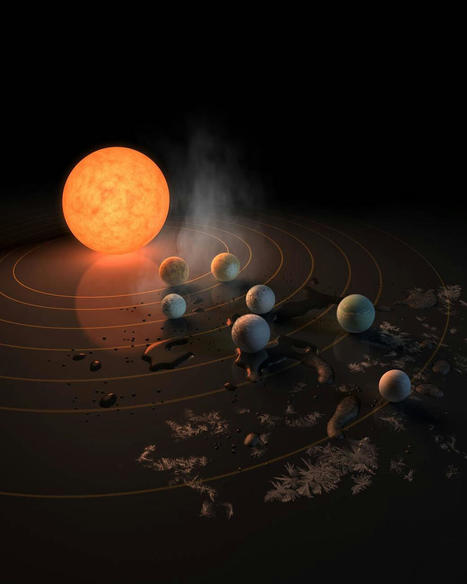
Scientists at UC Riverside are suggesting something is missing from the typical roster of chemicals that astrobiologists use to search for life on planets around other stars—laughing gas. Chemical compounds in a planet's atmosphere that could indicate life, called biosignatures, typically include gases found in abundance in Earth's atmosphere today. "There's been a lot of thought put into oxygen and methane as biosignatures. Fewer researchers have seriously considered nitrous oxide, but we think that may be a mistake," said Eddie Schwieterman, an astrobiologist in UCR's Department of Earth and Planetary Sciences. This conclusion, and the modeling work that led to it, are detailed in an article published today in The Astrophysical Journal. To reach it, Schwieterman led a team of researchers that determined how much nitrous oxide living things on a planet similar to Earth could possibly produce. They then made models simulating that planet around different kinds of stars and determined amounts of N2O that could be detected by an observatory like the James Webb Space Telescope. "In a star system like TRAPPIST-1, the nearest and best system to observe the atmospheres of rocky planets, you could potentially detect nitrous oxide at levels comparable to CO2 or methane," Schwieterman said. There are multiple ways that living things can create nitrous oxide, or N2O. Microorganisms are constantly transforming other nitrogen compounds into N2O, a metabolic process that can yield useful cellular energy. "Life generates nitrogen waste products that are converted by some microorganisms into nitrates. In a fish tank, these nitrates build up, which is why you have to change the water," Schwieterman said. "However, under the right conditions in the ocean, certain bacteria can convert those nitrates into N2O," Schwieterman explained. "The gas then leaks into the atmosphere." Under certain circumstances, N2O could be detected in an atmosphere and still not indicate life. Schwieterman's team accounted for this in their modeling. A small amount of nitrous oxide is created by lightning, for example. But alongside N2O, lightning also creates nitrogen dioxide, which would offer astrobiologists a clue that non-living weather or geological processes created the gas. Others who have considered N2O as a biosignature gas often conclude it would be difficult to detect from so far away. Schwieterman explained that this conclusion is based on N2O concentrations in Earth's atmosphere today. Because there isn't a lot of it on this planet, which is teeming with life, some believe it would also be hard to detect elsewhere.
|
|
Scooped by
Dr. Stefan Gruenwald
October 7, 2022 12:37 PM
|
Original Article A worrisome pattern has emerged with Paxlovid and other drugs that reduce the severity of Covid: Many people who would benefit most are not receiving the treatments, likely causing hundreds of unnecessary deaths every day in the U.S. There seem to be two main explanations for the drugs’ under-use. The first is that the public discussion of them has tended to focus on caveats and concerns, rather than on the overwhelming evidence that they reduce the risk of hospitalization and death. The second explanation is that many Americans, especially Republicans, still do not take Covid seriously. “A large chunk of deaths are preventable right now with Paxlovid alone,” Dr. Ashish Jha, the White House Covid response coordinator, told me. He predicted that if every American 50 and above with Covid received a course of either Paxlovid or a treatment known as monoclonal antibodies, daily deaths might fall to about 50 per day, from about 400 per day in recent months. Dr. Rebecca Wang, an infectious disease specialist at Dartmouth Hitchcock Medical Center, has said: “Never really in recent history for a respiratory virus can I think of an anti-viral medication being as effective, demonstrated in scientific literature, as what Paxlovid has shown.” Dr. Robert Wachter, the chair of the medicine department at the University of California, San Francisco, told me that he thought the underuse of Paxlovid was already associated with thousands of preventable deaths in the U.S. “The public doesn’t seem to understand that the evidence around hospitalization and deaths is really powerful,” Wachter said. By now, you have surely heard about the downsides and shortcomings of Paxlovid. The drug can produce a metallic taste in the mouth. (One member of my family described it as among the worst tastes she had ever experienced.) Some research has also found that the drug might not cause a statistically significant reduction in hospitalization among younger adults. Most prominently, people who take Paxlovid can endure “rebound” Covid — as both President Biden and Jill Biden did — in which symptoms return after the five-day course of pills has ended. All of this is true. It also does not change the big picture. Covid is a deadly virus, especially for older people, and Paxlovid reduces Covid’s severity. It does so by inhibiting the virus’s replication inside the human body, the same process that has made H.I.V. treatments so effective. With Paxlovid, both randomized trials and data from electronic health records have pointed to its effectiveness. Some research finds an effect across all age groups, while other research finds one only among older patients. But that is not surprising. The Covid death rate for people under 50 is already so close to zero that reducing it in a statistically significant way is difficult. A recent analysis of about 568,000 patients by Epic Research found that 0.016 percent of Covid patients over 50 who received Paxlovid died. The death rate for patients who did not get the drug was more than four times higher, or 0.070 percent. And yet the Epic data showed that only about 25 percent of patients eligible to receive Paxlovid actually did, even though the drug is widely available and free for patients. Perhaps the most shocking statistic about Paxlovid’s underuse — and Jha used the word “shocking” when describing it to me — is that a smaller share of 80-year-olds with Covid in the U.S. is now receiving the drug than 45-year-olds with Covid, according to data he has seen. Many doctors are evidently worried about side effects or rebound cases among their more vulnerable patients. Even in rebound cases, however, symptoms tend to be milder than they would have been without Paxlovid. After Dr. Anthony Fauci, another White House adviser, who’s 81, contracted Covid in June and then took Paxlovid, he experienced a rebound — and also believed that the drug kept him out of the hospital. “Medicine is about weighing costs and benefits,” Wachter said. “The recommendation should be clear and unambiguous for people at high risk: The benefits of the drug outweigh the downsides.”
|
|
Scooped by
Dr. Stefan Gruenwald
October 4, 2022 4:48 PM
|
In new research, scientists examined horizontal gene transfer in high-quality genomes of 218 insect species, including butterflies and moths, and found that they acquired 1,410 genes exhibiting diverse functions via 741 distinct transfers from microbes. Horizontal gene transfer is fairly common between microbes. For example, bacteria use this mechanism to transmit antibiotic-resistance genes between species. But scientists more recently have been systematically looking at the phenomenon between insects and microbes or plants. “Previous studies have shown that horizontal gene transfer may have contributed to insect biodiversity, but nobody knew how large a role it plays in this process,” said Dr. Xing-Xing Shen, an evolutionary biologist at Zhejiang University. “Since there are a lot of high-quality insect genomes available for our analysis, I thought that now is a good time to systematically investigate how prevalent horizontal gene transfer is in insects.” For their study, Dr. Shen and colleagues gathered 218 high-quality insect genome samples representing 11 of 19 species-rich orders of insects. Armed with these data, they were able to draw an evolutionary tree, identify out-of-place genes that are more commonly found in non-animal genomes, and examine what factors contribute to the fate of horizontal gene transfer in insects. “There were horizontal gene transfer events everywhere we looked,” Dr. Shen said. “However, we don’t know whether these transfers of genes are beneficial to the insects, or even the functions for most of these genes.” The authors then decided to validate the function of the most prevalent foreign gene without known functions in insects: LOC105383139. “LOC105383139 was horizontally introduced into nearly all moths and butterflies from a donor in the bacterial genus Listeria,” they said. “This gene has persisted in the genome since the time of moths’ and butterflies’ common ancestor more than 300 million years ago.” In diamondback moths, males lacking LOC105383139 courted females significantly less. “Surprisingly, we saw those moths lacking this gene cannot produce many viable eggs,” said Dr. Jianhua Huang, also from Zhejiang University. “Then, we found that the gene influences the male courtship behavior.” The results were published in Cell.
|
|
Scooped by
Dr. Stefan Gruenwald
October 4, 2022 4:37 PM
|
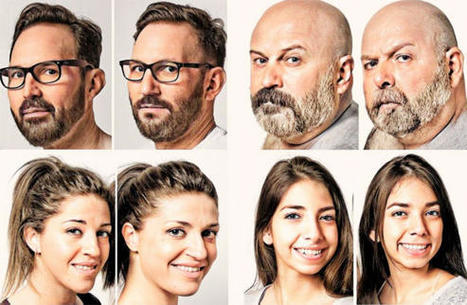
New research shows that people with extreme look-alike faces share common genotypes, but differ in their DNA methylation and microbiome landscapes. “For decades, the existence of individuals who resemble each other without having any family ties has been described as a proven fact, but only in anecdotal terms and without any scientific justification,” said senior author Dr. Manel Esteller, a researcher at the Josep Carreras Leukaemia Research Institute. “The widespread use of the Internet and social networks for image-sharing has meant that we are now able to identify and study such people.” In their study, Dr. Esteller and his colleagues set out to characterize a set of look-alike humans on a molecular level. To do so, they recruited human doubles from the photographic work of François Brunelle, a Canadian artist who has been obtaining worldwide pictures of look-alikes since 1999. They obtained headshot pictures of 32 look-alike pairs. They determined an objective measure of likeness for the pairs using three different facial recognition algorithms. In addition, the participants completed a comprehensive biometric and lifestyle questionnaire and provided saliva DNA for multiomics analysis. “This unique set of samples has allowed us to study how genomics, epigenomics, and microbiomics can contribute to human resemblance,” Dr. Esteller said. Overall, the results revealed that these individuals share similar genotypes, but differ in their DNA methylation and microbiome landscapes. Half of the look-alike pairs were clustered together by all three algorithms. Genetic analysis revealed that 9 of these 16 pairs clustered together, based on 19,277 common single-nucleotide polymorphisms. Moreover, physical traits such as weight and height, as well as behavioral traits such as smoking and education, were correlated in look-alike pairs. Taken together, the results suggest that shared genetic variation not only relates to similar physical appearance, but may also influence common habits and behavior. “Our findings provide a molecular basis for future applications in fields such as biomedicine, evolution, and forensics,” Dr. Esteller said. “It would be very interesting to follow up the potential application in forensics, using the genome of unknown people to prepare bioinformatic strategies to reconstruct the face from DNA. And in medicine, we may be able to deduce the genome of a person from facial analysis and hence use this as a pre-screening tool to detect the presence of genetic mutations associated with disease and apply preventive strategies at an early stage. Some previous studies have compared the genome of individuals with face traits, but in the general population,” he added.
|
|
Scooped by
Dr. Stefan Gruenwald
October 4, 2022 1:58 PM
|
Unless you’ve been living under a rock, you would have noticed that artificial neural networks are now used everywhere. They’re impacting our everyday lives, from performing predictive tasks such as recommendations, facial recognition and object classification, to generative tasks such as machine translation and image, sound, video generation. But with all of these advances, the impressive feats in deep learning required a substantial amount of sophisticated engineering effort. Even if we look at the early AlexNet from 2012, which made deep learning famous when it won the ImageNet competition back then, we can see the careful engineering decisions that were involved in its design. Modern networks are often even more sophisticated, and require a pipeline that spans network architecture and careful training schemes. Lots of sweat and labor had to go into producing these amazing results. In the last few years, many works in deep learning research pop up that have been using some ideas from collective intelligence, in particular, the area of emergent complex systems. Recently, Yujin Tang et al. published a survey paper called Collective intelligence for deep learning: A survey of recent developments about this topic, and in this post, key themes from this paper will be summarized. Cellular Neural Networks. Each neuron in a cellular neural network receives signals from their neighbors, performs a weighted sum operation, and applies a non-linear activation function, like how we do it today, and sends off a signal for its neighbors. The difference between these networks and today’s networks is that they were built using analog circuits, meaning they would work approximately, but also at the time much faster than digital circuits. Also, the wiring of each cell (the ‘parameters’ of each cell) is exactly the same (see The Chua Lectures). What is remarkable, is that even in the late 1980s, they have shown that these networks can produce amazing results such as object extraction. These analog networks work in nano-seconds, something that we were only able to match decades later in digital circuits. They can be programmed to do non-trivial things, like selecting all objects in a pixel image that are pointing up, and erasing all the other objects. We were able to do these tasks only decades later with deep learning. The problem is that complex systems are a huge topic, including topics that investigate behavior of actual honeybees and ant colonies, and we will limit our discussion to only a few areas focused on machine learning: - Image Processing and Generative Models
- Deep Reinforcement Learning
- Multi-agent Learning
- Meta-learning (“Learning-to-learn”)
Neural Cellular Automata regenerating corrupted images. Neural CA’s can also perform prediction tasks in a collective fashion. For example, they can be applied to classify MNIST digits, but the difference here is that each pixel must produce its own prediction based on its own pixel, and predictions from its immediate neighbors, so its own prediction will also influence the predictions of its neighbors too and change their opinions over time, like in a democratic society. Over time, usually some consensus is made across the collection of pixels, but sometimes, we can see interesting effects, like if the digit is written in a weird way, there will be different steady states of predictions across different regions of the digit. Self-classifying MNIST Digits. A Neural Cellular Automata (CA) trained to recognize MNIST digits created by (Randazzo et al. 2020) is also available as an interactive web demo. Each cell is only allowed to see the contents of a single pixel and communicate with its neighbors. Over time, a consensus will be formed as to which digit is the most likely pixel, but interestingly, disagreements may result depending on the location of the pixel where the prediction is made. Neural CA’s are not confined to generating pixels. They can also generate voxels and 3D shapes. Recent work even used Neural CA to produce designs in Minecraft, which are sort of like voxels. They can produce things like buildings and trees, but what’s most interesting is that, since some components inside Minecraft are active rather than passive, they can also generate functional machines with behavior.
|
|
Scooped by
Dr. Stefan Gruenwald
October 4, 2022 12:40 PM
|
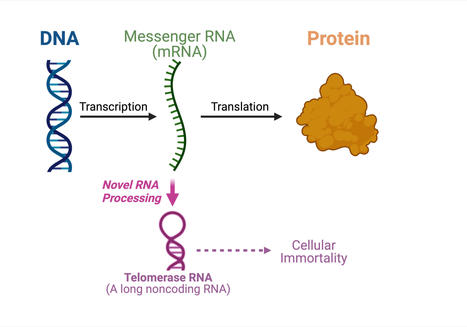
For the very first time, a study led by Julian Chen and his group in Arizona State University's School of Molecular Sciences and the Biodesign Institute's Center for the Mechanism of Evolution, has discovered an unprecedented pathway producing telomerase RNA from a protein-coding messenger RNA (mRNA). The central dogma of molecular biology specifies the order in which genetic information is transferred from DNA to make proteins. Messenger RNA molecules carry the genetic information from the DNA in the nucleus of the cell to the cytoplasm where the proteins are made. Messenger RNA acts as the messenger to build proteins. "Actually, there are many RNAs (ribonucleic acids) that are not used to make proteins," explained Chen. "About 70 percent of the human genome is used to make noncoding RNAs that don't code for protein sequences but have other uses." Telomerase RNA is one of the noncoding RNAs that assembles along with telomerase proteins to form the enzyme telomerase. Telomerase is crucial for cellular immortality in cancer and stem cells. In this study, Chen's group shows that a fungal telomerase RNA is processed from a protein-coding mRNA, instead of being synthesized independently. "Our finding from this paper is paradigm-shifting. Most RNA molecules are synthesized independently and here we uncovered a dual function mRNA that can be used to produce a protein or to make a noncoding telomerase RNA, which is really unique," said Chen. "We will need to do a lot more research to understand the underlying mechanism of such an unusual RNA biogenesis pathway." Basic research on the metabolism and regulation of mRNA has led to important medical applications. For example, several COVID-19 vaccines use messenger RNA as a means to produce viral spike proteins. In these vaccines, the mRNA molecules are eventually degraded and then absorbed by our bodies. This new approach has advantages over DNA vaccines which run the potential risk of being deleteriously and permanently incorporated into our DNA. The discovery of dual-function mRNA biogenesis in this work might lead to innovative ways of making future mRNA vaccines. In this study Chen's group discovered the unexpected mRNA-derived telomerase RNA in the model fungal organism Ustilago maydis or corn smut. Corn smut, also called Mexican truffle, is edible and adds a delicious umami effect to many dishes, for example tamales and tacos. The study of RNA and telomere biology in corn smut may provide opportunities for finding novel mechanisms for mRNA metabolism and telomerase biogenesis. If this mechanism is found to exist in humans, it may have major implications for vaccine development and aging research.
|
|
Scooped by
Dr. Stefan Gruenwald
October 3, 2022 5:03 PM
|
The ability to computationally generate novel yet physically foldable protein structures could lead to new biological discoveries and new treatments targeting yet incurable diseases. Despite recent advances in protein structure prediction, directly generating diverse, novel protein structures from neural networks remains difficult. In this present work, a group of scientists present a new diffusion-based generative model that designs protein backbone structures via a procedure that mirrors the native folding process. This approach describes protein backbone structure as a series of consecutive angles capturing the relative orientation of the constituent amino acid residues, and generate new structures by denoising from a random, unfolded state towards a stable folded structure. Not only does this strategy mirror how proteins biologically twist into energetically favorable conformations, the inherent shift and rotational invariance of this representation crucially alleviates the need for complex equivariant networks. The team was successful in training a denoising diffusion probabilistic model with a simple transformer backbone and were able to demonstrate that the resulting model unconditionally generates highly realistic protein structures with complexity and structural patterns akin to those of naturally-occurring proteins. As a useful and valuable resource, they released the first open-source codebase and trained models for protein structure diffusion to the scientific world. Code: https://github.com/microsoft/foldingdiff… Preprint: https://arxiv.org/abs/2209.15611
|
|
Scooped by
Dr. Stefan Gruenwald
October 3, 2022 1:08 PM
|
At the moment of fertilization, the genes in the fertilizing sperm and egg are switched off. For a new embryo to develop, they must be switched on—but how?
The answer is unknown, which seems remarkable for such a fundamental event at the beginning of embryonic life, and for decades, it was thought that genes in human embryos were silent for several days after fertilization. Recent findings, however, show they are switched on almost immediately.
Now that this is recognized, scientists have produced perhaps the first model of how the switch works to initiate embryonic development.
The model has been developed by Professor Tony Perry from the Department of Life Sciences at the University of Bath, with colleagues Dr. Maki Asami, also at Bath, and Dr. Brian Lam and Professor Giles Yeo at the University of Cambridge. Their work is published in this month's Trends in Cell Biology.
The model suggests that the myriad events that accompany fertilization act synergistically to switch on embryo gene expression. To emphasize that the switch occurs at the start of development, the piece borrows from "Under Milk Wood," by Dylan Thomas: "To begin at the beginning."
Professor Perry and colleagues have extended the model to predict something quite startling: that the switch that begins embryo formation may also initiate cancer.
The start of cancer and embryonic life
Often, by the time cancer is diagnosed, the disease is already advanced and in some cases, time is running out. We know little about how many cancers begin. It may be like lighting the blue touch paper of a firework, which is long gone when by the time see the sparkling array of colors. How can we discover the nature of this fuse, so that as soon as it is lit, we can detect it and put it out before cancer develops?
This is where a better understanding of the beginning of embryonic life fits in. The genes in an embryo need a switch to get going after fertilization, like the touch paper in cancer.
Professor Perry and his team have previously found that the switch in embryos involves genes, called oncogenes, that play key roles in cancer.
|
|
Scooped by
Dr. Stefan Gruenwald
October 3, 2022 12:15 PM
|
Swirling around the planet’s equator, the rings of Saturn are a dead giveaway that the planet is spinning at a tilt. The belted giant rotates at a 26.7-degree angle relative to the plane in which it orbits the sun. Astronomers have long suspected that this tilt comes from gravitational interactions with its neighbor Neptune, as Saturn’s tilt precesses, like a spinning top, at nearly the same rate as the orbit of Neptune. But a new modeling study by astronomers at MIT and elsewhere has found that, while the two planets may have once been in sync, Saturn has since escaped Neptune’s pull. What was responsible for this planetary realignment? The team has one meticulously tested hypothesis: a missing moon. In a recent study published in Science, the team proposes that Saturn, which today hosts 83 moons, once harbored at least one more, an extra satellite that they name Chrysalis. Together with its siblings, the researchers suggest, Chrysalis orbited Saturn for several billion years, pulling and tugging on the planet in a way that kept its tilt, or “obliquity,” in resonance with Neptune. But around 160 million years ago, the team estimates, Chrysalis became unstable and came too close to its planet in a grazing encounter that pulled the satellite apart. The loss of the moon was enough to remove Saturn from Neptune’s grasp and leave it with the present-day tilt. What’s more, the researchers surmise, while most of Chrysalis’ shattered body may have made impact with Saturn, a fraction of its fragments could have remained suspended in orbit, eventually breaking into small icy chunks to form the planet’s signature rings. The missing satellite, therefore, could explain two longstanding mysteries: Saturn’s present-day tilt and the age of its rings, which were previously estimated to be about 100 million years old — much younger than the planet itself. “Just like a butterfly’s chrysalis, this satellite was long dormant and suddenly became active, and the rings emerged,” says Jack Wisdom, professor of planetary sciences at MIT and lead author of the new study.
|
|
Rescooped by
Dr. Stefan Gruenwald
from Virus World
October 3, 2022 11:51 AM
|
Reports of myocarditis, penile necrosis, and atypical/persistent rash requiring amputation. Be alert for potentially severe manifestations of monkeypox in patients who are immunocompromised or co-infected with HIV, the CDC told healthcare workers on Thursday. "People who are immunocompromised due to HIV or other conditions are at higher risk for severe manifestations of monkeypox than people who are immunocompetent," the agency said in a health advisory to its Health Alert Network, adding that "the HIV status of all sexually active adults and adolescents with suspected or confirmed monkeypox should be determined." Of the patients with severe manifestations "for whom CDC has been consulted," the majority had HIV with CD4 counts below 200 cells/mL, indicating "substantial immunosuppression," the agency noted. These severe manifestations have included cases involving atypical or persistent rash requiring amputation of an extremity; secondary bacterial or fungal infections; lesions in sensitive areas resulting in severe pain or urethral or bowel strictures; and co-morbidities involving organ systems, including myocarditis, transverse myelitis, bowel lesions, penile necrosis, and others. The news arrives as the U.S. records its third known monkeypox-associated death in Ohio. To date, over 25,000 monkeypox cases have been reported in the U.S., 38% of which involved patients co-infected with HIV. Researchers have highlighted monkeypox severity and outcomes in people with HIV before. A recent study published in The Lancet about a 2017-2018 monkeypox outbreak in Nigeria reported seven deaths in a population of 122 patients, with four of the seven co-infected with HIV. More recently, papers on the current outbreak have reported conflicting results about the association between monkeypox severity and HIV co-infection. CDC data involving more than 1,300 monkeypox patients showed a higher rate of hospitalizations for those with HIV (8% vs 3% for those without HIV), with higher rates for those whose HIV was not virally suppressed. Conversely, German researchers reported that the clinical characteristics in HIV-infected versus non-infected monkeypox patients were largely similar. The new CDC advisory recommends that monkeypox treatment include optimization of immune function for people with immunocompromising conditions, such as limiting the use of immunosuppressive medications when "not otherwise clinically indicated," and offering antiretroviral therapy for those living with HIV. Severe immunocompromising conditions can including those with autoimmune disease where immunodeficiency is a clinical component; leukemia or lymphoma, transplant recipients; and those treated with high-dose steroids, alkylating agents, antimetabolites, radiation, or tumor necrosis factor (TNF) inhibitors. On a case-by-case basis, medications such as oral and intravenous tecovirimat (Tpoxx), cidofovir or brincidofovir, and vaccinia immune globulin intravenous should be considered, "although there are no data on effectiveness in treating human monkeypox with these medical countermeasures," according to the CDC. Clinicians should gather repeat lesion swabs in patients with persistent monkeypox DNA, and continue tecovirimat beyond 14 days (but not more than 90 days), "until there is clinical improvement," the advisory stated. Modifications to the dose, frequency, and duration of tecovirimat may be necessary, depending on the patient's clinical condition, disease progression, or therapeutic response. The advisory encouraged clinicians to consult with the CDC Monkeypox Response Clinical Escalations team when appropriate. The following severe manifestations seen in monkeypox patients were reported to the CDC, although the advisory did not include information about HIV status: - Atypical or persistent rash with coalescing or necrotic lesions, or both, some of which have required extensive surgical debridement or amputation of an affected extremity
- Lesions on a significant proportion of the total body surface area, which may be associated with edema and secondary bacterial or fungal infections among other complications
- Lesions in sensitive areas (including mucosal surfaces such as the oropharynx, urethra, rectum, and vagina) resulting in severe pain that interferes with activities of daily living
- Bowel lesions that are exudative or cause significant tissue edema, leading to obstruction
- Severe lymphadenopathy that can be necrotizing or obstructing (such as in airways)
- Lesions leading to stricture and scar formation resulting in significant morbidity such as urethral and bowel strictures, phimosis, and facial scarring
CDC Health Advisory published September 29, 2022
Via Juan Lama
|
|
Rescooped by
Dr. Stefan Gruenwald
from Immunology
September 30, 2022 4:55 PM
|
The immune system is highly complex and distributed throughout an organism, with hundreds to thousands of cell states existing in parallel with diverse molecular pathways interacting in a highly dynamic and coordinated fashion. Although the characterization of individual genes and molecules is of the utmost importance for understanding immune-system function, high-throughput, high-resolution omics technologies combined with sophisticated computational modeling and machine-learning approaches are creating opportunities to complement standard immunological methods with new insights into immune-system dynamics. Like systems immunology itself, immunology researchers must take advantage of these technologies and form their own diverse networks, connecting with researchers from other disciplines. This Review is an introduction and ‘how-to guide’ for immunologists with no particular experience in the field of omics but with the intention to learn about and apply these systems-level approaches, and for immunologists who want to make the most of interdisciplinary networks. The explosion of single-cell and systems approaches in immunology risks leaving the uninitiated behind. This guide to systems immunology is designed for immunologists who want an introduction to the area. Systems immunology provides a holistic understanding of the immune system, spanning single immunological components and pathways to form cross-scale networks. Unlike reductionist approaches aimed at understanding individual parts, systems immunology aims to understand properties of individual parts working together—a challenge requiring specialized methodologies1,2. During the past century, many successful experimental strategies have been developed that were instrumental in defining cell types and cellular states within the immune system to reveal major molecular and functional components of the immune system and to establish causal relationships for transcriptional and functional cascades that drive immune activation (see Figure). For two decades, high-throughput, high-resolution technologies from the omics field have revolutionized our understanding of immunology and enabled the simultaneous assessment of hundreds to thousands of cellular, functional and molecular parameters with continuously increasing throughput and decreasing turn-around times. Sequencing-based technologies are used to assess genomic, transcriptomic and epigenomic information, and sophisticated technologies in proteomics, metabolomics, microbiomics and lipidomics have been introduced to immunological research. In the past decade, single-cell sequencing technologies have emerged, with single-cell transcriptomics leading the way3. In this how-to guide, the authors provide a brief introduction in the use and integration of omics technologies in systems immunology and explain how current single-cell-level omics technologies can be applied to immunological questions in model systems and increasingly in human immunology and clinical trials for immune-mediated diseases. They focus on the use of transcriptomic technologies in systems immunology, particularly on single-cell assays, as mRNA constitutes the first functional and relatively easily accessible readout of the genome; as such, it can serve as a surrogate to bridge genomic and functional phenotypes to enable the description and prediction of causal relationships and effectors of immune-cell function.
Via Gilbert C FAURE
|