Your new post is loading...

|
Scooped by
Dr. Stefan Gruenwald
September 29, 2022 1:56 PM
|
The Nord Stream pipeline blasts have raised tensions in northern Europe — as well as concerns over the environmental impact of the leaks. The two explosions in the Nord Stream 1 and 2 pipelines in the Baltic Sea resulted in what could amount to the largest-ever single release of methane gas into the atmosphere, but it may not be enough to have a major effect on climate change, experts say. While sudden influxes of methane from underwater pipelines are unusual and scientists have little precedent to fall back on, the consensus is that with so much methane spewing into the atmosphere from all around the globe, the several hundred thousand tons from the pipelines will not make a dramatic difference. “It’s not trivial, but it’s a modest-sized U.S. city, something like that,” said Drew Shindell, a professor of earth science at Duke University. “There are so many sources all around the world. Any single event tends to be small. I think this tends to fall in that category.” New data released Wednesday by the Danish Energy Agency allowed scientists to produce preliminary estimates of the amount of methane released. If all that gas reaches the atmosphere, it would be equivalent to about 0.1 percent of the estimated annual global methane emissions, according to scientists with the U.S. Geological Survey’s Gas Hydrates Project. From an emissions perspective, the breach is “an important one to watch,” said Carolyn Ruppel, chief of the project, who made the estimate with a colleague, Bill Waite. A worst-case calculation by Thomas Lauvaux, a researcher with the Laboratory of Climate and Environmental Sciences in France, equated it to what comes from about 1 million cars in a year — compared with the about 250 million cars operating in the European Union alone. Other scientists cautioned against underestimating methane’s power. Paul Balcombe, a senior lecturer in chemical engineering and renewable energy at London’s Queen Mary University, called it a “really potent greenhouse gas” and said that “even a little leak has quite a climate impact.” Swedish monitoring stations that measure local atmospheric concentrations of greenhouse gases have reported spikes since the pipeline burst, with the methane concentration 20 to 25 percent higher than usual, “which is quite remarkable compared with our long-term data series,” Thomas Holst, a researcher at Lund University in Sweden, told The Washington Post in an email, while maintaining it was not enough to pose a health risk. Monitoring stations in Finland and Norway reported similar spikes. Ruppel noted that “methane is generally well-mixed in the atmosphere, so these local spikes would dissipate over the globe.” Despite the size of the leak, it isn’t likely to affect marine life in the way an oil leak might, said Jasmin Cooper, a research associate at the Sustainable Gas Institute. “The environmental impact will be toward global warming.” Images released Thursday by the Swedish coast guard still show a large mass of methane bubbles on the sea surface emanating from the four leaks across the pipelines — not three, as authorities initially said. Scientists say that further imaging and access to the site are both necessary to get a clearer picture of the leaks and to calculate how much methane might be released into the atmosphere. “We know it’s leaking badly because we see the pictures and video of the gas bubbling at the water surface, but we don’t know anything about the leaks,” Cooper said. “We don’t know how big they are or where they are in the pipeline, and so it’s difficult to figure out the flow rate.”
|
|
Scooped by
Dr. Stefan Gruenwald
September 29, 2022 12:23 PM
|
Nanoengineers at the University of California San Diego have developed microscopic robots, called microrobots, that can swim around in the lungs, deliver medication and be used to clear up life-threatening cases of bacterial pneumonia. In mice, the microrobots safely eliminated pneumonia-causing bacteria in the lungs and resulted in 100% survival. By contrast, untreated mice all died within three days after infection. The results are published Sept. 22, 2022 in Nature Materials. The microrobots are made of algae cells whose surfaces are speckled with antibiotic-filled nanoparticles. The algae provide movement, which allows the microrobots to swim around and deliver antibiotics directly to more bacteria in the lungs. The nanoparticles containing the antibiotics are made of tiny biodegradable polymer spheres that are coated with the cell membranes of neutrophils, which are a type of white blood cell. What's special about these cell membranes is that they absorb and neutralize inflammatory molecules produced by bacteria and the body's immune system. This gives the microrobots the ability to reduce harmful inflammation, which in turn makes them more effective at fighting lung infection. The work is a joint effort between the labs of nanoengineering professors Joseph Wang and Liangfang Zhang, both at the UC San Diego Jacobs School of Engineering. Wang is a world leader in the field of micro- and nanorobotics research, while Zhang is a world leader in developing cell-mimicking nanoparticles for treating infections and diseases. Together, they have pioneered the development of tiny drug-delivering robots that can be safely used in live animals to treat bacterial infections in the stomach and blood. Treating bacterial lung infections is the latest in their line of work. "Our goal is to do targeted drug delivery into more challenging parts of the body, like the lungs. And we want to do it in a way that is safe, easy, biocompatible and long lasting," said Zhang. "That is what we've demonstrated in this work." The team used the microrobots to treat mice with an acute and potentially fatal form of pneumonia caused by the bacteria Pseudomonas aeruginosa. This form of pneumonia commonly affects patients who receive mechanical ventilation in the intensive care unit. The researchers administered the microrobots to the lungs of the mice through a tube inserted in the windpipe. The infections fully cleared up after one week. All mice treated with the microrobots survived past 30 days, while untreated mice died within three days. Treatment with the microrobots was also more effective than an IV injection of antibiotics into the bloodstream. The latter required a dose of antibiotics that was 3000 times higher than that used in the microrobots to achieve the same effect. For comparison, a dose of microrobots provided 500 nanograms of antibiotics per mouse, while an IV injection provided 1.644 milligrams of antibiotics per mouse. The team's approach is so effective because it puts the medication right where it needs to go rather than diffusing it through the rest of the body. "These results show how targeted drug delivery combined with active movement from the microalgae improves therapeutic efficacy," said Wang.
|
|
Scooped by
Dr. Stefan Gruenwald
September 29, 2022 12:14 PM
|
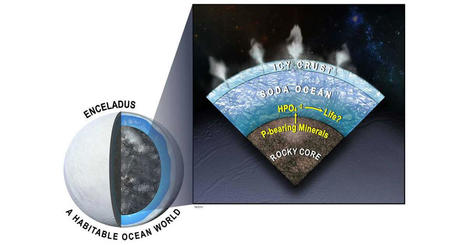
The search for extraterrestrial life just got more interesting as a team of scientists including Southwest Research Institute's Dr. Christopher Glein has discovered new evidence for a key building block for life in the subsurface ocean of Saturn's moon Enceladus. New modeling indicates that Enceladus's ocean should be relatively rich in dissolved phosphorus, an essential ingredient for life. "Enceladus is one of the prime targets in humanity's search for life in our solar system," said Glein, a leading expert in extraterrestrial oceanography. He is a co-author of a paper in the Proceedings of the National Academy of Sciences (PNAS) describing this research. "In the years since NASA's Cassini spacecraft visited the Saturn system, we have been repeatedly blown away by the discoveries made possible by the collected data." The Cassini spacecraft discovered Enceladus's subsurface liquid water and analyzed samples as plumes of ice grains and water vapor erupted into space from cracks in the moon's icy surface. "What we have learned is that the plume contains almost all the basic requirements of life as we know it," Glein said. "While the bioessential element phosphorus has yet to be identified directly, our team discovered evidence for its availability in the ocean beneath the moon's icy crust." One of the most profound discoveries in planetary science over the past 25 years is that worlds with oceans beneath a surface layer of ice are common in our solar system. Such worlds include the icy satellites of the giant planets, such as Europa, Titan and Enceladus, as well as more distant bodies like Pluto. Worlds like Earth with surface oceans must reside within a narrow range of distances from their host stars to maintain the temperatures that support surface liquid water. Interior water ocean worlds, however, can occur over a much wider range of distances, greatly expanding the number of habitable worlds likely to exist across the galaxy. "The quest for extraterrestrial habitability in the solar system has shifted focus, as we now look for the building blocks for life, including organic molecules, ammonia, sulfur-bearing compounds as well as the chemical energy needed to support life," Glein said. "Phosphorus presents an interesting case because previous work suggested that it might be scarce in the ocean of Enceladus, which would dim the prospects for life." Phosphorus in the form of phosphates is vital for all life on Earth. It is essential for the creation of DNA and RNA, energy-carrying molecules, cell membranes, bones and teeth in people and animals, and even the sea's microbiome of plankton. Team members performed thermodynamic and kinetic modeling that simulates the geochemistry of phosphorus based on insights from Cassini about the ocean-seafloor system on Enceladus. In the course of their research, they developed the most detailed geochemical model to date of how seafloor minerals dissolve into Enceladus's ocean and predicted that phosphate minerals would be unusually soluble there. "The underlying geochemistry has an elegant simplicity that makes the presence of dissolved phosphorus inevitable, reaching levels close to or even higher than those in modern Earth seawater," Glein said. "What this means for astrobiology is that we can be more confident than before that the ocean of Enceladus is habitable." According to Glein, the next step is clear: "We need to get back to Enceladus to see if a habitable ocean is actually inhabited."
|
|
Scooped by
Dr. Stefan Gruenwald
September 29, 2022 12:07 PM
|
UH astronomers have helped assemble the largest-ever compilation of high-precision galaxy distances, called Cosmicflows-4. How old is our universe, and what is its size? A team of researchers led by University of Hawaii at Manoa astronomers Brent Tully and Ehsan Kourkchi from the Institute for Astronomy have assembled the largest-ever compilation of high-precision galaxy distances, called Cosmicflows-4. Using eight different methods, they measured the distances to a whopping 56,000 galaxies. The study has been published in the Astrophysical Journal. Galaxies, such as the Milky Way, are the building blocks of the universe, each comprised of up to several hundred billion stars. Galaxies beyond our immediate neighborhood are rushing away, faster if they are more distant, which is a consequence of the expansion of the universe that began at the moment of the Big Bang. Measurements of the distances of galaxies, coupled with information about their velocities away from us, determine the scale of the universe and the time that has elapsed since its birth. "Since galaxies were identified as separate from the Milky Way a hundred years ago, astronomers have been trying to measure their distances," said Tully. "Now by combining our more accurate and abundant tools, we are able to measure distances of galaxies, and the related expansion rate of the universe and the time since the universe was born with a precision of a few percent." From the newly published measurements, the researchers derived the expansion rate of the universe, called the Hubble Constant, or H0. The team's study gives a value of H0=75 kilometers per second per megaparsec or Mpc (1 megaparsec = 3.26 million light years), with very small statistical uncertainty of about 1.5%. There are a number of ways to measure galaxy distances. Generally, individual researchers focus on an individual method. The Cosmicflows program spearheaded by Tully and Kourkchi includes their own original material from two methods, and additionally incorporates information from many previous studies. Because Cosmicflows-4 includes distances derived from a variety of independent, distinct distance estimators, intercomparisons should mitigate against a large systematic error. Cosmic dilemma Astronomers have assembled a framework that shows the universe's age to be a little more than 13 billion years old, however a dilemma of great significance has arisen in the details. Physics of the evolution of the universe based on the standard model of cosmology predicts H0=67.5 km/s/Mpc, with an uncertainty of 1 km/s/Mpc. The difference between the measured and predicted values for the Hubble Constant is 7.5 km/s/Mpc -- much more than can be expected given the statistical uncertainties. Either there is a fundamental problem with our understanding of the physics of the cosmos, or there is a hidden systematic error in the measurements of galaxy distances. Additional studies Cosmicflows-4 is also being used to study how galaxies move individually, in addition to flowing with the overall expansion of the universe. Deviations from this smooth expansion arise due to the gravitational influences of clumps of matter, on scales ranging from our Earth and Sun up to congregations of galaxies on scales of a half billion light years. The mysterious dark matter is the dominant component on larger scales. With knowledge of the motions of galaxies in response to the mass around them, we can recreate the orbits that galaxies have followed since they were formed, giving us a better understanding of how the universe's vast, dark-matter dominated structures have formed over the eons of time.
|
|
Scooped by
Dr. Stefan Gruenwald
September 26, 2022 8:19 PM
|
Astronomers have found what appears to be a bubble of hot electrons circling Sagittarius A*, the supermassive black hole at the centre of the Milky Way, at extraordinary speeds. This strange bubble could help us learn about how black holes devour the material around them. Maciek Wielgus at the Max Planck Institute for Radio Astronomy in Germany and his colleagues used the Atacama Large Millimeter/submillimeter Array (ALMA) in Chile to observe the area surrounding Sagittarius A* as the black hole was emitting a huge flare of X-rays. Minutes after the flare, they saw an enormous “hot spot” of radiation, most likely made up of electrons heated to billions of degrees, circling the black hole on an orbit about the distance that Mercury’s sits from the sun. Mercury takes 88 days to orbit the sun, whereas it only took this bubble about 70 minutes to make a loop around Sagittarius A*, meaning that it was traveling at about 30 per cent the speed of light. The researchers were only able to see it for two orbits before it faded from view, either destroyed or no longer emitting light in wavelengths ALMA can see. “The bubble cannot be too small, because a small bubble would not disappear that quickly,” says Wielgus. A small bubble would experience less shear force as it travelled around the black hole, so it would live longer. “It’s a huge bubble, it’s not a tiny little guy.” From observations of just two orbits, the researchers managed to determine that the magnetic fields affecting the bubble seem to be aligned as we would expect them to be based on a model of black holes called the magnetically arrested disc model. “It tells us that maybe our models of these systems really have something to do with reality,” says Wielgus. The orbit of the bubble also implied that the material immediately surrounding the black hole circles it on a path perpendicular to the disc of the galaxy, which means that from Earth we are seeing it from face-on despite being located in the disc, which has been hinted at by previous observations as well. “We are in the galactic plane, so it seems like we should be seeing it edge-on, but it is what it is,” he says. “It’s weird.” Studying this area in more detail could help us learn more about how black holes swallow up matter and why they spew out massive flares, but we will have to do that research from afar. “The view from this bubble would be a sort of magical kaleidoscope – you’d look in one direction and see something from a totally different direction because of the light bending in the black hole’s gravity – but you would have to be very resilient to survive the many billions of degrees,” says Wielgus. “If you magically materialized inside this bubble you would disappear just as quickly.” Journal reference: Astronomy & Astrophysics, DOI: 10.1051/0004-6361/202244493
|
|
Scooped by
Dr. Stefan Gruenwald
September 16, 2022 1:20 PM
|
Analysis finds evidence for many exoplanets made of water and rock around small stars Water is the one thing all life on Earth needs, and the cycle of rain to river to ocean to rain is an essential part of what keeps our planet's climate stable and hospitable. When scientists talk about where to search for signs of life throughout the galaxy, planets with water are always at the top of the list. A new study suggests that many more planets may have large amounts of water than previously thought -- as much as half water and half rock. The catch? All that water is probably embedded in the rock, rather than flowing as oceans or rivers on the surface. "It was a surprise to see evidence for so many water worlds orbiting the most common type of star in the galaxy," said Rafael Luque, first author on the new paper and a postdoctoral researcher at the University of Chicago. "It has enormous consequences for the search for habitable planets." Planetary population patterns Thanks to better telescope instruments, scientists are finding signs of more and more planets in distant solar systems. A larger sample size helps scientists identify demographic patterns -- similar to how looking at the population of an entire town can reveal trends that are hard to see at an individual level. Luque, along with co-author Enric Pallé of the Institute of Astrophysics of the Canary Islands and the University of La Laguna, decided to take a population-level look at a group of planets that are seen around a type of star called an M-dwarf. These stars are the most common stars we see around us in the galaxy, and scientists have catalogued dozens of planets around them so far. But because stars are so much brighter than their planets, we can't see the actual planets themselves. Instead, scientists detect faint signs of the planets' effects on their stars -- the shadow created when a planet crosses in front of its star, or the tiny tug on a star's motion as a planet orbits. That means many questions remain about what these planets actually look like. "The two different ways to discover planets each give you different information," said Pallé. By catching the shadow created when a planet crosses in front of its star, scientists can find the diameter of the planet. By measuring the tiny gravitational pull that a planet exerts on a star, scientists can find its mass. By combining the two measurements, scientists can get a sense of the makeup of the planet. Perhaps it's a big-but-airy planet made mostly out of gas like Jupiter, or a small, dense, rocky planet like Earth. These analyses had been done for individual planets, but much more rarely for the entire known population of such planets in the Milky Way galaxy. As the scientists looked at the numbers -- 43 planets in all -- they saw a surprising picture emerging. The densities of a large percentage of the planets suggested that they were too light for their size to be made up of pure rock. Instead, these planets are probably something like half rock and half water, or another lighter molecule. Imagine the difference between picking up a bowling ball and a soccer ball: they're roughly the same size, but one is made up of much lighter material. Searching for water worlds It may be tempting to imagine these planets like something out of Kevin Costner's Waterworld: entirely covered in deep oceans. However, these planets are so close to their suns that any water on the surface would exist in a supercritical gaseous phase, which would enlarge their radius. "But we don't see that in the samples," explained Luque. "That suggests the water is not in the form of surface ocean." Instead, the water could exist mixed into the rock or in pockets below the surface. Those conditions would be similar to Jupiter's moon Europa, which is thought to have liquid water underground. "I was shocked when I saw this analysis -- I and a lot of people in the field assumed these were all dry, rocky planets," said UChicago exoplanet scientist Jacob Bean, whose group Luque has joined to conduct further analyses. The finding matches a theory of exoplanet formation that had fallen out of favor in the past few years, which suggested that many planets form farther out in their solar systems and migrate inward over time. Imagine clumps of rock and ice forming together in the cold conditions far from a star, and then being pulled slowly inward by the star's gravity.
|
|
Scooped by
Dr. Stefan Gruenwald
September 14, 2022 5:13 PM
|
Eth2, Ethereum 2.0, ETH 2.0…The project has been called many things in the past, but earlier this year the Ethereum community settled on the “merge.” Most simply, the merge is a long-planned Ethereum upgrade aimed at improving the network. Such upgrades are commonplace, but this is the most important one to date, and its success will pave the way for developers to introduce a host of new features to the network. The merge will, well, merge the current Ethereum mainnet—or the main public Ethereum blockchain used by everyone—with something called the Beacon Chain. Currently, both chains exist in parallel. But only the Ethereum mainnet, which currently uses a mechanism called proof of work, is processing transactions. Once the merge is complete, the Ethereum mainnet will shift away from proof of work and instead adopt the Beacon Chain’s proof-of-stake mechanism. What’s proof of stake? Proof of stake (PoS) is a type of consensus mechanism that differs from the traditional proof-of-work (PoW) one. A consensus, what? A consensus mechanism describes the way Ethereum—or other blockchains—determine the legitimacy of transactions posted to its network. It is how a blockchain governs itself. Ethereum can be seen as a distributed database of nodes—or computers that run software to verify blocks and the transaction data within them. To reach consensus on the network and make a decision, the majority of nodes must be in agreement, and the choice of consensus mechanism determines how they do that. So, how does proof of stake work? Once Ethereum shifts to a proof-of-stake consensus mechanism post-merge, the network will rely on trusted entities known as validators to verify transactions and add new blocks to the blockchain. A validator will be chosen at random each time a new block is to be added, which will occur every 12 seconds or so post-merge. Anyone can apply to be a validator by depositing 32 Ethereum (about $61,000 at mid-August prices)—a sum intended to ensure that participants have a stake in the success of the network—and run up-to-date software. As the Ethereum Foundation explains, prospective validators will then be added to an “activation queue that limits the rate of new validators joining the network.” Once a validator is “activated,” it will be eligible to review and approve new blocks the Ethereum network proposes to add to its blockchain. In return for securing the network, validators will earn Ether as reward. While the 32 Ether staked as collateral serves as a major incentive to behave appropriately, there are also punishments for validators that are incompetent or malicious. Namely, they can be penalized with the loss of some or all of their deposit. The merge hasn’t happened yet, but the Beacon Chain already has over 415,000 validators.
|
|
Scooped by
Dr. Stefan Gruenwald
September 14, 2022 4:15 PM
|
Given a series of natural language descriptions, the task here at hand is to generate 3D human motions that correspond semantically to text, and follow the temporal order of the instructions. In particular, the goal is to enable the synthesis of a series of actions, which the programmers of this system refer to as temporal action composition. The current state of art in text-conditioned motion synthesis only takes a single action or a single sentence as input. This is mainly due to lack of suitable training data for action sequences, but also due to the computational complexity of their non-autoregressive model formulation, which does not scale well for long sequences. In this work, the programmers address both issues. First, they exploit the recent BABEL motion-text collection, which has a wide range of labeled actions, many of which occur in a sequence with transitions between them. They also designed a Transformer-based approach that operates non-autoregressively within a single action, but autoregressively within a sequence of actions. This hierarchical formulation proves effective in all carried-out experiments when compared with multiple baselines. This approach, called TEACH for “TEmporal Action Compositions for Human motions”, produces realistic human motions for a wide variety of actions and temporal compositions from language descriptions. To encourage work on this new task, all code is made available for research purposes at teach.is.tue.mpg.de.
|
|
Rescooped by
Dr. Stefan Gruenwald
from Virus World
September 12, 2022 7:42 PM
|
The flare-up of one of the world’s most infectious diseases has taken hold among church congregations that have rejected vaccinations. A measles outbreak in Zimbabwe, Africa, has now killed nearly 700 children, in a rapidly accelerating and “deeply concerning” flare-up of the highly contagious disease. Health officials are alarmed by both the speed of the spread and the high fatality rate of the outbreak, which has seen the recent death toll jump by dozens each day. The flare-up of one of the world’s most infectious diseases has taken hold among church congregations that have rejected vaccinations for religious reasons. Deaths had reached 698 by September 4, 2022, according to the nation’s health ministry, up from less than a quarter of that a two weeks earlier. Officials reported that 37 children died on September 1 alone. The outbreak is thought to be the worst for some time in the southern African nation of 15 million. The last outbreak 11 years ago was far less severe. Unicef said that in the worst affected eastern province of Manicaland, nearly one-in-10 of those getting the disease were dying. That rate is higher than in other recent African outbreaks. The UN body said it was “deeply concerned with the numbers of cases and deaths among children due to a measles outbreak in Zimbabwe”. Faith healers and anti-vaxxers Dr Johannes Marisa, the president of the Medical and Dental Private Practitioners of Zimbabwe, told The Associated Press that the government may need to force children to be vaccinated. He said: “Because of the resistance, education may not be enough so the government should also consider using coercive measures to ensure that no one is allowed to refuse vaccination for their children.” He urged the government to “consider enacting legislation that makes vaccination against killer diseases such as measles mandatory”. Zimbabwe’s government has already invoked a law used to respond to disasters to deal with the outbreak and has launched a mass vaccination campaign, which will target two million children under five years. Nationwide, the vaccination rate was around 85 per cent in 2020, having fallen back on previous years when it at times touched 95 per cent. The country’s Apostolic churches or sects are thought to be followed by around one-in-five of the population. Their teachings regularly include a potent mix of opposition towards Western medicine and belief in faith healing and prayer, meaning the congregations have become a stronghold of anti-vaccination sentiment. As the outbreak has worsened and pressure has mounted, some church leaders have in recent weeks appeared to change their stance and called on followers to get their children vaccinated. The virus causes fever, coughing and a tell-tale rash, but in some cases it causes complications that can be fatal. Complications of measles include blindness, brain swelling, severe diarrhea and dehydration, ear infections, or severe respiratory infections such as pneumonia. It is one of the world’s most contagious diseases, with a reproduction rate as high as 18 – compared to an R rate of between 2 and 3 for the original strain of Covid19. Before mass vaccinations began in the 1960s, the disease flared up in occasional epidemics, killing an estimated 2.6m children each year. More than 140,000 people died from measles in 2018 – mostly children under the age of five years, despite the availability of a safe and effective vaccine, according to the World Health Organization. The virus is so contagious that more than 90 per cent of the population needs to be immunized to prevent outbreaks.
Via Juan Lama
|
|
Scooped by
Dr. Stefan Gruenwald
September 11, 2022 2:24 AM
|
The human oral cavity is a hotspot of numerous, mostly unexplored, viruses that are important for maintaining oral health and microbiome homeostasis. A research team now analyzed 2,792 publicly available oral metagenomes and proposed the Oral Virus Database (OVD) comprising 48,425 non-redundant viral genomes (≥5 kbp). The OVD catalog substantially expands the known phylogenetic diversity and host specificity of oral viruses, allowing for enhanced delineation of some underrepresented groups such as the predicted Saccharibacteria phages and jumbo viruses. Comparisons of the viral diversity and abundance of different oral cavity habitats suggests strong niche specialization of viromes within individuals. The virome variations in relation to host geography and properties is of high importance, especially the age-dependent viral compositional signatures in saliva. Overall, the viral genome catalog describes the architecture and variability of the human oral virome, while offering new resources and insights for current and future studies.
|
|
Scooped by
Dr. Stefan Gruenwald
September 9, 2022 9:20 PM
|
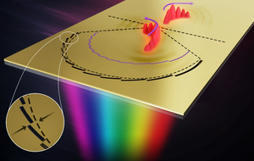
A new publication from Opto-Electronic Advances; DOI 10.29026/oea.2022.210047 discusses spatiotemporal manipulation of femtosecond light pulses for on-chip devices. With the development of highly integrated nanophotonic devices, researchers have begun to pursue new methods of flexibly manipulating the on-chip light signals in both extremely small spatial scale (e.g. nanometre) and ultrafast temporal scale (e.g. femtosecond). The control of optical signals in nanometre and femtosecond scales not only provides fundamental insights into the ultrafast dynamics of the interaction between light and matter, but also offers an effective platform for high-efficiency ultrafast signal processing in integrated nanophotonic devices, and optical detection and imaging with super-spatiotemporal resolution. Thus, research of spatiotemporal light-field manipulation is of great significance and can be widely applied in the fields of photonic circuits, photonic information processing, quantum information processing, neuromorphic computing and artificial intelligence, and ultrafast optical wavefront measurement. For the spatial modulation of light in nanoscale, in recent years some new optical devices such as metamaterials and metasurfaces have been rapidly developed to precisely control the behavior of micro- and nano-scale optical field. For example, the propagation of optical signals can be modulated to a curved trajectory as the Airy beam. For the modulation in time domain, the traditional methods, including dynamically controlled equipment (such as SLM) or actively controlled materials (such as electro-optical materials), suffer from the limited response time of materials and are not suitable for ultrafast modulation of femtosecond light pulses. Recently, with the development of pulse shaping technology, frequency-domain modulation has gradually become the main means of ultrafast modulation on femtosecond pulses. By combining the frequency-domain modulation method with the designed micro-/nano-structures, it is expected to achieve the light-field generation and manipulation in both nanometre and femtosecond scales, creating many novel spatiotemporal light fields and expanding new applications. The authors of this article propose a novel method to manipulate the on-chip propagation of a femtosecond light pulse based on the spatiotemporal Fourier transform (FT). By combining the frequency-domain modulation method with the spatial modulation method, they found that the spatial distribution of the light field can be arranged by regulating the spatial domain FT with an on-chip nanofocusing structure, and the ultrafast wavefront shaping of femtosecond pulses in the time domain can be realized by adjusting the temporal FT with the dispersion effect of light. Finally, the spatiotemporal FT can be synchronized to manipulate the on-chip propagation properties of femtosecond pulses in time-space domain.
|
|
Scooped by
Dr. Stefan Gruenwald
September 9, 2022 5:58 PM
|
Drone and AI-systems manufacturer Draganfly Inc. has deployed its next-generation Medical Response Drones to Ukraine, where they will be used to bring aid to soldiers and civilians in hard-to-reach parts of the war-torn country. Draganfly’s first Medical Response Drone was delivered to Ukraine in May 2022, and several more have been deployed since. This latest batch of drones has been customized by Draganfly engineers with specialized hardware and software tailored for use in Ukraine. The new features include an automatic payload-drop function that uses proximity sensors to release its cargo from several feet above ground, an expanded communication range and enhanced first-person viewing capabilities to facilitate day or night operations. All of these drones, which can carry up to 35 pounds, have been outfitted with temperature-controlled containers. These so-called Medical Response Payload Boxes are made to transport temperature-sensitive medical supplies, including insulin and medicines, blood, pharmaceuticals, vaccines, water and wound-care kits. This latest shipment builds upon previous orders from healthcare supply-chain company Coldchain Delivery Systems LLC, which has been sending medical-response drones to Ukraine via the nonprofit Revived Soldiers Ukraine (RSU). The 501(c)(3) organization was founded in 2015 following Russia’s first invasion of the Ukraine. Based in Orlando, Florida, the organization works to bring medical and humanitarian aid to Ukraine. “Draganfly’s Medical Response Drones are helping to ensure we can access hotspots in Ukraine,” RSU President Iryna Vashchuk Discipio said. “Draganfly’s ability to provide high-tech solutions is crucial in providing timely and safe medical supplies to communities affected in this crisis.” Based in Saskatoon, Saskatchewan, Draganfly has been manufacturing drones since 1998 and counts numerous companies and government agencies as customers. The publicly traded company’s personnel also work on U.S. military assets like the Scan Eagle and Predator II unmanned aerial vehicles. “Draganfly is excited to provide our next generation Medical Response Drones to be utilized by RSU in Ukraine,” Draganfly President and CEO Cameron Chell said. “We have seen first-hand how delivering critical medical supplies and equipment in hard-hit areas of the country makes a difference in their ongoing efforts during this conflict.”
|
|
Scooped by
Dr. Stefan Gruenwald
September 8, 2022 1:04 PM
|
NASA’s Double Asteroid Redirection Test (DART) spacecraft recently got its first look at Didymos, the double-asteroid system that includes its target, Dimorphos. On Sept. 26, DART will intentionally crash into Dimorphos, the asteroid moonlet of Didymos. While the asteroid poses no threat to Earth, this is the world’s first test of the kinetic impact technique, using a spacecraft to deflect an asteroid for planetary defense. Te image shows the light from asteroid Didymos and its orbiting moonlet Dimorphos, a composite of 243 images taken by the Didymos Reconnaissance and Asteroid Camera for Optical navigation (DRACO) on July 27, 2022 (Credits: NASA JPL DART Navigation Team). From this distance—about 20 million miles away from DART—the Didymos system is still very faint, and navigation camera experts were uncertain whether DRACO would be able to spot the asteroid yet. But once the 243 images DRACO took during this observation sequence were combined, the team was able to enhance it to reveal Didymos and pinpoint its location.
“This first set of images is being used as a test to prove our imaging techniques,” said Elena Adams, the DART mission systems engineer at the Johns Hopkins Applied Physics Laboratory (APL) in Laurel, Maryland. “The quality of the image is similar to what we could obtain from ground-based telescopes, but it is important to show that DRACO is working properly and can see its target to make any adjustments needed before we begin using the images to guide the spacecraft into the asteroid autonomously.”
Although the team has already conducted a number of navigation simulations using non-DRACO images of Didymos, DART will ultimately depend on its ability to see and process images of Didymos and Dimorphos, once it too can be seen, to guide the spacecraft toward the asteroid, especially in the final four hours before impact. At that point, DART will need to self-navigate to impact successfully with Dimorphos without any human intervention.
“Seeing the DRACO images of Didymos for the first time, we can iron out the best settings for DRACO and fine-tune the software,” said Julie Bellerose, the DART navigation lead at NASA’s Jet Propulsion Laboratory in Pasadena, California. “In September, we’ll refine where DART is aiming by getting a more precise determination of Didymos’ location.”
Using observations taken every five hours, the DART team will execute three trajectory correction maneuvers over the next three weeks, each of which will further reduce the margin of error for the spacecraft’s required trajectory to impact. After the final maneuver on Sept. 25, approximately 24 hours before impact, the navigation team will know the position of the target Dimorphos within 2 kilometers. From there, DART will be on its own to autonomously guide itself to its collision with the asteroid moonlet.
DRACO has subsequently observed Didymos during planned observations on Aug. 12, Aug. 13 and Aug. 22 of 2022.
|
|
|
Scooped by
Dr. Stefan Gruenwald
September 29, 2022 12:33 PM
|
The global population is projected to reach 8 billion on 15 November 2022, and India is projected to surpass China as the world’s most populous country in 2023, according to World Population Prospects 2022, released today on World Population Day. “This year’s World Population Day falls during a milestone year, when we anticipate the birth of the Earth’s eight billionth inhabitant. This is an occasion to celebrate our diversity, recognize our common humanity, and marvel at advancements in health that have extended lifespans and dramatically reduced maternal and child mortality rates,” said UN Secretary-General António Guterres. “At the same time, it is a reminder of our shared responsibility to care for our planet and a moment to reflect on where we still fall short of our commitments to one another,” he added. The global population is growing at its slowest rate since 1950, having fallen under 1 per cent in 2020. The latest projections by the United Nations suggest that the world’s population could grow to around 8.5 billion in 2030 and 9.7 billion in 2050. It is projected to reach a peak of around 10.4 billion people during the 2080s and to remain at that level until 2100. World Population Prospects 2022 also states that fertility has fallen markedly in recent decades for many countries. Today, two-thirds of the global population lives in a country or area where lifetime fertility is below 2.1 births per woman, roughly the level required for zero growth in the long run for a population with low mortality. The populations of 61 countries or areas are projected to decrease by 1 per cent or more between 2022 and 2050, owing to sustained low levels of fertility and, in some cases, elevated rates of emigration. More than half of the projected increase in the global population up to 2050 will be concentrated in eight countries: the Democratic Republic of the Congo, Egypt, Ethiopia, India, Nigeria, Pakistan, the Philippines and the United Republic of Tanzania. Countries of sub-Saharan Africa are expected to contribute more than half of the increase anticipated through 2050. “The relationship between population growth and sustainable development is complex and multidimensional” said Liu Zhenmin, UN Under-Secretary-General for Economic and Social Affairs. “Rapid population growth makes eradicating poverty, combatting hunger and malnutrition, and increasing the coverage of health and education systems more difficult. Conversely, achieving the Sustainable Development Goals, especially those related to health, education and gender equality, will contribute to reducing fertility levels and slowing global population growth.”
|
|
Scooped by
Dr. Stefan Gruenwald
September 29, 2022 12:17 PM
|
When female mosquitoes are looking for a human to bite, they smell a unique cocktail of body odors that we emit into the air. These odors then stimulate receptors in the mosquitoes' antenna. Scientists have tried deleting these receptors in attempts to make humans undetectable to mosquitoes.
However, even after knocking out an entire family of odor-sensing receptors from the mosquito genome, mosquitoes still find a way to bite us. Now, a group of researchers, publishing in the journal Cell on August 18, found that mosquitoes have evolved redundant fail-safes in their olfactory system that make sure they can always smell our scents.
"Mosquitoes are breaking all of our favorite rules of how animals smell things," says Margo Herre, a scientist at Rockefeller University and one of the lead authors of the paper.
In most animals, an olfactory neuron is only responsible for detecting one type of odor. "If you're a human and you lose a single odorant receptor, all of the neurons that express that receptor will lose the ability to smell that smell," says Leslie Vosshall of the Howard Hughes Medical Institute and a professor at Rockefeller University and the senior author of the paper. But she and her colleagues found that this is not the case in mosquitoes.
"You need to work harder to break mosquitoes because getting rid of a single receptor has no effect," says Vosshall. "Any future attempts to control mosquitoes by repellents or anything else has to take into account how unbreakable their attraction is to us."
"This project really started unexpectedly when we were looking at how human odor was encoded in the mosquito brain," says Meg Younger, a professor at Boston University and one of the lead authors of the paper.
They found that neurons stimulated by the human odor 1-octen-3-ol are also stimulated by amines, another type of chemical mosquitoes use to look for humans. This is unusual since according to all existing rules of how animals smell, neurons encode odor with narrow specificity, suggesting that 1-octen-3-ol neurons should not detect amines.
"Surprisingly, the neurons for detecting humans through 1-octen-3-ol and amine receptors were not separate populations," says Younger. This may allow all human-related odors to activate "the human-detecting part" of the mosquito brain even if some of the receptors are lost, acting as a fail-safe.
The team also utilized single-nucleus RNA sequencing to see what other receptors individual mosquito olfactory neurons are expressing. "The result gave us a broad view of just how common co-expression of receptors is in mosquitoes," says Olivia Goldman, another lead author of the paper.
|
|
Scooped by
Dr. Stefan Gruenwald
September 29, 2022 12:10 PM
|
The NASA-funded Asteroid Terrestrial-impact Last Alert System (ATLAS) has expanded its reach to the southern hemisphere, from two existing northern-hemisphere telescopes on Haleakalā and Maunaloa. Construction is now complete and operations are underway on two additional telescopes in South Africa and Chile. “An asteroid that hits the Earth can come at any time from any direction, so ATLAS is now all the sky, all the time,” said John Tonry, IfA professor and ATLAS principal investigator. The new telescopes are located at Sutherland Observing Station in South Africa and El Sauce Observatory in Chile. These locations were selected not only for their access to the southern part of the sky but also their time difference from Hawaiʻi—they are able to observe at night when it is daytime in Hawaiʻi. The four-telescope ATLAS system is now the first survey for hazardous asteroids capable of monitoring the entire dark sky every 24 hours. The modest-sized telescopes can image a chunk of sky 100 times larger than the full moon in a single exposure. The ATLAS system can provide one day’s warning for a 20-meter diameter asteroid, capable of city-level destruction. Since larger asteroids can be detected further away, ATLAS can provide up to three weeks’ warning for a 100-meter asteroid, capable of wide regional devastation. An asteroid that large could produce 10 times the destruction of the recent Hunga Tonga volcano eruption if it were to strike the Earth. University of Hawaiʻi developed the first two ATLAS telescopes in Hawaiʻi under a 2013 grant from NASA’s Near-Earth Objects Observations Program, now part of the Planetary Defense Coordination Office. The two facilities, on Haleakalā and Maunaloa, became fully operational in 2017. First light and first discovery in southern hemisphere After several years of successful operation in Hawaiʻi, IfA proposed for additional NASA funds to build two more telescopes in the southern hemisphere. IfA sought partners to host these telescopes, and selected the South African Astronomical Observatory (SAAO) in South Africa and a multi-institutional collaboration in Chile. The ATLAS presence augments already substantial astronomical capability in both countries. Despite delays due to COVID-19 travel restrictions and supply-chain complications, the UH ATLAS team remotely supervised the assembly of the ATLAS telescopes in coordination with international collaborators in South Africa and Chile. In South Africa, the construction effort was led by the SAAO, and in Chile the team consisted of multiple partners, including the Millennium Institute for Astrophysics and Obstech, which operates the private El Sauce Observatory. On January 22, 2022, ATLAS-Sutherland in South Africa discovered its first near-Earth object (NEO), 2022 BK, a 100-meter asteroid that currently poses no threat to Earth. To date, the ATLAS system has discovered more than 700 near-Earth asteroids and 66 comets, including detection of 2019 MO and observations of 2018 LA, two very small asteroids that actually struck the Earth. The system is specially designed to detect objects that approach very close to Earth—closer than the distance to the Moon, about 240,000 miles or 384,000 kilometers away. The new ATLAS telescopes join existing ground-based surveys as well as other next-generation ground-based NEO detection systems in the works. According to Larry Denneau, IfA astronomer and ATLAS co-principal investigator, “Fortunately, NEO-hunting is a cooperative global effort, and the enhanced ATLAS complements the existing ground-based NEO search programs, namely UH’s own Pan-STARRS and the Catalina Sky Survey in Tucson, Arizona. All these systems have different specialties, and together they are working to keep us safe from hazardous asteroids that could strike anywhere from days to decades into the future.”
|
|
Scooped by
Dr. Stefan Gruenwald
September 26, 2022 9:21 PM
|
But research has shown that the best chance astronomers have of finding life on another planet is likely to be on a super-Earth similar to the ones found recently.Common and easy to find Most super-Earths orbit cool dwarf stars, which are lower in mass and live much longer than the Sun. There are hundreds of cool dwarf stars for every star like the Sun, and scientists have found super-Earths orbiting 40 of cool dwarfs they have looked at. Astronomers now routinely discover planets orbiting stars outside of the solar system – they're called exoplanets. But in summer 2022, teams working on NASA's Transiting Exoplanet Survey Satellite found a few particularly interesting planets orbiting in the habitable zones of their parent stars. One planet is 30% larger than Earth and orbits its star in less than three days. The other is 70% larger than the Earth and might host a deep ocean. These two exoplanets are super-Earths – more massive than the Earth but smaller than ice giants like Uranus and Neptune. Earth is still the only place in the universe scientists know to be home to life. It would seem logical to focus the search for life on Earth clones – planets with properties close to Earth's. But research has shown that the best chance astronomers have of finding life on another planet is likely to be on a super-Earth similar to the ones found recently. Common and easy to find Most super-Earths orbit cool dwarf stars, which are lower in mass and live much longer than the Sun. There are hundreds of cool dwarf stars for every star like the Sun, and scientists have found super-Earths orbiting 40% of cool dwarfs they have looked at. Using that number, astronomers estimate that there are tens of billions of super-Earths in habitable zones where liquid water can exist in the Milky Way alone. Since all life on Earth uses water, water is thought to be critical for habitability. Based on current projections, about a third of all exoplanets are super-Earths, making them the most common type of exoplanet in the Milky Way. The nearest is only six light-years away from Earth. You might even say that our solar system is unusual since it does not have a planet with a mass between that of Earth and Neptune. Another reason super-Earths are ideal targets in the search for life is that they're much easier to detect and study than Earth-sized planets. There are two methods astronomers use to detect exoplanets. One looks for the gravitational effect of a planet on its parent star and the other looks for brief dimming of a star's light as the planet passes in front of it. Both of these detection methods are easier with a bigger planet. Super-Earths are super habitable Due to Earth's tectonic activity and changes in the brightness of the Sun, the climate has veered over time from ocean-boiling hot to planet-wide, deep-freeze cold. Earth has been uninhabitable for humans and other larger creatures for most of its 4.5-billion-year history. Simulations suggest the long-term habitability of Earth was not inevitable, but was a matter of chance. Humans are literally lucky to be alive. Researchers have come up with a list of the attributes that make a planet very conducive to life. Larger planets are more likely to be geologically active, a feature that scientists think would promote biological evolution. So the most habitable planet would have roughly twice the mass of the Earth and be between 20% and 30% larger by volume. It would also have oceans that are shallow enough for light to stimulate life all the way to the seafloor and an average temperature of 77 degrees Fahrenheit (25 degrees Celsius). It would have an atmosphere thicker than the Earth's that would act as an insulating blanket. Finally, such a planet would orbit a star older than the Sun to give life longer to develop, and it would have a strong magnetic field that protects against cosmic radiation. Scientists think that these attributes combined will make a planet super habitable. By definition, super-Earths have many of the attributes of a super habitable planet. To date, astronomers have discovered two dozen super-Earth exoplanets that are, if not the best of all possible worlds, theoretically more habitable than Earth. Recently, there's been an exciting addition to the inventory of habitable planets. Astronomers have started discovering exoplanets that have been ejected from their star systems, and there could be billions of them roaming the Milky Way. If a super-Earth is ejected from its star system and has a dense atmosphere and watery surface, it could sustain life for tens of billions of years, far longer than life on Earth could persist before the Sun dies. Detecting life on super-Earths To detect life on distant exoplanets, astronomers will look for bio-signatures, byproducts of biology that are detectable in a planet's atmosphere. NASA's James Webb Space Telescope was designed before astronomers had discovered exoplanets, so the telescope is not optimised for exoplanet research. But it is able to do some of this science and is scheduled to target two potentially habitable super-Earths in its first year of operations. Another set of super-Earths with massive oceans discovered in the past few years, as well as the planets discovered this summer, are also compelling targets for James Webb. But the best chances for finding signs of life in exoplanet atmospheres will come with the next generation of giant, ground-based telescopes: the 39-meter Extremely Large Telescope, the Thirty Meter Telescope and the 24.5-meter Giant Magellan Telescope. These telescopes are all under construction and set to start collecting data by the end of the decade. Astronomers know that the ingredients for life are out there, but habitable does not mean inhabited. Until researchers find evidence of life elsewhere, it's possible that life on Earth was a unique accident.
|
|
Scooped by
Dr. Stefan Gruenwald
September 16, 2022 1:23 PM
|
MIT’s MOXIE experiment has now produced oxygen on Mars. It is the first demonstration of in-situ resource utilization on the Red Planet, and a key step in the goal of sending humans on a Martian mission. On the red and dusty surface of Mars, nearly 100 million miles from Earth, an instrument the size of a lunchbox is proving it can reliably do the work of a small tree. The MIT-led Mars Oxygen In-Situ Resource Utilization Experiment, or MOXIE, has been successfully making oxygen from the Red Planet's carbon-dioxide-rich atmosphere since February 2021, when it touched down on the Martian surface as part of NASA's Perseverance rover mission. In a recently published study in the journal Science Advances, researchers report that, by the end of 2021, MOXIE was able to produce oxygen on seven experimental runs, in a variety of atmospheric conditions, including during the day and night, and through different Martian seasons. In each run, the instrument reached its target of producing six grams of oxygen per hour -- about the rate of a modest tree on Earth. Researchers envision that a scaled-up version of MOXIE could be sent to Mars ahead of a human mission, to continuously produce oxygen at the rate of several hundred trees. At that capacity, the system should generate enough oxygen to both sustain humans once they arrive, and fuel a rocket for returning astronauts back to Earth. So far, MOXIE's steady output is a promising first step toward that goal. "We have learned a tremendous amount that will inform future systems at a larger scale," says Michael Hecht, principal investigator of the MOXIE mission at MIT's Haystack Observatory. MOXIE's oxygen production on Mars also represents the first demonstration of "in-situ resource utilization," which is the idea of harvesting and using a planet's materials (in this case, carbon dioxide on Mars) to make resources (such as oxygen) that would otherwise have to be transported from Earth. "This is the first demonstration of actually using resources on the surface of another planetary body, and transforming them chemically into something that would be useful for a human mission," says MOXIE deputy principal investigator Jeffrey Hoffman, a professor of the practice in MIT's Department of Aeronautics and Astronautics. "It's historic in that sense." Hoffman and Hecht's MIT co-authors include MOXIE team members Jason SooHoo, Andrew Liu, Eric Hinterman, Maya Nasr, Shravan Hariharan, and Kyle Horn, along with collaborators from multiple institutions including NASA's Jet Propulsion Laboratory, which managed MOXIE's development, flight software, packaging, and testing prior to launch. Seasonal air The current version of MOXIE is small by design, in order to fit aboard the Perseverance rover, and is built to run for short periods, starting up and shutting down with each run, depending on the rover's exploration schedule and mission responsibilities. In contrast, a full-scale oxygen factory would include larger units that would ideally run continuously. Despite the necessary compromises in MOXIE's current design, the instrument has shown it can reliably and efficiently convert Mars' atmosphere into pure oxygen. It does so by first drawing the Martian air in through a filter that cleans it of contaminants. The air is then pressurized, and sent through the Solid OXide Electrolyzer (SOXE), an instrument developed and built by OxEon Energy, that electrochemically splits the carbon dioxide-rich air into oxygen ions and carbon monoxide. The oxygen ions are then isolated and recombined to form breathable, molecular oxygen, or O2, which MOXIE then measures for quantity and purity before releasing it harmlessly back into the air, along with carbon monoxide and other atmospheric gases. Since the rover's landing in February 2021, MOXIE engineers have started up the instrument seven times throughout the Martian year, each time taking a few hours to warm up, then another hour to make oxygen before powering back down. Each run was scheduled for a different time of day or night, and in different seasons, to see whether MOXIE could accommodate shifts in the planet's atmospheric conditions. "The atmosphere of Mars is far more variable than Earth," Hoffman notes. "The density of the air can vary by a factor of two through the year, and the temperature can vary by 100 degrees. One objective is to show we can run in all seasons." So far, MOXIE has shown that it can make oxygen at almost any time of the Martian day and year. "The only thing we have not demonstrated is running at dawn or dusk, when the temperature is changing substantially," Hecht says. "We do have an ace up our sleeve that will let us do that, and once we test that in the lab, we can reach that last milestone to show we can really run any time."
|
|
Scooped by
Dr. Stefan Gruenwald
September 15, 2022 9:57 AM
|
The world has never been in a better position to end the COVID-19 pandemic, the head of the World Health Organization said on Wednesday, urging nations to keep up their efforts against the virus has killed over six million people. "We are not there yet. But the end is in sight," WHO Director-General Tedros Adhanom Ghebreyesus told reporters at a virtual press conference. The comment was the most optimistic from the UN agency since it declared the novel coronavirus an international emergency in January 2020 and started describing it as a pandemic in March 2020. The virus, which emerged in China in late 2019, has killed nearly 6.5 million people and infected 606 million, roiling global economies and overwhelming healthcare systems. The rollout of vaccines and therapies has helped to stem the severity of the disease. Deaths from COVID-19 last week were the lowest since March 2020, the WHO reported. Still, countries need to take a hard look at their policies and strengthen them for COVID-19 and future viruses, Tedros said. He also urged nations to vaccinate 100 per cent of their high-risk groups and keep testing for the virus. The WHO warned of the possibility of future waves of the virus and said countries need to maintain adequate supplies of medical equipment and healthcare workers. "We expect there to be future waves of infections, potentially at different time points throughout the world caused by different subvariants of Omicron or even different variants of concern," said WHO's senior epidemiologist Maria Van Kerkhove. Monkeypox cases, too, were on a downtrend trend but Tedros urged countries to keep up the fight. WHO officials said last month that it is possible to eliminate the monkeypox outbreak in Europe by stepping up vaccination and testing. "As with COVID-19, this is not the time to relax or let down our guard."
|
|
Scooped by
Dr. Stefan Gruenwald
September 14, 2022 5:09 PM
|
Deepfakes are getting scarily good. If there were any doubt about it, this season’s America’s Got Talent should serve as a wakeup call. A startup called Metaphysic has managed to advance to the talent competition’s final round, which will air next week, by producing remarkable deepfakes of Simon Cowell and the other contest judges in real-time. The judges have been blown-away by seeing performers who have only the vaguest resemblance to them—a somewhat similar face and body shape—suddenly transform into their digital doppelgangers, right before their eyes.
Welcome to the world of live deepfakes. Two years ago, most deepfake software couldn’t create a convincing likeliness of someone without a lot of images of the deepfake target—which is why celebrities were often used for deepfakes, since plenty of photos of them from a variety of angles are readily available. What’s more, to get the details right—particularly around the mouth and eyes and jawline—so that the deepfake was really convincing, took a fair bit of post-production work. Finally, the A.I. models that created the deepfake couldn’t be run fast enough to produce the deepfake reliably in real-time over a broadcast video. Today, none of those things are true. Believable deepfakes can be deployed on a live video transmission.
Now, that’s not to say all live deepfakes are as good as the Cowell deepfake on America’s Got Talent. That’s because the creative genius behind Metaphysic is none other than Chris Ume, one of the world’s top deepfake artists (he produced those viral Tom Cruise deepfakes that broke the internet 18 months ago.) Ume prides himself on creating deepfakes that are as flawless as possible and sweats every wrinkle and micro-gesture he is trying to replicate. But software is freely available on the internet to allow someone with almost no technical skill to produce a not-half-bad live deepfake. And the technology is rapidly improving.
In fact, it’s getting better so quickly that even those who have been monitoring the field closely have been surprised by its rapid advance. “I remember someone asking me about live deepfakes about two years ago, and I said this is going to take about five years. I was wrong,” Hany Farid, a computer scientist at the University of California at Berkeley who is one of the world’s foremost experts on digital image authentication, explains.
Tom Graham, the Australian lawyer-turned-cryptocurrency-investor who is Ume’s business partner in Metaphysic, states that there has been, in his view, a 20-fold increase in the quality of the deepfakes his company can create in just the past year. Graham says the improvement has come both from a method Metaphysic has used in which the deepfakes are not created from a single A.I. model, but from a composite where different A.I. models handle different parts of a person’s face (for instance, one model might just work to perfect the eyebrow movements, and another the lips, etc.) But he also says that what makes live deepfakes like the ones Metaphysic is showcasing on America’s Got Talent possible are big advances in being able to have the A.I. systems render the deepfake images fast enough to work well over real-time video.
Graham says that part of the reason Metaphysic wanted to go on the talent show was to raise public awareness about how good deepfakes are getting and to prod people to start abandoning the old idea that “seeing is believing.” That does NOT work anymore!
Metaphysic is making money right now by creating deepfakes for Hollywood and the advertising industry. But it also has started a side project called Every Anyone that allows a person to upload a simple selfie and generate a realistic deepfake of themselves that is also linked to a non-fungible token (NFT). The idea, according to Graham, is that this will give people ownership over their own digital likenesses and provide them a means to control how they are used. (Because the deepfake—Graham and Ume prefer the term “hyper-real digital avatar”— is cryptographically written to an unalterable digital ledger, it will in theory provide a way for people to know they are interacting with you—or at least the authorized fake version of you—as opposed to some impostor pretending to be you.)
|
|
Scooped by
Dr. Stefan Gruenwald
September 12, 2022 7:49 PM
|
OpenAI Codex is a descendant of GPT-3; its training data contains both natural language and billions of lines of source code from publicly available sources, including code in public GitHub repositories. OpenAI Codex is most capable in Python, but it is also proficient in over a dozen languages including JavaScript, Go, Perl, PHP, Ruby, Swift and TypeScript, and even Shell. It has a memory of 14KB for Python code, compared to GPT-3 which has only 4KB—so it can take into account over 3x as much contextual information while performing any task. GPT-3’s main skill is generating natural language in response to a natural language prompt, meaning the only way it affects the world is through the mind of the reader. OpenAI Codex has much of the natural language understanding of GPT-3, but it produces working code—meaning you can issue commands in English to any piece of software with an API. OpenAI Codex empowers computers to better understand people’s intent, which can empower everyone to do more with computers. Once a programmer knows what to build, the act of writing code can be thought of as (1) breaking a problem down into simpler problems, and (2) mapping those simple problems to existing code (libraries, APIs, or functions) that already exist. The latter activity is probably the least fun part of programming (and the highest barrier to entry), and it’s where OpenAI Codex excels most. OpenAI Codex is a general-purpose programming model, meaning that it can be applied to essentially any programming task (though results may vary). OpenAI Codex is now available in private beta via API, and the developers are aiming to scale up as quickly as they possibly can. During the initial period, OpenAI Codex will be offered for free. OpenAI will continue building on the safety groundwork laid with GPT-3—reviewing applications and incrementally scaling them up while working closely with developers to understand the effect of this technology in the world.
|
|
Scooped by
Dr. Stefan Gruenwald
September 12, 2022 7:32 PM
|
Earth’s first mission to conduct detailed reconnaissance of Jupiter’s moon, Europa. NASA’s Europa Clipper will determine if this ocean world has environments suitable for life to exist. Jupiter’s moon Europa shows strong evidence for an ocean of liquid water beneath its icy crust. Beyond Earth, Europa is considered one of the most promising currently habitable environments in our solar system. Below Europa’s icy surface, evidence suggests there is a global ocean with more water than all of Earth’s oceans combined. Europa could have all the “ingredients” needed for life as we know it: -
Water: Twice as much as Earth’s oceans -
Organics: Essential chemical building blocks from a variety of sources -
Energy: Chemical energy sources from the surface and the sea floor -
Stability: Conditions remaining similar for 4 billion years NASA's Europa Clipper spacecraft will perform approximately 50 close flybys of the moon, gathering detailed measurements to investigate whether the moon could have conditions suitable for life. Europa Clipper is not a life detection mission – its main science goal is to determine whether there are places below Europa’s surface that could support life. Learn more about Europa › Europa Clipper has three main science objectives: Determine the Thickness of Europa’s Icy Shell & How the Ocean Interacts With the Surface Scientists aim to determine the thickness of Europa’s icy shell – the moon’s outer layer that includes its surface. They will discover whether there’s liquid water within and beneath the shell. Researchers will estimate the size, saltiness and other qualities of Europa's ocean. They also will determine how the ocean interacts with the surface: Does anything in the ocean rise up through the shell to the top? Does any material from the surface work its way down into the ocean? Investigate Europa’s Composition Scientists will investigate the composition of Europa's ocean to determine if it has the ingredients to permit and sustain life. Characterize the Geology of Europa Scientists will study how Europa’s surface features formed and locate any signs of recent activity such as sliding crust plates or plumes that are venting water into space.
|
|
Scooped by
Dr. Stefan Gruenwald
September 9, 2022 9:25 PM
|
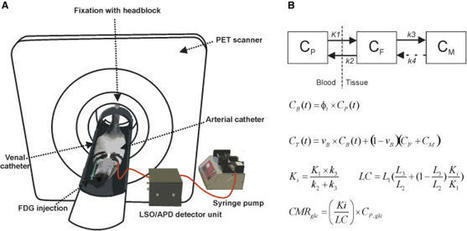
Birds have impressive cognitive abilities and show a high level of intelligence. Compared to mammals of about the same size, the brains of birds also contain many more neurons. Now a new study reported in Current Biology on September 8 2022 helps to explain how birds can afford to maintain more brain cells: their neurons get by on less fuel in the form of glucose. “What surprised us the most is not, per se, that the neurons consume less glucose—this could have been expected by differences in the size of their neurons,” says Kaya von Eugen of Ruhr University Bochum, Germany. “But the magnitude of difference is so large that the size difference cannot be the only contributing factor. This implies there must be something additionally different in the bird brain that allows them to keep the costs so low.” A landmark study in 2016 showed that the bird brain holds many more neurons compared to a similarly sized mammalian brain, the researchers explained. Since brains generally are made up of energetically costly tissue, it raised a critical question: how are birds able to support so many neurons? To answer this question, von Eugen and colleagues set out to determine the neuronal energy budget of birds based on studies in pigeons. They used imaging methods that allowed them to estimate glucose metabolism in the birds. They also used modelling approaches to calculate the brain’s metabolic rate and glucose consumption. Their studies found that the pigeon brain consumes a surprisingly low amount of glucose (27.29 ± 1.57 μmol glucose per 100 g per min) when the animal is awake. That translates into a surprisingly low energy budget for the brain, especially when one compares it to mammals. It means that neurons in the bird brain consume three times less glucose than those in the mammalian brain, on average. In other words, their neurons are, for reasons that aren’t yet clear, less costly. Von Eugen says it’s possible the differences are related to birds’ higher body temperature or the specific layout of their brains. The bird brain is also smaller on average than the mammalian brain. But their brains retain impressive capabilities, perhaps in part due to their less costly but more numerous neurons.
|
|
Scooped by
Dr. Stefan Gruenwald
September 9, 2022 9:17 PM
|
Multiple climate tipping points could be triggered if global temperature rises beyond 1.5°C above pre-industrial levels, according to a major new analysis published in the journal Science. Even at current levels of global heating the world is already at risk of passing five dangerous climate tipping points, and risks increase with each tenth of a degree of further warming. An international research team synthesized evidence for tipping points, their temperature thresholds, timescales, and impacts from a comprehensive review of over 200 papers published since 2008, when climate tipping points were first rigorously defined. They have increased the list of potential tipping points from nine to sixteen. The research, published in advance of a major conference “Tipping Points: from climate crisis to positive transformation” at the University of Exeter (12-14th September), concludes human emissions have already pushed Earth into the tipping points danger zone. Five of the sixteen may be triggered at today’s temperatures: the Greenland and West Antarctic ice sheets, widespread abrupt permafrost thaw, collapse of convection in the Labrador Sea, and massive die-off of tropical coral reefs. Four of these move from possible events to likely at 1.5°C global warming, with five more becoming possible around this level of heating. Lead author David Armstrong McKay from Stockholm Resilience Centre, University of Exeter, and the Earth Commission says, “We can see signs of destabilisation already in parts of the West Antarctic and Greenland ice sheets, in permafrost regions, the Amazon rainforest, and potentially the Atlantic overturning circulation as well.”
“The world is already at risk of some tipping points. As global temperatures rise further, more tipping points become possible.” he adds. “The chance of crossing tipping points can be reduced by rapidly cutting greenhouse gas emissions, starting immediately. The Sixth Assessment Report of the Intergovernmental Panel on Climate Change (IPCC), stated that risks of triggering climate tipping points become high by around 2°C above preindustrial temperatures and very high by 2.5-4°C. This new analysis indicates that Earth may have already left a ‘safe’ climate state when temperatures exceeded approximately 1°C warming. A conclusion of the research is therefore that even the United Nations’ Paris Agreement goal to limit warming to well-below 2°C and preferably 1.5°C is not enough to fully avoid dangerous climate change. According to the assessment, tipping point likelihood increases markedly in the ‘Paris range’ of 1.5-2°C warming, with even higher risks beyond 2°C. The study provides strong scientific support for the Paris Agreement and associated efforts to limit global warming to 1.5°C, because it shows that the risk of tipping points escalates beyond this level. To have a 50% chance of achieving 1.5°C and thus limiting tipping point risks, global greenhouse gas emissions must be cut by half by 2030, reaching net-zero by 2050.
|
|
Scooped by
Dr. Stefan Gruenwald
September 8, 2022 4:47 PM
|
If you’re one who’s looking for inspiration for your next AI-generated artwork, you should check out this website called Lexica.art. It’s a massive collection of millions of Stable Diffusion images including its text prompts people used to create them. The web app is pretty basic and neat with a simple discord link, a search box, and of course the images. The way it’s described by the developer Sharif Shameem, is a search engine for AI-generated images and prompts. For instance, you can enter “astronaut” in the search box if you’re interested in seeing artworks related to an astronaut. What’s great is you’ll see the exact prompt used to generate the image on the left side. You can copy and remix these text prompts to create even cooler results. According to Sharif, Lexica is serving 100 GB of images per hour and is growing rapidly. Lexica's search engine is now 100% powered by CLIP. This means your search query will likely have thousands of matching Stable Diffusion images. You can also search by image similarity too. God Mode You can toggle the Grid Layout mode to quickly view hundreds of images on one page. Click on each photo to see the parameters like the prompt, seed, etc. You can even move the slider to change the size of the image previews. I like this mode better than the List view.
|