Your new post is loading...

|
Scooped by
Gilbert C FAURE
December 2, 2013 9:13 AM
|
A topic dedicated to allergy
ouvert dans le contexte du DESC d'Immunologie clinique et allergologie en France opened for 10 years, > 2800 Highly selected scoops in an evolving and controversial field >14.4 K Views by > 4.4 K viewers
|
|
Scooped by
Gilbert C FAURE
June 19, 12:28 PM
|
New episode on JAK inhibitors for eczema 🎧
What is the difference between a JAK inhibitor cream and a pill?
Topical JAK inhibitors work mainly where they are applied, with much less systemic exposure.
Oral JAK inhibitors work throughout the body, which is why patient selection, monitoring, and lab checks matter.
In this episode, host Payel Gupta, MD, FACAAI speaks with Nicole Chase, MD about how JAK inhibitors work, who may benefit, and how to use them safely.
I created this infographic to help make the current options easier to understand.
Thank you to The ITCH Podcast for the shoutout and for including my infographic in the episode notes, and to Allergy & Asthma Network for helping bring this patient education forward.
Listen here: https://lnkd.in/g8yzBtEb
|
|
Scooped by
Gilbert C FAURE
June 1, 10:31 AM
|
Mast Cell–Neuronal Crosstalk in Allergic Defense The schematic illustrates how the immune and nervous systems cooperate through mast cell–neuronal pathways, supporting the “toxin hypothesis.” This concept suggests that allergic responses evolved as protective mechanisms to detect and avoid harmful substances. The process begins when environmental antigens breach epithelial barriers and are captured by dendritic cells, initiating a type 2 immune response. During the sensitization phase, dendritic cells activate T helper 2 (Th2) cells, which in turn stimulate B cells to produce antigen-specific IgE antibodies. These IgE molecules bind to mast cells, priming them for future encounters. Upon secondary exposure to the same antigen, mast cells become rapidly activated, releasing mediators such as leukotriene C4 (LTC4), which play a central role in signaling danger. Activated mast cells communicate with the nervous system through specific receptor-ligand interactions. Molecules like LTC4 bind to receptors such as CysLT2R, while other mediators including histamine and serotonin engage their respective receptors on sensory neurons. This interaction triggers neural pathways that transmit signals to the brain, integrating immune detection with behavioral responses. One key outcome of this crosstalk is antigen-driven avoidance behavior. Signals involving molecules such as GDF15 influence the central nervous system, prompting organisms to avoid harmful substances. This behavioral adaptation reduces further exposure to the antigen and helps protect against inflammation, particularly in the gastrointestinal tract. Different tissues exhibit specialized neuro-immune responses. Sensory neurons innervating the skin, gut, lungs, and mucosal surfaces mediate distinct allergic symptoms such as itching, sneezing, coughing, or gastrointestinal distress. These localized reflexes act as rapid defense mechanisms to expel or avoid harmful agents. At the molecular level, mast cells release a variety of mediators that interact with neuronal receptors, including histamine (H1R/H4R), serotonin (5-HT2/3R), and proteases (PAR1). Some signaling pathways remain incompletely understood, as indicated by unknown receptor-ligand pairs, highlighting areas for future research. Overall, mast cell–neuronal communication represents a sophisticated system linking immune detection to behavioral and physiological responses. This integration not only explains allergic symptoms but also underscores their potential evolutionary role in protecting the host from environmental toxins.
|
|
Scooped by
Gilbert C FAURE
May 17, 4:16 AM
|
Allergy clinic looks simple.
It rarely is.
What people see
↳ Skin testing
↳ Patch testing
↳ Food challenges
↳ Allergy shots
↳ Biologics
What they do not see
↳ Sorting out whether a reaction was IgE-mediated, delayed, irritant, infectious, mast cell-related, bradykinin-mediated, or not allergy at all
↳ Explaining why a positive test does not always mean clinical allergy
↳ Rebuilding trust after broad food panels turn tolerated foods into sources of anxiety
↳ Reviewing ingredient lists, cofactors, timing, and symptom patterns in detail
↳ Figuring out whether “sinus allergy” is allergic rhinitis, vasomotor rhinitis, reflux, chronic sinus disease, or something else
↳ Deciding when hives are spontaneous urticaria and when swelling may be hereditary angioedema, ACE inhibitor angioedema, or another non-histamine process
↳ Recognizing when the story fits alpha-gal, especially when reactions are delayed and the timing feels “off”
↳ Working through drug allergy labels that have followed patients for years
↳ Sorting eczema from allergic contact dermatitis, then using patch testing when the story fits
↳ Explaining why flushing is not always allergy, swelling is not always angioedema, and eczema is not always food driven
↳ Figuring out whether “uncontrolled asthma” is persistent airway inflammation, poor inhaler technique, adherence issues, rhinitis, reflux, vocal cord dysfunction, or the wrong diagnosis altogether
↳ Working up recurrent sinus, lung, or skin infections and asking whether the problem is allergy, immune deficiency, or both
↳ Evaluating for antibody deficiency or other immune problems when the infection history does not add up
↳ Prior authorizations, school forms, biologic renewals, and portal messages in between visits
↳ Helping patients unlearn years of misinformation from social media, panel testing, and vague “sensitivity” reports
That is the part people miss.
A good allergy visit is not just about finding a trigger.
It is about asking better questions.
It is about narrowing a differential.
It is about knowing when the answer is allergy, and when it is not.
A big part of this specialty is not diagnosing more allergy.
It is ruling it out correctly.
And honestly, that is where a lot of the value lives.
Because the right diagnosis does two things:
↳ It finds what truly needs treatment
↳ It frees patients from avoiding things they were never actually allergic to
That can mean fewer false labels.
Less fear.
Less unnecessary restriction.
And better care.
Allergy-immunology sits at a strange intersection of detective work, pattern recognition, patient education, skin disease, airway disease, swelling disorders, immune evaluation, and long-term management.
It looks lighter from the outside than it really is.
Clinical allergists know otherwise.
What do you think is the most misunderstood part of allergy practice? | 14 comments on LinkedIn
|
|
Scooped by
Gilbert C FAURE
May 15, 11:15 AM
|
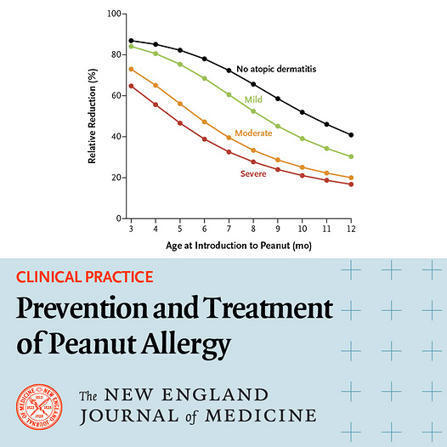
Beyond Early Allergen Introduction: A New Paradigm for Pediatric Allergy Prevention 👶💡
As healthcare professionals, we’ve long focused on the timing of introducing peanuts and eggs to prevent food allergies. But a new EAACI interest group report (2025),co-authored by leading experts in the field such as Carina Venter , Emilia Vassilopoulou , Berber Vlieg-Boerstra RD PhD , and Alexandra Santos, MD PhD ,reminds us that the quality of the entire diet matters just as much.
The latest guidance emphasizes a holistic "Healthy Complementary Feeding" approach to support immune maturation and a diverse gut microbiome.
Key Clinical Takeaways:
⏱️ Timing is Key (4-6 Months): Start complementary feeding around this window to meet increasing needs for iron and zinc and to utilize the "window of opportunity" for immune tolerance.
🥦 Prioritize Diversity: Encourage a high variety of whole, nutrient-dense, and home-cooked plant-based foods (vegetables, legumes, grains).
🐟 Nutrient Focus: Aim for diets rich in fiber, iron, zinc, and omega-3 fatty acids, while including fermented foods like natural yogurt.
🚫 The "Whole Food" Advantage: Discourage over-reliance on ultra-processed commercial baby foods and pouches, which are often low in nutrients and may delay the development of oral motor skills.
🥜 Allergen Integration: Continue the early and regular introduction of regional allergens (especially egg and peanut), particularly for high-risk infants with eczema.
By shifting our focus from "avoidance" to "diverse inclusion," we can better support the development of a healthy immune system in our youngest patients.
Reference: Vlieg-Boerstra B, et al. Pediatr Allergy Immunol. 2025;36:e70150.
|
|
Scooped by
Gilbert C FAURE
May 12, 10:24 AM
|
A positive allergy test is not a diagnosis.
It's a data point.
🧪 What looks like good medicine:
Treating every positive the same.
Same restriction. Same fear. Same label.
That’s not expertise. It’s one-size-fits-all thinking.
✅ This is expertise:
→ Positive test, no history = sensitization only. Watch, don't restrict.
→ Oral allergy syndrome = raw fruit tingles, rarely systemic. Context matters.
→ Cross-reactivity = depends on the pair. Not all cross-reactive allergens carry equal risk.
→ Clear symptoms + positive test = that's your diagnosis. Act on it.
→ Anaphylaxis history = full glass. Treat accordingly. No second-guessing.
The test confirms your clinical story.
It doesn't replace it.
When we over-restrict based on a number, we create food fear, nutritional gaps, and patients avoiding safe foods for years.
When we under-act on a real history, we miss the diagnosis entirely.
The skill isn't ordering the test.
It's knowing what to do with the result.
💬 What's the most common positive test misinterpretation you see in your practice?
|
|
Scooped by
Gilbert C FAURE
May 8, 11:38 AM
|
|
|
Scooped by
Gilbert C FAURE
April 22, 4:15 AM
|
Découvrez notre dernière publication du groupe de travail e-santé et intelligence artificielle #GTESIA de la Société Française d'Allergologie - SFA !
Plusieurs sessions évoquent ce sujet lors du #CFA2026. Le groupe assure la promotion des outils de #MachineLearning et d’#IA qui permettent aux patients allergiques d’être mieux pris en charge et de bénéficier de soins personnalisés.
|
|
Scooped by
Gilbert C FAURE
April 13, 9:52 AM
|
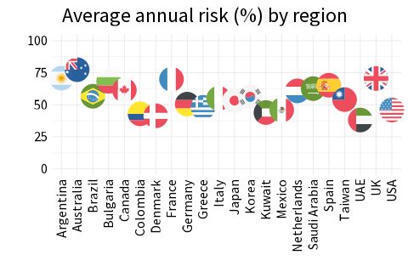
📢 Happy to share our latest paper on RESA, a risk prediction tool for asthma attacks (exacerbations) in severe asthma, developed using data from 27 regions across the planet.
Led by Dr. Wenjia Chen, RESA is a modular model with a core and optional set of predictors, predicting the risk of any or frequent attacks. This is a highly relevant outcome, as we strive for more efficient management of this important subgroup of asthma.
★ The more we tried, the clearer it became that a universally applicable model without local adjustment may not be realistic. The team concluded that the most responsible approach is to treat background exacerbation risk as an input parameter.
This reflects the nature of asthma attacks, a biological event, but also shaped by subjective symptom perception, standards of care, and environmental factors.
This real-world heterogeneity remains hidden until we try to quantify the risk, and is difficult to identify in the harmonized world of trials.
This work would not have been possible without the sustained efforts behind large-scale initiatives like ISAR and NOVELTY.
👉 Open access paper in American Academy of Allergy, Asthma & Immunology - AAAAI journal: https://lnkd.in/gMd7FepJ
👉 Web app (RESAScore.com): https://www.resascore.com/
International collaboration: The University of British Columbia | Collaboration for Outcomes Research and Evaluation (CORE) | National University of Singapore | Observational & Pragmatic Research Institute | AstraZeneca | Respiratory Evaluation Sciences Program
|
|
Scooped by
Gilbert C FAURE
March 29, 5:23 AM
|
How do clinicians manage pediatric egg & milk allergy across countries?
🇮🇪 Ireland: Ladders dominate (egg & milk), OIT not offered.
🇨🇦 Canada: Mixed model — avoidance + ladders + OIT in some centers.
🇪🇸 Spain: Avoidance most common — yet OIT widely available.
Snapshot: A multinational survey reveals striking variation in #diagnostics, #treatment choices, and follow‑up intensity across Ireland, Canada, and Spain.
🔗 https://lnkd.in/dX_R8f4u
.
#FoodAllergy #eggallergy #milkallergy #PAI_Journal #irland #canada #spain #oit #multinationalsurvey #foodallergymanagement #foodladder #internationalsurvey #oralimmunotherapy #letter #openaccess
|
|
Scooped by
Gilbert C FAURE
March 21, 5:42 AM
|
📣 Allergies : une spécialité médicale, pas un terrain pour les pratiques non scientifiques
Sur les réseaux sociaux, on voit fleurir de nombreuses « techniques » présentées comme des solutions miracles pour comprendre ou soigner les allergies.
Elles se parent souvent d’un discours séduisant, rassurant, pseudo‑scientifique… et elles ciblent particulièrement les personnes perdues face à leurs symptômes.
Le problème, c’est que ces approches ne reposent sur aucune base médicale.
Leur discours, souvent construit sur des concepts flous ou invérifiables, peut représenter un véritable danger pour les personnes allergiques.
Les allergies ne sont ni une intuition, ni une énergie, ni une impression.
Ce sont des maladies du système immunitaire, qu’elles soient immédiates (médiation IgE) ou retardées (médiation cellulaire).
Elles déclenchent une cascade de réactions immunitaires complexes, qui n’ont absolument rien à voir avec des manipulations symboliques, des gestes approximatifs ou des méthodes sans fondement scientifique.
🩺 L’allergologie est une spécialité médicale reconnue comme telle depuis 2017, fondée sur :
• des tests validés
• des protocoles rigoureux
• une compréhension croissante des mécanismes immunitaires mis en jeu
• des traitements efficaces et sécurisés
S’éloigner de cette expertise, c’est prendre le risque :
– d’un mauvais diagnostic
– d’un retard de prise en charge
– d’une exposition à des risques non maîtrisés
– d’une aggravation des symptômes
🎯 Pour les allergies, la sécurité passe par la science.
Consulter un professionnel formé, c’est se protéger.
Faire confiance à des méthodes non validées, c’est le danger dont certains n’ont pas conscience. Surfer sur la détresse des personnes allergiques a coup de séances coûtant parfois une blinde est- ce bien raisonnable ?
Bien sûr, d’autres spécialités connaissent aussi ces mêmes problèmes !!
|
|
Scooped by
Gilbert C FAURE
February 17, 10:10 AM
|
Open Access: Development of Betalactam-Predictor: A Clinical Decision Tool for Delabeling Low-Risk Betalactam Allergy Patients. Initial Validation in Penicillin Allergy. First author: Marina Labella; corresponding authors: Elizabeth Phillips, María José Torres
Read the article here: doi.org/10.1111/all.70222
Beta-lactam predictor has emerged as a new tool for delabeling #penicillin allergy. External validation has shown a specificity of 93% for detecting low-risk patients. This score could potentially reduce diagnostic costs and the negative consequences associated with incorrect antibiotic allergy labels.
#Allergy_journal
Read more articles published in #Allergy on penicillin allergy here: https://lnkd.in/gfs_z4g6
|
|
Scooped by
Gilbert C FAURE
February 11, 11:28 AM
|
🔔 Read our latest paper published "Scope, Features, and Utility of Australian Penicillin Allergy Delabelling Protocols: A Descriptive Analysis" by Prof. Dr. Sandra M Salter et al.
🔗 Link: https://brnw.ch/21wZQJI
🎓 These findings emphasise the complexity of clinical decision-making around penicillin allergy and suggest a need for standardisation of PADL-Ps to maximise delabelling benefits and safety across Australian healthcare settings.
#PenicillinAllergy #PenicillinAllergyDelabelling #PADL #AntimicrobialStewardship #PatientSafety #HealthcareQuality #ClinicalGuidelines #ASCIA #AllergyManagement #MedicationSafety #HealthcareResearch #ClinicalDecisionMaking #StandardisationInHealthcare #AustralianHealthcare #PaediatricCare #AdultMedicine #EvidenceBasedPractice #HealthPolicy #InfectiousDiseases #QualityImprovement
|
|
|
Scooped by
Gilbert C FAURE
July 15, 8:00 AM
|
|
|
Scooped by
Gilbert C FAURE
June 13, 2:04 PM
|
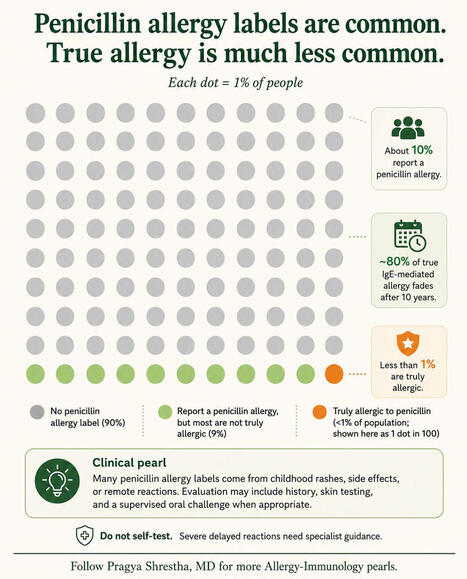
About 1 in 10 people carry a penicillin allergy label.
But less than 1% are truly allergic.
That gap matters.
Because a penicillin allergy label can mean:
↳ broader antibiotics
↳ more side effects
↳ higher costs
↳ fewer first-line treatment options
Many labels come from childhood rashes, GI side effects, or reactions that happened decades ago.
And about 80% of true IgE-mediated penicillin allergy fades after 10 years.
This does not mean self-test at home.
It means the label may be worth revisiting with an allergist.
Sometimes better care starts by removing the wrong diagnosis.
|
|
Scooped by
Gilbert C FAURE
May 17, 4:54 AM
|
Allergy-Immunology is moving past diagnosis-first treatment.
The question now is which pathway fits.
What started with anti-IgE has expanded into a much broader therapeutic era:
anti-IL-5, anti-IL-4Rα, anti-TSLP, anti-IL-13, anti-IL-31RA, BTK inhibition, kallikrein pathway targeting, FXIIa inhibition, and RNA-targeted therapy.
This timeline shows how quickly the field has evolved.
A few things stand out:
🔹 Asthma helped lead the way
From Xolair to anti-IL-5 therapies to Tezspire, asthma has been one of the major drivers of targeted treatment development in our field.
🔹 Type 2 disease is not just one disease
The same inflammatory pathways show up across asthma, atopic dermatitis, CRSwNP, eosinophilic disease, and more, but not in identical ways.
🔹 Hereditary angioedema is a great example of precision medicine
HAE management has expanded well beyond older paradigms, with both prophylactic and on-demand targeted therapies now available.
🔹 We are moving beyond monoclonal antibodies alone
This is no longer just a biologics story.
It is also a story of oral targeted therapy, pathway-specific inhibition, and RNA-directed treatment.
🔹 Mechanism matters more than ever
As options grow, choosing therapy becomes less about “what is available” and more about:
↳ phenotype
↳ endotype
↳ comorbid disease
↳ age/indication
↳ convenience
↳ access and coverage
For trainees, this timeline is a reminder of how fast the field is moving.
For clinicians, it is a reminder of how much treatment selection has changed in just two decades.
And honestly, we are probably still early.
Which approval do you think most changed practice in Allergy-Immunology?
|
|
Scooped by
Gilbert C FAURE
May 17, 3:48 AM
|
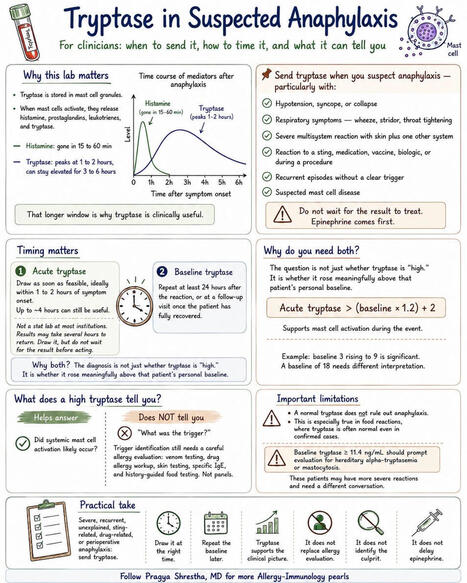
If you treat anaphylaxis,
this lab matters.
But it is often drawn too late. Or not at all.
Serum tryptase.
Tryptase is stored in mast cell granules.
When mast cells activate, they release histamine, prostaglandins, leukotrienes, and tryptase.
Here is the key difference:
Histamine disappears within 15 to 60 minutes.
Tryptase peaks around 1 to 2 hours and can stay elevated for 3 to 6 hours.
That longer window is why it is clinically useful.
📌 Send tryptase when you suspect anaphylaxis — particularly with:
→ Hypotension, syncope, or collapse
→ Respiratory symptoms — wheeze, stridor, throat tightening
→ Severe multisystem reaction with skin plus one other system
→ Reaction to a sting, medication, vaccine, biologic, or during a procedure
→ Recurrent episodes without a clear trigger
→ Suspected mast cell disease
Epinephrine comes first.
The blood draw happens after the patient is stabilized.
🧪 Timing matters
1️⃣ Acute tryptase — within 1 to 2 hours of symptom onset (up to ~4 hours is still useful)
Note: tryptase is not a stat lab at most institutions. Results may take hours. Do not wait for the result before acting.
2️⃣ Baseline tryptase — at least 24 hours post-reaction or at follow-up
Why both?
Because the question is not whether tryptase is “high.”
It is whether it rose above that patient’s baseline.
📌 The formula: Acute > (baseline × 1.2) + 2
That supports mast cell activation during the event.
⚠️ Two limitations to know:
A normal tryptase does not rule out anaphylaxis — especially in food reactions.
An elevated baseline (≥11.4 ng/mL) should prompt evaluation for hereditary alpha-tryptasemia or mastocytosis.
Tryptase supports the clinical picture.
It does not replace allergy evaluation.
It does not identify the culprit.
It does not delay epinephrine.
PCPs, ER clinicians, and hospitalists — are you routinely getting tryptase when anaphylaxis is on the table? What gets in the way?
|
|
Scooped by
Gilbert C FAURE
May 13, 3:38 AM
|
👩⚕️ One of the biggest mistakes I see in allergy care:
broad food panel testing.
If you come to my clinic expecting a 50-food scratch test on your child’s back, you are probably going to be disappointed.
Here’s why:
1️⃣ Skin prick testing without a history is a guessing game
A positive wheal (that little bump on the skin) means sensitization.
It does not automatically mean your child will react if they eat that food.
Without a credible reaction history to guide us, broad skin testing creates false alarms - not answers.
2️⃣ IgE blood panels have the same problem
A positive specific IgE does not equal food allergy.
It can simply mean sensitization.
When these panels are ordered without the right clinical context, the positive predictive value is low. We end up managing numbers on a lab report instead of treating the patient in front of us.
3️⃣ IgG “sensitivity” panels are a different category - and even less supported
IgG to foods usually reflects exposure and normal immune tolerance.
No major allergy society recommends IgG food panels to diagnose food allergy or food sensitivity.
A positive IgG to egg usually just means… your child eats egg.
It tells me more about what they had for dinner than what is actually making them sick.
4️⃣ These tests create fear around safe foods
Test 50 foods without a good history, and you are almost guaranteed to get positives.
Then families are left avoiding nutritious foods for months or years with no real reaction history to justify it.
I’ve seen children unnecessarily avoiding: Egg, Tree nuts, Wheat, Dairy
…all because of a “number” on a page.
5️⃣ They delay the right diagnosis
This is the part that bothers me most.
When we chase panel results, we can miss what is actually going on.
Chronic GI symptoms may be: FPIES, EoE, Celiac, reflux, constipation, or something non-immunologic entirely
Eczema has many drivers beyond food.
Broad panels do not clarify the picture - they often cloud it.
✅ What I do instead
I start with a detailed history. Always.
Then, if needed, I order:
🔹 Targeted skin testing
🔹 Targeted specific IgE testing
🔹 Oral food challenge when we need a real answer
The story a parent tells me in clinic is often worth far more than 50 wheals on a back. | 14 comments on LinkedIn
|
|
Scooped by
Gilbert C FAURE
May 9, 10:56 AM
|
A #basophil #activation #test (#BAT) performed better than #skin #prick #tests and standard sesame-specific #blood #tests for diagnosing #sesame #seed #allergy in children and was projected to reduce the need for oral #food #challenges. https://lnkd.in/eYvPynqF
|
|
Scooped by
Gilbert C FAURE
May 8, 4:43 AM
|
|
|
Scooped by
Gilbert C FAURE
April 22, 4:06 AM
|
Urine Mast Cell Mediator Levels in the Pediatric Population with and without Allergic Disease Stratified by Age and Gender: A Novel Diagnostic Insight
|
|
Scooped by
Gilbert C FAURE
April 2, 1:14 PM
|
You might not be allergic to penicillin after all.
Our researchers from The Peter Doherty Institute for Infection and Immunity, along with Austin Health, are part of a global study showing that simple testing can safely rule out incorrect allergy labels, helping patients access more effective antibiotics and improving care worldwide.
We sat down with Professor Jason Trubiano from the Faculty of Medicine, Dentistry and Health Sciences to unpack what this means for patients and healthcare systems.
Explore the research → unimelb.me/3Qf1nNZ
|
|
Scooped by
Gilbert C FAURE
March 28, 5:46 AM
|
Allergy Season Meets a Scientific Breakthrough
Every spring, millions of people brace themselves for the return of pollen. But a recent discovery could change the game: our bodies may store memories of microbial exposure directly within lung tissues, opening the door to long-lasting prevention of allergies.
Our teams have revealed that protection against allergies is stored not in immune cells, but in lung fibroblasts — structural cells that "remember" microbial exposure through epigenetic changes, shielding us from allergic reactions for months.
This finding resonates deeply with my work on microbe-immune interactions and our strategic plan Pasteur 2030. It shows how profoundly microbes educate our bodies in ways we're only beginning to understand.
What excites me? The clinical implications.
This opens a path toward genuine prevention. Not just treating allergies but stopping them before they develop through early interventions that reprogram tissue memory.
This is fundamental research at its finest: curiosity-driven science that unlocks unexpected therapeutic possibilities. And it showcases the power of interdisciplinary collaboration that defines Institut Pasteur — immunologists and tissue biologists working together to solve complex questions.
Warmest congratulations to Gérard Eberl, Lucie Peduto and all the researchers involved. Your work exemplifies the creative freedom that drives breakthrough discoveries.
Photo credit : Stromal cells (in green), which possess memory properties, around the bronchiole (smooth musculature, in red), and specifically recruited immune cells (in pink).
© Institut Pasteur
|
|
Scooped by
Gilbert C FAURE
February 20, 2:59 AM
|
Patients with pollen-related allergic rhinitis prefer on demand antihistamines, with treatment preferences differing markedly by age group, new research finds.
|
|
Scooped by
Gilbert C FAURE
February 17, 3:44 AM
|
💡 Connaissiez-vous le site e-allergie.fr ? La référence en enseignement de l’allergologie depuis près de 30 ans
Issu du CDRom Encyclopédique d’Allergologie, créé en 1998 et récompensé pour son excellence pédagogique, e-allergie.fr est aujourd’hui une plateforme de référence pour l’enseignement et la formation continue en allergologie.
🔬 Validée par des experts reconnus, constamment mise à jour, elle couvre l’intégralité des programmes universitaires (DES, FST, ex-DESC) à travers :
- 7 grands ouvrages thématiques (immunologie, pharmacologie, dermatologie, ORL, asthme, explorations biologiques…)
- 45 fiches conseil éditables à destination des patients
- Un glossaire complet
- Des renvois directs vers les RCP à jour (Base Claude Bernard – Dexther)
👩⚕️👨⚕️ Étudiants, enseignants et professionnels de santé y trouvent un outil fiable, structuré et évolutif, pensé comme un véritable support pédagogique et clinique.
🤝 Ces évolutions se font avec le soutien de la Société Française d’Allergologie et du Collège des Enseignants d’Allergologie, partenaires historiques de la plateforme.
➡️ L’accès à e-allergie.fr est désormais proposé sous forme d’abonnement annuel, garant de la qualité, de l’indépendance et de l’actualisation continue des contenus.
En savoir plus et s’abonner : https://e-allergie.fr/
#eallergie #allergologie #enseignementallergologie
|
|
Scooped by
Gilbert C FAURE
February 11, 6:28 AM
|
De-Labelling Penicillin Allergies in the Paediatric Emergency Department
"While many children carry a penicillin allergy label, the vast majority do not have a true immunologically mediated allergy, leading to a lifetime risk of avoidable use of broad-spectrum antibiotics, higher healthcare costs, and poorer clinical outcomes."
Most children thought to have a penicillin allergy actually don't.
Giving them an alternative to a penicillin-based antibiotic (because of said "allergy") denies them from receiving the best treatment for their infection.
Any opportunity to remove the incorrect "penicillin allergy" label will help them receive better care.
via Ceri Phillips cc Damian Roland
https://lnkd.in/e5bZiEwr
|