Gen AI systems are not substitutes for Google or even a damn good book - please stop treating like they are, then complaining when they aren’t! So I’ve been hearing a lot about what AI can’t do as the resistance to AI in education mounts, just as the pressure to engage increases (Newtonian physics playing…
Future of Jobs Report 2025 states that 39 percent of workers’ core skills will be disrupted by 2030, and 170 million new jobs will emerge – equivalent to 14 percent of today’s employment in the world. This is the landscape students will graduate into. Degrees provide a foundation but it is the adaptable, human skills that the Future of Jobs Report highlights will be our students’ passports into the future. These skills include:
A new UNESCO report cautions that artificial intelligence has the potential to threaten students’ access to quality education. The organization calls for a focus on people, to ensure digital tools enhance education.
"While AI and other digital technology hold enormous potential to improve education, a new UNESCO report warns they also risk eroding human rights and worsening inequality if deployed without deliberately robust safeguards."
Discover the benefits and challenges of chatbots in higher education. Learn strategies to prevent misuse, protect academic integrity, and integrate AI responsibly to support teaching and student success.
"As more students leverage chatbots for both approved and unapproved use, educational institutions can work to help students understand the appropriate way to leverage technology within the learning environment."
Dr. Andrew Jones’s delivers a lecture on Large Language Model AI (LLMs)—and why their widespread use is quietly lowering our ability to think, read, write, and discern truth.
He contrasts the liberal arts + trades model at St. Joseph the Worker College with the AI-everywhere status quo in higher ed, and argues that those who refuse intellectual outsourcing will form a new elite capable of real freedom.
In this talk, Dr. Jones argues:
LLMs simulate conversation and “flatter” the user, but don’t reason—functioning like automated sophistry.
Offloading reading, outlining, and synthesis to AI doesn’t keep you “neutral”; it erodes your analytic capacity over time.
As universities normalize AI for coursework, grading, and research, the meaning of “educated” collapses—opening space for a smaller class who can truly read, write, and think.
A true liberal education (paired with mastery of a real trade) forms free men and women: intellectually, morally, and economically independent.
What St. Joseph the Worker College is doing differently
Liberal arts that demand real discourse: reading slowly, writing clearly, and pursuing truth in community.
Trades that build durable freedom: skills you own, work that can’t be automated away.
Formation of friendship and virtue: the social conditions where truth can be received, tested, and lived.
A counter-model to AI dependency: become the kind of person who doesn’t need the machine to think.
Who this is for Students, parents, educators, and anyone concerned about the future of learning, work, and human intelligence in an AI-saturated world.
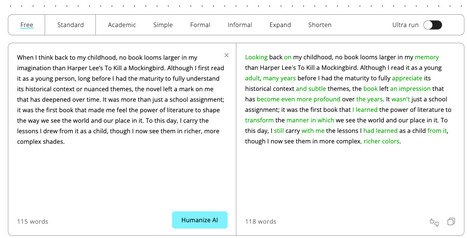
Humanizers are AI tools meant to change AI text and make it sound more human. These can be used by students in attempts to pass off AI writing as their own.
Get students excited for reading with this bracket-style digital book challenge, perfect for single classrooms or entire districts! Explore this and more at TCEA TechNotes Blog, your go-to source for educational technology and teaching innovation.
Discover how AI prompt engineering can transform higher education classrooms. Learn strategies for teaching students effective, ethical, and critical use of AI to enhance learning and engagement.
“Learning coaches,” contracts and monitoring attendance online — while virtual school may tout itself as more flexible for students, parents are involved as ever.
I’m going to make a deliberately provocative statement: generative AI is not a source of information. Now, before the technically minded among you start typing furious corrections, let me clarify what I actually mean.
A raw large language model is a pattern matching system, designed specifically for creating plausible-sounding text. That’s its job. That’s what the transformer architecture was built to do. Can it produce information? Yes, absolutely. Can it produce accurate information? Often, yes. But here’s the critical issue: this accuracy is neither guaranteed nor verifiable without external checking – and that’s the fundamental problem.
Un LMS es un motor de coincidencia de patrones probabilísticos. Eso es una simplificación, y estoy seguro de que las personas que saben mucho más sobre LLM que yo vendrán y me dirán lo equivocado que está eso. Pero esencialmente, es estocástico. Está haciendo predicciones basadas en patrones en lo que le ha pedido, patrones en sus datos de entrenamiento, los pesos que se le han dado, el aprendizaje por refuerzo al que se ha sometido y la configuración de temperatura a la que se está ejecutando. Los modelos están entrenados explícitamente para reproducir información con precisión, a través de conjuntos de datos masivos, algoritmos de optimización y aprendizaje por refuerzo a partir de comentarios humanos.
Los LLM tienen un proceso consistente pero producen resultados inconsistentes. Puede confiar absolutamente en que un modelo de lenguaje grande genere patrones que coincidan con lo que se ha programado para que coincida en función de su entrada y sus datos de entrenamiento. Eso es 100% confiable. En lo que no puede confiar es en que esos patrones serán precisos, completos o incluso iguales de una consulta a la siguiente.
GenAI has been quickly adopted by students, but the consequences of using it as a shortcut could be grave. A study into how students think about and use GenAI offers insights into how teaching might adapt
"[T]he great educational challenge lies in enabling students to take advantage of the benefits that GenAI offers, while making a critical use of it that does not undermine their own thinking."
Discover the benefits and challenges of chatbots in higher education. Learn strategies to prevent misuse, protect academic integrity, and integrate AI responsibly to support teaching and student success.
There’s a word around AI you rarely hear at conferences – PRODUCTIVITY. If we fail to understand what is happening here, all the discussions around what we do ethically, politically and economically will misfire.
A 24/7 free History homework AI tutor that instantly provides personalized step-by-step guidance, explanations, and examples for any History homework problem. Improve your grades with our AI homework helper!
Create compelling interactive fiction and choose-your-own-adventure stories effortlessly with StoryMate. Designed for creative writers, StoryMate offers a user-friendly, no-code platform that simplifies the writing process. Compete with industry-standard tools like Twine, without the need for coding skills. Perfect for writers of all levels who want to focus on storytelling, not coding.
"Zoe MacLeod discusses how to intentionally align non-credit learning, especially microcredentials, with credit programs to build learner confidence and how technology, through digital credentials and integrated records, makes those achievements visible and portable across systems."
To get content containing either thought or leadership enter:
To get content containing both thought and leadership enter:
To get content containing the expression thought leadership enter:
You can enter several keywords and you can refine them whenever you want. Our suggestion engine uses more signals but entering a few keywords here will rapidly give you great content to curate.


 Your new post is loading...