 Your new post is loading...

|
Scooped by
Yashy Tohsaku
Today, 11:13 AM
|
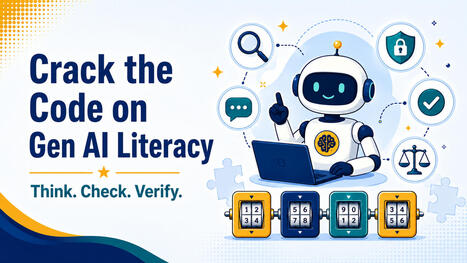
If you have missed it, the flurry of misinformation, angst, and more continues to swirl around Gen AI in schools. I'm so over it, aren't you? These days, Explore this and more at TCEA TechNotes Blog, your go-to source for educational technology and teaching innovation.
|
|
Scooped by
Yashy Tohsaku
Today, 11:10 AM
|
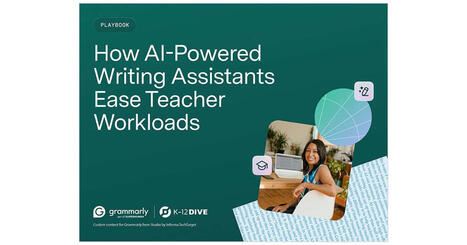
Free Playbook to How AI Writing Assistants Can Ease Teacher Workloads. This playbook explores how AI writing assistants can reduce teacher workloads, address adoption concerns and give educators more time to teach.
|
|
Scooped by
Yashy Tohsaku
October 28, 2:06 PM
|
Learn what strategies and tactics schools can develop to encourage smart and responsible AI use, while also enforcing tech guardrails.
|
|
Scooped by
Yashy Tohsaku
October 28, 1:54 PM
|
Aka, how to innovate the learning experience & improve outcomes with game design
|
|
Rescooped by
Yashy Tohsaku
from Edumorfosis.it
October 28, 1:43 PM
|
This study investigates whether persona prompting improves AI performance on challenging academic benchmarks. We find that despite widespread adoption, assigning expert personas (e.g., “You are a world-class physics expert”) does not reliably improve accuracy. Domain-mismatched experts sometimes degrade performance, and low-knowledge personas (layperson, young child, toddler) often reduce accuracy. These results suggest practitioners should focus on task-specific instructions rather than persona assignment.
Via Edumorfosis
A long time ago, in a land far, far away, there existed no smartphones (20 years ago).
Via Ana Cristina Pratas
"Generative AI has made eLearning faster and cheaper to produce, but it can also make it easier to optimize for completion rates while neglecting capability. Organizations should judge AI-assisted training by what employees can actually do afterwards."
Via EDTECH@UTRGV
|
|
Rescooped by
Yashy Tohsaku
from e-learning-ukr
October 28, 1:41 PM
|
Aka, how to innovate the learning experience & improve outcomes with game design
Via Vladimir Kukharenko
|
|
Scooped by
Yashy Tohsaku
October 27, 4:10 PM
|
In partnership with Pearson, a global report mapping 15 approaches to AI-supported collaborative learning, drawing on emerging institutional practices and student perspectives.
|
|
Scooped by
Yashy Tohsaku
October 27, 1:25 PM
|
Automation will transform work over the next few decades, but it won’t be a binary “before and after,” says MIT FutureTech Director Neil Thompson, as part of Every’s upcoming Thesis: 2027 conference.
|
|
Scooped by
Yashy Tohsaku
October 27, 1:21 PM
|
To prepare K–12 students for work after graduation, districts must first consider how they can support the tech stack for a career program.
|
|
Rescooped by
Yashy Tohsaku
from e-learning-ukr
October 27, 11:47 AM
|
This article explores the transformative potential of open educational resources (OER) as digital public goods (DPG) to foster the responsible development and use of artificial intelligence (AI). Guided by the United Nations’ Common Agenda, Global Digital Compact and agenda for open solutions, along with the United Nations Educational, Scientific and Cultural Organization’s Recommendation on OER, the ROAM-X framework and the FAIR principles for open science, this article promotes the importance of inclusivity, equity and global collaboration in tackling both local and global challenges. It also advocates for non-commercial, shared infrastructures that democratise knowledge and technology, ensuring they are secure, ethical and accessible to all communities. Current OER infrastructures and policy ecosystems remain fragmented and face significant challenges, as they are distributed across disconnected repositories and lack consistent metadata, limiting their reusability and accessibility. These barriers are exacerbated by inequities in internet access, and limited collaboration between institutions and nations, resulting in an uneven global OER landscape. To address these issues, the authors propose the creation of integrated and open platforms that position OER as global public goods, grounded in open principles and standards. This approach will foster resilient, collaborative, responsible and inclusive infrastructures that prioritise gender, linguistic and cultural diversity, and empower communities worldwide, thus democratising access to knowledge and enabling a more equitable technological future.
Via Vladimir Kukharenko
|
|
Rescooped by
Yashy Tohsaku
from Educational Technology News
October 27, 11:46 AM
|
Explore why relevance is the key to meaningful training engagement and how learning leaders can move beyond completion to build capability.
Via EDTECH@UTRGV
|
|
|
Scooped by
Yashy Tohsaku
Today, 11:13 AM
|
Explore the podcast vs. blog discussion to determine which format best meets your learning needs and preferences.
|
|
Scooped by
Yashy Tohsaku
Today, 11:08 AM
|
10 Insanely Powerful AI Tools You Didn’t Know You Needed (All 100% Free) AI is moving faster than ever. But while everyone talks about ChatGPT, Claude, and Gemini the real magic lies in the …
|
|
Scooped by
Yashy Tohsaku
October 28, 2:00 PM
|
Learn what strategies and tactics schools can develop to encourage smart and responsible AI use, while also enforcing tech guardrails.
|
|
Scooped by
Yashy Tohsaku
October 28, 1:49 PM
|
OpenAI, Meta, Google, and others are positioning AI agents as personal assistants that can perform a range of tasks online. But the web is becoming increasingly unfriendly toward agents, undermining their usefulness.
|
|
Rescooped by
Yashy Tohsaku
from e-learning-ukr
October 28, 1:42 PM
|
This open access edited volume explores the evolving relationship between artificial intelligence (AI) and mathematics education, offering a comprehensive, multidisciplinary examination of how AI technologies are transforming curriculum design, student learning outcomes, assessment methods, and pedagogical practices across diverse educational contexts. In light of the rapid development and adoption of AI in educational institutions, this book addresses critical questions, shares global perspectives, and provides practical guidance on the future of mathematics instruction. Each chapter—whether theoretical, empirical, or practice-based—offers a distinct perspective on AI’s impact on pedagogy, equity, inclusion, and ethics, four critical dimensions of contemporary education. Bringing together educators, researchers, and technologists from regions including India, Latin America, the United States, and Europe, this book examines both the opportunities and challenges of integrating AI into mathematics education, and serves as a valuable resource for educators, researchers, and policymakers worldwide.
Via Vladimir Kukharenko
Discover how ChatGPT-powered job interview practice helps students build language skills, strengthen professional communication, and gain confidence through scaffolded learning.
Via EDTECH@UTRGV
Artificial intelligence is rapidly changing career paths so it's up to us to prepare students with skills that empower them across all fields and jobs
Via EDTECH@UTRGV
|
|
Rescooped by
Yashy Tohsaku
from e-learning-ukr
October 28, 1:40 PM
|
AI is making a virtual laboratory for human learning possible, opening the door to testing ideas we could never afford or safely attempt with actual students.
Via Vladimir Kukharenko
|
|
Rescooped by
Yashy Tohsaku
from Edumorfosis.it
October 27, 4:09 PM
|
¿Estamos enseñando a nuestros estudiantes a pensar mejor o simplemente a obtener respuestas más rápidas? Esta pregunta me parece fundamental en momentos en que la IA está transformando la educación a una velocidad que, en ocasiones, supera nuestra capacidad para reflexionar. Desde mi perspectiva, el verdadero desafío educativo no consiste en incorporar más herramientas de IA al salón de clases. Consiste en garantizar que su utilización fortalezca el pensamiento crítico, la autonomía intelectual y la responsabilidad de quienes aprenden. He llegado a una convicción: la IA amplía nuestras capacidades, la ética orienta nuestras decisiones y el aprendizaje transforma la información en conocimiento. Ninguno de estos tres elementos, por sí solo, garantiza una mejor educación. Por eso, propongo considerar un modelo pedagógico de seis fases que permita integrar estas dimensiones en un proceso continuo.
Via Edumorfosis
|
|
Scooped by
Yashy Tohsaku
October 27, 1:23 PM
|
Classrooms rely increasingly on technology. Here’s how to make sure the network can keep up.
|
|
Scooped by
Yashy Tohsaku
October 27, 1:19 PM
|
Even when I don’t use AI, others might think I have.
|






















Also, there are societal concerns, including getting access to valuable intellectual property, sabotage to companies or governments and espionage. Consumer-focused companies need to ensure they are meeting their customers’ concerns. Simply put, the proper cybersecurity and privacy measures can aid businesses in seeing the full potential of IoT.
Learn more / En savoir plus / Mehr erfahren:
http://www.scoop.it/t/21st-century-learning-and-teaching/?&tag=IoT
http://www.scoop.it/t/securite-pc-et-internet/?&tag=iot