SoRo class
5.2K views | +0 today
SoRo class
A collection of readings
Curated by Clairelouise
Your new post is loading...
Rescooped by Clairelouise from Cultural Geography
October 14, 2014 8:21 AM
Scoop.it!

Fareed Zakaria: Let’s be honest, Islam has a problem right now

Fareed Zakaria: Let’s be honest, Islam has a problem right now | SoRo class | Scoop.it
But here’s what Bill Maher and Sam Harris get wrong.

Via Seth Dixon
Seth Dixon's curator insight, October 13, 2014 11:17 AM

There are far too many oversimplifications when people throw around the terms "Muslim-majority countries" and this video shows that a more nuanced understanding is needed.  That being said, it would be naive to pretend as though Islam today were without some structural problems.  As stated in the linked article, "In 2013, of the top 10 groups that perpetrated terrorist attacks, seven were Muslim. Of the top 10 countries where terrorist attacks took place, seven were Muslim-majority.  Of the 24 most restrictive countries (according to Pew Research), 19 are Muslim-majority. Of the 21 countries that have laws against apostasy, all have Muslim majorities."


Tags: place, regions, culture,  religion, Middle East, media.

Rescooped by Clairelouise from Schools + Libraries + Museums + STEAM + Digital Media Literacy + Cyber Arts + Connected to Fiber Networks
October 5, 2014 7:28 PM
Scoop.it!

Growth of Online Reading Fuels New Achievement Gap, Researchers Say | Benjamin Herold | EdWeek.org

Growth of Online Reading Fuels New Achievement Gap, Researchers Say | Benjamin Herold | EdWeek.org | SoRo class | Scoop.it

Long a cause for alarm, the gap in reading skills between poor students and their more affluent peers is well-established and worsening.

Now, there's more bad news: Educators and researchers may be underestimating the real magnitude of the reading achievement gap because they have not adequately accounted for the different skills that are required to successfully read online, as opposed to in print.

In a new study, researcher Donald Leu of the University of Connecticut, in Storrs, and his team found "a large and significant achievement gap, based on income inequality, in an important new area for learning—the ability to read on the Internet to learn information," according to a release from the university.

Titled "The New Literacies of Online Research and Comprehension: Rethinking the Reading Achievement Gap," the complete study looked at 7th graders from two Connecticut school districts. It is set to published January in the academic journal Reading Research Quarterly.

Leu's findings, while limited to a small sample that did not include students whose families are at or below the poverty line, are significant, both statistically and from a policy perspective.

Both upper- and lower-middle income students generally do a poor job of reading to locate online information, critically evaluating and synthesizing that information, and communicating online, the study found. Across the board, the students were particularly bad at gauging the reliability of scientific information on a Web page and writing to communicate information via an email message and classroom wiki.

And the gap between students from different income groups, Leu found, is large: About a year's worth of learning during the middle school years.

In an age where the Internet is an increasingly essential daily tool for finding answers, seeking understanding, and communicating, that spells big trouble.


Click headline to read more--


Via Chuck Sherwood, Former Senior Associate, TeleDimensions, Inc
No comment yet.
Rescooped by Clairelouise from The 21st Century
October 5, 2014 8:58 AM
Scoop.it!

6 Principles Of Genius Hour In The Classroom

6 Principles Of Genius Hour In The Classroom | SoRo class | Scoop.it
6 Principles Of Genius Hour In The Classroom

Via Dr. Susan Bainbridge
Eileen Forsyth's curator insight, October 10, 2014 11:54 AM

In other words, my independent study...

Raquel Oliveira's curator insight, October 12, 2014 6:46 AM

6 principios da "Hora Genial " na Sala de aula:

Hora Genial permite liberdade aos aprendizes para desenharem sua aprendizagem. durante o periodo da aula. Sao estimulados a explorarem suas proprias curiosidades, e construirem e organziarem seu conheimento durante a aula. Para que isso se concretize, devem seguir os 6 principios:


1- regra 80/20

2- socializacao

3- criacao

4- requerimento de informacao

5- consolidacao (desenho)

6- proposito


Miguel Damiani's curator insight, October 12, 2014 1:12 PM

Seis principios que todo profesor debe tener en cuenta en su clase

Scooped by Clairelouise
October 3, 2014 8:55 AM
Scoop.it!

Muslim Pilgrims Are Taking "Hajj Selfies" And Clerics Are Not Happy

Muslim Pilgrims Are Taking "Hajj Selfies" And Clerics Are Not Happy | SoRo class | Scoop.it
Clerics are reportedly condemning the latest "selfie fever" at Islam's holiest sites.
No comment yet.
Rescooped by Clairelouise from visualizing social media
September 28, 2014 8:51 PM
Scoop.it!

46 Hidden Tips and Tricks to Use Google Search Like a Boss: Infographic

46 Hidden Tips and Tricks to Use Google Search Like a Boss: Infographic | SoRo class | Scoop.it

How often do you use Google to find something on the internet?

If like a lot of people you use Google every day you’ll be astounded by the number of hidden tips and tricks their search facility offers.

Find 46 of them featured in this infographic.


Via Lauren Moss
Mayra.Loves.Books's curator insight, January 9, 2015 10:38 AM

More Google search tips...

Kelly 's curator insight, January 9, 2015 10:46 AM

Nothing hidden about these "tips & tricks" - just standard every day library functions. This is not new, most these functions have been used since Win95, the days before we see the net as we do now. Nonetheless, whatever it takes for people to finally catch up and educate themselves about easier searching techniques! 

Teresa Maceira's curator insight, April 8, 2016 8:32 PM
Add Google hacks to a students research skill set
Scooped by Clairelouise
September 26, 2014 9:04 AM
Scoop.it!

Stamford Hill council removes 'unacceptable' posters telling women which side of the road to walk down

Stamford Hill council removes 'unacceptable' posters telling women which side of the road to walk down | SoRo class | Scoop.it
A London council has removed “unacceptable” posters instructing women which side of the road they should walk down.
No comment yet.
Scooped by Clairelouise
September 21, 2014 5:42 PM
Scoop.it!

Welcome to the Anthropocene

"A 3-minute journey through the last 250 years of our history, from the start of the Industrial Revolution to the Rio+20 Summit. The film charts the growth of humanity into a global force on the equivalent scale to major geological processes."

Olga Boldina's curator insight, September 24, 2014 10:39 AM

добавить свой понимание ...

Courtney Barrowman's curator insight, May 21, 2015 11:33 AM

Summer reading KQ1: How has the Earth's environment changed over time?

Alex Smiga's curator insight, March 14, 2016 7:44 PM

Many geologists and other scientists now recognize that we are in a new geologic era.  This new era, called the Anthropocene, is distinguished by the fact that one species (homo sapiens), is dramatically modifying the environment. These modifications are impacting geologic processes to such a degree that this time period is geologically distinct (see this remote sensing interactive for examples of environmental change).  Paul Crutzen, a Nobel Prize–winning scientist who champions the term Anthropocene declared, “It’s no longer us against ‘Nature.’ Instead, it’s we who decide what nature is and what it will be.”  This video is a great primer for discussing the nature and extent of human and environmental interactions as related to industrialization, globalization and climate change.  This is definitely one of my favorite resources. 

Scooped by Clairelouise
September 21, 2014 5:41 PM
Scoop.it!

The world as it is: The influence of religion

The world as it is: The influence of religion | SoRo class | Scoop.it

"Seldom has it been more important for Americans to form a realistic assessment of the world scene. But our current governing, college-­educated class suffers one glaring blind spot.

Modern American culture produces highly individualistic career and identity paths for upper- and middle-class males and females. Power couples abound, often sporting different last names. But deeply held religious identities and military loyalties are less common. Few educated Americans have any direct experience with large groups of men gathered in intense prayer or battle. Like other citizens of the globalized corporate/consumer culture, educated Americans are often widely traveled but not deeply rooted in obligation to a particular physical place, a faith or a kinship."

Brett Laskowitz's curator insight, January 28, 2015 12:17 PM

My APHUG students will read this article before even beginning our study of religion.  My hope is that this may at the very least help them empathize with the religious fervor that still has such a profound impact on the culture of much of the world.  

Evan Margiotta's curator insight, March 18, 2015 12:26 PM

With the rise and fall of human civilizations have come the rise and fall of religions as well. Americans have grown unaware of the  beliefs and teachings of other religions. They do not know the difference between ethnic and universalizing religions. They do not know that Islam is the fastest expanding religion in the world even though Christianity still has the most followers. Unit 3 Culture

Molly McComb's curator insight, March 21, 2015 3:57 PM

This article shows how religion affects the world around us and its importance in governments. Especially in the middle east (Saudi Arabia), countries often import factors of their major religion into their government. 

Rescooped by Clairelouise from Daraja.net
September 19, 2014 7:39 PM
Scoop.it!

It's time NGOs admit aid isn't going to 'save' Africa

It's time NGOs admit aid isn't going to 'save' Africa | SoRo class | Scoop.it
The UK is a world leader in development aid. It's also a leader in greenhouse gas emissions, tax haven networks, and taking corporate profits out of Africa – which cause far more poverty there than aid relieves. Yet, the continent is often portrayed as "needing our help" and the question we must answer is what role have international NGOs – including my own, Health Poverty Action – played in portraying Africa as a continent in need of help?

Last week, along with 12 other UK and African NGOs, we published research that attempts to challenge the dominant narrative around aid and development. Our report quantifies the total resource flows in and out of Africa. It shows that Africa is losing £192bn to the rest of the world each year, while only £134bn flows in. This means Africa suffers a net loss of £58bn a year.

And against the £192bn annual losses, aid puts back less than £30bn. It's a tiny part of the picture – and clearly no solution to the regular and systematic impoverishment of a continent. Yet raising money, whether as government aid or charity donations, is what most development NGOs bang on about more than anything else.

This distorted communication implies aid is the answer. But the true figures highlight the dishonesty of the aid narrative, which portrays Africa as the grateful beneficiary of the rich world's generosity, and its hope for the future resting on how charitable we choose to be. To reinforce this perception – or to fail to challenge it – is to perpetuate a lie, and one that causes profound damage to the cause of poverty eradication.

First, it undermines public solidarity. Is it any wonder that the public have become tired and disillusioned when for years they have been told their donations and taxes are alleviating poverty in Africa, yet an end to poverty is nowhere in sight?

Second, it re-enforces power imbalances between north and south – consolidating perceptions of the poor and unproductive Africans dependent on their northern 'saviours'.

Worst of all, it diverts attention from the real issue – that the UK plays a key role in the theft of Africa's resources. Through the actions of its inadequately regulated multinational companies, its contributions to climate change, giving parts of its aid as loans that contribute to the debt crisis, and its network of tax havens through which it facilitates the looting of billions from Africa each year.

As NGOs we have constantly reinforced and validated this narrative. There has been – and is – an overwhelming tendency in the sector to lead with a focus on aid: how much it should be and what it should be spent on. These debates came to a head in the run-up to the 2013 budget, when (despite the budget being condemned by UK poverty groups) the international NGO sector warmly applauded the Chancellor for committing to meet the 0.7 target – a target that did nothing to change the UK's role in creating that poverty in the first place.

By holding this tiny gesture up as a heroic victory, the sector reinforced the perception that aid is the key tool in the fight against poverty, and wrongly validated the UK government's self-proclaimed image as the heroic saviour of the poor.

We (and I repeat, I'm including myself and Health Poverty Action too) have become part of the problem. Speaking up about resources between Africa and the rich world is not just a call to action to government, but also to ourselves.

So what do we do about it?

To start with, we need to end our obsession with 0.7%. With little time and space to talk about global poverty, when we get the chance we need to focus on what can really make poverty history. And that's not aid.

We have to examine our communications with the public, and be honest about what £3 a month can and can't do. We have a duty to those we purport to work on behalf of, and to our own public, to tell the truth. And the truth is the UK takes far more from Africa than it gives in aid. Africa subsidises us, not the other way around. The solution is to stop those losses, that drain of resources, not divert attention away from it by demands for aid and charity appeals.

We need to look at our own internal structures, policies and practices – in our campaign collations, and inside our organisations. We can't expect to change the power imbalances that create mass poverty in the world while retaining similar imbalances within our own partnerships.

Finally, the sector needs to shift the development debate to holding our government to account for its role in the global poverty. There are already impressive campaigns on tax and climate change – the sector needs to unite behind these. Yet challenging the government on their actions, while simultaneously congratulating them for their aid just doesn't make sense. It is the paradox at the very heart of the sector that undermines all that we are trying to achieve. Justice for Africa requires action to stop the resources being taken out. Let's focus on that.

Martin Drewry is director of Health Poverty Action. Along with others he's set up the Progressive Development Forum. Follow @HealthPoverty on Twitter

Via Firoze Manji
No comment yet.
Scooped by Clairelouise
September 19, 2014 2:05 PM
Scoop.it!

Mesopotamia: Crash Course World History #3 - YouTube

In which John presents Mesopotamia, and the early civilizations that arose around the Fertile Crescent. Topics covered include the birth of territorial kingd...
No comment yet.
Scooped by Clairelouise
September 19, 2014 8:53 AM
Scoop.it!

America is rapidly aging in a country built for the young

America is rapidly aging in a country built for the young | SoRo class | Scoop.it

"Although we seldom think about them this way, most American communities as they exist today were built for the spry and mobile. We've constructed millions of multi-story, single-family homes where the master bedroom is on the second floor, where the lawn outside requires weekly upkeep, where the mailbox is a stroll away. We've designed neighborhoods where everyday errands require a driver's license. We've planned whole cities where, if you don't have a car, it's not particularly easy to walk anywhere — especially not if you move gingerly.

This reality has been a fine one for a younger country. Those multi-story, single-family homes with broad lawns were great for Baby Boomers when they had young families. And car-dependent suburbs have been fine for residents with the means and mobility to drive everywhere. But as the Baby Boomers whose preferences drove a lot of these trends continue to age, it's becoming increasingly clear that the housing and communities we've built won't work very well for the old."

Alexandra Piggott's curator insight, October 18, 2014 6:48 PM

This is also an issue in Australia where the overwhelming majority of people live in single story dwellings and are very car reliant.

Joshua Mason's curator insight, January 28, 2015 8:59 PM

I can definitely see this as a real problem. Both my Uncle and my Great Uncle moved their condos from ones that had numerous steps to climb to the second floor to more elder-friendly options. My Great Uncle even went a step further to move him and his wife to a senior living community, where there food, entertainment, etc. is all provided within an enclosed neighbourhood with other people of their age group. More of these communities that act like oversized retirement homes could be the answer. They give the illusion of suburban living, something the baby boomers liked, while providing the accessibility they need.

Dawn Haas Tache's curator insight, April 8, 2015 12:27 PM

APHG- HW Option 1

Scooped by Clairelouise
September 16, 2014 2:43 PM
Scoop.it!

ISIS: A New Threat | Teaching with the News | Brown University

ISIS: A New Threat | Teaching with the News | Brown University | SoRo class | Scoop.it
No comment yet.
Scooped by Clairelouise
September 16, 2014 1:33 PM
Scoop.it!

ISIS used to be al-Qaeda in Iraq

ISIS used to be al-Qaeda in Iraq | SoRo class | Scoop.it
An Iraqi soldier during a fight against al-Qaeda in Iraq in January 2014. Ali al-Saadi/AFP/Getty Images
The Islamic State of Iraq and the Levant (ISIS) used to have a different name: al Qaeda in...
No comment yet.
Scooped by Clairelouise
October 13, 2014 2:35 PM
Scoop.it!

Misconceptions Around Banking [Banking 101 - Part 1]

Misconceptions Around Banking [Banking 101 - Part 1] | SoRo class | Scoop.it
Tweet There’s a lot of confusion about how banks work and where money comes from. Very few members of the public really understand it. Economics graduates have a slightly better idea, but many university economics courses still teach a model … Continue reading →
No comment yet.
Rescooped by Clairelouise from Schools + Libraries + Museums + STEAM + Digital Media Literacy + Cyber Arts + Connected to Fiber Networks
October 5, 2014 7:19 PM
Scoop.it!

This Country Just Abolished College Tuition Fees | Joaquim Moreira Salles | Think Progress

This Country Just Abolished College Tuition Fees | Joaquim Moreira Salles | Think Progress | SoRo class | Scoop.it

Prospective students in the United States who can’t afford to pay for college or don’t want to rack up tens of thousands in student debt should try their luck in Germany. Higher education is now free throughout the country, even for international students. Yesterday, Lower Saxony became the last of seven German states to abolish tuition fees, which were already extremely low compared to those paid in the United States.

German universities only began charging for tuition in 2006, when the German Constitutional Court ruled that limited fees, combined with loans, were not in conflict the country’s commitment to universal education. The measure proved unpopular, however, and German states that had instituted fees began dropping them one by one.

“We got rid of tuition fees because we do not want higher education which depends on the wealth of the parents,” Gabrielle Heinen-Kjajic, the minister for science and culture in Lower Saxony, said in a statement. Her words were echoed by many in the German government. “Tuition fees are unjust,” said Hamburg’s senator for science Dorothee Stapelfeldt. “They discourage young people who do not have a traditional academic family background from taking up study. It is a core task of politics to ensure that young women and men can study with a high quality standard free of charge in Germany.”

Compared to American students, Germans barely had to pay for undergraduate study even before tuition fees were abolished. Semester fees averaged around €500 ($630) and students were entitled to many perks, such as cheap (often free) transportation within and between cities.

Free education is a concept that is embraced in most of Europe with notable exceptions like the U.K., where the government voted to lift the cap on university fees in 2010. The measure has reportedly cost more money than it brought in. The Guardian reported in March that students are failing to pay back student loans at such a rate that “the government will lose more money than it would have saved from keeping the old £3,000 ($4,865) tuition fee system.”


Click headline to read more--


Via Chuck Sherwood, Former Senior Associate, TeleDimensions, Inc
No comment yet.
Scooped by Clairelouise
October 3, 2014 9:09 AM
Scoop.it!

Demographic Transition Model

Demographic Transition Model | SoRo class | Scoop.it
A page to help you understand the Demographic Transition Model
No comment yet.
Scooped by Clairelouise
September 30, 2014 2:18 PM
Scoop.it!

Environmental Determinism vs. Possibilism - YouTube

Mounica Brendan Hunter Brandt
No comment yet.
Scooped by Clairelouise
September 26, 2014 1:46 PM
Scoop.it!

A Headdress Ban Disqualified Qatar’s Entire Women’s Basketball Team from International Competition

A Headdress Ban Disqualified Qatar’s Entire Women’s Basketball Team from International Competition | SoRo class | Scoop.it
If the Asian Games really want to be a place where diversity shines, they should've opposed International Basketball's ban on religious headwear.
No comment yet.
Scooped by Clairelouise
September 21, 2014 5:42 PM
Scoop.it!

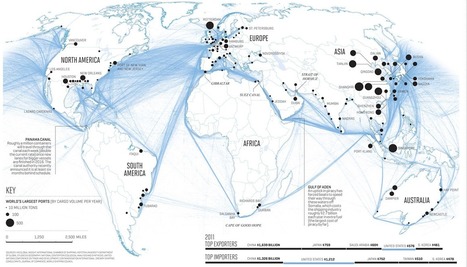
38 maps that explain the global economy

38 maps that explain the global economy | SoRo class | Scoop.it
Commerce knits the modern world together in a way that nothing else quite does. Almost anything you own these days is the result of a complicated web of global interactions. And there's no better way to depict those interactions than some maps.
Scooped by Clairelouise
September 20, 2014 6:02 PM
Scoop.it!

Population pyramids: Powerful predictors of the future

"Population statistics are like crystal balls -- when examined closely, they can help predict a country's future (and give important clues about the past). Kim Preshoff explains how using a visual tool called a population pyramid helps policymakers and social scientists make sense of the statistics, using three different countries' pyramids as examples."

Nancy Watson's curator insight, September 26, 2014 4:04 PM

Population unit

Lauren Quincy's curator insight, March 20, 2015 1:51 PM

Unit 2: Population and Migration


This video was about how demographers categorize data and analyze it. This video showed a few different population pyramids in order to show differences in population in different countries. It showed China as an example and pointed out the remnants of the one child policy 35 years before and how the number of men were higher due to sex selective abortions. They also talked about how the population pyramids could show what stage in the demographic transition model a country was in and how they use them to predict future patterns and changes. 


This relates to unit 2 because it covers topics such as population change, demographic transition models, sex composition, population policies and much more. Population pyramids are very useful due to the visualization of sex, age and number composition in a countries population. They are very important in the use of predicting the future change in population because it can tell what the population has gone through in the past and what to expect in the DTM. 

Daniel Lindahl's curator insight, March 21, 2015 10:43 PM

This video illustrates how population pyramids have the ability to show how populations will rise and fall over time. Pyramids specifically show the population based on a specific age, and illustrates a country's amount of young people in comparison to the elderly. 

Scooped by Clairelouise
September 19, 2014 2:07 PM
Scoop.it!

Youngsters recite 'The Morning After'

Youngsters recite 'The Morning After' | SoRo class | Scoop.it
School children from across Scotland recite the poem, "The Morning After", by Christine De Luca.
No comment yet.
Scooped by Clairelouise
September 19, 2014 9:25 AM
Scoop.it!

Whoa — Surprising Facts About Happiness From A Brilliant Guy Who Spends His Life Studying It

Whoa — Surprising Facts About Happiness From A Brilliant Guy Who Spends His Life Studying It | SoRo class | Scoop.it
Things that matter. Pass 'em on.
No comment yet.
Scooped by Clairelouise
September 17, 2014 7:35 AM
Scoop.it!

Scottish Independence

"Scotland is about to vote on whether to secede from the UK. There are solid arguments on both sides."

Maria la del Varrio's curator insight, December 5, 2014 12:21 PM

I support Scotland independence! Mother England should understand the current Scotland need more freedom of speech and decisions. This a good example of a peacefully claim of independence, instead of the bloody war (remember England?). The video... Is too funny to take it seriously. 

Louis Mazza's curator insight, February 27, 2015 7:34 AM

Scotland is vying for its independence from the United Kingdom, becoming free from London and its own Country. Here john Oliver analyzes the issue and provides a decent background history while stabbing lots of jokes and puns into his commentary. So basically England and Scotland got into an arranged marriage as Oliver phrased it, forming the United Kingdom some 300 years ago. Oliver goes on to say Scotland got the bad end of the philosophical relationship, setting up reasons for Scotland ambition to possibly leave. For the last 2 ½ years there has been a campaign for this independence, where Scotts feel they can better run the country they live in. Scotland is a liberal country ran by the conservative country England. These are the reasons that set up this split.   

Edgar Manasseh Jr.'s curator insight, March 7, 2015 9:27 PM

This video is hilarious and John Oliver pokes fun at the Scottish, the little brother trying to lobby themselves for independence. Great video to watch hilarious, and also informative at the same time.


Scooped by Clairelouise
September 16, 2014 2:11 PM
Scoop.it!

Overview of Human Geography: Political Geography

Overview of Human Geography: Political Geography | SoRo class | Scoop.it
No comment yet.