


“From Catalonia to Kurdistan, nationalist and separatist movements in Europe and beyond are watching the Scottish independence referendum closely.”

 Your new post is loading...
 Scoop.it!
“From Catalonia to Kurdistan, nationalist and separatist movements in Europe and beyond are watching the Scottish independence referendum closely.”

Scoop.it!
"Overview video for GE Teach http://geteach.com/maps."
Scoop.it!
“ First, don't memorize dates and don't memorize quotations. You can look them up. What matters is what happens and why. 1) Understand that the United States o...”
Via Mr. David Burton, John O'Hara

Arlis Groves's comment,
June 10, 2013 12:39 AM
Thank you, David. This is confirmation that those 8th grade Washington D.C. trips are important and impactful.
Scoop.it!
http://www.youtube.com/NSOTD http://www.twitter.com/NSOTD From Wikipedia, the free encyclopedia Lake Chaubunagungamaug (pronounced /tʃəˌbʌnəˈɡʌŋɡəmɑːɡ/), als...
Scoop.it!

Knights in the Middle Ages were not the brutal and merciless killing machines depicted on film. New research draws a different picture of the medieval military elite.
Scoop.it!

"Today, there's often a perception that Asian children are given a hard time by their parents. But a few hundred years ago northern Europe took a particularly harsh line, sending children away to live and work in someone else's home. Not surprisingly, the children didn't always like it." Via Seth Dixon

Seth Dixon's curator insight,
March 24, 2014 11:10 AM
Just a reminder for students today that they live in a good time and place for educational opportunities and personal liberties.
Arlis Groves's curator insight,
March 26, 2014 12:05 AM
Young folks today may be surprised to learn that, had they been born a few hundred years ago in Medieval Europe, they might well be working for another family through their teenaged years.
Scoop.it!

As the United States and its allies look to fight the Islamic State in Iraq and Syria, longtime adversaries are scrambling to see if they can cooperate to defeat the rising threat.
Scoop.it!

Public pool rules in France say your swimsuit can't be something you could be found wearing outside the pool. That means no trunks, Bermuda shorts, T-shirts or anything that is not strictly meant for swimming. But bust out all the Speedos you want. Via Mr. David Burton
Scoop.it!
View full lesson: http://ed.ted.com/lessons/the-five-major-world-religions-john-bellaimey It's perfectly human to grapple with questions, like 'Where do we c...
Scoop.it!

"While 62 percent of the total U.S. population was classified as non-Hispanic white in 2013, when public schools start this fall their racial landscape will reflect a different America."

Linda Rutledge Hudson's curator insight,
September 15, 2014 6:02 PM
Have observed the transition in our suburban school district. I love the diversity -- yet, teaching students from all over the globe, sometimes with limited English, can be challenging. And, our working population will eventually see the change as well -- at all levels.
Scoop.it!

"Weak and failing states pose a challenge to the international community. In today’s world, with its highly globalized economy, information systems and interlaced security, pressures on one fragile state can have serious repercussions not only for that state and its people, but also for its neighbors and other states halfway across the globe. The Fragile States Index (FSI), produced by The Fund for Peace, is a critical tool in highlighting not only the normal pressures that all states experience, but also in identifying when those pressures are pushing a state towards the brink of failure."

Melissa Marshall's curator insight,
August 28, 2014 12:57 AM
How can political stability and security be measured? The Fragile States Index is a statistical ranking designed to measure the effective political institutions across the globe.
Scoop.it!

Pharmaceutical companies would need to compensate indigenous people for using their knowhow in creating new medicines

Shawn Wright's curator insight,
September 7, 2014 8:20 AM
The Nagoya protocol is an international biological diversity convention. The protocol would at it's core require permission, acknowledgment of source knowledge or practice and compensation for the use of cultural wisdom. i don't see Nagoya as a perfect solution - there is a lot of room for language interpretation so slick corporate lawyers will find ways to legally cheat indigenous peoples from their share but I do see it as at least A small step in the right direction. The World Health Organisation estimates that 4 billion people, 80% of the world's population, use herbal medicine in primary healthcare. Cherokees Believe and have practiced healing from plant and water for thousands of years. Every and any human sickness has a plant who can cure it. Every plant in the world has a purpose if we but learn to hear and understand what that is - there are no weeds to the Cherokee. Yona Shawn |
Scoop.it!

“Some are contemplating migration, severing ties to their holy land. Others want to stay and protect their shrines.”

Kaitlin Young's curator insight,
December 14, 2014 12:07 PM
"I cannot leave Lalish, or live without it," Pir Said said. "People, whoever they might be, are most present in their own land. When they leave it, they disappear—they melt into other communities. We're present here as a community in Lalish. If we leave, we think we will be weakened." Many religions are incredibly tied to place. The Yazidis in Irag are a religious minority that blends ancient Mesopotamian beliefs and Zoroastrianism with Christian, Jewish, and Sufi influences. They are incredibly tied to the land, and fear that being chased out will ultimately end in the weakening of their religious community. Yazidis are no strangers to this, and in the recent past they have lost entire villages to Hussein's Arabization project. For the Yazidis, their religion is much more a way of life than just a spiritual belief. Like many different peoples, they fear that being forced to move will cause their religious community to be taken over by the beliefs and lifestyles of where they have to live. 
Molly McComb's curator insight,
March 21, 2015 3:59 PM
The Yazidis are loosing their spiritual identity due to their exile from Iraq. They are being forced out of the country and it is slowly diluting the diversity in their religion as they are becoming more spread out and great cultural artifacts are lost. 
Nicholas A. Whitmore's curator insight,
December 16, 2015 5:11 PM
I interesting story. It reminds me of all the unique small cultural groups mentioned in Strabo's Geography. Unfortunately as is the case o most small groups historically is they were either eradicated or assimilated. This group seems to have only a choice between those two and may not be able to preserve themselves. ISIS eradication or Western assimilation. It is unfortunate this is the historical cycle or that so soon after Saddam's fall they once again had to flee. Their culture/religion I do find odd though given it is a mixture of everything that has been in that region for over 2000 years and seems to only have identity because it has been rejected by every other group. To me it lacks identity in and of itself but that is a discussion for another time. Also geographically being a hill people they are disadvantaged because they have historically lower numbers (due to poor agriculture) in addition to the fact that most people who lived in the plains saw hill peoples as savages and uncivilized because they took longer to create settlements and often raided lowland peoples as well (history likes to rhyme sometimes). Overall the best solution for this situation geographically perhaps would be to give them an enclave in a mountainous portion of another country so they could retain their identity and be safe for the time being.
Scoop.it!
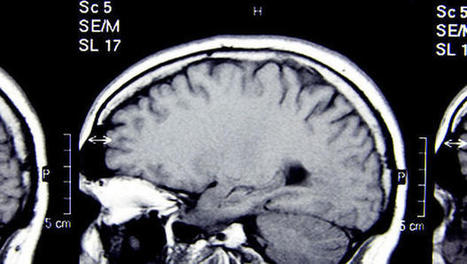
“ Active learning may improve cognitive reserve, which helps reverse neurological damage”
Via Dr. Susan Bainbridge, Tam Hutchinson
Scoop.it!

“ barney fife explaining the preamble”
Via John O'Hara
Scoop.it!

Dan Lewis runs the wildly popular daily newsletter Now I Know (“Learn Something New Every Day, By Email”). To subscribe to his daily email, click here.Carrots are mutants.Well, orange carrots at least.
Scoop.it!
TED Talks A clay cylinder covered in Akkadian cuneiform script, damaged and broken, the Cyrus Cylinder is a powerful symbol of religious tolerance and multi-culturalism.
At first glance this TED Talk appears to be more about ancient history, archaeology and biblical studies that anything modern. Yet as Neil MacGregor, the Director of the British Museum continues his discussion of the Cyrus Cylinder (A clay cylinder covered in Akkadian cuneiform script), it becomes clear that this historical artifact is an important more of how modern states conceive of their heritage, cultural legacy and role within the Middle East today (such as Israel, Iraq, Iran and the U.K.). As such the Cyrus Cylinder is a powerful symbol of religious tolerance and multi-culturalism and plays a role in shaping Middle Eastern cultural and political institutions. Via Seth Dixon

Rebecca Farrea's curator insight,
November 8, 2013 9:16 AM
Neil MacGregor, the Director of the British Museum, explains Middle Eastern history using the Cyrus Cylinder. His first point in this TED talk is especially interesting because he explains that people age and perish and objects do the same, but objects such as this cylinder survive and are able to tell important stories of history for a much longer time than people normally can.
Scoop.it!

Boston was one of America’s earliest settlements, and that is reflected in its neighborhood and town names.
Scoop.it!

Uber has been banned from operation in Germany by a Frankfurt court, the latest shot in the popular app's fight with taxi drivers worldwide. Via Mr. David Burton
Scoop.it!

Here's a talk that could literally change your life. Which career should I pursue? Should I break up -- or get married?! Where should I live? Big decisions like these can be agonizingly difficult. But that's because we think about them the wrong way, says philosopher Ruth Chang. She offers a powerful new framework for shaping who we truly are.
Scoop.it!
FOLLOW MICHAEL STEVENS ON TWITTER: http://www.twitter.com/tweetsauce FOLLOW ON INSTAGRAM: http://www.instagram.com/electricpants Kevin is VSAUCE2: http://www...

Alex Smiga's curator insight,
September 7, 2015 4:29 PM
Seth Dixon's insight:
This video covers various topics important to mapping and satellite imagery (and alesson from an APHG teacher on how to use this video with other resources). There is so much more to the world and space than what we can see see. Chromoscope, referenced in the video, simulates other forms of energy on the electromagnetic spectrum besides just visible light. This type of information is at the core of the science behind all of our satellite imagery. This video also covers many map projection issues and highlights online resources to understand map distortion including: Google’s Mercator Map PuzzleJason Davies’ interactive map projection websiteInteractive Gnomonic Projectionand the military's live rendering of what the Earth looks like right now.
Scoop.it!

"Temperatures across the Northeast have been unusually cool, and they have been unusually hot across the northwest. A strange jet stream is behind the flip-flop between summer conditions in the two northern corners of the country. The polar jet stream is the prevailing band of wind that blows west to east across the upper half of the U.S. in summer. (There is a subtropical jet, also, that typically crosses northern Mexico). We often see the jet stream depicted on TV weather reports—that big, wavy line across the U.S. and Canada that bends south then north then south again. Low-pressure weather systems, sometimes called cold fronts, ride along the jet stream, bringing us much of our daily weather. But this summer the polar jet steam seems to be somewhat flattened out, and it’s been in that position more than usual."
Tags: physical, weather and climate, seasonal.

Alyssa Dorr's curator insight,
December 16, 2014 7:51 AM
A strange jet stream is the cause of this flip-flop summer. People in the Northeast have experienced a cooler summer while people in the West have experienced hotter summers than usual. Boston typically experiences 90 degree weather about fifteen days throughout the summer. This summer, it only hit that mark about four times. In Oregon, they hit 90 degrees twelve times already and this usually only happens a few times a year. The polar jet stream is banding the wind that blows across the upper half of the US, this makes their summers colder than usual. This jet stream seems to be flattened out and has lately been in that position more than expected. Forces in the atmosphere make the stream flat. The climate change, as said by S.Y. Simon Wang, is said to be not "global warming" but "global weirding". This article goes through most of the summer and stops at the weather for the week of August 18th. |







Compare and contrast Scotland's bid for independence with events leading to American independence. How does a culture decide to change its political geography?
It is interesting to see how globalization does as much to bring us together as it does to rip us apart. The exchange of ideas, goods, and people has hugely impacted the lives of everyday citizens and the nations that they call home, where divisions among people are felt more keenly as the competition in today's global economy grows stronger. Catalonia, the region that has done much to keep the economy of the Spanish nation afloat, and Catalans are eager to shed the "dead weight" they feel they are carrying; the Basque region has long since demanded its independence, and we have already seen the fracturing of the Balkans. In some instances, perhaps separation is for the best. However, I feel like these movements are the result of knee-jerk reactions to the current economic climate and deep, underlying hatreds that have no place in the current world order. Spain has been one nation for hundreds of years, as has the United Kingdom; to suddenly dissolve these unions in the name of century-long feuds seems not only unnecessary, but almost child-like. There is enough hatred in the world- why let us continue to divide amongst ourselves when history has shown that people in these regions can coexist and can consistently pull through these difficult periods. It is one thing to be proud of being Scottish- it is another to ignore the economic and political realities of what Scottish independence would bring for its people for the sake of this nationalist sentiment. I, for one, was relieved to see Scotland vote to remain a member of the UK. Separatist movements across the continent have been quieted, if only for another few years.
The Scottish vote for independence would have broken up a modern United Kingdom. Many Scottish folks feel that it is time to separate from a parent country where there are many other countries that are involved. Becoming independent is not an easy task. There has to be a vote and a strong position for those separatists to succeed in getting a victorious vote.