Your new post is loading...

|
Scooped by
Gilbert C FAURE
August 15, 3:34 AM
|
Our new study with our PhD student Franck Zekre a great pediatrician and in collaboration with a smart company in US Vaxcyte. We developed a new vaccine againt P gingivalis to prevent inflammatory dosorders
|
|
Scooped by
Gilbert C FAURE
August 8, 5:27 AM
|
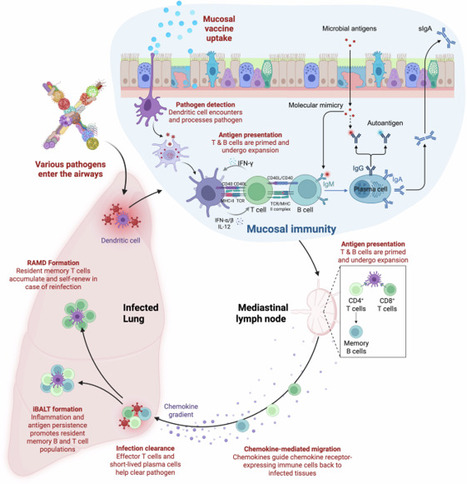
If we want more effective vaccines against respiratory pathogens, we need more reliable ways to measure immunity where infection begins: in the airways.
We are very pleased to share that the Conference Report: Airway Mucosal Sampling and Immune Analysis, was recently published in Vaccine. This article captures the key discussions and recommendations that emerged from a workshop convened by Novo Nordisk Foundation and Wellcome Trust last year, held in connection with NIVI’s Harnessing Airway Immunity For Next-Gen Vaccines Cluster Conference.
Check out the full article here 👉: https://lnkd.in/dFzKHjHR
The report highlights several key challenges currently limiting progress towards developing airway targeting vaccines, including:
• A lack of standardized approaches for airway sampling and immune analysis
• Limited cross-study comparability and assay validation
• The need for better understanding of mucosal correlates of protection
• Regulatory and implementation barriers to incorporating mucosal endpoints into vaccine development
A major outcome of the workshop was the development of a recommendation framework aimed to strengthen coordination across research groups, improve standardization, build evidence for mucosal immune markers of protection, and ultimately support the next generation of respiratory vaccines.
At NIVI, we are proud to have contributed to these discussions and to be helping build the scientific foundations needed to advance mucosal vaccine development.
A big thank you to all workshop participants, collaborators, and those that helped shape this report and the roadmap it presents for the field.
With Joshua Rosenheim, Jens-Ulrik Stæhr Jensen, Deborah King, Henrik Kløverpris, Shane Crotty, Marianne H., Cecilia Lindestam Arlehamn, Hocine W. Mankouri, Rasmus Mortensen, Morten Ruhwald, MD, PhD, Tian Yun Wang, Helene Bæk Juel
Novo Nordisk Foundation Initiative for Vaccines and Immunity (NIVI), Department of Immunology and Microbiology (ISIM), University of Copenhagen Novo Nordisk Foundation Science Cluster
|
|
Scooped by
Gilbert C FAURE
July 29, 1:28 PM
|
Mucosal immunity and vaccine development.
Abstract
The mucosal system, which includes the respiratory, gastrointestinal, and urogenital tracts, serves as a primary entry point for pathogens, with a unique immune microenvironment and specialized defense mechanisms. In recent years, especially following the onset of the COVID-19 pandemic, there has been increasing recognition of the importance of mucosal immunity, motivated by an enhanced comprehension of its fundamental mechanisms. Currently, strategies based on mucosal delivery systems to administer antigens and induce strong mucosal protective immunity have become a key focus in the development of mucosal vaccines. Compared with conventional intramuscular delivery, mucosal vaccination can simultaneously elicit a robust local mucosal response, effectively block pathogen entry into the local mucosa, and generate systemic immune responses to prevent symptomatic infections and severe disease. In addition, mucosal delivery offers advantages such as ease of administration and low invasiveness, making it a more widely acceptable approach to vaccination. In the present study, we conducted a systematic review of the mechanisms of mucosal immunity, the technological platforms for mucosal vaccines, and proposed a perspective on the challenges and future directions for the development of next-generation mucosal vaccines, with the goal of enhancing public knowledge and awareness regarding mucosal immunity and its possible effects on global health.
Ingo Fricke
https://lnkd.in/equJEmmW
|
|
Scooped by
Gilbert C FAURE
April 30, 8:05 AM
|
How do intranasal vaccines work? Can flu vaccines be better? Thrilled to announce our newest paper is out, demonstrating memory B cell responses in human upper airway after immunization with the intranasal flu vaccine (Flumist). Great findings by dedicated scientist Dr. Hannah Stacey in the lab, leveraging clever sampling techniques from Dr. Sydney Ramirez. La Jolla Institute for Immunology Science Magazine
https://lnkd.in/gtRiyMdS
|
|
Scooped by
Gilbert C FAURE
April 1, 3:57 AM
|
🫁 Uncovering the Lung’s Local Immune Network
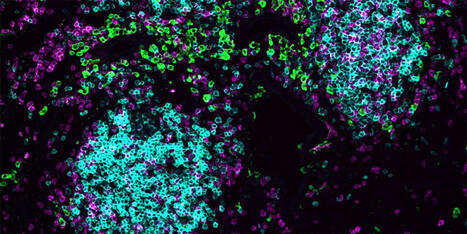
When a virus enters the lungs, the immune system must respond immediately. The King lab, Jean de Lima as first author, at the Department of Biomedicine and the Universität Basel has now identified a specialized group of CD4⁺ T cells that coordinate a local immune defense directly within the lung.
These T cells produce a molecule called HIF-1α, which is typically known as a cellular stress sensor but can also be activated by immune signals. Using advanced imaging methods, the team mapped how these cells position themselves at the outer edges of small immune hubs and release interleukin-21 (IL-21) to activate neighboring cells. When HIF-1α was switched off in the T cells, the local immune network collapsed, leaving the lungs poorly equipped to fight off a second infection with a different influenza strain.
The same HIF-1α-driven T cells were also found in a mouse model of lung cancer, where they supported the immune system’s fight against tumor cells. This suggests that the lung maintains its own immune ecosystem — a coordinated community of cells with distinct roles in tissue defense.
This discovery provides important insight for developing inhalable mucosal vaccines that protect the lungs where viruses first enter, and it may also inform new strategies for tissue-targeted immunotherapies.
Congrats to this great achievement!
👉 Publikation link in comments.
#Immunology #LungImmunity #Tcells #ImmuneSystem #Influenza #CancerImmunology
|
|
Scooped by
Gilbert C FAURE
March 22, 6:31 AM
|
🧬 Programming lung immunity through mucosal vaccination
A new Science Magazine study shows how intranasal vaccination can induce broad protection against diverse respiratory threats in mice.
Using an intranasal liposomal formulation combining TLR4 and TLR7/8 agonists with antigen, the authors demonstrate durable protection against multiple viral and bacterial respiratory infections, as well as allergic airway inflammation.
Multi-omic profiling of lung tissue reveals several key features of this response:
🔹 Durable tissue-resident T cell immunity
Intranasal vaccination induces persistent antigen-specific CD4⁺ and CD8⁺ tissue-resident memory T cells (TRM) in the lung that remain detectable for months.
🔹 Epigenetic reprogramming of alveolar macrophages
Single-cell transcriptomic and chromatin accessibility analyses reveal sustained transcriptional and epigenomic remodeling of alveolar macrophages, enhancing antigen presentation, phagocytosis, and antiviral responses.
🔹 T cell–innate cell cross-talk via RANKL signaling
Memory T cells imprint macrophage function through RANKL-mediated signaling, establishing a feed-forward circuit between adaptive and innate immunity within lung tissue.
🔹 Rapid spatial immune organization upon infection
Following challenge, vaccinated lungs rapidly form tertiary lymphoid structures, enabling accelerated pathogen-specific T- and B-cell responses.
These findings support the concept of “integrated organ immunity” - a coordinated network of tissue-resident immune and structural cells that can provide broad protection against diverse respiratory threats.
💡 The study also highlights how integrating spatial transcriptomics, single-cell RNA-seq, and chromatin accessibility profiling enables detailed mapping of immune programming directly within lung tissue microenvironments.
📄 Zhang et al., Science (2026)
Mucosal vaccination in mice provides protection from diverse respiratory threats
👉 Read the full study here:
https://lnkd.in/d4uzxQCD
📊 Graphical abstract adapted from the article.
#Immunology #Immunity #SystemsImmunology #Vaccines #SpatialTranscriptomics #SingleCell #Multiomics
|
|
Scooped by
Gilbert C FAURE
February 23, 4:27 AM
|
A very insightful review from the Akiko Iwasaki's group on the potential to harness mucosal immunity in next-generation vaccine development.
While the rapid deployment of intramuscular mRNA vaccines was a landmark achievement in preventing severe COVID-19, intramuscular shots often fall short of providing sterilizing immunity.
Mucosal immunity represents a particularly promising avenue for improving vaccines against respiratory viruses, as it enables immune protection to be established directly at the site of viral entry and early replication.
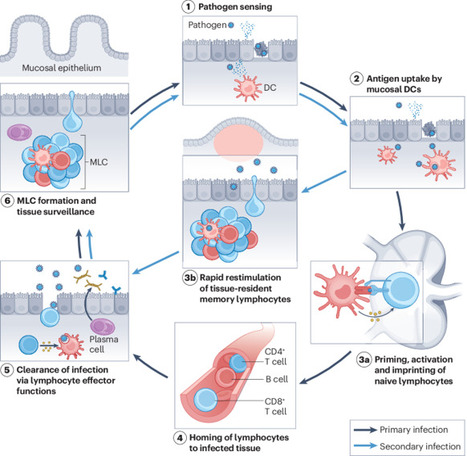
Mucosal tissues, such as the respiratory tract, host locally regulated specialized immune cells that are functionally and spatially distinct. Reduction of infection and transmission requires engaging the mucosal immune response: a coordinated process beginning with epithelial pathogen sensing and culminating in the establishment of tissue-resident memory T (TRM) and B (BRM) cells, alongside robust local secretory IgA (SIgA) production. Unlike systemic IgG, nasal SIgA has demonstrated superior virus-neutralizing activity and greater breadth against antigenically drifted variants.
A promising strategy for advancing vaccine design is the heterologous prime-boost approach. Research suggests that intramuscular priming (to establish peripheral memory pools) followed by an intranasal boost can effectively "pull" memory cells to the respiratory mucosa.
However, the so-called 'mucosal' vaccines requires navigating complex physiological constraints, such as the mucociliary clearance system and the anionic mucus layer.
Moreover, the regulatory path for mucosal vaccines is primarily hindered by the lack of validated correlates of protection, making it difficult to predict efficacy and guide clinical trial designs. Additionally, the anatomical proximity of the nasal mucosa to the central nervous system necessitates rigorous safety evaluations to prevent neuro-olfactory spillover or unintended neuro-inflammation.
https://lnkd.in/eb5ZUMY4
|
|
Scooped by
Gilbert C FAURE
February 4, 6:39 AM
|
Ever had a client ask: "Why does my kitten need to come TWO times for vaccines? Can't we just do it all at once?"
Let me break down the science in a way that might change how it act
🧬 The "Goldilocks Problem" of Maternal Immunity
Kittens are born with almost NO immunity from their mother during pregnancy. Unlike humans, cats have a special type of placenta that blocks antibody transfer before birth. Instead, 90-95% of protective antibodies come through colostrum in those critical first 16 hours of life (Claus et al., 2006).¹
But here's where it gets tricky...
These maternal antibodies are both a blessing and a curse:
✅ They protect vulnerable kittens from deadly diseases
❌ But they ALSO attack vaccine antigens, preventing the kitten from building their own immunity
This creates what scientists call the "window of susceptibility", a period where kittens are:
-Too vulnerable to fight off real infections
-Yet unable to respond to vaccines
Consider these exposure risks for "indoor-only" cats:
-Panleukopenia virus survives for YEARS in the environment and can be tracked indoors on shoes and clothing
-Multi-cat households where ONE cat goes outside creates risk for ALL cats
Here's what evidence-based feline vaccination looks like in #2026:
For Kittens: → Start at 6-8 weeks, continue every 2-4 weeks until 16-20 weeks → Core vaccines: FPV, FHV-1, FCV → FeLV for ALL kittens (remember that age-resistance curve!) → Rabies at 12-16 weeks → yearly booster
For Adult High-Risk Cats: → Annual booster of Core and Rabies
What challenges do you face while Vaccination?
#mianpetsandvets #VeterinaryMedicine #FelineHealth #VetMed #CatVaccination #VeterinaryEducation #CatsOfLinkedIn
|
|
Scooped by
Gilbert C FAURE
December 21, 2025 4:08 AM
|
Just as a curiosity.
"Chris Buck stands barefoot in his kitchen holding a glass bottle of unfiltered Lithuanian farmhouse ale. He swirls the bottle gently to stir up a fingerbreadth blanket of yeast and pours the turbulent beer into a glass mug.
Buck raises the mug and sips. “Cloudy beer. Delightful!”
He has just consumed what may be the world’s first vaccine delivered in a beer. It could be the first small sip toward making vaccines more palatable and accessible to people around the world. Or it could fuel concerns about the safety and effectiveness of vaccines. Or the idea may go nowhere. No matter the outcome, the story of Buck’s unconventional approach illustrates the legal, ethical, moral, scientific and social challenges involved in developing potentially life-saving vaccines."
https://lnkd.in/gdPZRTsV
|
|
Scooped by
Gilbert C FAURE
November 16, 2025 4:46 AM
|
Advances and prospects of respiratory mucosal vaccines: mechanisms, technologies, and clinical applications - npj Vaccines
|
|
Scooped by
Gilbert C FAURE
September 19, 2025 10:52 AM
|
Event by Novo Nordisk Foundation Science Cluster Conference: Harnessing airway immunity for next-gen vaccines The 32nd Science Cluster Conference, "Harnessing airway immunity for next-gen vaccines", will feature world leaders exploring the latest advancements in airway immunity and innovative...
|
|
Scooped by
Gilbert C FAURE
September 11, 2025 1:06 PM
|
🚰🐔 Drinking Water Vaccination in Poultry – Proper SOPs for Success
Mass vaccination of a flock via drinking water is one of the most practical, less stressful, and commonly used methods in poultry farms. But to achieve protection against diseases, strict SOPs must be followed.
Here’s a complete overview 👇
---
1️⃣ Drinking Water Vaccination
The goal is simple: every bird in the flock must receive the correct vaccine dose.
✅ Calculate water intake based on bird age (see standard tables).
✅ Vaccine water should be consumed within 1.5–2 hours.
✅ Withhold water for 1 hour before vaccination to encourage uniform drinking.
✅ Neutralize chlorine/heavy metals in water (using skimmed milk powder or vaccine stabilizer).
2️⃣ Storage & Transportation of Vaccine
📦 Vaccines must be handled with extreme care:
Store at 2–8°C (35–46°F) in a dedicated fridge.
Transport in a cool box with ice packs, keeping 4–8°C constant.
Only transport the required doses.
🛠️ Equipment Needed:
Clean container (80L approx.)
Vaccination can/water proportioner (5–10L)
Measuring jug, bucket, stirrer
Skimmed milk (stabilizer)
💡 Administration Steps:
1. Prepare vaccines on a clean surface using disposable gloves.
2. Neutralize chlorine (stock solution, 20 min wait).
3. Mix vaccine gently in water and distribute evenly.
4. Ensure all drinkers/nipples are filled before lowering.
5. Walk the flock to encourage uniform drinking.
6. Vaccine water must be consumed within 2 hours.
---
3️⃣ Evaluation of Drinking Water Vaccination
After vaccination, it’s critical to check how well the flock received the vaccine:
🔹 Dye Test: Add dye tablets with vaccine water. Birds’ tongues should stain blue. At least 90% of sampled birds should show staining.
🔹 Serology (ELISA/HI): Take blood samples from 20 random birds after ~3 weeks to measure antibody titers.
📊 Good Response Indicators:
High antibody titers
Coefficient of variation (CV) < 50%
Uniform flock immunity
---
✅ Conclusion
Drinking water vaccination is simple, quick, and flock-friendly. When SOPs are followed properly—from storage → preparation → administration → evaluation—the benefits are clear:
✔️ Better growth & weight gain
✔️ Higher egg production
✔️ Improved uniformity
✔️ Stronger disease resistance
---
💬 What’s your experience with drinking water vaccination in poultry?
#Poultry #AnimalHealth #Vaccination #Veterinary #SOPs #PoultryFarming
|
|
Scooped by
Gilbert C FAURE
June 29, 2025 7:30 AM
|
A review of currently licensed mucosal COVID-19 vaccines
|
|
|
Scooped by
Gilbert C FAURE
August 14, 9:42 AM
|
🧬 Immunology Insights | Episode 29
Every vaccine you have ever received by injection did something specific: it protected your blood.
It may not have protected the surface the pathogen actually walks through to get there.
That gap is the reason a vaccinated person can still carry and transmit a virus even while being fully protected from severe disease. It comes down to one distinction most people never learn: the immune system at your body's entry points is a different system from the one circulating in your blood.
Your gut, lungs, nasal passages, and reproductive tract are where nearly every pathogen first makes contact. So the body maintains a dedicated mucosal immune system stationed exactly there. Its main weapon is secretory IgA (sIgA) - and here is the fact that surprises most people, including most biology graduates: sIgA is the most abundantly produced antibody in the entire human body. Not IgG. Not the antibody every vaccine textbook centres on. IgA.
This system has its own infrastructure. Mucosa-associated lymphoid tissue (MALT), Peyer's patches in the gut wall, and intraepithelial lymphocytes (IELs) sitting directly within the epithelial barrier - all positioned to intercept pathogens before they ever reach the bloodstream.
This is why injectable vaccines can be a partial answer. They train the blood-based immune system very effectively. But they often fail to establish strong mucosal immunity, because the injection site and the mucosal surface are, immunologically speaking, separate territories. The pathogen can still enter, replicate briefly at the surface, and pass to another person, even in someone whose blood is fully protected.
It is why the next generation of vaccine design is moving toward nasal and oral delivery - trying to train immunity exactly where the pathogen arrives, not just where the needle does.
Mucosal immunity does not get the attention IgG and blood-based immunity get. But it is standing guard at every single point where the outside world touches you.
I'm Sangeetha - Biotechnology Masters graduate (Gold Medalist) with a research background in biofilms, now building my foundation towards a PhD in Immunology in Melbourne.
Learning in public, one episode at a time.
📖 If injectable vaccines struggle to build mucosal immunity, what do you think is the biggest barrier to making nasal or oral vaccines mainstream - science, manufacturing, or public trust? 👇
Happy immunology!🔬🥼
#MucosalImmunity #IgA #MALT #Vaccines #ImmunologyInsights #GutImmunity
|
|
Scooped by
Gilbert C FAURE
July 30, 2:53 AM
|
Mucosal immune response in biology, disease prevention and treatment; "The mucosal immune system, as the most extensive peripheral immune network, serves as the frontline defense against a myriad of microbial and dietary antigens. It is crucial in preventing pathogen invasion and establishing immune tolerance. A comprehensive understanding of mucosal immunity is essential for developing treatments that can effectively target diseases at their entry points, thereby minimizing the overall impact on the body. Despite its importance, our knowledge of mucosal immunity remains incomplete, necessitating further research. The outbreak of severe acute respiratory syndrome coronavirus 2 (SARS-CoV-2) has underscored the critical role of mucosal immunity in disease prevention and treatment. This systematic review focuses on the dynamic interactions between mucosa-associated lymphoid structures and related diseases. We delve into the basic structures and functions of these lymphoid tissues during disease processes and explore the intricate regulatory networks and mechanisms involved. Additionally, we summarize novel therapies and clinical research advances in the prevention of mucosal immunity-related diseases. The review also addresses the challenges in developing mucosal vaccines, which aim to induce specific immune responses while maintaining tolerance to non-pathogenic microbes. Innovative therapies, such as nanoparticle vaccines and inhalable antibodies, show promise in enhancing mucosal immunity and offer potential for improved disease prevention and treatment."; 08 January 2025; Xiaoxue Zhou, et al.; Nature, Signal Transduction and Targeted Therapy : https://lnkd.in/gwDRDPSb
|
|
Scooped by
Gilbert C FAURE
June 3, 5:08 AM
|
What if the immune system could change antibody behavior without changing the antibody itself?
This discovery could redefine IgA Therapeutics, Mucosal Immunity, and Next-Generation Antibody Engineering.For decades, immunology held the view that there were basically two distinct systems of IgA production, monomeric and dimeric, by different populations of plasma cells.
In human circulation, the SAME IgA1 clone can be found in both monomeric IgA and dimer form, bound to J-chain.
• monomeric IgA
• J-chain coupled dimeric IgA
But even more astounding: These “structurally promiscuous” clones make up the circulating IgA repertoire.
These different structures of IgAs have various distinct characteristics on:
•tissue distribution,
•receptor activation,
•serumclearance,
•neutralization potency and
•mucosal transport capacity.
This suggests that it is possible to dynamically adjust antibody function (without altering antigen specificity) by changing assembly state of the immune system.
In other words:
One antibody sequence may generate multiple functional immune states.
The potential implications for this are:
• Next generation mucosal vaccines
• Improved antiviral neutralization
• Antibody design using AI platforms
• Precision IgA therapeutics
• Autoimmune disease targeting, and
• IgA nephropathy biology.
The exciting thing is the era of “static antibodies” might come to an end.
https://lnkd.in/e59xzg4D
|
|
Scooped by
Gilbert C FAURE
April 10, 5:14 AM
|
Most pathogens don’t wait for an invitation, they enter through our mucosal surfaces.
A recent paper in Nature Reviews Immunology highlights a critical gap in how we think about vaccines: while traditional injected vaccines are excellent at preventing severe disease, they often fall short at the body’s frontlines; the respiratory, gastrointestinal, and urogenital mucosa.
🔬 Key takeaway:
To truly control infections (and not just reduce symptoms), we need to design vaccines that generate strong mucosal immunity.
Here’s why this matters:
• Mucosal tissues are the first point of contact for most pathogens
• Local immune defenses (like IgA and tissue-resident memory cells) can stop infections before they start
• Current systemic vaccines don’t always induce strong protection at these sites
• Mucosal vaccines (e.g., nasal or oral) could help block transmission, not just disease
💡 The future of vaccination may lie in integrated strategies:
Systemic priming + mucosal boosting = broader, more effective protection
This shift is especially relevant for respiratory and emerging zoonotic diseases, where stopping transmission is just as important as treating illness.
As we continue to rethink vaccine design, one thing is clear; the protection at the entry point could change the game.
Read more : https://lnkd.in/dgsSd4q7
#Immunology #Vaccines #MucosalImmunity #OneHealth #InfectiousDiseases #Research #PublicHealth
|
|
Scooped by
Gilbert C FAURE
March 26, 4:12 AM
|
#Immunology | 𝗧 𝗖𝗲𝗹𝗹𝘀 𝗣𝗼𝘀𝗶𝘁𝗶𝗼𝗻 𝗧𝗵𝗲𝗺𝘀𝗲𝗹𝘃𝗲𝘀 𝗶𝗻 𝗟𝗼𝘄-𝗢𝘅𝘆𝗴𝗲𝗻 𝗭𝗼𝗻𝗲𝘀 𝘁𝗼 𝗖𝗼𝗺𝗺𝗮𝗻𝗱 𝗟𝘂𝗻𝗴 𝗗𝗲𝗳𝗲𝗻𝘀𝗲 | University of Basel researchers led by Jean de Lima found that specialized helper T cells migrate to oxygen-scarce edges of immune hubs during lung infection. There, they produce the so-called HIF-1α protein and release interleukin-21, directing macrophages, B cells, and natural killer cells into coordinated responses against respiratory pathogens. Using advanced imaging in influenza-infected mice and inducible knockout models, the team mapped how these cells position at hub boundaries to orchestrate defense networks.
The findings show tissue-resident immune hubs function as command centers for on-site protection rather than antibody factories. Professor Carolyn King's group validated the mechanism across secondary influenza infections and lung cancer models, showing broad therapeutic potential. This breakthrough enables design of inhalable vaccines that build immune defense directly in airways where viruses enter, potentially transforming respiratory disease prevention. The spatial coordination strategy also opens perspectives for tissue-targeted therapies that use the body's natural positioning systems to strengthen local immune responses at infection sites.
👇 Learn more & read the original publication: link in the comments 👇
🇨🇭 Follow #ScienceSwitzerland for the latest news and emerging trends on Swiss science, technology, education, and innovation >> swissinnovation.org
Follow us >> Science-Switzerland
#Science | #Education | #Research | #Innovation
|
|
Scooped by
Gilbert C FAURE
March 9, 5:19 AM
|
Oral Vaccines Are Moving From Research to Reality
The global vaccine landscape may be entering a new phase — and oral vaccines are quickly becoming one of the most discussed innovations in infectious disease prevention.
In recent industry conversations across biotech and pharmaceutical research communities in the U.S., more attention is shifting toward oral vaccine platforms. Unlike traditional injections, oral vaccines could simplify distribution, improve patient compliance, and make large-scale immunization campaigns far more accessible — especially in regions where healthcare infrastructure is limited.
Several biotechnology companies are now accelerating research around oral delivery systems, mucosal immunity, and next-generation vaccine platforms. The idea is not only to prevent disease more effectively, but also to rethink how vaccines are manufactured, distributed, and administered globally.
For pharmaceutical companies and healthcare systems, this shift could represent more than just a scientific breakthrough. It may reshape public health logistics, vaccine accessibility, and global pandemic preparedness in the coming decade.
The question many people in the industry are asking now is:
If oral vaccines become widely scalable, could they fundamentally change the way the world approaches infectious disease prevention?
Curious to hear perspectives from people working across biotech, healthcare, and public health.
#Biotechnology #Vaccines #OralVaccines #PharmaceuticalIndustry #InfectiousDiseases
#DrugDevelopment #BiotechInnovation #GlobalHealth #HealthcareInnovation #ClinicalResearch
#LifeSciences #PublicHealth #BiotechInvesting #FutureOfMedicine #MedicalInnovation
|
|
Scooped by
Gilbert C FAURE
February 17, 12:55 PM
|
Harnessing Mucosal Immunity for Protective Vaccines -
A thorough review on mucosal immunity, the type of responses elicited, the unique anatomical and immunological features of the mucosal surfaces of the body, and the challenges associated with the generation of protective immunity via mucosal vaccines.
https://sco.lt/8hqDuy
#vaccines #influenza #Covid19 #RSV #HMPV #HPIV #health #globalhealth #publichealth #medicine #biotechnology #medicine #pharmaceuticals #FDA #CDC #WHO #ECDC
|
|
Scooped by
Gilbert C FAURE
December 29, 2025 6:08 AM
|
Efficacy, Immunogenicity, and Safety of the Live-Attenuated Intranasal Pertussis Vaccine BPZE1: A Randomised, Placebo-Controlled Phase 2b Human Challenge Study in the UK:
The resurgence of pertussis is largely attributed to suboptimal vaccination coverage, particularly in countries that rely exclusively on acellular vaccines, which fail to induce mucosal immunity and generate minimal indirect (herd) protection. Consequently, sustained coverage levels above 95% are required to control transmission. BPZE1 is a live-attenuated Bordetella pertussis strain developed for intranasal administration, engineered through the genetic inactivation or deletion of three key virulence factors—pertussis toxin (PT), dermonecrotic toxin (DNT), and tracheal cytotoxin (TCT)—to safely prevent whooping cough while closely mimicking natural infection. This vaccine elicits robust Th1-biased cellular immunity alongside strong humoral responses. In a phase 2b human challenge study, intranasal BPZE1 vaccination prevented or markedly reduced infection following exposure to virulent B. pertussis, supporting its potential as a promising next-generation pertussis vaccine. Given its favorable safety profile, large-scale phase 3 clinical trials are warranted to confirm these findings and further assess its public health impact.
#pertussis
#pertussisvaccines
#mucosalvaccines
#nasalvaccines
https://lnkd.in/gukzy-aE
|
|
Scooped by
Gilbert C FAURE
December 5, 2025 7:10 AM
|
𝗡𝗲𝘄 𝗥𝗲𝘀𝗲𝗮𝗿𝗰𝗵: 𝗧 𝗰𝗲𝗹𝗹𝘀 𝗶𝗻 𝘁𝗶𝘀𝘀𝘂𝗲𝘀 𝗱𝗶𝗳𝗳𝗲𝗿 𝗺𝗮𝗿𝗸𝗲𝗱𝗹𝘆 𝗳𝗿𝗼𝗺 𝘁𝗵𝗼𝘀𝗲 𝗶𝗻 𝗯𝗹𝗼𝗼𝗱 - 𝗿𝗲𝘀𝗵𝗮𝗽𝗶𝗻𝗴 𝗵𝗼𝘄 𝘄𝗲 𝗲𝘃𝗮𝗹𝘂𝗮𝘁𝗲 𝘃𝗮𝗰𝗰𝗶𝗻𝗲𝘀 𝗮𝗻𝗱 𝗶𝗺𝗺𝘂𝗻𝗼𝘁𝗵𝗲𝗿𝗮𝗽𝗶𝗲𝘀
A new study in Immunity from Washington University School of Medicine in St. Louis reveals that #Tcells residing in tissues such as the #tonsils differ significantly from T cells circulating in the #blood. This challenges long-standing assumptions in #immunology and could transform how we assess immune responses to #vaccines, #infections, and #immunotherapies.
In one of the largest single-cell datasets of human T cells ever generated, researchers analyzed 5.7 million T cells from paired tonsil tissue and blood samples of 10 donors. Led by Dr. Naresha Saligrama, the team found profound differences in T cell subtypes and functions between compartments even within the same individual.
Why does this matter?
▪️ Less than 2% of the body’s T cells are actually in the blood, yet blood is currently the standard sample type used for immune monitoring.
▪️Many specialized T cells - including resident memory T cells and T follicular helper cells - exist almost exclusively in tissues, not blood.
▪️Tissue location can shape a T cell’s phenotype and its ability to recognize specific antigens.
🔍 Significance
This study highlights the need for a more tissue-aware approach to evaluating immune responses. Relying solely on blood samples may overlook critical populations of T cells that drive protection, disease progression, or therapeutic responses. Future vaccine design, #immunotherapy evaluation, and clinical diagnostics may need to incorporate location-specific immune profiling to truly understand human #immunity.
🗃️ See comments section for reference.
|
|
Scooped by
Gilbert C FAURE
October 15, 2025 4:44 AM
|
|
|
Scooped by
Gilbert C FAURE
September 13, 2025 1:46 PM
|
|
|
Scooped by
Gilbert C FAURE
August 5, 2025 5:05 AM
|
STI Vaccines at #STIHIV2025 #IUSTI #ISSTDR
Professor Helen Rees
- HPV Vaccine uptakes rising with move to 1-dose and the pipeline of therapeutic HPV vaccines promising
- Syphilis vaccine candidates but all preclinical phase
- Herpes simplex vaccine candidates - preclinical phase
- Gonorrhoea - 4CMenB may be useful (~30-40% effective)
- Chlamydia - preclinical phase.
- Trichomoniasis - preclinical phase.
- Mpox - 3 licensed vaccines (originally for small pox) - access remains an issue
- Vaccine hesitancy needs to be addressed. Convenience. Complacency. Convenience. Context.
Professor Sanjay Ram
- Chlamydia: "bacteria that thinks it is a virus".
majority would generate antibodies against chlamydia but does not affect chance of reinfection.
high titres of antibodies may be associated with greater complications (PID).
Mice model - CD4 cells are important for clearing genital infection.
- Syphilis
previous syphilis can alter course of subsequent episode of syphilis
- Gono
No immunity following gonococcal infection.
Intravacc (intranasal) vaccine, LimmaTech Biologics "6-in-1" vaccine might be promising.
|




 Scoop.it!