Your new post is loading...

|
Scooped by
Gilbert C FAURE
December 27, 2013 10:35 AM
|
|
|
Scooped by
Gilbert C FAURE
September 18, 4:46 AM
|
September issue online! Cover depicts work from Randy Longman, Wei Yang & colleagues identifying Bhlhe40 as a central regulator linking innate and adaptive intestinal immunity. Cover art designed by August Fireflies Studio. https://lnkd.in/e8g3cDqX
Maintaining tolerance at mucosal barrier surfaces, enabled by coordinated communication among immune cells, is critical for tissue health. Yang et al. report that the transcriptional regulator Bhlhe40 enables intestinal type 3 innate lymphoid cells and RORγt+ antigen-presenting cells to integrate inflammatory and microbial signals and promote regulatory T cell differentiation, thereby balancing tissue protection with tolerance in the intestine. This mechanism is relevant to inflammatory bowel disease. The impact of Bhlhe40 is depicted as the first light of dawn shining through a forest, illuminating a healthy landscape that symbolizes the activation of protective immune programs (blooming flowers) and the restoration of intestinal immune balance.
|
|
Scooped by
Gilbert C FAURE
September 12, 8:49 AM
|
In a new #SciencePerspective, researchers dig into the skin microbiome’s role in healthy skin aging and argue that microbial functions and metabolites may ultimately be more informative than microbial composition alone for understanding microbiome-linked skin aging.
Learn more: https://scim.ag/4xyajig
|
|
Scooped by
Gilbert C FAURE
August 25, 8:26 AM
|
Functional beverages are having a moment. But what’s really driving the conversation? 🥤
From prebiotic sodas to kombucha, the functional beverage category is becoming increasingly visible across social media.
But looking at mentions alone only tells part of the story.
We analysed functional beverage conversations across LinkedIn, TikTok and Instagram to understand the trends, communities and brands driving attention online.
Here’s what stood out:
🔎 Gut health is a major conversation driver
#GutHealth, #Prebiotics and #Probiotics are closely intertwined with functional beverage conversations.
📱 Products are becoming part of creator culture
Brands such as Poppi are appearing in shopping, lifestyle and entertainment content — with some posts generating millions of views.
📊 The category is fragmented
Consumers aren't talking about “functional beverages” as one category. They're entering the conversation through wellness, low sugar, fermentation, gut health and other interests.
💡 Context matters
The most useful insight isn't simply how many times a brand is mentioned, but who is talking about it, what they're talking about and where those conversations are happening.
👉 Read the full analysis:
https://lnkd.in/eugKNDdP
|
|
Scooped by
Gilbert C FAURE
August 17, 1:09 PM
|
A New Model of EBV Infection Using Tonsil Organoids –
A study published in PNAS and led by researchers at University of California Irvine, shows an alternative in vitro model using human tonsil organoids to study Epstein Barr Virus infection and to investigate key aspects of EBV immunity and pathogenesis.
The model utilizes tonsils from healthy individuals. After dissociation, and filtration, cell suspensions can be cryopreserved to minimize variation and facilitate processing. After thawing, tonsil cells can be infected with EBV-GFP viruses to generate EBV-infected tonsil organoids.
The approach allows researchers to investigate the changes in EBV-infected B cell biology and immunity under a physiological environment, and to evaluate antiviral responses and therapeutic strategies.
https://lnkd.in/gFAnruR4
#EBV #immunology #immunity #Epsteinbarrvirus #health #globalhealth #publichealth #medicine #biotechnology #pharmaceuticals #FDA #WHO #CDC #ECDC #NIH #NIAID
|
|
Scooped by
Gilbert C FAURE
August 15, 3:34 AM
|
Our new study with our PhD student Franck Zekre a great pediatrician and in collaboration with a smart company in US Vaxcyte. We developed a new vaccine againt P gingivalis to prevent inflammatory dosorders
|
|
Scooped by
Gilbert C FAURE
August 10, 10:21 AM
|
On accepte sans broncher une montre qui compte nos pas et notre sommeil.
Mais le meilleur indicateur digestif du quotidien, on le jette encore d’un coup de chasse d’eau.
TOTO a lancé en août 2025 ses cuvettes Neorest qui scannent les selles en chute. À côté du jet d’eau, un capteur optique, même principe qu’un lecteur de code-barres en caisse, s’ouvre dès qu’on s’assoit. Une LED éclaire, un passage suffit : forme, couleur, volume.
Sept formes tirées de l’échelle Bristol que les médecins utilisent déjà, des grumeaux durs au liquide. Trois couleurs. Trois volumes. Tout part tout seul dans l’appli : calendrier, tendances, conseils du type « mange plus de légumes » ou « dors sept heures ». Jusqu’à six personnes par maison. Autour de 3 300 à 3 650 dollars.
Avant, 76 % des gens jetaient un œil. Seulement 6 % notaient quoi que ce soit. Les concepts existaient depuis le CES 2021, Panasonic avait déjà des capteurs en maison de retraite. Ce qui coinçait : se souvenir, oser regarder, taper l’info. Là, le suivi devient aussi passif que de s’asseoir.
Ça m’agace un peu qu’on trouve ça bizarre. On colle des capteurs partout sur le corps, et le moment le plus riche en signal digestif reste tabou. Le système reste purement optique. Mais il comble enfin le trou entre l’observation vague et un vrai suivi quotidien. (Hâte de voir les commentaires)
D’ici deux ou trois ans, ignorer ce flux paraîtra aussi étrange que de ne pas se peser à l’hôpital.
La prévention avance vraiment quand elle regarde là où on préférait détourner les yeux. | 20 comments on LinkedIn
|
|
Scooped by
Gilbert C FAURE
August 8, 5:26 AM
|
Patients with recurrent respiratory tract infections receiving Broncho-Vaxom, a bacterial lysate-based therapy, had lower rates of infection at 12 months after vs. before treatment, according to preliminary results.
These data on Broncho-Vaxom (OM-85, OM Pharma) were presented at the 2026 European Academy of Allergy and Clinical Immunology - EAACI Annual Congress.
Read more on Healio ⬇️
https://lnkd.in/gaPVktbR
|
|
Scooped by
Gilbert C FAURE
July 30, 4:30 AM
|
Sexual transmission is the main route of human immunodeficiency virus 1 (HIV-1) infection, and novel interventions are needed to prevent this crucial first step.Mucosal dendritic cells play a key role by capturing HIV-1 via attachment receptors, leading to dendritic cell infection and subsequent ...
|
|
Scooped by
Gilbert C FAURE
July 30, 4:29 AM
|
|
|
Scooped by
Gilbert C FAURE
July 30, 2:53 AM
|
Human lungs maintain tissue-resident memory T cells against a broad spectrum of pathogens - Nature Immunology
|
|
Scooped by
Gilbert C FAURE
July 29, 1:28 PM
|
Mucosal immunity and vaccine development.
Abstract
The mucosal system, which includes the respiratory, gastrointestinal, and urogenital tracts, serves as a primary entry point for pathogens, with a unique immune microenvironment and specialized defense mechanisms. In recent years, especially following the onset of the COVID-19 pandemic, there has been increasing recognition of the importance of mucosal immunity, motivated by an enhanced comprehension of its fundamental mechanisms. Currently, strategies based on mucosal delivery systems to administer antigens and induce strong mucosal protective immunity have become a key focus in the development of mucosal vaccines. Compared with conventional intramuscular delivery, mucosal vaccination can simultaneously elicit a robust local mucosal response, effectively block pathogen entry into the local mucosa, and generate systemic immune responses to prevent symptomatic infections and severe disease. In addition, mucosal delivery offers advantages such as ease of administration and low invasiveness, making it a more widely acceptable approach to vaccination. In the present study, we conducted a systematic review of the mechanisms of mucosal immunity, the technological platforms for mucosal vaccines, and proposed a perspective on the challenges and future directions for the development of next-generation mucosal vaccines, with the goal of enhancing public knowledge and awareness regarding mucosal immunity and its possible effects on global health.
Ingo Fricke
https://lnkd.in/equJEmmW
|
|
Scooped by
Gilbert C FAURE
July 21, 11:09 AM
|
Only 43% of parents and pregnant women have heard of the scientific concept of the “first 1,000 days of life”.
Yet this period is a key window for baby microbiota development.
Missed our big 2026 International Microbiota Observatory reveal?
Everything you need to know about baby microbiota and the first 1,000 days is in this infographic.
Based on data from our 2026 survey, conducted by Ipsos France across 11 countries, it highlights what parents and pregnant women know, where knowledge gaps remain, and how healthcare professional guidance can support clearer understanding from the very beginning of life.
The Biocodex Microbiota Institute is here to support science-backed dialogue around microbiota at every key stage.
📩 Download the infographic and share it with fellow practitioners to help bring baby microbiota education into more care conversations.
|
|
|
Scooped by
Gilbert C FAURE
September 18, 5:03 AM
|
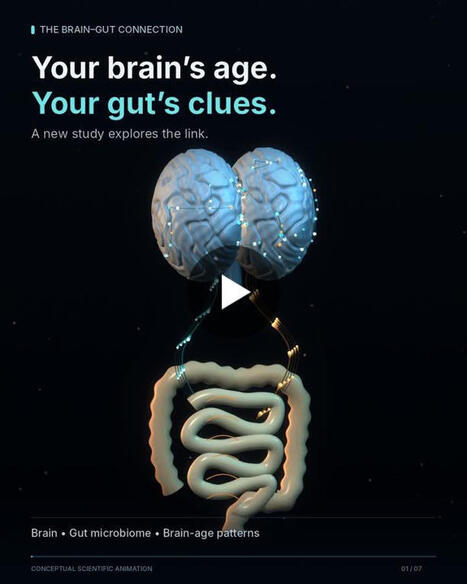
Your brain may appear older than it really is. And scientists at UCLA say that gap might have something to do with your gut. In a new paper published in eBioMedicine, researchers looked at brain images from about 1,500 men and women, both younger and middle aged.
Using a measure of how various areas of the brain talk to one another while resting, they calculated the brain’s age and then contrasted it with the individuals’ real ages.
Those whose brains appeared older than their years also scored lower on tests of memory and cognition, and exhibited more symptoms of depression.
This is when the gut enters the picture.
For a smaller group, researchers looked at fecal specimens. They discovered links between the brain-age gap, certain strains of gut bacteria, and metabolites in the stool.
Their results suggested mechanisms involving the immune system, blood vessels, neuronal communication, and energy metabolism.
I hope the dialogue around the microbiome can expand beyond a list of good and bad microbes. The presence of certain organisms is important. But linking them to a chemical landscape in the gut, as well as other parts of the body, seems like a far more intriguing topic.
This study was cross-sectional. It didn’t track patients into dementia. It can’t establish that a certain microbial composition leads to an older brain or that changing those bacteria would make the brain younger. Nor can it tell you if a colonoscopy would help identify someone at risk for dementia.
we should stop limiting the discussion of the gut to gas and defecation. Are we being too circumspect about the microbiome? Or are we jumping the gun? To me, that’s the conversation we should be having. | 12 comments on LinkedIn
|
|
Scooped by
Gilbert C FAURE
September 12, 11:11 AM
|
Airway epithelial cells as drivers of severe #asthma pathogenesis in this review from Bart Lambrecht, Gianni Marone and colleagues: https://lnkd.in/g9tZSgSV
|
|
Scooped by
Gilbert C FAURE
August 25, 9:14 AM
|
🫁 A respiratory vaccine can protect against severe disease — and still leave an important immunological gap at the place where infection begins.
What if one of the next major advances in vaccinology is not simply a stronger systemic response, but 𝒊𝒎𝒎𝒖𝒏𝒊𝒕𝒚 𝒑𝒓𝒐𝒈𝒓𝒂𝒎𝒎𝒆𝒅 𝒂𝒕 𝒕𝒉𝒆 𝒑𝒐𝒓𝒕𝒂𝒍 𝒐𝒇 𝒆𝒏𝒕𝒓𝒚?
A new Review in Immunity by Kazer and colleagues reframes the nose as far more than an anatomical gateway for respiratory viruses.
It presents the nasal mucosa as a coordinated immune ecosystem in which epithelial cells, innate immune populations, local lymphoid structures, IgA-producing plasma cells, and tissue-resident memory cells collectively influence infection, spread to the lower airways, and potentially onward transmission.
🧬 One of the most important concepts introduced is tissue-scale immunity.
Protection at the nasal surface is not reduced to a single antibody titre or immune-cell population. Instead, it may depend on several layers working together:
🔹 A poised antiviral epithelium — with appropriately timed type I and III interferon responses.
🔹 Rapid innate mobilisation — including recruited and locally activated immune cells.
🔹 Resident adaptive memory — particularly Trm cells, Brm cells and local IgA-producing plasma cells that can respond where the pathogen first arrives.
This also exposes an important distinction in respiratory vaccinology:
𝑺𝒚𝒔𝒕𝒆𝒎𝒊𝒄 𝒊𝒎𝒎𝒖𝒏𝒊𝒕𝒚 𝒂𝒏𝒅 𝒎𝒖𝒄𝒐𝒔𝒂𝒍 𝒊𝒎𝒎𝒖𝒏𝒊𝒕𝒚 𝒂𝒓𝒆 𝒏𝒐𝒕 𝒊𝒏𝒕𝒆𝒓𝒄𝒉𝒂𝒏𝒈𝒆𝒂𝒃𝒍𝒆.
Intramuscular vaccination remains highly important for systemic protection, but the Review highlights that establishing substantial local IgA and tissue-resident memory in the airway may require local mucosal stimulation. This is why strategies such as systemic prime + intranasal boost are scientifically so compelling.
⚖️ Yet the objective is not maximum inflammation.
Interferon signalling must be calibrated in time, magnitude and location: early local responses can restrict viral spread, whereas delayed or dysregulated inflammation may impair tissue integrity or memory formation.
That leads to what I see as the most important implication of this Review:
𝑻𝒉𝒆 𝒏𝒆𝒙𝒕 𝒈𝒆𝒏𝒆𝒓𝒂𝒕𝒊𝒐𝒏 𝒐𝒇 𝒓𝒆𝒔𝒑𝒊𝒓𝒂𝒕𝒐𝒓𝒚 𝒗𝒂𝒄𝒄𝒊𝒏𝒆𝒔 𝒎𝒂𝒚 𝒏𝒆𝒆𝒅 𝒕𝒐 𝒅𝒐 𝒎𝒐𝒓𝒆 𝒕𝒉𝒂𝒏 𝒕𝒆𝒂𝒄𝒉 𝒕𝒉𝒆 𝒊𝒎𝒎𝒖𝒏𝒆 𝒔𝒚𝒔𝒕𝒆𝒎 𝒘𝒉𝒂𝒕 𝒕𝒐 𝒓𝒆𝒄𝒐𝒈𝒏𝒊𝒔𝒆 — 𝒕𝒉𝒆𝒚 𝒎𝒂𝒚 𝒏𝒆𝒆𝒅 𝒕𝒐 𝒕𝒆𝒂𝒄𝒉 𝒕𝒉𝒆 𝒕𝒊𝒔𝒔𝒖𝒆 𝒉𝒐𝒘 𝒕𝒐 𝒓𝒆𝒔𝒑𝒐𝒏𝒅.
📖 Kazer SW, Walsh JML, Juttukonda LJ, Ordovas-Montanes J. Nasal immunity in respiratory viral infection, transmission, and protection. Immunity. 2026.
#MucosalImmunity #NasalVaccines #VaccineResearch #Immunology #VaccineDevelopment
|
|
Scooped by
Gilbert C FAURE
August 19, 10:31 AM
|
Read the latest #SMIMemberPaper by Monica Gestal and colleagues in STAR Protocols by Cell Press on how to prepare lungs from infected mice while preserving the immunological architecture. Read more here: https://lnkd.in/gD4RK2g6
|
|
Scooped by
Gilbert C FAURE
August 15, 11:29 AM
|
Learn all about the role of B cells beyond antibodies. Explore the emerging roles of B cells in gastrointestinal inflammation and disease in this review from Deanna Santer, Marina Costa Fujishima, Jing (Maggie) Ouyang, and Thomas Murooka: https://lnkd.in/gTXjgj9u
|
|
Scooped by
Gilbert C FAURE
August 14, 9:42 AM
|
🧬 Immunology Insights | Episode 29
Every vaccine you have ever received by injection did something specific: it protected your blood.
It may not have protected the surface the pathogen actually walks through to get there.
That gap is the reason a vaccinated person can still carry and transmit a virus even while being fully protected from severe disease. It comes down to one distinction most people never learn: the immune system at your body's entry points is a different system from the one circulating in your blood.
Your gut, lungs, nasal passages, and reproductive tract are where nearly every pathogen first makes contact. So the body maintains a dedicated mucosal immune system stationed exactly there. Its main weapon is secretory IgA (sIgA) - and here is the fact that surprises most people, including most biology graduates: sIgA is the most abundantly produced antibody in the entire human body. Not IgG. Not the antibody every vaccine textbook centres on. IgA.
This system has its own infrastructure. Mucosa-associated lymphoid tissue (MALT), Peyer's patches in the gut wall, and intraepithelial lymphocytes (IELs) sitting directly within the epithelial barrier - all positioned to intercept pathogens before they ever reach the bloodstream.
This is why injectable vaccines can be a partial answer. They train the blood-based immune system very effectively. But they often fail to establish strong mucosal immunity, because the injection site and the mucosal surface are, immunologically speaking, separate territories. The pathogen can still enter, replicate briefly at the surface, and pass to another person, even in someone whose blood is fully protected.
It is why the next generation of vaccine design is moving toward nasal and oral delivery - trying to train immunity exactly where the pathogen arrives, not just where the needle does.
Mucosal immunity does not get the attention IgG and blood-based immunity get. But it is standing guard at every single point where the outside world touches you.
I'm Sangeetha - Biotechnology Masters graduate (Gold Medalist) with a research background in biofilms, now building my foundation towards a PhD in Immunology in Melbourne.
Learning in public, one episode at a time.
📖 If injectable vaccines struggle to build mucosal immunity, what do you think is the biggest barrier to making nasal or oral vaccines mainstream - science, manufacturing, or public trust? 👇
Happy immunology!🔬🥼
#MucosalImmunity #IgA #MALT #Vaccines #ImmunologyInsights #GutImmunity
|
|
Scooped by
Gilbert C FAURE
August 8, 5:27 AM
|
If we want more effective vaccines against respiratory pathogens, we need more reliable ways to measure immunity where infection begins: in the airways.
We are very pleased to share that the Conference Report: Airway Mucosal Sampling and Immune Analysis, was recently published in Vaccine. This article captures the key discussions and recommendations that emerged from a workshop convened by Novo Nordisk Foundation and Wellcome Trust last year, held in connection with NIVI’s Harnessing Airway Immunity For Next-Gen Vaccines Cluster Conference.
Check out the full article here 👉: https://lnkd.in/dFzKHjHR
The report highlights several key challenges currently limiting progress towards developing airway targeting vaccines, including:
• A lack of standardized approaches for airway sampling and immune analysis
• Limited cross-study comparability and assay validation
• The need for better understanding of mucosal correlates of protection
• Regulatory and implementation barriers to incorporating mucosal endpoints into vaccine development
A major outcome of the workshop was the development of a recommendation framework aimed to strengthen coordination across research groups, improve standardization, build evidence for mucosal immune markers of protection, and ultimately support the next generation of respiratory vaccines.
At NIVI, we are proud to have contributed to these discussions and to be helping build the scientific foundations needed to advance mucosal vaccine development.
A big thank you to all workshop participants, collaborators, and those that helped shape this report and the roadmap it presents for the field.
With Joshua Rosenheim, Jens-Ulrik Stæhr Jensen, Deborah King, Henrik Kløverpris, Shane Crotty, Marianne H., Cecilia Lindestam Arlehamn, Hocine W. Mankouri, Rasmus Mortensen, Morten Ruhwald, MD, PhD, Tian Yun Wang, Helene Bæk Juel
Novo Nordisk Foundation Initiative for Vaccines and Immunity (NIVI), Department of Immunology and Microbiology (ISIM), University of Copenhagen Novo Nordisk Foundation Science Cluster
|
|
Scooped by
Gilbert C FAURE
August 1, 4:51 AM
|
|
|
Scooped by
Gilbert C FAURE
July 30, 4:29 AM
|
In IgA nephropathy (IgAN), elevated levels of the circulating autoantigen galactose-deficient IgA1 are critical to disease pathogenesis. Genetic as well as in vitro, in vivo, and human immunologic studies have identified APRIL (a proliferation-inducing ligand) and BAFF (B-cell activating factor)...
|
|
Scooped by
Gilbert C FAURE
July 30, 4:17 AM
|
🧬 Constitutive IFN-ε Shapes Baseline Antiviral Readiness Across Mucosal Epithelia
How do mucosal surfaces stay protected against viruses before an infection even starts?
A study in mBio (Casazza et al.) explores how Interferon epsilon (IFN-ε) acts as a unique homeostatic guardian, maintaining a persistent antiviral state across epithelial barriers without needing pathogen induction.
To map these innate immune pathways and verify cell health, the team relied on specific targeted tools:
• PRR Activation & Baseline Expression: By stimulating cells with Poly(I:C) LMW (TLR3), 2'3'-cGAMP (STING), and LPS-EK (TLR4), authors demonstrated that unlike classic interferons, IFN-ε expression is not induced by PAMP signaling, confirming its unique role as a constitutive, baseline guardian.
• Cytotoxicity & Release Mechanism: Using the LDH-Blue™ Cytotoxicity Assay, membrane integrity was quantified alongside IFN-ε levels, revealing that IFN-ε is retained intracellularly and released as a DAMP upon cellular damage or lysis.
IFN-ε provides essential basal protection to mucosal barriers (such as the female reproductive tract and intestine), acting as an intracellular sentinel that alerts surrounding tissue upon cellular injury or turnover.
📖 Read the full paper in mBio: https://lnkd.in/ezYErJ3X
#Immunology #InnateImmunity #Interferon #MucosalImmunity #PRR #CellSignaling #InvivoGen
|
|
Scooped by
Gilbert C FAURE
July 30, 2:53 AM
|
Mucosal immune response in biology, disease prevention and treatment; "The mucosal immune system, as the most extensive peripheral immune network, serves as the frontline defense against a myriad of microbial and dietary antigens. It is crucial in preventing pathogen invasion and establishing immune tolerance. A comprehensive understanding of mucosal immunity is essential for developing treatments that can effectively target diseases at their entry points, thereby minimizing the overall impact on the body. Despite its importance, our knowledge of mucosal immunity remains incomplete, necessitating further research. The outbreak of severe acute respiratory syndrome coronavirus 2 (SARS-CoV-2) has underscored the critical role of mucosal immunity in disease prevention and treatment. This systematic review focuses on the dynamic interactions between mucosa-associated lymphoid structures and related diseases. We delve into the basic structures and functions of these lymphoid tissues during disease processes and explore the intricate regulatory networks and mechanisms involved. Additionally, we summarize novel therapies and clinical research advances in the prevention of mucosal immunity-related diseases. The review also addresses the challenges in developing mucosal vaccines, which aim to induce specific immune responses while maintaining tolerance to non-pathogenic microbes. Innovative therapies, such as nanoparticle vaccines and inhalable antibodies, show promise in enhancing mucosal immunity and offer potential for improved disease prevention and treatment."; 08 January 2025; Xiaoxue Zhou, et al.; Nature, Signal Transduction and Targeted Therapy : https://lnkd.in/gwDRDPSb
|
|
Scooped by
Gilbert C FAURE
July 29, 9:40 AM
|
Lung tissue-resident memory T (TRM) cells are critical for frontline immunity, yet they undergo rapid attrition in the mouse lung. Whether this paradigm applies to humans has remained unknown. Here we present a comprehensive analysis of T cells from human lungs, characterizing the prevalence and properties of lung TRM cells specific to a broad spectrum of pathogens. Using a T cell receptor-guided approach that integrates single-cell transcriptomics with paired T cell receptor repertoire profiling, we mapped the pathogen specificity of more than 87,000 lung T cells across 40 individuals, the majority of whom harbored TRM cells specific to multiple pathogens. We confirmed that a large fraction of lung TRM clones persist in the lung for many months to years. Thus, in contrast to those of mice, human lungs retain a stable and varied pool of pathogen-specific TRM cells, suggesting that strategies to bolster these responses could provide durable protection against severe lung infections. Unlike in other tissues, lung-resident memory T cell populations are not well maintained in mice. Here the authors show that this is not the case in human lungs, where tissue-resident memory T cells specific to a variety of pathogens can persist for many years.
|
|
Scooped by
Gilbert C FAURE
July 20, 4:13 AM
|
Congratulations to Mauro and Maria on this outstanding demonstration of how the IgA-class BCR differentially shapes B cell memory and plasma cell differentiation in gut and lung, to make pathogens unforgotten!!!
|