Your new post is loading...

|
Scooped by
Gilbert C FAURE
October 2, 10:52 AM
|
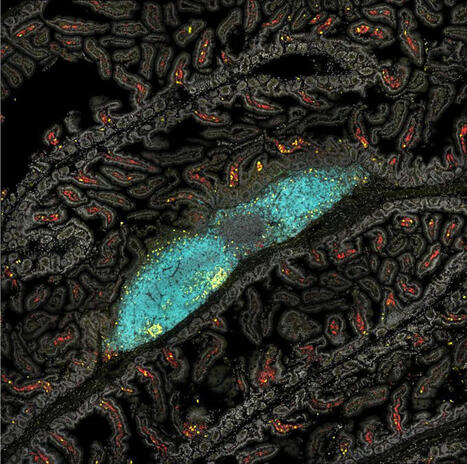
🔬 New in Science Immunology from the Gaya lab at CIML!
Does our immune memory work the same way everywhere in the body? Not quite.
Mauro Gaya's team at CIML shows that after infection, B cell memory follows a different strategy depending on the mucosal tissue:
🫁 In the lungs, it favors memory B cells that stay on standby, ready to react quickly to new variants.
🦠 In the gut, it favors plasma cells that continuously produce large amounts of antibodies.
Strikingly, this choice is set by the tissue itself rather than by the pathogen. In the gut, microbiota-driven TGF-β promotes IgA class switching, and the IgA BCR pushes B cells toward plasma cell fate. Surprisingly, deleting the IgA BCR's short cytoplasmic tail enhanced this commitment by protecting cells from intracellular stress.
These findings could help design nasal and oral vaccines that trigger the most protective type of memory in each tissue. 💉
Congratulations to Pia HOLGADO, Samuel Origlio, Mauro Gaya and the whole team! 👏
📄 https://lnkd.in/evUZB3RN
Inserm PACA et Corse
INSERM
CNRS Provence et Corse
CNRS
Aix-Marseille University
|
|
Scooped by
Gilbert C FAURE
August 25, 9:14 AM
|
🫁 A respiratory vaccine can protect against severe disease — and still leave an important immunological gap at the place where infection begins.
What if one of the next major advances in vaccinology is not simply a stronger systemic response, but 𝒊𝒎𝒎𝒖𝒏𝒊𝒕𝒚 𝒑𝒓𝒐𝒈𝒓𝒂𝒎𝒎𝒆𝒅 𝒂𝒕 𝒕𝒉𝒆 𝒑𝒐𝒓𝒕𝒂𝒍 𝒐𝒇 𝒆𝒏𝒕𝒓𝒚?
A new Review in Immunity by Kazer and colleagues reframes the nose as far more than an anatomical gateway for respiratory viruses.
It presents the nasal mucosa as a coordinated immune ecosystem in which epithelial cells, innate immune populations, local lymphoid structures, IgA-producing plasma cells, and tissue-resident memory cells collectively influence infection, spread to the lower airways, and potentially onward transmission.
🧬 One of the most important concepts introduced is tissue-scale immunity.
Protection at the nasal surface is not reduced to a single antibody titre or immune-cell population. Instead, it may depend on several layers working together:
🔹 A poised antiviral epithelium — with appropriately timed type I and III interferon responses.
🔹 Rapid innate mobilisation — including recruited and locally activated immune cells.
🔹 Resident adaptive memory — particularly Trm cells, Brm cells and local IgA-producing plasma cells that can respond where the pathogen first arrives.
This also exposes an important distinction in respiratory vaccinology:
𝑺𝒚𝒔𝒕𝒆𝒎𝒊𝒄 𝒊𝒎𝒎𝒖𝒏𝒊𝒕𝒚 𝒂𝒏𝒅 𝒎𝒖𝒄𝒐𝒔𝒂𝒍 𝒊𝒎𝒎𝒖𝒏𝒊𝒕𝒚 𝒂𝒓𝒆 𝒏𝒐𝒕 𝒊𝒏𝒕𝒆𝒓𝒄𝒉𝒂𝒏𝒈𝒆𝒂𝒃𝒍𝒆.
Intramuscular vaccination remains highly important for systemic protection, but the Review highlights that establishing substantial local IgA and tissue-resident memory in the airway may require local mucosal stimulation. This is why strategies such as systemic prime + intranasal boost are scientifically so compelling.
⚖️ Yet the objective is not maximum inflammation.
Interferon signalling must be calibrated in time, magnitude and location: early local responses can restrict viral spread, whereas delayed or dysregulated inflammation may impair tissue integrity or memory formation.
That leads to what I see as the most important implication of this Review:
𝑻𝒉𝒆 𝒏𝒆𝒙𝒕 𝒈𝒆𝒏𝒆𝒓𝒂𝒕𝒊𝒐𝒏 𝒐𝒇 𝒓𝒆𝒔𝒑𝒊𝒓𝒂𝒕𝒐𝒓𝒚 𝒗𝒂𝒄𝒄𝒊𝒏𝒆𝒔 𝒎𝒂𝒚 𝒏𝒆𝒆𝒅 𝒕𝒐 𝒅𝒐 𝒎𝒐𝒓𝒆 𝒕𝒉𝒂𝒏 𝒕𝒆𝒂𝒄𝒉 𝒕𝒉𝒆 𝒊𝒎𝒎𝒖𝒏𝒆 𝒔𝒚𝒔𝒕𝒆𝒎 𝒘𝒉𝒂𝒕 𝒕𝒐 𝒓𝒆𝒄𝒐𝒈𝒏𝒊𝒔𝒆 — 𝒕𝒉𝒆𝒚 𝒎𝒂𝒚 𝒏𝒆𝒆𝒅 𝒕𝒐 𝒕𝒆𝒂𝒄𝒉 𝒕𝒉𝒆 𝒕𝒊𝒔𝒔𝒖𝒆 𝒉𝒐𝒘 𝒕𝒐 𝒓𝒆𝒔𝒑𝒐𝒏𝒅.
📖 Kazer SW, Walsh JML, Juttukonda LJ, Ordovas-Montanes J. Nasal immunity in respiratory viral infection, transmission, and protection. Immunity. 2026.
#MucosalImmunity #NasalVaccines #VaccineResearch #Immunology #VaccineDevelopment
|
|
Scooped by
Gilbert C FAURE
May 5, 9:02 AM
|
Your nose may be the gateway to a stronger immune system. 👃
At the moment, an influenza vaccine called FluMist is the only licensed intranasal vaccine approved for use in humans. The vaccine is administered through a spray of fluid in the nose, rather than with an injection.
FluMist has proven effective in children, and is licensed for adults—but for a long time there has been no measurable “correlate of protection.” Scientists saw no sign of influenza-fighting immune cells circulating in the blood after adults received FluMist.
Now scientists at La Jolla Institute for Immunology (LJI) have discovered that FluMist can trigger an immune response directly in nasal tissue in adults. The vaccine trains immune cells in the upper nasal passages to recognize and fight influenza virus infection. This immune response stays in the upper airways and can’t be detected via blood samples.
Read more about the study: https://lnkd.in/gpnnU66X
|
|
Scooped by
Gilbert C FAURE
April 9, 11:58 AM
|
|
|
Scooped by
Gilbert C FAURE
February 20, 3:00 AM
|
Nasal spray vaccine could ‘replace multiple jabs every year’Bookmark popoverRemoved from bookmarksClose popoverScientists at Stanford Medicine have developed a universal vaccine formula, tested on mice, that offers broad protection against various respiratory threats. The vaccine, delivered as a nasal spray, could protect against cold, flu, Covid, allergies, respiratory viruses, sepsis-causing bacteria, and even house dust mites. It works by mimicking the signals immune cells use to communicate during an infection, rather than targeting specific parts of a pathogen. If developed for humans, this vaccine could replace multiple annual jabs for winter respiratory infections and potentially protect against new pandemic bugs. While lead author Dr Bali Pulendran estimates human availability within five to seven years, other experts caution that a truly universal vaccine is still some way off due to safety considerations and the diversity of the human population.
|
|
Scooped by
Gilbert C FAURE
November 13, 2025 6:22 AM
|
A team of Trinity College Dublin researchers has developed a new form of vaccine that could transform how we are protected from respiratory infections and reduce the chance of passing on whooping cough.
It could mean a whooping cough vaccine, currently given by way of injection, could be administered nasally to children and young babies whose lives are more at risk from the disease.
The research was led by Prof Kingston Mills (pictured) and Dr Seyed Davoud Jazayeri from the college's School of Biochemistry and Immunology. “We’ve applied our understanding of protective immune pathways to engineer a fundamentally different kind of vaccine. By stimulating immunity where infections begin, we can offer stronger protection and potentially interrupt community transmission,” Prof Mills said
Whoopingcough can sound like an old fashioned disease but Ireland has had a resurgence in whooping cough, with a record 713 cases reported last year. More than one in four of those infected needed hospital treatment.
The landmark study, published in Nature Microbiology, found the experimental vaccine in pre-clinical studies managed complete protection against infection of the lungs and nasal cavity. The research was initially funded through a Research Ireland and is now advancing under the Arc Hub for Therapeutics.
Read a summary here: https://lnkd.in/e8XcN3RF
Read the full story here: https://lnkd.in/e_wnmS-E
|
|
Scooped by
Gilbert C FAURE
June 8, 2025 1:53 PM
|
A Review of Currently Licensed Mucosal COVID-19 Vaccines -
Recent review on mucosal COVID-19 vaccines approved by the FDA. Unlike most injectable vaccines, they induce a robust mucosal immune response with secretory IgA antibodies. Mucosal vaccines also lead to a strong systemic cellular and humoral immune response.
To date, only five active mucosal vaccines have received regulatory approval for human use, and at least 29 are under clinical trials. Approved vaccines use intranasal, sometimes also combined with intramuscular doses. Most of them utilize replication incompetent viruses (e.g. adenovirus) to deliver the antigen to the nasal mucose via nasal sprays or nebulizers.
https://sco.lt/8DN1Jg
#covid19 #health #globalhealth #publichealth #medicine #biotechnology #pharmaceuticals #FDA #WHO #CDC #ECDC #NIAID #clinicaltrials #immunology #vaccines
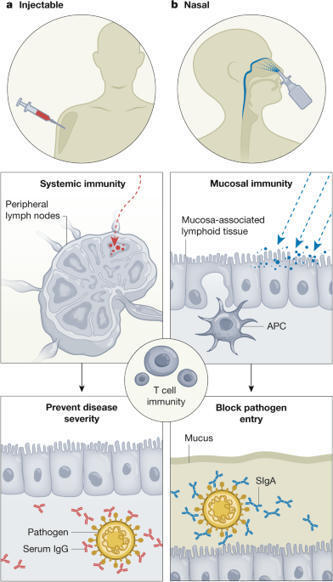
Beginning with Edward Jenner’s discovery of the smallpox vaccine, the ever-expanding repertoire of vaccines against pathogens has saved many lives. During the COVID-19 pandemic, a revolutionary mRNA injectable vaccine emerged that effectively controlled the severity of disease caused by SARS-CoV-2. This vaccine induced potent antigen-specific neutralizing serum IgG antibodies, but was limited in its ability to prevent viral invasion at the respiratory surfaces. Nasal vaccines have attracted attention as a potential strategy to combat respiratory infections and prepare for future pandemics. Input from disciplines such as microbiology, biomaterials, bioengineering and chemistry have complemented the immunology to create innovative delivery systems. This approach to vaccine delivery has yielded nasal vaccines that induce secretory IgA as well as serum IgG antibodies, which are expected to prevent pathogen invasion, thereby diminishing transmission and disease severity. For a nasal vaccine to be successful, the complexity of the relevant anatomical, physiological and immunological properties, including the proximity of the central nervous system to the nasal cavity, must be considered. In this Review, we discuss past and current efforts as well as future directions for developing safe and effective nasal vaccines for the prevention of respiratory infections. This Review provides an overview of progress and future directions in the development of nasally administered vaccines for respiratory infections.
|
|
Scooped by
Gilbert C FAURE
April 12, 2025 4:14 AM
|
|
|
Scooped by
Gilbert C FAURE
October 17, 2024 4:47 AM
|
An excellent article in Scientific American discusses recent advances in the development of nasal vaccines against respiratory viral infections, including…
|
|
Scooped by
Gilbert C FAURE
September 8, 2024 11:51 AM
|
Drooling into a tube is not only more comfortable than nasal testing, it could also detect disease earlier.
|
|
Scooped by
Gilbert C FAURE
July 31, 2024 9:43 AM
|
|
|
Scooped by
Gilbert C FAURE
June 3, 2024 11:33 AM
|
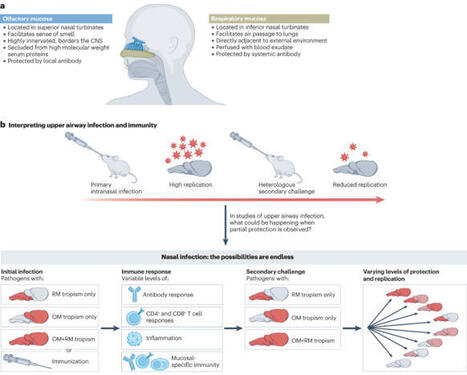
The olfactory mucosa is a component of the nasal airway that mediates the sense of smell. Recent studies point to an important role for the olfactory mucosa as a barrier to both respiratory pathogens and to neuroinvasive pathogens that hijack the olfactory nerve and invade the CNS. In particular, the COVID-19 pandemic has demonstrated that the olfactory mucosa is an integral part of a heterogeneous nasal mucosal barrier critical to upper airway immunity. However, our insufficient knowledge of olfactory mucosal immunity hinders attempts to protect this tissue from infection and other diseases. This Review summarizes the state of olfactory immunology by highlighting the unique immunologically relevant anatomy of the olfactory mucosa, describing what is known of olfactory immune cells, and considering the impact of common infectious diseases and inflammatory disorders at this site. We will offer our perspective on the future of the field and the many unresolved questions pertaining to olfactory immunity. This Review from Wellford and Moseman considers the unique immunology of the olfactory mucosa. The authors describe how stromal cells, innate immune cells and adaptive immune cells cooperate to defend the olfactory mucosa, protecting the host from potentially serious respiratory or neurotropic infections. They also discuss the relevance of olfactory mucosal immunology for the fields of vaccination and neurodegeneration.
|
|
|
Scooped by
Gilbert C FAURE
September 22, 8:06 AM
|
How durable is T cell memory in the human upper airway?
The nose and throat are major entry sites for respiratory viruses, yet surprisingly little is known about the longevity of antigen-specific memory T cells at these barrier tissues.
In our new preprint, we directly tracked virus-specific CD8 and CD4 T cells in the human upper airway for more than 18 months.
We collected nasal swabs monthly from healthy adults—nearly 900 samples in total—and used peptide–MHC multimers to track antigen-specific T cells with epitope-level specificity. We also followed corresponding T cell populations in blood for >12 months.
What did we find?
1. SARS-CoV-2- and influenza A-specific memory CD8 and CD4 T cells were remarkably common, detectable in nasal samples from >95% of individuals.
2. Upper-airway antigen-specific T cell memory was highly durable, persisting for 18+ months with no clear evidence of decline.
3. These virus-specific cells predominantly exhibited tissue-resident memory (TRM) phenotypes, consistent with long-term residence at this important barrier site.
4. During reported or suspected SARS-CoV-2 infections, SARS-CoV-2-specific T cell frequencies increased, providing evidence that these local memory populations can respond to renewed viral exposure.
Together, these data demonstrate remarkably durable antigen-specific CD8 and CD4 T cell memory in human upper-airway mucosal and lymphoid tissues.
The findings have implications for next-generation vaccines and T cell-based therapeutics designed to establish long-lived immunity directly at sites of pathogen entry.
Preprint: https://lnkd.in/dp43Nf2J
Huge congratulations to @Sydney Ramirez, Farhoud Faraji, La Jolla Institute for Immunology and the entire team!
|
|
Scooped by
Gilbert C FAURE
August 14, 9:42 AM
|
🧬 Immunology Insights | Episode 29
Every vaccine you have ever received by injection did something specific: it protected your blood.
It may not have protected the surface the pathogen actually walks through to get there.
That gap is the reason a vaccinated person can still carry and transmit a virus even while being fully protected from severe disease. It comes down to one distinction most people never learn: the immune system at your body's entry points is a different system from the one circulating in your blood.
Your gut, lungs, nasal passages, and reproductive tract are where nearly every pathogen first makes contact. So the body maintains a dedicated mucosal immune system stationed exactly there. Its main weapon is secretory IgA (sIgA) - and here is the fact that surprises most people, including most biology graduates: sIgA is the most abundantly produced antibody in the entire human body. Not IgG. Not the antibody every vaccine textbook centres on. IgA.
This system has its own infrastructure. Mucosa-associated lymphoid tissue (MALT), Peyer's patches in the gut wall, and intraepithelial lymphocytes (IELs) sitting directly within the epithelial barrier - all positioned to intercept pathogens before they ever reach the bloodstream.
This is why injectable vaccines can be a partial answer. They train the blood-based immune system very effectively. But they often fail to establish strong mucosal immunity, because the injection site and the mucosal surface are, immunologically speaking, separate territories. The pathogen can still enter, replicate briefly at the surface, and pass to another person, even in someone whose blood is fully protected.
It is why the next generation of vaccine design is moving toward nasal and oral delivery - trying to train immunity exactly where the pathogen arrives, not just where the needle does.
Mucosal immunity does not get the attention IgG and blood-based immunity get. But it is standing guard at every single point where the outside world touches you.
I'm Sangeetha - Biotechnology Masters graduate (Gold Medalist) with a research background in biofilms, now building my foundation towards a PhD in Immunology in Melbourne.
Learning in public, one episode at a time.
📖 If injectable vaccines struggle to build mucosal immunity, what do you think is the biggest barrier to making nasal or oral vaccines mainstream - science, manufacturing, or public trust? 👇
Happy immunology!🔬🥼
#MucosalImmunity #IgA #MALT #Vaccines #ImmunologyInsights #GutImmunity
|
|
Scooped by
Gilbert C FAURE
April 10, 5:14 AM
|
Most pathogens don’t wait for an invitation, they enter through our mucosal surfaces.
A recent paper in Nature Reviews Immunology highlights a critical gap in how we think about vaccines: while traditional injected vaccines are excellent at preventing severe disease, they often fall short at the body’s frontlines; the respiratory, gastrointestinal, and urogenital mucosa.
🔬 Key takeaway:
To truly control infections (and not just reduce symptoms), we need to design vaccines that generate strong mucosal immunity.
Here’s why this matters:
• Mucosal tissues are the first point of contact for most pathogens
• Local immune defenses (like IgA and tissue-resident memory cells) can stop infections before they start
• Current systemic vaccines don’t always induce strong protection at these sites
• Mucosal vaccines (e.g., nasal or oral) could help block transmission, not just disease
💡 The future of vaccination may lie in integrated strategies:
Systemic priming + mucosal boosting = broader, more effective protection
This shift is especially relevant for respiratory and emerging zoonotic diseases, where stopping transmission is just as important as treating illness.
As we continue to rethink vaccine design, one thing is clear; the protection at the entry point could change the game.
Read more : https://lnkd.in/dgsSd4q7
#Immunology #Vaccines #MucosalImmunity #OneHealth #InfectiousDiseases #Research #PublicHealth
|
|
Scooped by
Gilbert C FAURE
February 23, 4:27 AM
|
A very insightful review from the Akiko Iwasaki's group on the potential to harness mucosal immunity in next-generation vaccine development.
While the rapid deployment of intramuscular mRNA vaccines was a landmark achievement in preventing severe COVID-19, intramuscular shots often fall short of providing sterilizing immunity.
Mucosal immunity represents a particularly promising avenue for improving vaccines against respiratory viruses, as it enables immune protection to be established directly at the site of viral entry and early replication.
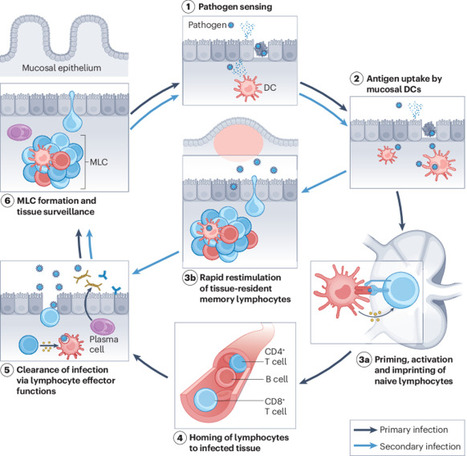
Mucosal tissues, such as the respiratory tract, host locally regulated specialized immune cells that are functionally and spatially distinct. Reduction of infection and transmission requires engaging the mucosal immune response: a coordinated process beginning with epithelial pathogen sensing and culminating in the establishment of tissue-resident memory T (TRM) and B (BRM) cells, alongside robust local secretory IgA (SIgA) production. Unlike systemic IgG, nasal SIgA has demonstrated superior virus-neutralizing activity and greater breadth against antigenically drifted variants.
A promising strategy for advancing vaccine design is the heterologous prime-boost approach. Research suggests that intramuscular priming (to establish peripheral memory pools) followed by an intranasal boost can effectively "pull" memory cells to the respiratory mucosa.
However, the so-called 'mucosal' vaccines requires navigating complex physiological constraints, such as the mucociliary clearance system and the anionic mucus layer.
Moreover, the regulatory path for mucosal vaccines is primarily hindered by the lack of validated correlates of protection, making it difficult to predict efficacy and guide clinical trial designs. Additionally, the anatomical proximity of the nasal mucosa to the central nervous system necessitates rigorous safety evaluations to prevent neuro-olfactory spillover or unintended neuro-inflammation.
https://lnkd.in/eb5ZUMY4
|
|
Scooped by
Gilbert C FAURE
November 19, 2025 4:55 AM
|
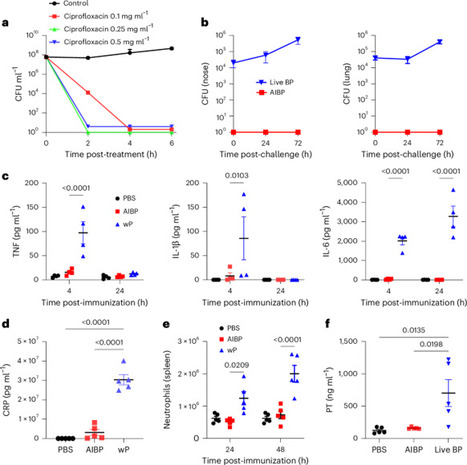
The Gram-negative bacterium Bordetella pertussis causes whooping cough (pertussis), a severe respiratory disease, especially in young children, which is resurgent despite high vaccine coverage. The current acellular pertussis vaccine prevents severe disease but does not prevent nasal infection with B. pertussis. This parenterally delivered vaccine induces potent circulating antibody responses but limited respiratory tissue-resident memory T cells and IgA responses. Here we developed a vaccine approach based on respiratory delivery of antibiotic-inactivated B. pertussis (AIBP). Ciprofloxacin-treated B. pertussis potently activated antigen-presenting cells to drive T cell responses. AIBP immunization via aerosol or intranasal administration conferred a high level of protection against lung and nasal infection. The AIBP vaccine induced B. pertussis-specific interleukin (IL)-17-producing CD4 tissue-resident memory T cells that recruited neutrophils to the respiratory tract. Protection was abrogated by depletion of CD4 T cells or neutralization of IL-17 in mice. Unlike a parenterally delivered whole-cell pertussis vaccine, which induced high levels of serum IL-1β, IL-6, tumour necrosis factor and C-reactive protein, aerosol immunization with the AIBP vaccine did not promote systemic pro-inflammatory responses. We present preclinical evidence of a safe and effective respiratory-delivered vaccine platform for inducing T cell-mediated sterilizing immunity against a respiratory pathogen. In this preclinical study, the authors find that respiratory immunization with an antibiotic-treated bacterial vaccine is a highly effective approach for inducing tissue-resident memory T cells that protect against lung and nasal infection with Bordetella pertussis.
|
|
Scooped by
Gilbert C FAURE
October 15, 2025 4:44 AM
|
|
|
Scooped by
Gilbert C FAURE
May 24, 2025 9:26 AM
|
|
|
Scooped by
Gilbert C FAURE
May 5, 2025 5:02 AM
|
🌍 Le futur des vaccins : des solutions nasales contre les infections respiratoires 🦠
Dans le cadre de la Semaine Européenne de la Vaccination, découvrez les dernières innovations dans le domaine des vaccins, avec un focus particulier sur les vaccins nasaux permettant une protection plus efficace et ciblée. 👃
🚀 Ces solutions novatrices sont développées pour protéger les générations futures contre des infections respiratoires graves telles que la coqueluche, la pneumonie à pneumocoques, et les virus comme la #grippe et le Covid-19. 🫁
Des chercheurs européens, dont l’Institut Pasteur de Lille, sont à la pointe de ces découvertes avec des projets comme :
🟢 BPZE1 : Un vaccin nasal contre la coqueluche en développement, il bloque la transmission et offre une protection durable, avec des résultats positifs chez les enfants et adultes ! 🎉
🟢 Vaccin nasal contre les pneumocoques : Ce vaccin protège contre toutes les souches de pneumocoques, une avancée importante pour protéger les plus vulnérables ! 👶👵
👉 Pour en savoir plus, rendez-vous sur pasteur-lille.fr
|
|
Scooped by
Gilbert C FAURE
February 19, 2025 8:13 AM
|
Nasal vaccine devices have the potential to offer more convenient and more effective protection against a variety of viruses, with vaccines in development for…
|
|
Scooped by
Gilbert C FAURE
September 27, 2024 8:51 AM
|
Equine herpesvirus type 1 (EHV-1) enters through the upper respiratory tract (URT). Mucosal immunity at the URT is crucial in limiting viral infection and morbidity. Here, intranasal immune cells were collected from horses (n = 15) during an experimental EHV-1 infection.
|
|
Scooped by
Gilbert C FAURE
August 2, 2024 4:15 AM
|
The findings, published July 31 in Science Advances, provide further evidence that so-called mucosal vaccines sprayed into the nose or dropped into the mouth…
|
|
Scooped by
Gilbert C FAURE
July 11, 2024 3:42 AM
|
|