Internet of Things - Technology focus
44.5K views | +2 today
Follow
 
Scooped by Richard Platt
onto Internet of Things - Technology focus
February 3, 2025 9:28 AM
Scoop.it!

Neuromorphic Semiconductor Chip Learns and Corrects Itself 

Neuromorphic Semiconductor Chip Learns and Corrects Itself  | Internet of Things - Technology focus | Scoop.it
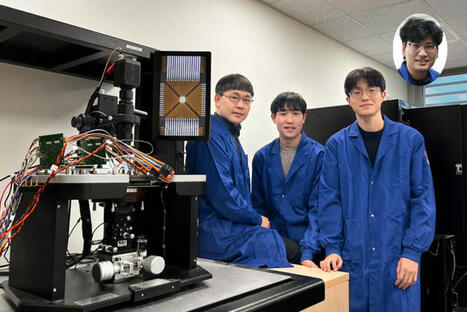
The research team of the School of Electrical Engineering posed by the newly developed processor. (From center to the right) Professor Young-Gyu Yoon, Integrated Master's and Doctoral Program Students Seungjae Han and Hakcheon Jeong and Professor Shinhyun Choi (Image: The researchers) Existing computer systems have separate data processing and storage devices, making them inefficient for processing complex data like AI.
Richard Platt's insight:

Existing computer systems have separate data processing and storage devices, making them inefficient for processing complex data like AI. A Korea Advanced Institute of Science and Technology (KAIST) research team has developed a memristor-based integrated system that is similar to the way our brain processes information.

It is now ready for use in various devices including smart security cameras, allowing them to recognize suspicious activity immediately without having to rely on remote cloud servers, and medical devices with which it can help analyze health data in real time.  What is special about this computing chip is that it can learn and correct errors that occur due to non-ideal characteristics that were difficult to solve in existing neuromorphic devices. For example, when processing a video stream, the chip learns to automatically separate a moving object from the background, and it becomes better at this task over time.  This self-learning ability has been proven by achieving accuracy comparable to ideal computer simulations in real-time image processing. The research team's main achievement is that it has completed a system that is both reliable and practical, beyond the development of brain-like components. It can adapt to immediate environmental changes and has presented an innovative solution that overcomes the limitations of existing technology.  At the heart of this innovation is a next-generation semiconductor device called a memristor. The variable resistance characteristics of this device can replace the role of synapses in neural networks, and by utilizing it, data storage and computation can be performed simultaneously, just like our brain cells do. The memristor is highly reliable and can precisely control resistance changes. This efficient system excludes complex compensation processes through self-learning.  The study is significant in that it experimentally verified the commercialization possibility of a next-generation neuromorphic semiconductor-based integrated system that supports real-time learning and inference. This technology will revolutionize the way artificial intelligence is used in everyday devices, allowing AI tasks to be processed locally without relying on remote cloud servers, making them faster, more privacy-protected, and more energy-efficient.  “This system is like a smart workspace where everything is within arm’s reach instead of having to go back and forth between desks and file cabinets,” explained KAIST researchers Hakcheon Jeong and Seungjae Han, who led the development of this technology. “This is similar to the way our brain processes information, where everything is processed efficiently at once at one spot.”

No comment yet.
Internet of Things - Technology focus
Your new post is loading...

Rescooped by Richard Platt from iGeneration - Humane Use of Technology in an AI world (Pedagogy & Digital Innovation)
January 15, 11:48 AM
Scoop.it!

Oxford Rubric - Assessing AI Usage in Schools based on: • Safety • Efficacy • Accountability • Transparency • Agency (download the 2026 whitepaper)

Oxford Rubric - Assessing AI Usage in Schools based on: • Safety • Efficacy • Accountability • Transparency • Agency (download the 2026 whitepaper) | Internet of Things - Technology focus | Scoop.it

Oxford Rubric. Assessing Artificial Intelligence Usage in Schools


Via Dr. Tom D'Amico (@TDOttawa)
Nik Peachey's curator insight, January 8, 5:31 AM

The Oxford Rubric™ is proposed as a normative framework rather than a technical standard. Its purpose is not to rank AI systems, but to assess appropriateness of use in educational contexts. The framework is intentionally technology‑agnostic and future‑proofed, focusing on enduring educational values rather than transient tools.

Rescooped by Richard Platt from iGeneration - Humane Use of Technology in an AI world (Pedagogy & Digital Innovation)
January 15, 11:47 AM
Scoop.it!

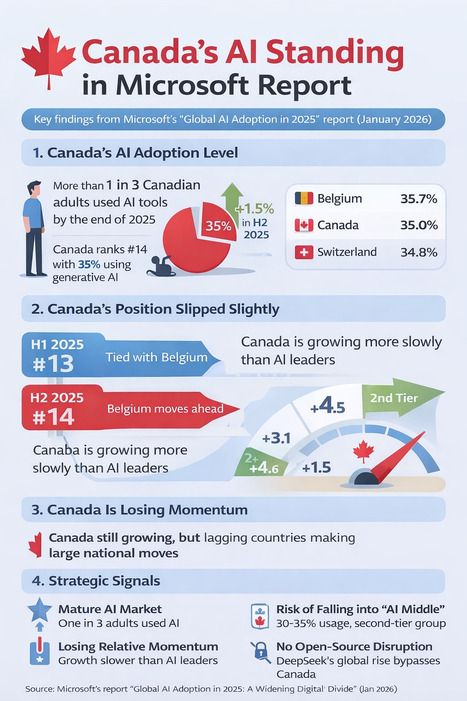
AI Global Diffusion (Jan. 2026) - download the report - Canada ranks 14th with 35% using AI

AI Global Diffusion (Jan. 2026) - download the report - Canada ranks 14th with 35% using AI | Internet of Things - Technology focus | Scoop.it

Via Dr. Tom D'Amico (@TDOttawa)
No comment yet.
Rescooped by Richard Platt from 7- DATA, DATA,& MORE DATA IN HEALTHCARE by PHARMAGEEK
January 15, 11:46 AM
Scoop.it!

Why we need to transform our healthcare data architecture

Note Buddy

Via Lionel Reichardt / le Pharmageek
No comment yet.
Rescooped by Richard Platt from GAFAMS, STARTUPS & INNOVATION IN HEALTHCARE by PHARMAGEEK
January 15, 11:43 AM
Scoop.it!

Clinical evaluation of a machine learning–based early warning system for patient deterioration | CMAJ

Clinical evaluation of a machine learning–based early warning system for patient deterioration | CMAJ | Internet of Things - Technology focus | Scoop.it

Via Lionel Reichardt / le Pharmageek
No comment yet.
Rescooped by Richard Platt from GAFAMS, STARTUPS & INNOVATION IN HEALTHCARE by PHARMAGEEK
January 7, 10:48 AM
Scoop.it!

Healthcare AI adoption up, but data and integration challenges persist

Healthcare AI adoption up, but data and integration challenges persist | Internet of Things - Technology focus | Scoop.it
On the provider side, 58% of organizations polled are using AI for administrative tasks, such as medical coding, billing and scheduling, while 44% are deploying it for clinical decision support and imaging analysis.

Via Lionel Reichardt / le Pharmageek
Richard Platt's insight:

On the provider side, 58% of organizations polled are using AI for administrative tasks, such as medical coding, billing and scheduling, while 44% are deploying it for clinical decision support and imaging analysis

No comment yet.
Rescooped by Richard Platt from HEALTHCARE & SOCIAL MEDIA
January 7, 10:47 AM
Scoop.it!

One in four UK patients using AI and social media for health info

One in four UK patients using AI and social media for health info | Internet of Things - Technology focus | Scoop.it
One in four UK patients (24%) are turning to AI and social media for help in understanding their health, according to survey results.

Via Lionel Reichardt / le Pharmageek
Richard Platt's insight:

One in four UK patients (24%) are turning to AI and social media for help in understanding their health, according to survey results.

No comment yet.
Rescooped by Richard Platt from GAFAMS, STARTUPS & INNOVATION IN HEALTHCARE by PHARMAGEEK
January 7, 10:46 AM
Scoop.it!

H1 2025 market overview: Proof in the pudding | Rock Health

H1 2025 market overview: Proof in the pudding | Rock Health | Internet of Things - Technology focus | Scoop.it

Via Lionel Reichardt / le Pharmageek
No comment yet.
Rescooped by Richard Platt from GAFAMS, STARTUPS & INNOVATION IN HEALTHCARE by PHARMAGEEK
January 7, 10:45 AM
Scoop.it!

Physicians turning to AI for clinical support, not just paperwork, athenahealth survey finds | Medical Economics

Physicians turning to AI for clinical support, not just paperwork, athenahealth survey finds | Medical Economics | Internet of Things - Technology focus | Scoop.it
new findings from athenahealth’s athenaInstitute

Via Lionel Reichardt / le Pharmageek
Richard Platt's insight:

new findings from athenahealth’s athenaInstitute

No comment yet.
Rescooped by Richard Platt from Learning & Technology News
July 19, 2025 3:19 AM
Scoop.it!

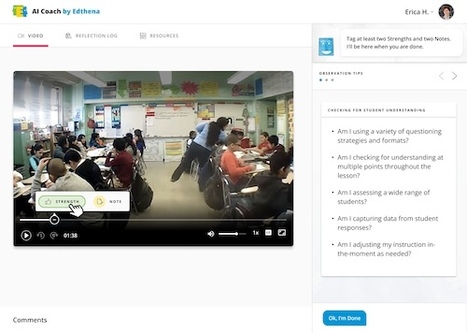
Using AI to Reimagine Teacher Preparation for Scale, Equity, and Reflective Practice

Using AI to Reimagine Teacher Preparation for Scale, Equity, and Reflective Practice | Internet of Things - Technology focus | Scoop.it
A computerized AI coaching support model lets pre-service teachers engage in scalable, self-guided reflection for teacher preparation.

Via EDTECH@UTRGV, Nik Peachey
Richard Platt's insight:

A computerized AI coaching support model enables pre-service teachers to engage in scalable, self-guided reflection for teacher preparation. It is worth having a look at, as it will likely lead to more improvements for Teachers and Instructors. 

EDTECH@UTRGV's curator insight, July 18, 2025 12:44 PM

"An AI-powered video coaching platform enables pre-service teachers to independently reflect on their teaching, receive time-stamped feedback, and improve their practice by aligning lessons with self-identified goals—fostering scalable, self-guided professional growth."

Nik Peachey's curator insight, July 19, 2025 2:39 AM

Just checking this out. The demo looks impressive.

Peter Lakeman's curator insight, July 19, 2025 2:54 AM

In de VS wordt AI ingezet om toekomstige docenten te begeleiden met directe feedback, gesimuleerde praktijksituaties en reflectievragen. Doel: betere voorberetiding, meer gelijkheid én opschaling van lerarenopleidingen.


� Interessant voorbeeld van hoe AI niet vervangt, maar versterkt.

Scooped by Richard Platt
July 15, 2025 10:32 PM
Scoop.it!

How China outsmarted Europe and the US on rare earths | Business Beyond

Richard Platt's insight:

The US and Europe both need Rare Earth Minerals for their industrial bases, for the transition to green technology, and for their defence. But China controls the majority of the supply, from mining all the way through to the end-use stage. Beijing has begun to wield this strategic influence, raising questions about America and Europe's need and ability, and in this case, for the EU to find its own critical minerals. In this episode of Business Beyond, this video looks at how China conquered the market and asks if there is any way Europe can develop strategic independence.

No comment yet.
Scooped by Richard Platt
July 11, 2025 9:56 PM
Scoop.it!

2025 State of the U.S. Semiconductor Industry

2025 State of the U.S. Semiconductor Industry | Internet of Things - Technology focus | Scoop.it
Richard Platt's insight:

In 2025, semiconductors are not just components in consumer devices – they are the essential building blocks for the technologies shaping America’s future. From artificial intelligence and quantum computing to advanced communications networks and defense systems, chips are at the heart of the competition for global technology leadership in the 21st century.

American engineers invented semiconductors 65 years ago, and the U.S. semiconductor industry remains the global leader, commanding just over 50% of global chip revenues. But as competitors from around the world have sought to challenge U.S. leadership, America’s share of global chip manufacturing capacity was declining sharply – from 37% in 1990 to just 10% by 2022. If this trend were to continue, the U.S. semiconductor industry would risk falling back from the forefront of further advances in manufacturing processing technology, designs and architectures, and materials critical for developing the next generation of chips that will underpin the technologies of tomorrow.

This foundational technology is the hidden force driving modern innovation – and a testament to the wonder of advanced semiconductor research, design, and manufacturing.

Semiconductors are a marvel of modern technology and the foundation of our digital world. The chips powering modern smartphones contain more than 15 Billion transistors, each smaller than a virus and capable of switching on and off billions of times/second.

Semiconductors are the heart of today’s AI data centers can contain hundreds of billions of transistors, a number so high that if you counted one transistor per second, it would take more than 6,000 years to count all the transistors on a single chip.


No comment yet.
Rescooped by Richard Platt from Learning & Technology News
July 10, 2025 8:52 AM
Scoop.it!

Against "Brain Damage" - by Ethan Mollick

Against "Brain Damage" - by Ethan Mollick | Internet of Things - Technology focus | Scoop.it

I increasingly find people asking me “does AI damage your brain?” It's a revealing question. Not because AI causes literal brain damage (it doesn't) but because the question itself shows how deeply we fear what AI might do to our ability to think. So, in this post, I want to discuss ways of using AI to help, rather than hurt, your mind. But why the obsession over AI damaging our brains?


Via Nik Peachey
Richard Platt's insight:

Author Ethan Mollick states, "I increasingly find people asking me, 'Does AI damage your brain?” It's a revealing question. Not because AI causes literal brain damage (it doesn't) but because the question itself shows how deeply we fear what AI might do to our ability to think. So, in this post, I want to discuss ways of using AI to help, rather than hurt, your mind. But why the obsession over AI damaging our brains?  - This article is well worth reading. - AI can help or hurt our thinking. I particularly like the conclusion, “Our fear of AI's damaging our brains” is a fear of our laziness. The technology offers an easy out from the hard work of thinking, and we worry we'll take it. We should worry. But we should also remember that we have a choice. Your brain is safe. Your thinking, however, is up to you.”

Nik Peachey's curator insight, July 9, 2025 6:08 AM

This article is well worth reading. - AI can help, or hurt, our thinking. I particularly like the conclusion “Our fear of AI “damaging our brains” is actually a fear of our own laziness. The technology offers an easy out from the hard work of thinking, and we worry we'll take it. We should worry. But we should also remember that we have a choice.

Your brain is safe. Your thinking, however, is up to you.”

Rescooped by Richard Platt from Learning & Technology News
July 6, 2025 10:31 AM
Scoop.it!

Silent Signals: How AI Can Read Between The Lines In Your Voice

Silent Signals: How AI Can Read Between The Lines In Your Voice | Internet of Things - Technology focus | Scoop.it

"Voice technologies are no longer just about recognizing what we say; they are beginning to understand how we say it. As artificial intelligence (AI) advances, it can detect subtle emotional signals in our speech, promising more human-like interactions with machines. Emotional AI is reshaping how voice data is used across industries."


Via EDTECH@UTRGV, Nik Peachey
Richard Platt's insight:

"Voice technologies are no longer just about recognizing what we say; they are beginning to understand how we say it. As artificial intelligence (AI) advances, it can detect subtle emotional signals in our speech, promising more human-like interactions with machines. Emotional AI is reshaping how voice data is used across industries."

EDTECH@UTRGV's curator insight, July 4, 2025 11:03 AM

"Paralinguistic voice analysis focuses on non-verbal elements of speech like tone, pitch, volume, pauses and rhythm that convey emotion, intention or attitude. While traditional voice recognition focused on transcribing spoken words, emotional AI adds a new layer: interpreting how those words are delivered. Today’s AI systems use deep learning to identify these paralinguistic features in real time."

Rescooped by Richard Platt from iGeneration - Humane Use of Technology in an AI world (Pedagogy & Digital Innovation)
January 15, 11:48 AM
Scoop.it!

Skills economy report 2026 - data from 100 million job postings across 100 countries - students need AI and Data literacy along with Critical Thinking and Creative Problem Solving skills

Skills economy report 2026 - data from 100 million job postings across 100 countries - students need AI and Data literacy along with Critical Thinking and Creative Problem Solving skills | Internet of Things - Technology focus | Scoop.it

Via Dr. Tom D'Amico (@TDOttawa)
No comment yet.
Rescooped by Richard Platt from iGeneration - Humane Use of Technology in an AI world (Pedagogy & Digital Innovation)
January 15, 11:46 AM
Scoop.it!

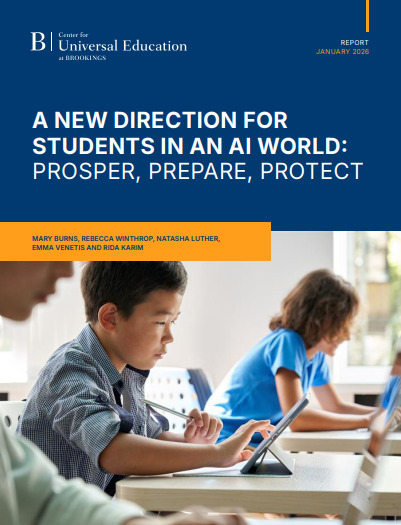
Informative report - A New Direction for Students in an AI world - Prosper - Prepare - Protect (released Jan. 14, 2026)

Informative report - A New Direction for Students in an AI world - Prosper - Prepare - Protect (released Jan. 14, 2026) | Internet of Things - Technology focus | Scoop.it

Via Dr. Tom D'Amico (@TDOttawa)
Nik Peachey's curator insight, January 15, 2:11 AM

This is a really useful and well balanced report.

anita92delarosa@gmail.com's curator insight, Today, 8:29 AM
El informe “A New Direction for Students in an AI World: Prosper, Prepare, Protect” (Brookings, 2026) analiza los efectos de la inteligencia artificial en la educación y advierte que, si se usa sin regulación y preparación adecuada, puede generar riesgos sobre el aprendizaje, la privacidad y la equidad. Propone tres pilares: Prosper, para enriquecer el aprendizaje sin sustituir el pensamiento; Prepare, para fortalecer la alfabetización en IA y la formación docente; y Protect, para garantizar la seguridad y el bienestar estudiantil. Críticamente, aunque ofrece un marco útil, el informe enfatiza los riesgos más que los beneficios potenciales, y sugiere que la integración efectiva de IA requiere evidencia empírica, formación docente y adaptación curricular. 

Referencia Bibliográfica: 

Burns, M. et al. (2026). Una nueva dirección para los estudiantes en un mundo de IA: prosperar, prepararse, proteger. Centro para la Educación Universal en Bookings. https://www.brookings.edu/wp-content/uploads/2026/01/A-New-Direction-for-Students-in-an-AI-World-FULL-REPORT.pdf
Rescooped by Richard Platt from GAFAMS, STARTUPS & INNOVATION IN HEALTHCARE by PHARMAGEEK
January 15, 11:44 AM
Scoop.it!

Apple will soon announce its BIG ‘AI doctor’ plan for digital health – Apple Must

Apple will soon announce its BIG ‘AI doctor’ plan for digital health – Apple Must | Internet of Things - Technology focus | Scoop.it

Via Lionel Reichardt / le Pharmageek
No comment yet.
Rescooped by Richard Platt from Educational Technology News
January 9, 9:37 AM
Scoop.it!

AI Clarity: 4 Mindset Shifts Learning Leaders Need Before Building an AI Strategy

AI Clarity: 4 Mindset Shifts Learning Leaders Need Before Building an AI Strategy | Internet of Things - Technology focus | Scoop.it
The AI landscape will keep shifting—new tools, faster models, endless possibilities. But clarity, not speed, will determine who succeeds.

Via EDTECH@UTRGV
Richard Platt's insight:

"The leaders who thrive are the ones who adapt with purpose, aligning every experiment with strategy and using AI to elevate, not erode, human skills."

EDTECH@UTRGV's curator insight, January 6, 12:10 PM

"The leaders who thrive are the ones who adapt with purpose, aligning every experiment with strategy and using AI to elevate, not erode, human skills."

Nik Peachey's curator insight, January 8, 5:30 AM

"The leaders who thrive are the ones who adapt with purpose, aligning every experiment with strategy and using AI to elevate, not erode, human skills."

Rescooped by Richard Platt from GAFAMS, STARTUPS & INNOVATION IN HEALTHCARE by PHARMAGEEK
January 7, 10:48 AM
Scoop.it!

Stanford AI Experts Predict What Will Happen in 2026 | Stanford HAI

Stanford AI Experts Predict What Will Happen in 2026 | Stanford HAI | Internet of Things - Technology focus | Scoop.it
The era of AI evangelism is giving way to evaluation. Stanford faculty see a coming year defined by rigor, transparency, and a long-overdue focus on actual utility over speculative promise.

Via Lionel Reichardt / le Pharmageek
Richard Platt's insight:

The era of AI evangelism is giving way to evaluation. Stanford faculty see a coming year defined by rigor, transparency, and a long-overdue focus on actual utility over speculative promise.

No comment yet.
Rescooped by Richard Platt from GAFAMS, STARTUPS & INNOVATION IN HEALTHCARE by PHARMAGEEK
January 7, 10:47 AM
Scoop.it!

The trust gap: why AI in healthcare must feel safe, not just be built safe

South-East Asian health systems provide case studies for building AI healthcare with verifiability and accountability that patients can trust.

Via Lionel Reichardt / le Pharmageek
Richard Platt's insight:

South-East Asian health systems provide case studies for building AI healthcare with verifiability and accountability that patients can trust.

No comment yet.
Rescooped by Richard Platt from GAFAMS, STARTUPS & INNOVATION IN HEALTHCARE by PHARMAGEEK
January 7, 10:46 AM
Scoop.it!

A Huge Amount of Doctors Are Already Using AI in Medical Care

A Huge Amount of Doctors Are Already Using AI in Medical Care | Internet of Things - Technology focus | Scoop.it
recent survey

Via Lionel Reichardt / le Pharmageek
Richard Platt's insight:

recent survey

No comment yet.
Rescooped by Richard Platt from GAFAMS, STARTUPS & INNOVATION IN HEALTHCARE by PHARMAGEEK
January 7, 10:44 AM
Scoop.it!

Some doctors are using ChatGPT to assist with clinical decisions. Is it safe?

Some doctors are using ChatGPT to assist with clinical decisions. Is it safe? | Internet of Things - Technology focus | Scoop.it
Nineteen-year-old Lia was at a follow-up appointment at a boutique dermatology practice in New York City. She was interested in a prescription for hair growth. Since she was already on another medication, the dermatologist decided to check for potential drug-drug interactions — using ChatGPT on her phone.“I just was kind of like, that’s strange,” Lia, who did not share her last name out of privacy concerns, told Fierce Healthcare. “I guess I’ll just do my own research in addition to her.” | Publicly available generative AI tools like ChatGPT are popular, easy to access and simple to use. If consumers are using them, are doctors, too? The answer, Fierce Healthcare finds, is yes.

Via Lionel Reichardt / le Pharmageek
Richard Platt's insight:

Nineteen-year-old Lia was at a follow-up appointment at a boutique dermatology practice in New York City. She was interested in a prescription for hair growth. Since she was already on another medication, the dermatologist decided to check for potential drug-drug interactions — using ChatGPT on her phone.“I just was kind of like, that’s strange,” Lia, who did not share her last name out of privacy concerns, told Fierce Healthcare. “I guess I’ll just do my own research in addition to her.” | Publicly available generative AI tools like ChatGPT are popular, easy to access and simple to use. If consumers are using them, are doctors, too? The answer, Fierce Healthcare finds, is yes.

No comment yet.
Rescooped by Richard Platt from Learning & Technology News
July 19, 2025 3:17 AM
Scoop.it!

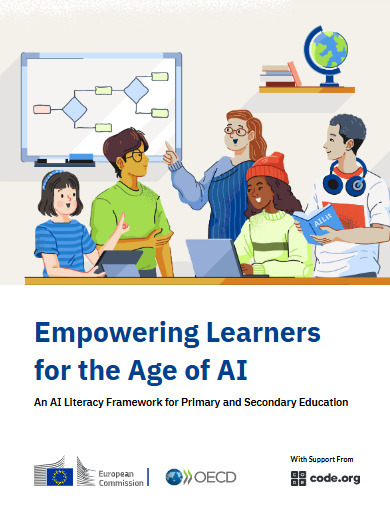
Empowering Learners for the Age of AI

Empowering Learners for the Age of AI | Internet of Things - Technology focus | Scoop.it

As Artificial Intelligence (AI) increasingly influences how we access information, communicate, and make decisions, AI literacy becomes essential for navigating daily life, creating with purpose, and preparing for the future of learning and work. AI literacy equips learners and educators to understand both the risks and opportunities that AI presents, and to make meaningful and ethical decisions about its use.


Via Edumorfosis, Nik Peachey
Richard Platt's insight:

As Artificial Intelligence (AI) increasingly influences how we access information, communicate, and make decisions, AI literacy becomes essential for navigating daily life, creating with purpose, and preparing for the future of learning and work. AI literacy equips learners and educators to understand both the risks and opportunities that AI presents, and to make meaningful and ethical decisions about its use

Edumorfosis's curator insight, July 18, 2025 9:19 AM

Artificial Intelligence (AI) has become a widely used tool in our everyday life, including for learning, personalized assistance, and entertainment. Therefore, young people must be able to understand how AI works, its societal impact, and how to use it ethically in order to be prepared for a society and economy in the age of AI

Integrating AI literacy into education is essential to equip students with the critical thinking skills necessary to understand, interact with, and innovate using digital technologies, preparing them to contribute meaningfully to society” (Lidija Kralj) 


Rescooped by Richard Platt from Learning & Technology News
July 15, 2025 11:49 AM
Scoop.it!

Artificial Intelligence and Critical Thinking in Higher Education: Fostering a Transformative Learning Experience for Students

Artificial Intelligence and Critical Thinking in Higher Education: Fostering a Transformative Learning Experience for Students | Internet of Things - Technology focus | Scoop.it

Via Nik Peachey
Richard Platt's insight:

Discover how integrating artificial intelligence and critical thinking strategies can foster transformative learning experiences in higher education. Learn how educators can model, guide, and support students in navigating AI with intention, reflection, and integrity. Whilst a lot of articles like this see critical thinking as a tool to apply to AI-generated content, I find myself seeing AI as a tool to critically examine the world

Nik Peachey's curator insight, July 15, 2025 6:52 AM

Whilst a lot of articles like this see critical thinking as a tool to apply to AI generated content, I find myself seeing AI as a tool to critically examine the world

Rescooped by Richard Platt from Nik Peachey
July 11, 2025 12:02 PM
Scoop.it!

How to Partner with AI to Engage with Educational Research

Watch the recording of the webinar from Tuesday 8 July 2025 to explore how teacher educators can help teachers partner with AI to identify relevant and credible research, and extract insights that inform their classroom practice.


Via Nik Peachey
Richard Platt's insight:

Watch the recording of the webinar from Tuesday 8 July 2025 to explore how teacher educators can help teachers partner with AI to identify relevant and credible research, and extract insights that inform their classroom practice.

Nik Peachey's curator insight, July 11, 2025 6:18 AM

It was great to be one of the presenters at this event for teacher educators.

Scooped by Richard Platt
July 6, 2025 11:15 PM
Scoop.it!

Built to Lead, Afraid to Risk: The Strategic Rot Inside Intel 

Over the last few weeks, I’ve been on a bit of a risk kick. I’ve been reading books on how risk plays out at the operational and financial level, and one thing keeps sticking out, Intel feels like…
Richard Platt's insight:

It’s hard to pinpoint exactly when the decline started. Like most corporate failures, it didn’t happen all at once, it rolled in slowly, one missed step at a time. Intel’s fall traces back to a series of leadership missteps culminating in one of the most consequential fumbles in tech history: missing the mobile market. Intel had a front-row seat to the iPhone revolution. Apple came to them 1st, Ottelini passed, believing the volumes weren’t worth it.  The mobile shift was already in motion Intel ignored it. It was a failure of strategic judgment. The current leadership reflects this today, not with accountability, but with rationalization. No sense of ownership, no clear admission that the call was wrong. Just soft hindsight and shrugged shoulders. That’s not leadership. That’s deflection. - Intel never had a financial problem (before) they had a risk management problem specifically, in its leadership class. Otellini, came from an economics background, but Intel is famed for being run by engineers.  There was the Intel Atom, which flopped in mobile; the QLogic Ethernet acquisition, which they let wither; and the infamous Arizona fab , a billion-dollar facility shuttered before it ever opened. These aren’t the moves of a cautious company they’re the missteps of a leadership team stuck between 2 identities.  


If Intel truly wants to minimize risk, it should lean into its strengths as a front-line innovative manufacturer, becoming a world-class foundry.

The problem is identity. Intel still sees itself as the architect of x86 dominance. Those days are past. This crap self-image is increasingly out of step with market reality. They don’t want to supply the stars, they still think they are one. Intel is going to be almost entirely dependent on what they do over the next 12–18 months. Long-term success means pivoting away from designing in-house chips and becoming a one-stop manufacturing hub for the broader market. Intel as a household name began to fade when people stopped using home computers and started paying their bills from their phones. That consumer relevance is gone. But there’s still value Intel can bring specifically, as a world-class foundry with capabilities TSMC can’t easily match. Intel can step in as the alternative, with manufacturing sites across Oregon, Ireland, and soon Germany. If TSMC’s capacity maxes out, or its economics falter, Intel can capture share. And then there’s compliance. Intel’s deep ties to U.S. regulators and defense contractors make it uniquely positioned to maintain ITAR compliance something that could become critical in an increasingly digitized military landscape. Intel says it wants to build the next great global foundry. But right now, its customer list reads more like an internal memo than a marketplace. I’ll be more optimistic when Intel’s foundry serves more external partners than internal product lines.

No comment yet.