|
|
Rescooped by
Richard Platt
from GAFAMS, STARTUPS & INNOVATION IN HEALTHCARE by PHARMAGEEK
onto Internet of Things - Technology focus January 15, 11:44 AM
|
Get Started for FREE
Sign up with Facebook Sign up with X
I don't have a Facebook or a X account
Your new post is loading...

Nik Peachey's curator insight,
January 8, 5:31 AM
The Oxford Rubric™ is proposed as a normative framework rather than a technical standard. Its purpose is not to rank AI systems, but to assess appropriateness of use in educational contexts. The framework is intentionally technology‑agnostic and future‑proofed, focusing on enduring educational values rather than transient tools.
EDTECH@UTRGV's curator insight,
July 18, 2025 12:44 PM
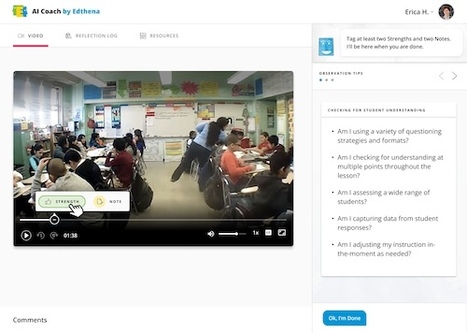
"An AI-powered video coaching platform enables pre-service teachers to independently reflect on their teaching, receive time-stamped feedback, and improve their practice by aligning lessons with self-identified goals—fostering scalable, self-guided professional growth."
Nik Peachey's curator insight,
July 19, 2025 2:39 AM
Just checking this out. The demo looks impressive.
Peter Lakeman's curator insight,
July 19, 2025 2:54 AM
In de VS wordt AI ingezet om toekomstige docenten te begeleiden met directe feedback, gesimuleerde praktijksituaties en reflectievragen. Doel: betere voorberetiding, meer gelijkheid én opschaling van lerarenopleidingen.
� Interessant voorbeeld van hoe AI niet vervangt, maar versterkt.
Nik Peachey's curator insight,
July 9, 2025 6:08 AM
This article is well worth reading. - AI can help, or hurt, our thinking. I particularly like the conclusion “Our fear of AI “damaging our brains” is actually a fear of our own laziness. The technology offers an easy out from the hard work of thinking, and we worry we'll take it. We should worry. But we should also remember that we have a choice. Your brain is safe. Your thinking, however, is up to you.”
EDTECH@UTRGV's curator insight,
July 4, 2025 11:03 AM
"Paralinguistic voice analysis focuses on non-verbal elements of speech like tone, pitch, volume, pauses and rhythm that convey emotion, intention or attitude. While traditional voice recognition focused on transcribing spoken words, emotional AI adds a new layer: interpreting how those words are delivered. Today’s AI systems use deep learning to identify these paralinguistic features in real time." |
Nik Peachey's curator insight,
January 15, 2:11 AM
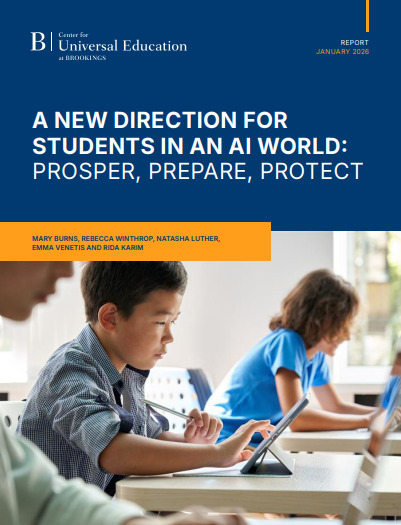
This is a really useful and well balanced report.
anita92delarosa@gmail.com's curator insight,
Today, 8:29 AM
El informe “A New Direction for Students in an AI World: Prosper, Prepare, Protect” (Brookings, 2026) analiza los efectos de la inteligencia artificial en la educación y advierte que, si se usa sin regulación y preparación adecuada, puede generar riesgos sobre el aprendizaje, la privacidad y la equidad. Propone tres pilares: Prosper, para enriquecer el aprendizaje sin sustituir el pensamiento; Prepare, para fortalecer la alfabetización en IA y la formación docente; y Protect, para garantizar la seguridad y el bienestar estudiantil. Críticamente, aunque ofrece un marco útil, el informe enfatiza los riesgos más que los beneficios potenciales, y sugiere que la integración efectiva de IA requiere evidencia empírica, formación docente y adaptación curricular.
Referencia Bibliográfica: Burns, M. et al. (2026). Una nueva dirección para los estudiantes en un mundo de IA: prosperar, prepararse, proteger. Centro para la Educación Universal en Bookings. https://www.brookings.edu/wp-content/uploads/2026/01/A-New-Direction-for-Students-in-an-AI-World-FULL-REPORT.pdf
EDTECH@UTRGV's curator insight,
January 6, 12:10 PM
"The leaders who thrive are the ones who adapt with purpose, aligning every experiment with strategy and using AI to elevate, not erode, human skills."
Nik Peachey's curator insight,
January 8, 5:30 AM
"The leaders who thrive are the ones who adapt with purpose, aligning every experiment with strategy and using AI to elevate, not erode, human skills."
Edumorfosis's curator insight,
July 18, 2025 9:19 AM
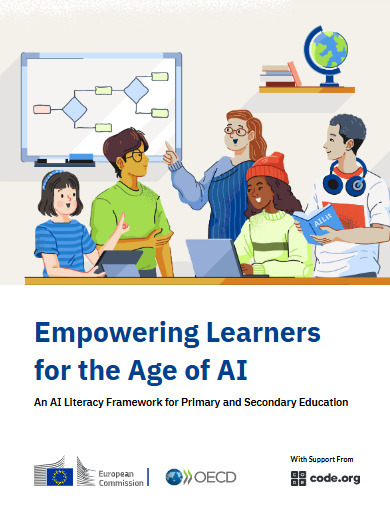
Artificial Intelligence (AI) has become a widely used tool in our everyday life, including for learning, personalized assistance, and entertainment. Therefore, young people must be able to understand how AI works, its societal impact, and how to use it ethically in order to be prepared for a society and economy in the age of AI. “Integrating AI literacy into education is essential to equip students with the critical thinking skills necessary to understand, interact with, and innovate using digital technologies, preparing them to contribute meaningfully to society” (Lidija Kralj)
Nik Peachey's curator insight,
July 15, 2025 6:52 AM
Whilst a lot of articles like this see critical thinking as a tool to apply to AI generated content, I find myself seeing AI as a tool to critically examine the world
Nik Peachey's curator insight,
July 11, 2025 6:18 AM
It was great to be one of the presenters at this event for teacher educators. |