Your new post is loading...

|
Scooped by
Gilbert C FAURE
August 2, 2020 11:38 AM
|
The role of T cells in the resolution or exacerbation of COVID-19, as well as their potential to provide long-term protection from reinfection with SARS-CoV-2, remains debated. Nevertheless, recent studies have highlighted various aspects of T cell responses to SARS-CoV-2 infection that are starting to enable some general concepts to emerge. In this Progress article, Zeyu Chen and E. John Wherry summarize early reports of the T cell responses observed in patients with COVID-19, emphasizing how different immune response characteristics in different patients may reflect a spectrum of disease phenotypes.
Cancer cells take advantage of NETosis to escape host immune surveillance and mediate metastasis. The pharmacological targeting of NETosis may prove beneficial in maximizing the response to cancer immunotherapy.
Via Krishan Maggon
|
|
Scooped by
Gilbert C FAURE
August 1, 2020 4:26 AM
|
The pathogenesis of coronavirus disease 2019 (COVID-19) may be envisaged as the dynamic
interaction between four vicious feedback loops chained or happening at once. These are the viral loop, the hyperinflammatory loop, the non-canonical renin-angiotensin system (RAS) axis loop, and the...
|
|
Scooped by
Gilbert C FAURE
July 29, 2020 3:50 AM
|
Metastatic disease is responsible for approximately 90% of cancer deaths. For successful dissemination and metastasis, cancer cells must evade detection and destruction by the immune system. This process is enabled by factors secreted by the primary tumour that shape both the intratumoural microenvironment and the systemic immune landscape. Here, we review the evidence of aberrant immune cell crosstalk in metastasis formation and the role that primary tumours play in hijacking these interactions in order to enhance their metastatic potential. Moreover, we highlight the intriguing parallels between the inflammatory pathways underlying inflammatory disorders and cancer progression. Immune subversion by primary tumours plays a key role in metastatic spread. This Review explores how primary tumours interfere with the crosstalk between immune cells to promote a chronic inflammatory yet immunosuppressed state that enables immune evasion and the formation of metastases.
|
|
Scooped by
Gilbert C FAURE
July 28, 2020 4:30 AM
|
Abstract Cytokine storm syndrome (CSS) is a critical clinical condition induced by a cascade of cytokine activation, characterized by overwhelming systemic inflammation, hyperferritinaemia, haemody...
|
|
Scooped by
Gilbert C FAURE
July 27, 2020 10:29 AM
|
|
|
Scooped by
Gilbert C FAURE
July 25, 2020 11:36 AM
|
How does the body fine-tune the activation of killer T cells?

|
Suggested by
Société Francaise d'Immunologie
July 24, 2020 2:55 AM
|
Viruses, an international, peer-reviewed Open Access journal.
|
|
Scooped by
Gilbert C FAURE
July 21, 2020 1:46 PM
|
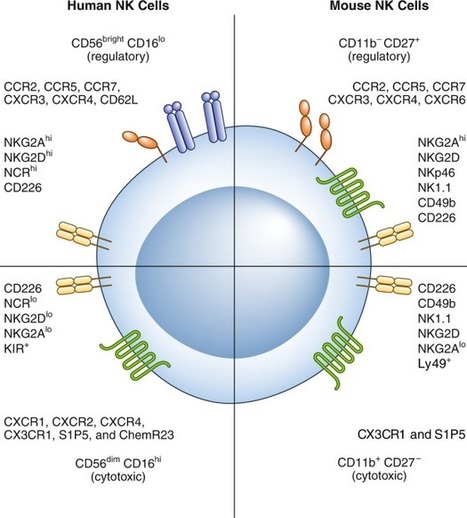
Natural killer (NK) cells belong to the innate immune system and contribute to protecting the host through killing of infected, foreign, stressed or transformed cells. Additionally, via cellular cross-talk, NK cells orchestrate antitumor immune responses. Hence, significant efforts have been undertaken to exploit the therapeutic properties of NK cells in cancer. Current strategies in preclinical and clinical development include adoptive transfer therapies, direct stimulation, recruitment of NK cells into the tumor microenvironment (TME), blockade of inhibitory receptors that limit NK cell functions, and therapeutic modulation of the TME to enhance antitumor NK cell function. In this Review, we introduce the NK cell–cancer cycle to highlight recent advances in NK cell biology and to discuss the progress and problems of NK cell–based cancer immunotherapies. In this Review, Smyth and colleagues provide an overview of recent advances in NK cell biology and discuss the progress and problems of NK cell–based cancer immunotherapies.
|
|
Scooped by
Gilbert C FAURE
July 21, 2020 1:37 PM
|
Neutrophils play a key role in defence against infection and in the activation and regulation of innate and adaptive immunity. In cancer, tumour-associated neutrophils (TANs) have emerged as an important component of the tumour microenvironment. Here, they can exert dual functions. TANs can be part of tumour-promoting inflammation by driving angiogenesis, extracellular matrix remodelling, metastasis and immunosuppression. Conversely, neutrophils can also mediate antitumour responses by direct killing of tumour cells and by participating in cellular networks that mediate antitumour resistance. Neutrophil diversity and plasticity underlie the dual potential of TANs in the tumour microenvironment. Myeloid checkpoints as well as the tumour and tissue contexture shape neutrophil function in response to conventional therapies and immunotherapy. We surmise that neutrophils can provide tools to tailor current immunotherapy strategies and pave the way to myeloid cell-centred therapeutic strategies, which would be complementary to current approaches. This Review discusses the emerging dual role played by neutrophils in the tumour microenvironment as part of tumour-promoting inflammation, while also mediating antitumour immune responses, and suggests that neutrophil function could be manipulated in myeloid cell-based therapeutic approaches to improve patient outcomes.

|
Suggested by
LIGHTING
July 18, 2020 6:21 AM
|
SARS-CoV-2 T cell immunity: Specificity, function, durability, and role in protection T cells at last
|
|
Scooped by
Gilbert C FAURE
July 17, 2020 6:16 AM
|
Click here to edit the content
|
|
Scooped by
Gilbert C FAURE
July 16, 2020 6:13 AM
|
Sign Up and Create a free Cronycle Account to start Curating, Collaborating and Publishing relevant content.
|
|
|
Scooped by
Gilbert C FAURE
August 2, 2020 10:34 AM
|
|
|
Scooped by
Gilbert C FAURE
August 1, 2020 2:06 PM
|
The protein expression profile of ACE2, suggested as host receptor for SARS‐CoV‐2, is assessed in various human organs. Notably, limited ACE2 expression is observed in the respiratory system both o
|
|
Scooped by
Gilbert C FAURE
July 31, 2020 2:03 PM
|
Inborn errors of immunity are genetic disorders with broad clinical manifestations, ranging from increased susceptibility to infections to significant immune dysregulation, often leading to multiple autoimmune phenomena, lymphoproliferation, and malignancy. The treatment is challenging as it requires careful balancing of immunosuppression in subjects at increased risk of infections. Recently, the improved ability to define inborn errors of immunity pathophysiology at the molecular level has set the basis for the development of targeted therapeutic interventions. Such a “precision medicine” approach is mainly bases on the use of available small molecules and biologics to target a specific cell function. In this article, we summarize the clinical and laboratory features of various recently described inborn errors of immunity associated with immune dysregulation and hyperinflammation in which mechanism-based therapeutic approaches have been implemented.
|
|
Suggested by
Société Francaise d'Immunologie
July 28, 2020 3:03 PM
|
Scientists are examining the role of T cells, which are likely crucial for long-term protection against SARS-CoV-2.
|
|
Scooped by
Gilbert C FAURE
July 27, 2020 10:32 AM
|
|
|
Scooped by
Gilbert C FAURE
July 27, 2020 8:22 AM
|
Recent studies have provided insights into the pathogenesis of coronavirus disease 2019 (COVID-19)1–4. Yet, longitudinal immunological correlates of disease outcome remain unclear. Here, we serially analysed immune responses in 113 COVID-19 patients with moderate (non-ICU) and severe (ICU) disease. Immune profiling revealed an overall increase in innate cell lineages with a concomitant reduction in T cell number. We identify an association between early, elevated cytokines and worse disease outcomes. Following an early increase in cytokines, COVID-19 patients with moderate disease displayed a progressive reduction in type-1 (antiviral) and type-3 (antifungal) responses. In contrast, patients with severe disease maintained these elevated responses throughout the course of disease. Moreover, severe disease was accompanied by an increase in multiple type 2 (anti-helminths) effectors including, IL-5, IL-13, IgE and eosinophils. Unsupervised clustering analysis identified 4 immune signatures, representing (A) growth factors, (B) type-2/3 cytokines, (C) mixed type-1/2/3 cytokines, and (D) chemokines that correlated with three distinct disease trajectories of patients. The immune profile of patients who recovered with moderate disease was enriched in tissue reparative growth factor signature (A), while the profile for those with worsened disease trajectory had elevated levels of all four signatures. Thus, we identified development of a maladapted immune response profile associated with severe COVID-19 outcome and early immune signatures that correlate with divergent disease trajectories.
|
|
Scooped by
Gilbert C FAURE
July 25, 2020 4:40 AM
|
Understanding the clinical presentation of severe acute respiratory syndrome coronavirus 2 (SARS-CoV-2) infection and prognosis in children is a major issue. Children often present mild symptoms, and some severe forms require paediatric intensive care, with in some cases a fatal prognosis. Our aim was to identify the epidemiological characteristics, clinical presentation, and prognosis of children with coronavirus disease 2019 (Covid-19) hospitalized in Paris suburb hospitals. In this prospective, observational, multicentre study, we included children hospitalized in paediatric departments of Paris suburb hospitals from 23 March 2020 to 10 May 2020, during the national lockdown in France with confirmed SARS-CoV-2 infection (positive RNA test on a nasopharyngeal swab) or highly suspected infection (clinical, biological, and/or radiological data features suggestive for SARS-CoV-2 infection). A total of 192 children were included for confirmed (n = 157) or highly suspected (n = 35) SARS-CoV-2 infection. The median age was one year old (interquartile range 0.125–11) with a sex ratio 1.3:1. Fever was recorded in 147 (76.6%) children and considered poorly tolerated in 29 (15.1%). The symptoms ranged from rhinorrhoea (34.4%) and gastrointestinal (35.5%) to respiratory distress (25%). Only 10 (5.2%) children had anosmia and five (2.6%) had chest pain. An underlying condition was identified in almost 30% of the children in our study. Overall, 24 (12.5%) children were admitted to paediatric intensive care units, 12 required mechanical ventilation, and three died. For children in Paris suburbs, most cases of Covid-19 showed mild or moderate clinical expression. However, one-eighth of children were admitted to paediatric intensive care units and three died.
|
|
Scooped by
Gilbert C FAURE
July 23, 2020 1:57 PM
|
|
|
Scooped by
Gilbert C FAURE
July 21, 2020 1:43 PM
|
Plasmacytoid dendritic cells (pDCs) are a major source of type I interferon (IFN-I). What other functions pDCs exert in vivo during viral infections is controversial, and more studies are needed to understand their orchestration. In the present study, we characterize in depth and link pDC activation states in animals infected by mouse cytomegalovirus by combining Ifnb1 reporter mice with flow cytometry, single-cell RNA sequencing, confocal microscopy and a cognate CD4 T cell activation assay. We show that IFN-I production and T cell activation were performed by the same pDC, but these occurred sequentially in time and in different micro-anatomical locations. In addition, we show that pDC commitment to IFN-I production was marked early on by their downregulation of leukemia inhibitory factor receptor and was promoted by cell-intrinsic tumor necrosis factor signaling. We propose a new model for how individual pDCs are endowed to exert different functions in vivo during a viral infection, in a manner tightly orchestrated in time and space. Plasmacytoid dendritic cells (pDCs) are a major source of type I interferon (IFN-I). Dalod and colleagues show that IFN-I production and T cell activation were performed by the same pDC, but these occurred sequentially and in different micro-anatomical locations during virus infection.
|
|
Scooped by
Gilbert C FAURE
July 18, 2020 6:28 AM
|
Presentation Innate immunity is a new branch of immunology, confirmed by three Nobel Prize winners in 2011. It is the first line of defense against pathogens and is in a way the preliminary step of adaptive
immunity which occurs later, and only present in vertebrates.
This book examines the way in which innate immunity was discovered in invertebrates. As a starting point, it looks at the work of Louis Pasteur on silkworm disease and the findings of Ilya Metchnikov, discoverer of phagocytosis. It also investigates André Paillot, who in 1920 demonstrated the existence of humoral immunity in insects, unrelated to the type of immunity that was initially thought to be present in all vertebrates. Finally, Innate Immunity shows how the group directed by Jules Hoffmann found strong similarities between the innate immunity response of insects and mammals. The discovery of a receptor protein in Drosophila, which is also found in humans, was what led to Jules Hoffmann being awarded the Nobel Prize in 2011. The author Yves Carton, immunology graduate of the Pasteur Institute, worked as a geneticist at the EGCE CNRS laboratory (Gif-sur-Yvette and University Paris-Saclay, France) and is currently Emeritus Research Director at CNRS. Since few years, he has dedicated himself to the history of science, in particular the fields of entomology, biological control, Darwinism and immunology. more informations HERE.
Via Life Sciences UPSaclay
|
|
Scooped by
Gilbert C FAURE
July 16, 2020 1:24 PM
|
Xu et al. find that TGF-β, produced as part of the wound healing process, induces
expression of interleukin-31 by dermal conventional type 2 DCs, which, in turn, increases
neuron sensitivity and provokes itching.
|