Your new post is loading...

|
Scooped by
Gilbert C FAURE
September 14, 2020 2:58 AM
|

|
Suggested by
Société Francaise d'Immunologie
September 9, 2020 1:35 PM
|
Thieme et al. demonstrate T cell response against M-, N-, and S-proteins of SARS-CoV-2,
with M-protein triggering a stronger CD4+ T cell response. ICU COVID-19 patients are
capable of generating functional SARS-CoV-2 immunity non-inferior to non-ICU COVID-19
patients.
|
|
Scooped by
Gilbert C FAURE
September 6, 2020 5:26 AM
|
A closer look at the Bradykinin hypothesis and what it suggests.
|
|
Scooped by
Gilbert C FAURE
August 28, 2020 10:10 AM
|
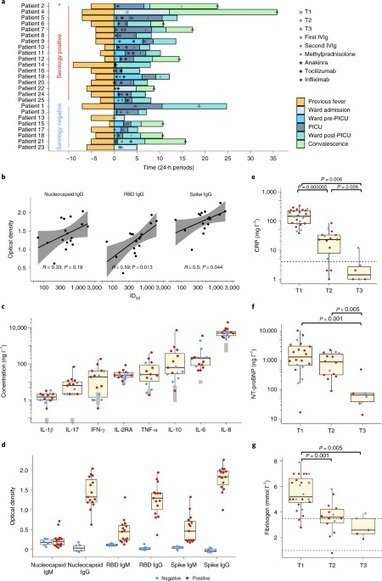
Our series supports clinical data showing that the four dominant interrelated pathological
processes in severe COVID-19 are diffuse alveolar damage, thrombosis, haemophagocytosis,
and immune cell depletion.
|
|
Scooped by
Gilbert C FAURE
August 26, 2020 8:00 AM
|
T cells are so called because they are predominantly produced in the thymus. They recognise foreign particles (antigen) by a surface expressed, highly variable, T cell receptor (TCR). There are two major types of T cells: the helper T cell and the cytotoxic T cell.
|
|
Scooped by
Gilbert C FAURE
August 21, 2020 1:30 PM
|
bioRxiv - the preprint server for biology, operated by Cold Spring Harbor Laboratory, a research and educational institution
|
|
Scooped by
Gilbert C FAURE
August 21, 2020 2:25 AM
|
Abstract. Beside the commonly described pulmonary expression of the coronavirus disease 2019 (COVID-19), major vascular events have been reported. The objectiv
|
|
Scooped by
Gilbert C FAURE
August 18, 2020 9:37 AM
|
Recent reports highlight a new clinical syndrome in children related to severe acute respiratory syndrome coronavirus 2 (SARS-CoV-2)1—multisystem inflammatory syndrome in children (MIS-C)—which comprises multiorgan dysfunction and systemic inflammation2–13. We performed peripheral leukocyte phenotyping in 25 children with MIS-C, in the acute (n = 23; worst illness within 72 h of admission), resolution (n = 14; clinical improvement) and convalescent (n = 10; first outpatient visit) phases of the illness and used samples from seven age-matched healthy controls for comparisons. Among the MIS-C cohort, 17 (68%) children were SARS-CoV-2 seropositive, suggesting previous SARS-CoV-2 infections14,15, and these children had more severe disease. In the acute phase of MIS-C, we observed high levels of interleukin-1β (IL-1β), IL-6, IL-8, IL-10, IL-17, interferon-γ and differential T and B cell subset lymphopenia. High CD64 expression on neutrophils and monocytes, and high HLA-DR expression on γδ and CD4+CCR7+ T cells in the acute phase, suggested that these immune cell populations were activated. Antigen-presenting cells had low HLA-DR and CD86 expression, potentially indicative of impaired antigen presentation. These features normalized over the resolution and convalescence phases. Overall, MIS-C presents as an immunopathogenic illness1 and appears distinct from Kawasaki disease. Characterization of a cohort of children with multisystem inflammatory syndrome associated with SARS-CoV-2 infection provides insights into the immunopathogenic features of the disease.
|
|
Scooped by
Gilbert C FAURE
August 17, 2020 3:58 AM
|
Covid-19 T cell response is strong
|
|
Scooped by
Gilbert C FAURE
August 13, 2020 3:28 AM
|
Type 1 dendritic cells activate both CD4 and CD8 T cells.
|
|
Scooped by
Gilbert C FAURE
August 11, 2020 6:14 AM
|
The molecular mechanisms regulating lymphocyte homing into lymph nodes are only partly understood. Here, we report that B cell-specific deletion of the X-linked gene, Cosmc, and the consequent decrease of protein O-glycosylation, induces developmental blocks of mouse B cells. After transfer into wild-type recipient, Cosmc-null B cells fail to home to lymph nodes as well as non-lymphoid organs. Enzymatic desialylation of wild-type B cells blocks their migration into lymph nodes, indicating a requirement of sialylated O-glycans for proper trafficking. Mechanistically, Cosmc-deficient B cells have normal rolling and firm arrest on high endothelium venules (HEV), thereby attributing their inefficient trafficking to alterations in the subsequent transendothelial migration step. Finally, Cosmc-null B cells have defective chemokine signaling responses. Our results thus demonstrate that Cosmc and its effects on O-glycosylation are important for controlling B cell homing. Migration and homing of B cells to lymph nodes are important for B cell functions, but their regulation is poorly understood. Here, the authors show that B cell-specific deletion of Cosmc results in decreased protein O-glycosylation, loss of B cell homing to both lymphoid and nonlymphoid organs, and altered transendothelial migration implicated in this loss.
|
|
Scooped by
Gilbert C FAURE
August 7, 2020 2:50 AM
|
Severe acute respiratory syndrome coronavirus 2 (SARS-CoV-2) has caused the rapidly unfolding coronavirus disease 2019 (COVID-19) pandemic1,2. Clinical manifestations of COVID-19 vary, ranging from asymptomatic infection to respiratory failure. The mechanisms determining such variable outcomes remain unresolved. Here, we investigated SARS-CoV-2 spike glycoprotein (S)-reactive CD4+ T cells in peripheral blood of patients with COVID-19 and SARS-CoV-2-unexposed healthy donors (HD). We detected SARS-CoV-2 S-reactive CD4+ T cells in 83% of patients with COVID-19 but also in 35% of HD. S-reactive CD4+ T cells in HD reacted primarily to C-terminal S epitopes, which show a higher homology to spike glycoproteins of human endemic coronaviruses, compared to N-terminal epitopes. S-reactive T cell lines generated from SARS-CoV-2-naive HD responded similarly to C-terminal S of human endemic coronaviruses 229E and OC43 and SARS-CoV-2, demonstrating the presence of S-cross-reactive T cells, probably generated during past encounters with endemic coronaviruses. The role of pre-existing SARS-CoV-2 cross-reactive T cells for clinical outcomes remains to be determined in larger cohorts. However, the presence of S-cross-reactive T cells in a sizable fraction of the general population may affect the dynamics of the current pandemic, and has important implications for the design and analysis of upcoming COVID-19 vaccine trials.
|
|
Scooped by
Gilbert C FAURE
August 2, 2020 11:40 AM
|
The human genome encodes more than 300 potential immune inhibitory receptors. The reason for this large number of receptors remains unclear. We suggest that inhibitory receptors operate as two distinct functional categories: receptors that control the signalling threshold for immune cell activation and receptors involved in the negative feedback of immune cell activation. These two categories have characteristic receptor expression patterns: ‘threshold’ receptors are expressed at steady state and their expression remains high or is downregulated upon activation, whereas ‘negative feedback’ receptors are induced upon immune cell activation. We use mathematical models to illustrate their possible modes of operation in different scenarios for different purposes. We discuss how this categorization may impact the choice of therapeutic targets for immunotherapy of malignant, infectious and autoimmune diseases. Why does the human genome encode more than 300 potential immune inhibitory receptors? Here, the authors propose a categorization of inhibitory receptors — as threshold receptors and negative feedback receptors — that reflects their distinct functions in immune regulation, illustrated using mathematical modelling. This categorization may be useful for the therapeutic targeting of inhibitory receptors.
|
|
|
Suggested by
Société Francaise d'Immunologie
September 11, 2020 3:22 PM
|
SARS-CoV-2 is an enveloped, positive-sense, single-stranded RNA beta coronavirus belonging to the order of nidovirales. In the first three months since its ...
|
|
Scooped by
Gilbert C FAURE
September 8, 2020 1:37 PM
|
A new briefing note from the British Society for Immunology reviewing what we do and don’t currently know about the long-term immunological health effects of COVID-19
|
|
Scooped by
Gilbert C FAURE
September 5, 2020 1:17 PM
|
Systems biology is an approach to interrogate complex biological systems through large-scale quantification of numerous biomolecules. The immune system involves >1,500 genes/proteins in many interconnected pathways and processes, and a systems-level approach is critical in broadening our understanding of the immune response to vaccination. Changes in molecular pathways can be detected using high-throughput omics datasets (e.g., transcriptomics, proteomics, and metabolomics) by using methods such as pathway enrichment, network analysis, machine learning, etc. Importantly, integration of multiple omic datasets is becoming key to revealing novel biological insights. In this perspective article, we highlight the use of protein-protein interaction (PPI) networks as a multi-omics integration approach to unravel information flow and mechanisms during complex biological events, with a focus on the immune system. This involves a combination of tools, including: InnateDB, a database of curated interactions between genes and protein products involved in the innate immunity; NetworkAnalyst, a visualization and analysis platform for InnateDB interactions; and MetaBridge, a tool to integrate metabolite data into PPI networks. The application of these systems techniques is demonstrated for a variety of biological questions, including: the developmental trajectory of neonates during the first week of life, mechanisms in host-pathogen interaction, disease prognosis, biomarker discovery
|
|
Scooped by
Gilbert C FAURE
August 28, 2020 9:21 AM
|
Key Points.Early interactions between NK cells and CD14+CD16− monocytes determine the functional specialization of subsequent monocyte-derived DCs.NK-cell–tra...
|
|
Scooped by
Gilbert C FAURE
August 22, 2020 7:11 AM
|
Conventional type 1 dendritic cells (cDC1)1 are thought to perform antigen cross-presentation, which is required to prime CD8+ T cells2,3, whereas cDC2 are specialized for priming CD4+ T cells4,5. CD4+ T cells are also considered to help CD8+ T cell responses through a variety of mechanisms6–11, including a process whereby CD4+ T cells ‘license’ cDC1 for CD8+ T cell priming12. However, this model has not been directly tested in vivo or in the setting of help-dependent tumour rejection. Here we generated an Xcr1Cre mouse strain to evaluate the cellular interactions that mediate tumour rejection in a model requiring CD4+ and CD8+ T cells. As expected, tumour rejection required cDC1 and CD8+ T cell priming required the expression of major histocompatibility class I molecules by cDC1. Unexpectedly, early priming of CD4+ T cells against tumour-derived antigens also required cDC1, and this was not simply because they transport antigens to lymph nodes for processing by cDC2, as selective deletion of major histocompatibility class II molecules in cDC1 also prevented early CD4+ T cell priming. Furthermore, deletion of either major histocompatibility class II or CD40 in cDC1 impaired tumour rejection, consistent with a role for cognate CD4+ T cell interactions and CD40 signalling in cDC1 licensing. Finally, CD40 signalling in cDC1 was critical not only for CD8+ T cell priming, but also for initial CD4+ T cell activation. Thus, in the setting of tumour-derived antigens, cDC1 function as an autonomous platform capable of antigen processing and priming for both CD4+ and CD8+ T cells and of the direct orchestration of their cross-talk that is required for optimal anti-tumour immunity. Conventional type 1 dendritic cells perform antigen processing and priming of CD4+ and CD8+ T cells against tumour antigens, orchestrating their cross-talk to effect anti-tumour immunity.
|
|
Scooped by
Gilbert C FAURE
August 21, 2020 4:32 AM
|
Buggert and colleagues provide a phenotypic and functional map of SARS-CoV-2-specific
T cells across the full spectrum of exposure, infection, and COVID-19 severity. They
observe that SARS-CoV-2-specific T cells generate a broad, robust and functionally
replete response in convalescent individuals, that may provide protection from recurrent
episodes of severe COVID-19.
|
|
Scooped by
Gilbert C FAURE
August 19, 2020 3:21 AM
|
The Eyes of the Innate Immune System
Toll-like receptors (TLRs) are a type of Pattern Recognition Receptor (PRR), found on the surface of innate immune system cells like macrophages. They help these cells “see” foreign molecules such as flagella, peptidoglycan, and lipopolysaccharide cell walls, and other Pathogen Associated Molecular Patterns (PAMPs). Toll-like receptors have nothing to do with cars paying tolls, in case you were wondering. They just play an important role in protecting you from foreign invaders. This TLR necklace would make a perfect gift for immunologists, people who love acronyms, epidemiologists, and starry-eyed pre-med students.
A durable sterling silver pendant (92.5% silver) that will last a lifetime
Delivered with a sterling silver chain with lobster clasp (ø 1.8 mm, 45 cm - 17.7”) that is easy to put on every day
Hypoallergenic (100% nickel and lead-free), so no skin rashes or other irritations
Packed in a beautiful gift box (no need to search for one if it’s a present)
Cleaning cloth included, just to make sure the necklace never loses its shine
Delivered with our Certificate of Authenticity
For other chain lengths or pendant materials (gold, platinum) please contact us
|
|
Scooped by
Gilbert C FAURE
August 18, 2020 4:38 AM
|
Monocytes and macrophages are central cells of the innate immune system, responsible for defending against diverse pathogens. While they originate from a common myeloid precursor and share functions in innate immunity, each has a very distinct life span ...
|
|
Scooped by
Gilbert C FAURE
August 15, 2020 2:33 AM
|
Antibody-dependent enhancement (ADE) has been described as a mechanism that contributes to the pathogenesis of dengue virus infection. Limited evidence also suggests that it can also occur in other viral infections.
|
|
Scooped by
Gilbert C FAURE
August 12, 2020 7:04 AM
|
The immune system enables organisms to combat infections and to eliminate endogenous challenges. Immune responses can be evoked through diverse inducible pathways. However, various constitutive mechanisms are also required for immunocompetence. The inducible responses of pattern recognition receptors of the innate immune system and antigen-specific receptors of the adaptive immune system are highly effective, but they also have the potential to cause extensive immunopathology and tissue damage, as seen in many infectious and autoinflammatory diseases. By contrast, constitutive innate immune mechanisms, including restriction factors, basal autophagy and proteasomal degradation, tend to limit immune responses, with loss-of-function mutations in these pathways leading to inflammation. Although they function through a broad and heterogeneous set of mechanisms, the constitutive immune responses all function as early barriers to infection and aim to minimize any disruption of homeostasis. Supported by recent human and mouse data, in this Review we compare and contrast the inducible and constitutive mechanisms of immunosurveillance. Constitutive innate immune mechanisms, such as restriction factors, RNA interference, antimicrobial peptides, basal autophagy and proteasomal degradation, exert early host defence activities that also aim to minimize tissue damage and homeostatic disruption by limiting the activation of inducible innate immunity.
|
|
Scooped by
Gilbert C FAURE
August 8, 2020 4:14 AM
|
Background— Mast cells are powerful producers of multiple cytokines and chemical mediators playing a pivotal role in the pathogenesis of various cardiovascular diseases. We examined the role of mas...
|
|
Scooped by
Gilbert C FAURE
August 5, 2020 2:13 AM
|
|


 Scoop.it!