Your new post is loading...

|
Scooped by
Gilbert C FAURE
July 19, 2023 2:45 AM
|
Combining whole-tissue imaging and single-cell RNA sequencing datasets, Tauber et al. present a pan-organ analysis of mast cells in mice and humans at steady st
|
|
Rescooped by
Gilbert C FAURE
from Virus World
July 17, 2023 5:11 AM
|
Exposure to the spike protein or receptor-binding domain (S-RBD) of SARS-CoV-2 significantly influences endothelial cells and induces pulmonary vascular endotheliopathy. In this study, angiotensin-converting enzyme 2 humanized inbred (hACE2 Tg) mice and cultured pulmonary vascular endothelial cells were used to investigate how spike protein/S-RBD impacts pulmonary vascular endothelium. Results show that S-RBD leads to acute-to-prolonged induction of the intracellular free calcium concentration ([Ca2+]i) via acute activation of TRPV4, and prolonged upregulation of mechanosensitive channel Piezo1 and store-operated calcium channel (SOCC) key component Orai1 in cultured human pulmonary arterial endothelial cells (PAECs). In mechanism, S-RBD interacts with ACE2 to induce formation of clusters involving Orai1, Piezo1 and TRPC1, facilitate the channel activation of Piezo1 and SOCC, and lead to elevated apoptosis. These effects are blocked by Kobophenol A, which inhibits the binding between S-RBD and ACE2, or intracellular calcium chelator, BAPTA-AM. Blockade of Piezo1 and SOCC by GsMTx4 effectively protects the S-RBD-induced pulmonary microvascular endothelial damage in hACE2 Tg mice via normalizing the elevated [Ca2+]i. Comparing to prototypic strain, Omicron variants (BA.5.2 and XBB) of S-RBD induces significantly less severe cell apoptosis. Transcriptomic analysis indicates that prototypic S-RBD confers more severe acute impacts than Delta or Lambda S-RBD. In summary, this study provides compelling evidence that S-RBD could induce persistent pulmonary vascular endothelial damage by binding to ACE2 and triggering [Ca2+]i through upregulation of Piezo1 and Orai1. Targeted inhibition of ACE2-Piezo1/SOCC-[Ca2+]i axis proves a powerful strategy to treat S-RBD-induced pulmonary vascular diseases. Published (Julay 14, 2023) in Sig Transduct Target Ther. : https://doi.org/10.1038/s41392-023-01556-8
Via Juan Lama
|
|
Scooped by
Gilbert C FAURE
July 12, 2023 2:24 AM
|
|
|
Scooped by
Gilbert C FAURE
July 10, 2023 4:47 AM
|
|
|
Scooped by
Gilbert C FAURE
July 8, 2023 9:13 AM
|
In the past two decades, record-breaking heatwaves have caused an increasing number of heat-related deaths, including heatstroke, globally. Heatstroke is a heat illness characterized by the rapid rise of core body temperature above 40 °C and central nervous system dysfunction. It is categorized as classic when it results from passive exposure to extreme environmental heat and as exertional when it develops during strenuous exercise. Classic heatstroke occurs in epidemic form and contributes to 9–37% of heat-related fatalities during heatwaves. Exertional heatstroke sporadically affects predominantly young and healthy individuals. Under intensive care, mortality reaches 26.5% and 63.2% in exertional and classic heatstroke, respectively. Pathological studies disclose endothelial cell injury, inflammation, widespread thrombosis and bleeding in most organs. Survivors of heatstroke may experience long-term neurological and cardiovascular complications with a persistent risk of death. No specific therapy other than rapid cooling is available. Physiological and morphological factors contribute to the susceptibility to heatstroke. Future research should identify genetic factors that further describe individual heat illness risk and form the basis of precision-based public health response. Prioritizing research towards fundamental mechanism and diagnostic biomarker discovery is crucial for the design of specific management approaches. Heatstroke is a life-threatening illness typically associated with an uncontrolled rise in core body temperature and central nervous system dysfunction. This Primer describes its epidemiology, pathophysiology, diagnosis, preventive and therapeutic strategies, as well as long-term complications and areas for future research.
|
|
Scooped by
Gilbert C FAURE
July 7, 2023 4:10 AM
|
|
|
Scooped by
Gilbert C FAURE
July 6, 2023 2:20 AM
|
Michelson et al. show that the transcription factor Hnf4 upregulates gut and liver self-antigens within thymic epithelial cells via an enhancer-driven mechanism
|
|
Rescooped by
Gilbert C FAURE
from Virus World
July 1, 2023 1:04 PM
|
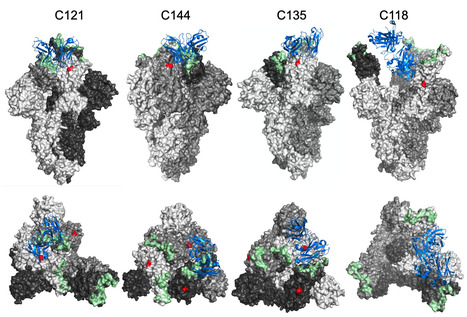
The glycosylation of viral envelope proteins can play important roles in virus biology and immune evasion. The spike (S) glycoprotein of severe acute respiratory syndrome coronavirus-2 (SARS-CoV-2) includes 22 N-linked glycosylation sequons and 17 O-linked glycosites. Here, we investigated the effect of individual glycosylation sites on SARS-CoV-2 S function in pseudotyped virus infection assays and on sensitivity to monoclonal and polyclonal neutralizing antibodies. In most cases, removal of individual glycosylation sites decreased the infectiousness of the pseudotyped virus. For glycosylation mutants in the N-terminal domain (NTD) and the receptor binding domain (RBD), reduction in pseudotype infectivity was predicted by a commensurate reduction in the level of virion-incorporated spike protein. Notably, the presence of a glycan at position N343 within the RBD had diverse effects on neutralization by RBD-specific monoclonal antibodies (mAbs) cloned from convalescent individuals. The N343 glycan reduced overall sensitivity to polyclonal antibodies in plasma from COVID-19 convalescent individuals, suggesting a role for SARS-CoV-2 spike glycosylation in immune evasion. However, vaccination of convalescent individuals produced neutralizing activity that was resilient to the inhibitory effect of the N343 glycan. Preprint at bioRxiv (June 30, 2023): https://doi.org/10.1101/2023.06.30.547241
Via Juan Lama
|
|
Scooped by
Gilbert C FAURE
June 29, 2023 6:18 AM
|
Antibody-dependent enhancement (ADE) has been shown previously for SARS-CoV-1, MERS-CoV, and SARS-CoV-2 infection in vitro. In this study, the first monoclonal antibody (mAb) that causes ADE in a SARS-CoV-2 in vivo model was identified.
|
|
Scooped by
Gilbert C FAURE
June 24, 2023 4:49 AM
|
Abstract.Among the cytokines regulating immune cells, IL-9 has gained considerable attention for its ability to act on multiple cell types as a regulator of be...
|
|
Scooped by
Gilbert C FAURE
June 20, 2023 1:36 PM
|
The British Society for Immunology are delighted to partner with the Federation of Clinical Immunology Societies (FOCIS) to celebrate the 2023 FOCIS Annual Meeting with a selection of cutting-edge translational immunology research from Clinical & Experimental Immunology.
|
|
Scooped by
Gilbert C FAURE
June 17, 2023 6:59 AM
|
The Veterinary and Comparative Clinical Immunology Society (VCCIS) is an exciting global network of people with a passion for the workings of the immune system in health and disease. We are focused on how the immune system may be harnessed for good to treat some of the most debilitating and deadly diseases of the 21st Century. Whether your interest is autoimmunity, allergy, autoinflammation, immunodeficiency, or cancer immunology, we welcome you! We offer unique membership benefits and have a simple vision: A healthier world for pets and people. Our mission is to advance veterinary and comparative clinical immunology through the power of global networking, by means of knowledge creation and knowledge dissemination. Quite simply, we promote best clinical practice by best evidence-based medicine. We hope that you find something of interest to you in the pages of this website and would be delighted to welcome you into the VCCIS family if what you see inspires you to take the next step!
|
|
Scooped by
Gilbert C FAURE
May 29, 2023 10:03 AM
|
|
|
|
Scooped by
Gilbert C FAURE
July 18, 2023 4:31 AM
|
Researchers uncover how gamma delta T cells develop and produce an immune response.
|
|
Scooped by
Gilbert C FAURE
July 13, 2023 9:38 AM
|
B cells play essential roles in immunity, mainly through the production of high affinity plasma cells (PCs) and memory B (Bmem) cells. The affinity maturation and differentiation of B cells rely on the integration of B-cell receptor (BCR) intrinsic and extrinsic signals provided by antigen binding and the microenvironment, respectively. In recent years, tumor infiltrating B (TIL-B) cells and PCs (TIL-PCs) have been revealed as important players in antitumor responses in human cancers, but their interplay and dynamics remain largely unknown. In lymphoid organs, B-cell responses involve both germinal center (GC)-dependent and GC-independent pathways for Bmem cell and PC production. Affinity maturation of BCR repertoires occurs in GC reactions with specific spatiotemporal dynamics of signal integration by B cells. In general, the reactivation of high-affinity Bmem cells by antigens triggers GC-independent production of large numbers of PC without BCR rediversification. Understanding B-cell dynamics in immune responses requires the integration of multiple tools and readouts such as single-cell phenotyping and RNA-seq, in situ analyses, BCR repertoire analysis, BCR specificity and affinity assays, and functional tests. Here, we review how those tools have recently been applied to study TIL-B cells and TIL-PC in different types of solid tumors. We assessed the published evidence for different models of TIL-B-cell dynamics involving GC-dependent or GC-independent local responses and the resulting production of antigen-specific PCs. Altogether, we highlight the need for more integrative B-cell immunology studies to rationally investigate TIL-B cells as a leverage for antitumor therapies.
|
|
Scooped by
Gilbert C FAURE
July 11, 2023 2:07 AM
|
Recent advances in studies of immune memory in mice and humans have reinforced the concept that memory B cells play a critical role in protection against repeated infections, particularly from variant viruses. Hence, insights into the development of high-quality memory B cells that can generate broadly neutralizing antibodies that bind such variants are key for successful vaccine development. Here, we review the cellular and molecular mechanisms by which memory B cells are generated and how these processes shape the antibody diversity and breadth of memory B cells. Then, we discuss the mechanisms of memory B cell reactivation in the context of established immune memory; the contribution of antibody feedback to this process has now begun to be reappreciated. Memory B cells are critical for protection against repeated infections, particularly with viral variants, and understanding their function and development is key for successful vaccine development. This Review discusses the cellular and molecular mechanisms of memory B cell generation and reactivation and how these processes shape antibody diversity and breadth.
|
|
Scooped by
Gilbert C FAURE
July 8, 2023 10:21 AM
|
As the first responders, neutrophils lead the innate immune response to infectious pathogens and inflammation inducing agents. The well-established pathogen neutralizing strategies employed by neutrophils are phagocytosis, the action of microbicide granules, the production of ROS, and the secretion of neutrophil extracellular traps (NETs). Only recently, the ability of neutrophils to sense and respond to pathogen-associated molecular patterns is being appreciated. This review brings together the current information about the intracellular recognition of DNA by neutrophils and proposes models of signal amplification in immune response. Finally, the clinical relevance of DNA sensing by neutrophils in infectious and non-infectious diseases including malignancy are also discussed.
|
|
Scooped by
Gilbert C FAURE
July 7, 2023 4:13 AM
|
|
|
Scooped by
Gilbert C FAURE
July 6, 2023 5:52 AM
|
|
|
Scooped by
Gilbert C FAURE
July 4, 2023 1:41 PM
|
|
|
Scooped by
Gilbert C FAURE
July 1, 2023 6:54 AM
|
|
|
Scooped by
Gilbert C FAURE
June 25, 2023 3:58 AM
|
Within the next few months, newborns in Quebec will be systematically screened for severe combined immunodeficiency (SCID), which should considerably improve the prognosis of those suffering from this rare disease.
|
|
Scooped by
Gilbert C FAURE
June 23, 2023 3:49 AM
|
Embryo-derived tissue-resident macrophages are the first representatives of the haematopoietic lineage to emerge in metazoans. In mammals, resident macrophages originate from early yolk sac progenitors and are specified into tissue-specific subsets during organogenesis-establishing stable spatial an …
|
|
Scooped by
Gilbert C FAURE
June 17, 2023 1:53 PM
|
|
|
Scooped by
Gilbert C FAURE
May 30, 2023 2:32 AM
|
Pan-#Cancer ATLAS of #Tcells Links a #CellularStressResponse State to #ImmunoTherapyResistance | Potent #WebTool to Aid #TherapyOptimisation &…
|