Your new post is loading...

|
Scooped by
Gilbert C FAURE
August 30, 2023 11:01 AM
|
Abstract. The term Tc17 cells refers to interleukin 17 (IL-17)-producing CD8+ T cells. While IL-17 is an important mediator of mucosal defense, it is also centr
|
|
Scooped by
Gilbert C FAURE
August 22, 2023 2:56 AM
|
The AIDS epidemic has been a global public health issue for more than 40 years and has resulted in ~40 million deaths. AIDS is caused by the retrovirus, HIV-1, which is transmitted via body fluids and secretions. After infection, the virus invades host cells by attaching to CD4 receptors and thereafter one of two major chemokine coreceptors, CCR5 or CXCR4, destroying the host cell, most often a T lymphocyte, as it replicates. If unchecked this can lead to an immune-deficient state and demise over a period of ~2–10 years. The discovery and global roll-out of rapid diagnostics and effective antiretroviral therapy led to a large reduction in mortality and morbidity and to an expanding group of individuals requiring lifelong viral suppressive therapy. Viral suppression eliminates sexual transmission of the virus and greatly improves health outcomes. HIV infection, although still stigmatized, is now a chronic and manageable condition. Ultimate epidemic control will require prevention and treatment to be made available, affordable and accessible for all. Furthermore, the focus should be heavily oriented towards long-term well-being, care for multimorbidity and good quality of life. Intense research efforts continue for therapeutic and/or preventive vaccines, novel immunotherapies and a cure. In HIV infection, the virus invades and destroys the immune system of the host. This Primer by Bekker and colleagues summarizes the epidemiology, mechanisms, diagnosis and treatment of HIV infection, and discusses patient quality of life and open research questions for this condition.
|
|
Scooped by
Gilbert C FAURE
August 20, 2023 5:18 AM
|
|
|
Scooped by
Gilbert C FAURE
August 15, 2023 7:19 AM
|
Mucosal-associated invariant T (MAIT) cells are innate-like T cells that recognize microbial metabolites through a semi-invariant T cell receptor (TCR). Major questions remain regarding the extent of human MAIT cell functional and clonal diversity. To address these, we analyzed the single-cell transcriptome and TCR repertoire of blood and liver MAIT cells and developed functional RNA-sequencing, a method to integrate function and TCR clonotype at single-cell resolution. MAIT cell clonal diversity was comparable to conventional memory T cells, with private TCR repertoires shared across matched tissues. Baseline functional diversity was low and largely related to tissue site. MAIT cells showed stimulus-specific transcriptional responses in vitro, with cells positioned along gradients of activation. Clonal identity influenced resting and activated transcriptional profiles but intriguingly was not associated with the capacity to produce IL-17. Overall, MAIT cells show phenotypic and functional diversity according to tissue localization, stimulation environment and clonotype. Garner et al. analyzed the single-cell transcriptome and TCR repertoire of matched blood and liver, and resting and activated, human MAIT cells. They identify donor-specific TCR repertoires shared across tissues and a transcriptome that is largely homogeneous at rest, but highly adaptive to different tissue and stimulation environments.
|
|
Scooped by
Gilbert C FAURE
August 12, 2023 11:49 AM
|
Germinal centers (GCs) are distinct microanatomical structures that form in the secondary lymphoid organs of endothermic vertebrates (i.e., mammals and some birds). Within GCs, B cells undergo a Darwinian selection process to identify clones which can respond to pathogen insult as well as affinity mature the B cell repertoire. The GC response ultimately generates memory B cells and bone marrow plasma cells which facilitate humoral immunological memory, the basis for successful vaccination programs. GCs have not been observed in the secondary lymphoid organs of ectothermic jawed vertebrates (i.e., fishes, reptiles, and amphibians). However, abundant research over the past decades has indicated these organisms can produce antigen specific B cell responses and some degree of affinity maturation. This review examines data demonstrating that the fundamentals of B cell selection may be more conserved across vertebrate phylogeny than previously anticipated. Further, research in both conventional mammalian model systems and comparative models raises the question of what evolutionary benefit GCs provide endotherms if they are seemingly unnecessary for generating the basic functional components of jawed vertebrate humoral adaptive immune responses.
|
|
Scooped by
Gilbert C FAURE
August 10, 2023 4:10 AM
|
|
|
Scooped by
Gilbert C FAURE
August 8, 2023 9:39 AM
|
|
|
Scooped by
Gilbert C FAURE
August 8, 2023 3:49 AM
|
#Immunotherapy | #Cancer | #Viruses | Factors Contributing to the #Potency of #CD8+ #Tcells | KILLER Review from Yuri Sykulev at Trends #Immunology |…
|
|
Scooped by
Gilbert C FAURE
August 3, 2023 3:45 AM
|
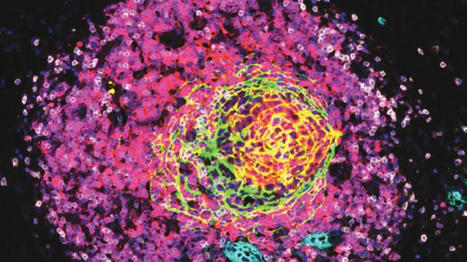
Tertiary lymphoid structures (TLS) have been a hot topic in the field of immuno-oncology, where it is believed they play a critical important role in influencing the tumor microenvironment.
|
|
Scooped by
Gilbert C FAURE
July 29, 2023 2:16 AM
|
The immune system is strictly regulated by glycosylation through the addition of highly diverse and dynamically changing sugar structures (glycans) to the majority of immune cell receptors. Although knowledge in the field of glycoimmunology is still limited, numerous studies point to the key role of glycosylation in maintaining homeostasis, but also in reflecting its disruption. Changes in oligosaccharide patterns can lead to impairment of both innate and acquired immune responses, with important implications in the pathogenesis of diseases, including autoimmunity. B cells appear to be unique within the immune system, since they exhibit both innate and adaptive immune activity. B cell surface is rich in glycosylated proteins and lectins which recognise glycosylated ligands on other cells. Glycans are important in the development, selection, and maturation of B cells. Changes in sialylation and fucosylation of cell surface proteins affect B cell signal transduction through BCRs, CD22 inhibitory coreceptor and Siglec-G. Plasmocytes, as the final stage of B cell differentiation, produce and secrete immunoglobulins (Igs), of which IgGs are the most abundant N-glycosylated proteins in human serum with the conserved N-glycosylation site at Asn297. N-oligosaccharide composition of the IgG Fc region affects its secretion, structure, half-life and effector functions (ADCC, CDC). IgG N-glycosylation undergoes little change during homeostasis, and may gradually be modified with ag
|
|
Scooped by
Gilbert C FAURE
July 22, 2023 10:56 AM
|
Antigen-presenting cells (APCs) are master regulators of the immune response by directly interacting with T cells to orchestrate distinct functional outcomes. Several types of professional APC exist, including conventional dendritic cells, B cells and macrophages, and numerous other cell types have non-classical roles in antigen presentation, such as thymic epithelial cells, endothelial cells and granulocytes. Accumulating evidence indicates the presence of a new family of APCs marked by the lineage-specifying transcription factor retinoic acid receptor-related orphan receptor-γt (RORγt) and demonstrates that these APCs have key roles in shaping immunity, inflammation and tolerance, particularly in the context of host–microorganism interactions. These RORγt+ APCs include subsets of group 3 innate lymphoid cells, extrathymic autoimmune regulator-expressing cells and, potentially, other emerging populations. Here, we summarize the major findings that led to the discovery of these RORγt+ APCs and their associated functions. We discuss discordance in recent reports and identify gaps in our knowledge in this burgeoning field, which has tremendous potential to advance our understanding of fundamental immune concepts. Recent studies have revealed a family of antigen-presenting cells (APCs) marked by the transcription factor RORγt that fundamentally shape immunity, inflammation and tolerance. This article reviews heterogeneity among RORγt+ APCs, their associated functions and the future promise of this new field.
|
|
Scooped by
Gilbert C FAURE
July 20, 2023 2:05 PM
|
|
|
Scooped by
Gilbert C FAURE
July 20, 2023 2:52 AM
|
Petersone et al. investigate IL-21–dependent germinal center (GC) regulation and reveal key roles for IL-21 in promoting light zone GC B cell selection and cont
|
|
|
Scooped by
Gilbert C FAURE
August 23, 2023 9:26 AM
|
bioRxiv - the preprint server for biology, operated by Cold Spring Harbor Laboratory, a research and educational institution
|
|
Scooped by
Gilbert C FAURE
August 21, 2023 2:11 PM
|
|
|
Scooped by
Gilbert C FAURE
August 17, 2023 11:56 AM
|
The tumor necrosis factor (TNF) receptor superfamily is a structurally and functionally related group of cell surface receptors that play crucial roles in various cellular processes, including apoptosis, cell survival, and immune regulation. This review paper synthesizes key findings from recent studies, highlighting the importance of clustering in TNF receptor superfamily signaling. We discuss the underlying molecular mechanisms of signaling, the functional consequences of receptor clustering, and potential therapeutic implications of targeting surface structures of receptor complexes.
|
|
Scooped by
Gilbert C FAURE
August 15, 2023 5:03 AM
|
Long COVID is an often debilitating illness that occurs in at least 10% of severe acute respiratory syndrome coronavirus 2 (SARS-CoV-2) infections. More than 200 symptoms have been identified with impacts on multiple organ systems. At least 65 million individuals worldwide are estimated to have long COVID, with cases increasing daily. Biomedical research has made substantial progress in identifying various pathophysiological changes and risk factors and in characterizing the illness; further, similarities with other viral-onset illnesses such as myalgic encephalomyelitis/chronic fatigue syndrome and postural orthostatic tachycardia syndrome have laid the groundwork for research in the field. In this Review, we explore the current literature and highlight key findings, the overlap with other conditions, the variable onset of symptoms, long COVID in children and the impact of vaccinations. Although these key findings are critical to understanding long COVID, current diagnostic and treatment options are insufficient, and clinical trials must be prioritized that address leading hypotheses. Additionally, to strengthen long COVID research, future studies must account for biases and SARS-CoV-2 testing issues, build on viral-onset research, be inclusive of marginalized populations and meaningfully engage patients throughout the research process. Long COVID is an often debilitating illness of severe symptoms that can develop during or following COVID-19. In this Review, Davis, McCorkell, Vogel and Topol explore our knowledge of long COVID and highlight key findings, including potential mechanisms, the overlap with other conditions and potential treatments. They also discuss challenges and recommendations for long COVID research and care.
|
|
Scooped by
Gilbert C FAURE
August 10, 2023 6:55 AM
|
Read and download the current trending articles in Frontiers in Immunology
|
|
Scooped by
Gilbert C FAURE
August 8, 2023 1:54 PM
|
BiteSized Immunology is our free online resource designed to form a comprehensive guide to the #ImmuneSystem. Divided into easy-to-digest entries, it's an…
|
|
Scooped by
Gilbert C FAURE
August 8, 2023 4:00 AM
|
Summary. Monocytes are circulating myeloid cells that are derived from dedicated progenitors in the bone marrow. Originally thought of as mere precursors for th
|
|
Scooped by
Gilbert C FAURE
August 6, 2023 5:04 AM
|
Interleukin-17 family (IL-17s) comprises six structurally related members (IL-17A to IL-17F); sequence homology is highest between IL-17A and IL-17F, displaying certain overlapping functions. In general, IL-17A and IL-17F play important roles in chronic inflammation and autoimmunity, controlling bacterial and fungal infections, and signaling mainly through activation of the nuclear factor-kappa B (NF-κB) pathway. The role of IL-17A and IL-17F has been established in chronic immune-mediated inflammatory diseases (IMIDs), such as psoriasis (PsO), psoriatic arthritis (PsA), axial spondylarthritis (axSpA), hidradenitis suppurativa (HS), inflammatory bowel disease (IBD), multiple sclerosis (MS), and asthma. CD4+ helper T cells (Th17) activated by IL-23 are well-studied sources of IL-17A and IL-17F. However, other cellular subtypes can also produce IL-17A and IL-17F, including gamma delta (γδ) T cells, alpha beta (αβ) T cells, type 3 innate lymphoid cells (ILC3), natural killer T cells (NKT), or mucosal associated invariant T cells (MAIT). Interestingly, the production of IL-17A and IL-17F by innate and innate-like lymphocytes can take place in an IL-23 independent manner in addition to IL-23 classical pathway. This would explain the limitations of the inhibition of IL-23 in the treatment of patients with certain rheumatic immune-mediated conditions such as axSpA. Despite their coincident functions, IL-17A and IL-17F contribute independently to chronic tissue inflammatio
|
|
Scooped by
Gilbert C FAURE
August 1, 2023 2:03 PM
|
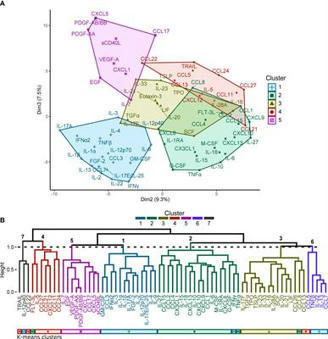
IntroductionCytokines are mediators of the immune system that are essential for the maintenance, development and resolution of immune responses. Beneficial immune responses depend on complex, interdependent networks of signaling and regulatory events in which individual cytokines influence the production and release of others. Since disruptions in these signaling networks are associated with a wide spectrum of diseases, cytokines have gained considerable interest as diagnostic, prognostic and precision therapy-relevant biomarkers. However, currently individual cytokines testing has limited value because the wider immune response context is often overlooked. The aim of this study was to identify specific cytokine signaling patterns associated with different diseases.MethodsUnbiased clustering analyses were performed on a clinical cytokine multiplex test using a cohort of human plasma specimens drawn from individuals with known or suspected diseases for which cytokine profiling was considered clinically indicated by the attending physician.Results and discussionSeven clusters of co-expressing cytokines were identified, representing common patterns of immune activation. Common expression profiles of the cytokine clusters and preliminary associations of these profiles with specific diseases or disease categories were also identified. These findings increase our understanding of the immune environments underlying the clinical presentations of patients of inflammatory
|
|
Scooped by
Gilbert C FAURE
July 27, 2023 2:39 AM
|
Join Drs. Brenda Raud and Jason Goldsmith as they discuss the latest immunology research.
|
|
Scooped by
Gilbert C FAURE
July 22, 2023 6:46 AM
|
|
|
Scooped by
Gilbert C FAURE
July 20, 2023 2:58 AM
|
Studies have demonstrated that at least 20% of individuals infected with SARS-CoV-2 remain asymptomatic1–4. Although most global efforts have focused on severe illness in COVID-19, examining asymptomatic infection provides a unique opportunity to consider early immunological features that promote rapid viral clearance. Here, postulating that variation in the human leukocyte antigen (HLA) loci may underly processes mediating asymptomatic infection, we enrolled 29,947 individuals, for whom high-resolution HLA genotyping data were available, in a smartphone-based study designed to track COVID-19 symptoms and outcomes. Our discovery cohort (n = 1,428) comprised unvaccinated individuals who reported a positive test result for SARS-CoV-2. We tested for association of five HLA loci with disease course and identified a strong association between HLA-B*15:01 and asymptomatic infection, observed in two independent cohorts. Suggesting that this genetic association is due to pre-existing T cell immunity, we show that T cells from pre-pandemic samples from individuals carrying HLA-B*15:01 were reactive to the immunodominant SARS-CoV-2 S-derived peptide NQKLIANQF. The majority of the reactive T cells displayed a memory phenotype, were highly polyfunctional and were cross-reactive to a peptide derived from seasonal coronaviruses. The crystal structure of HLA-B*15:01–peptide complexes demonstrates that the peptides NQKLIANQF and NQKLIANAF (from OC43-CoV and HKU1-CoV) share a similar ability to be stabilized and presented by HLA-B*15:01. Finally, we show that the structural similarity of the peptides underpins T cell cross-reactivity of high-affinity public T cell receptors, providing the molecular basis for HLA-B*15:01-mediated pre-existing immunity. The human leukocyte antigen allele HLA-B*15:01 is associated with asymptomatic SARS-CoV-2 infection due to pre-existing T cell immunity.
|


 Scoop.it!