




PLoS Pathog. 2016 Oct 5;12(10):e1005929. doi: 10.1371/journal.ppat.1005929. eCollection 2016.

 Your new post is loading...
 Scoop.it! PLoS Pathog. 2016 Oct 5;12(10):e1005929. doi: 10.1371/journal.ppat.1005929. eCollection 2016. 
No comment yet.
Sign up to comment
Scoop.it!
Christian MünzcorrespondencePress enter key for correspondence informationemailPress enter key to Email the author Publication stage: In Press Corrected Proof
Gilbert C FAURE's insight:
Autophagy is a group of cellular pathways that deliver cytoplasmic constituents for lysosomal degradation. The peptides generated from these pathways can be presented by MHC II molecules, making autophagy an important source of antigens for CD4+ T cells. In addition, modules of the molecular machinery of autophagy were found in recent years to also influence extracellular antigen processing for MHC Class I and Class II presentation, as well as regulation of MHC Class I surface expression. These studies paint a more complicated picture of how regulation of individual autophagy proteins influences adaptive immunity. The respective pathways, especially in regard to their net outcome for CD4+ helper and CD8+ cytotoxic T cell responses in vivo, will be discussed in this review.
Scoop.it!
Gilbert C FAURE's insight:
more autophagy from Nature
Scoop.it!

Molecular Therapy — Nucleic Acids is a new international all open-access journal publishing top-quality basic, translational and clinical research in the broad fields of nucleic acid-based therapeutics to treat and/or correct genetic and...
Scoop.it!

Scoop.it!
The aryl hydrocarbon receptor is required for the maintenance of liver-resident natural killer cells
A tissue-resident population of natural killer cells (NK cells) in the liver has recently been described to have the unique capacity to confer immunological memory in the form of hapten-specific contact hypersensitivity independent of T and B cells. Factors regulating the development and maintenance of these liver-resident NK cells are poorly understood. The aryl hydrocarbon receptor (AhR) is a transcription factor modulated by exogenous and endogenous ligands that is important in the homeostasis of immune cells at barrier sites, such as the skin and gut. In this study, we show that liver-resident NK (NK1.1+CD3−) cells, defined as CD49a+TRAIL+CXCR6+DX5− cells in the mouse liver, constitutively express AhR. In AhR−/− mice, there is a significant reduction in the proportion and absolute number of these cells, which results from a cell-intrinsic dependence on AhR. This deficiency in liver-resident NK cells appears to be the result of higher turnover and increased susceptibility to cytokine-induced cell death. Finally, we show that this deficiency has functional implications in vivo. Upon hapten exposure, AhR−/− mice are not able to mount an NK cell memory response to hapten rechallenge. Together, these data demonstrate the requirement of AhR for the maintenance of CD49a+TRAIL+CXCR6+DX5− liver-resident NK cells and their hapten memory function.
Scoop.it!

Persistent viral infection suppresses CD4 Th1 responses, but the resulting disease
Scoop.it!
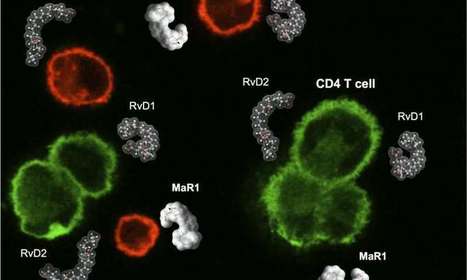
In a study published online this week in Science Translational Medicine, investigators from Brigham and Women's Hospital and the Santa Lucia Foundation in Rome report that resolvins and maresins, molecules produced in th...
Via LAMBERT Claude
Scoop.it!

RT @BiomedJ: Alternative functions for the multifarious #inflammasome https://t.co/s2ob3PKSTk #immunology https://t.co/QuO9SLSTIq
Scoop.it!

Author Summary Regions of the human genome that vary in gene copy number are challenging to identify and analyze. This is particularly true for the immunoglobulin heavy variable locus (IGHV), which codes for a component of the antibody molecule.
|
Scoop.it!

Our first review by Ralph Weichselbaum and colleagues on Radiation and the #Immune system is online! Read it at… https://t.co/UkDQu4L06g
Scoop.it!

Autophagy has broad functions in immunity, ranging from cell-autonomous defence to coordination of complex multicellular immune responses. The successful resolution of infection and avoidance of autoimmunity necessitates efficient and timely communication between autophagy and pathways that sense the immune environment. The recent literature indicates that a variety of immune mediators induce or repress autophagy. It is also becoming increasingly clear that immune signalling cascades are subject to regulation by autophagy, and that a return to homeostasis following a robust immune response is critically dependent on this pathway. Importantly, examples of non-canonical forms of autophagy in mediating immunity are pervasive. In this article, the progress in elucidating mechanisms of crosstalk between autophagy and inflammatory signalling cascades is reviewed. Improved mechanistic understanding of the autophagy machinery offers hope for treating infectious and inflammatory diseases.
Scoop.it!

To date, biologists have typically had to study the progress of a virus through indirect means, such as studying the antibodies -- actually tracking th
Gilbert C FAURE's insight:
By using multiphoton microscopy in tandem with a laser and fluorescence, the team monitored influenza virus in a mouse's trachea (where the transluency made imaging possible) through the infection and immune system response.
already posted on mucosal immunity
Scoop.it!
Laurence Zitvogel, Jonathan M. Pitt, Romain Daillère, Mark J. Smyth & Guido Kroemer AffiliationsCorresponding authors Nature Reviews Cancer (2016) doi:10.1038/nrc.2016.91 Published online 30 September 2016
Gilbert C FAURE's insight:
Fundamental cancer research and the development of efficacious antineoplastic treatments both rely on experimental systems in which the relationship between malignant cells and immune cells can be studied. Mouse models of transplantable, carcinogen-induced or genetically engineered malignancies — each with their specific advantages and difficulties — have laid the foundations of oncoimmunology. These models have guided the immunosurveillance theory that postulates that evasion from immune control is an essential feature of cancer, the concept that the long-term effects of conventional cancer treatments mostly rely on the reinstatement of anticancer immune responses and the preclinical development of immunotherapies, including currently approved immune checkpoint blockers. Specific aspects of pharmacological development, as well as attempts to personalize cancer treatments using patient-derived xenografts, require the development of mouse models in which murine genes and cells are replaced with their human equivalents. Such 'humanized' mouse models are being progressively refined to characterize the leukocyte subpopulations that belong to the innate and acquired arms of the immune system as they infiltrate human cancers that are subjected to experimental therapies. We surmise that the ever-advancing refinement of murine preclinical models will accelerate the pace of therapeutic optimization in patients.
Scoop.it!

Cholesterol has typically been considered an exogenous, disease-related factor in
Scoop.it!

Transport of antigen to the stromal follicular dendritic cell (FDC) population is
Gilbert C FAURE's insight:
bad guys
Scoop.it!
A prospective study on the natural history of patients with profound combined immunodeficiency P-CID https://t.co/rXyY4rglze #hvhebron #imm
Scoop.it!

Sepsis occurs when the body's attempt to fight an infection gets out of control. It is important to know the signs of sepsis as early treatment is critical.
Scoop.it!
The recent development of direct acting antivirals (DAA) has changed the field of hepatitis C and probably of hepatology.
Scoop.it!

Slides with blood stains related to our research on shark immunology @UMSharkResearch:
https://t.co/DztVspTxGI https://t.co/HDlxu5XhH2
|






