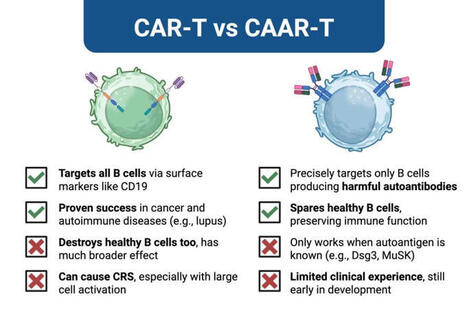
You’ve heard of CAR-T. But you might not know about CAAR-T - a newer, more targeted twist on the same technology:
So what is it? - CAAR-T (Chimeric AutoAntibody Receptor T cells) are designed to eliminate only the B cells producing harmful autoantibodies, while sparing the rest. - Instead of using an antibody fragment to find targets (like CAR-T does), CAAR-T cells display an autoantigen on their surface, tricking autoreactive B cells into binding and revealing themselves.
Here’s how they compare:
CAR-T Cells Advantages: - Targets all B cells via markers like CD19 - Proven success in cancer and autoimmune diseases (e.g., lupus) Disadvantages: - Destroys healthy B cells too, leading to broader immune impact - Can cause CRS, especially with large-scale immune activation
CAAR-T Cells Advantages: - Precisely targets only B cells producing harmful autoantibodies - Spares healthy B cells, preserving immune function Disadvantages: - Requires known autoantigen (e.g., Dsg3, MuSK) - Limited clinical experience, still early in development
In short: CAR-T is broad and proven. CAAR-T is precise and emerging.
Now, I don't see CAAR-T replacing CAR-T.
But for autoantibody-driven diseases, it could offer something we’ve never had before: A precise strike against the root cause, without wiping out the entire immune arsenal.
Anything else you'd add? Drop it in the comments. | 31 comments on LinkedIn
DIU Immunologie et Biotherapies is a french diploma associating french universities and immunology laboratories. It is dedicated to the involvement of immunology in new biotherapies, either molecular or cellular.
Gilbert C FAURE's insight:
We use Scoop.it as preferred curation tool to collect, select, comment informations flowing on the web in this rapidly evolving theme to keep teachers abreast of scientific knowledge and help students surf the wave... Feel free to be a follower!
A malaria vaccine showing up to 90% protection in early clinical studies and a key question: how does it work? That’s what the European CAPTIVATE consortium is working on. BPRC is a partner.
In Antwerp, researchers from across Europe came together to share progress and align next steps.
The CAPTIVATE consortium approach is fundamentally different. Instead of using fragments of the parasite, this vaccine uses a genetically attenuated version of the malaria parasite itself.
After vaccination, the parasite reaches the liver, but stops there. It cannot develop further. This allows the immune system to recognise and eliminate the parasite at the earliest stage, before it causes disease.
“The strong protection seen in healthy volunteers often doesn’t translate to endemic settings”, says Erica Pasini (BPRC). “We want to understand why and how to make it work where it matters most.”
At BPRC, we contribute by studying immune responses in greater depth, helping to bridge the gap between controlled studies and real-world impact. During the meeting, scientists shared the latest developments. Key project milestones have already been reached, and the work is in full swing!
Next step: in June, the first results of the non-human primate trial will become available along with key samples to further investigate the immune mechanisms behind protection.
Dans une revue publiée dans Trends in Biochemical Sciences, Xia Xiao et Svetlana Dokudovskaya de l’UMR 9018 METSY (CNRS/UPSaclay/Gustave Roussy, Villejuif) font le point sur cinquante années de recherche autour de la rapamycine, une molécule initialement décrite comme antifongique et devenue un pilier de la biologie moderne. Cet article, un Feature Review, a été sélectionné pour être mis à l’honneur en couverture et s’inscrit dans la série spéciale « TIBS at 50: Foundations and Frontiers ».
Les auteurs retracent l’histoire de la découverte de la rapamycine à partir d’échantillons de sol de l’île de Pâques (Rapa Nui), et montrent comment l’étude de cette molécule a conduit à l’identification d’une voie de signalisation majeure, la voie TOR (Target of Rapamycin). Contrairement à d’autres molécules emblématiques comme la pénicilline ou la ciclosporine, la rapamycine n’a pas seulement révolutionné des applications thérapeutiques, mais a révélé un réseau biologique entièrement nouveau.
La revue met en lumière le rôle central de la voie TOR dans la régulation de la croissance cellulaire, du métabolisme, du vieillissement et de nombreuses pathologies. Elle souligne également comment cette découverte a permis d’intégrer des domaines auparavant distincts, tels que le métabolisme et la signalisation cellulaire, en introduisant le concept de détection des nutriments comme mécanisme clé de régulation.
Enfin, les auteurs discutent des perspectives actuelles et futures, illustrant l’impact durable de cette découverte, qui continue de structurer un champ de recherche en constante évolution.
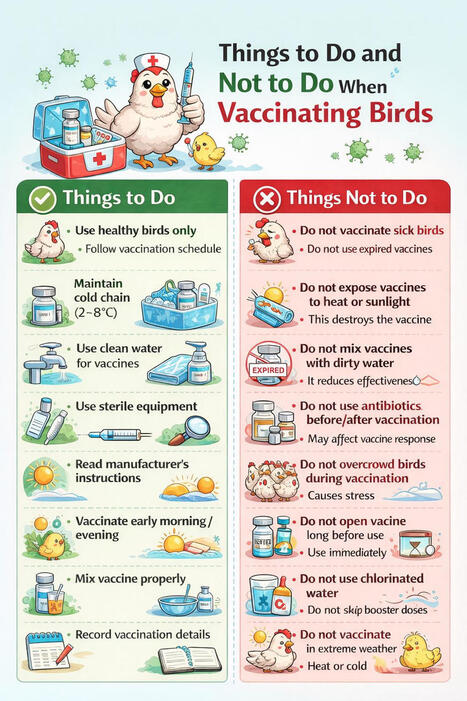
Things to Do and Not to Do When Vaccinating Birds 🐓💉
✅ Things to Do When Vaccinating Birds Use healthy birds only – Vaccinate only birds that are active and disease-free.Only vaccinate healthy birds; postpone vaccination if the flock is showing signs of illness. Follow vaccination schedule – Give vaccines at the correct age and time. Maintain cold chain (2–8°C) – Keep vaccines in a refrigerator or ice pack.Bring them out of the cooler only when ready to use. Use clean water for vaccines – Especially for drinking-water vaccines. Use sterile equipment – Clean syringes and droppers should be used. Read manufacturer’s instructions – Follow dosage and method carefully. Vaccinate early in the morning or evening – Avoid heat stress. Withhold water for 1-4 hours before vaccination to ensure birds are thirsty. Mix vaccine properly – Ensure even distribution in water or solution. Consider adding skim milk powder (about 2g per liter) to stabilize the vaccine. Ensure the vaccine is consumed within 1-2 hours. Record vaccination details – Date, vaccine name, age of birds, batch number. Walk through the house to encourage birds to move around and drink or if in Battery cage system, ensure the nipples are not blocked. Observe birds after vaccination – Monitor for reactions or stress.
❌ Things Not to Do When Vaccinating Birds Do not vaccinate sick birds – It may worsen their condition. Do not use expired vaccines – They will not work effectively. Do not expose vaccines to sunlight or heat – This destroys the vaccine. Do not mix vaccines with dirty water – It reduces effectiveness. Do not use antibiotics before or after vaccination – May affect vaccine response. Do not overcrowd birds during vaccination – Causes stress. Do not open vaccine long before use – Use immediately after opening. Do not use chlorinated water – Chlorine kills live vaccines. Do not skip booster doses – Immunity will be weak. Do not vaccinate during extreme weather – Heat or cold affects immunity.
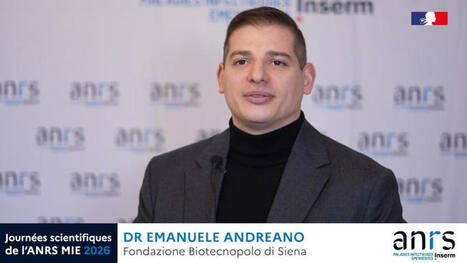
La « reverse vaccinology 3.0 » consiste à utiliser l’intelligence artificielle (#IA) pour prédire des structures antigéniques et d’interactions anticorps-antigène. Elle a notamment mené à l’identification d’une protéine utile à la neutralisation de certaines formes de variole, variole bovine ou variole du singe.
Explications par Dr Emanuele Andreano, Ph.D., head of serology and immunology à la Fondazione Biotecnopolo di Siena, à l’occasion des Journées scientifiques 2026 de l’ANRS Maladies infectieuses émergentes.
“Administered together with first-line TB drug therapy, our intranasal DNA fusion vaccine helped infected mice clear the disease bacteria faster, reduced lung inflammation and prevented relapse after treatment ended,” says study lead author Styliani Karanika, M.D., a faculty member of the Johns Hopkins Center for Tuberculosis Research and assistant professor of medicine at the Johns Hopkins University School of Medicine.
“The vaccine also helped the powerful TB drug combination of bedaquiline, pretomanid and linezolid work better, suggesting it could be used with treatments against drug-resistant TB to help the body fight the disease, even hard-to-treat cases.”
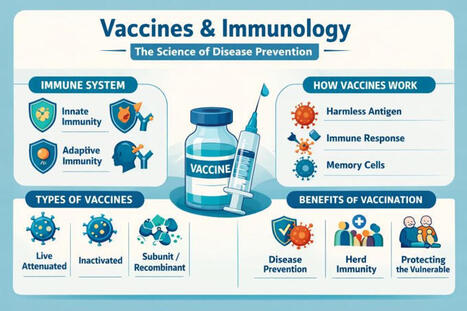
Vaccines and Immunology: A Foundation of Preventive Medicine
One of the most impactful applications of immunology is vaccination—a concept built on a simple yet powerful idea: training the immune system before exposure to disease.
The adaptive immune system’s ability to develop long-term memory allows vaccines to provide lasting protection with minimal risk. This principle has transformed global health outcomes and continues to shape modern medical innovation.
What’s particularly remarkable is how advancements in biotechnology—especially mRNA platforms—have accelerated vaccine development timelines without compromising safety or efficacy.
Vaccination is not only an individual health decision; it is a collective responsibility that strengthens public health systems through herd immunity. As science continues to evolve, the role of immunology in preventive medicine will only become more critical.
The future of healthcare is not just about treating disease—but preventing it.
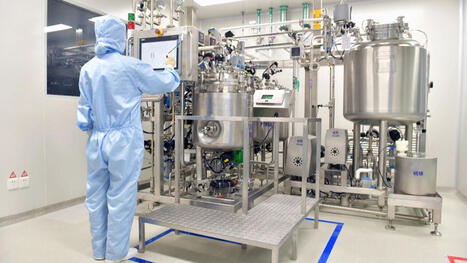
The most critical strategy for controlling the spread of infectious diseases is vaccination—making vaccine production processes pivotal to disease control and eventual eradication. Vaccination is an artificial process where inactivated, attenuated infectious pathogens, or their components, are delivered to the human body, using antigenic structures to activate the immune system. This process stimulates an effective response against specific pathogens to combat impending infections.
Since the mid-20th century, viral vaccines have been produced using chicken embryos, with dozens of approved traditional human vaccines manufactured via embryo-based processes. Today, however, cell culture-based vaccine production has become widespread: it enables simple infection and replication in controlled environments, with harvesting steps conducted in closed bioreactor systems to ensure sterility and further reduce biosafety risks through automation. This approach significantly boosts factory capacity, enabling the production of large quantities of vaccine doses.
The paper will be published in 𝘔𝘰𝘭𝘦𝘤𝘶𝘭𝘢𝘳 𝘛𝘩𝘦𝘳𝘢𝘱𝘺 this month.
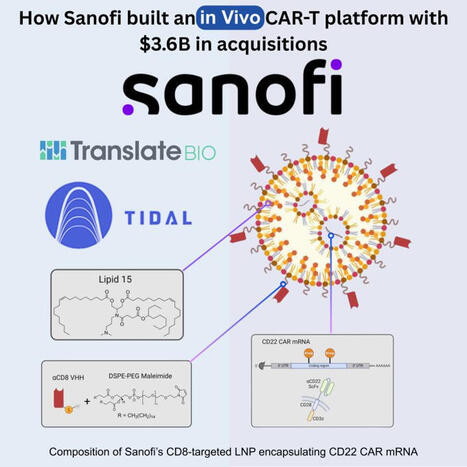
Was this built in-house? Not really. It's the result of two strategic acquisitions that tell you exactly how big pharma is entering in vivo cell engineering.
Everything started about 8 years ago with Sanofi entering the mRNA therapeutics space first.
In 2018, Sanofi partnered with Translate Bio for mRNA vaccines. $45M upfront. Focusing specifically on up to five infectious diseases.
COVID hit.
They expanded the deal in 2020 to $300M cash + $125M as stock investment, covering all infectious diseases. Then in August 2021, they acquired the whole company for $3.2B!!!
What did they get? One of the largest private LNP libraries in the industry. mRNA manufacturing expertise. A platform ready to go beyond vaccines.
Tidal brought the missing piece: targeted nanoparticle technology to reprogram immune cells directly in the body.
Now the paper shows what happens when you combine both platforms.
The technical execution is solid:
• Proprietary ionizable lipid 15 for T cell transfection • Anti-CD8 VHH nanobody outperforming other ligands • CD22 CAR benchmarked against clinically validated CARs (FMC63 and m971) • Hepatic de-targeting, under 5% liver uptake • Tumor suppression in aggressive human models
That last point matters. Getting mRNA into T cells is hard enough.
Keeping it away from liver trapping while maintaining efficacy is the real challenge.
They solved both.
This is how platforms get built in 2025. You don't develop everything internally. You acquire the best technology, integrate it fast, and publish validation data within a few years.
Translate Bio gave them the mRNA engine. Tidal gave them the targeting system. Together, they created an in vivo CAR-T platform neither could build alone.
The question now is whether improvements we witness in the in vivo CAR-T space will scale beyond hematological malignancies.
The delivery is transient. The safety profile looks clean (mRNA). Serial killing durability up to 8 days. And repeat dosing gave no signs of toxicity.
Can this match the persistence of ex vivo products? Will in vivo CAR-T platforms ever be efficacious in solid tumors?
So much money has been invested in this tech and we are seeing progress with creative solutions to optimize in vivo CAR-T platforms.
This week’s Global Health Notes looks at how science and policy are shaping disease prevention — from vaccine‑carrying mosquitoes and India’s HPV rollout to new ways countries plan and fund vaccines.
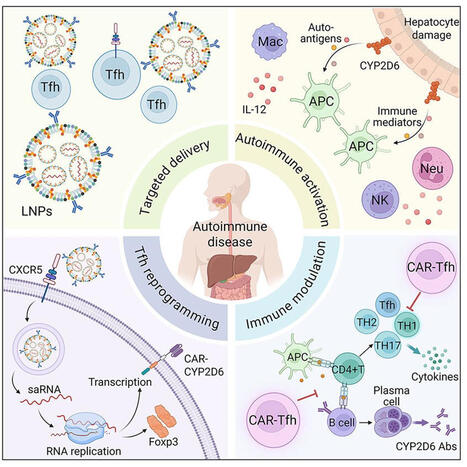
Interesting in Cell Stem Cell: In vivo CAR-Tfh cell reprogramming restores tolerance in a mouse model of autoimmune hepatitis https://lnkd.in/en36DGSU Autoimmune diseases involve the coordinated dysregulation of multiple types of immune cells, and single-cell targeted therapies often yield suboptimal results. Here, we developed chimeric antigen receptor (CAR)-engineered follicular helper T (Tfh) cells capable of simultaneously suppressing T cells, B cells, and dendritic cells (DCs) to restore immune homeostasis in an autoimmune hepatitis (AIH) mouse model. Using amino acid-derived lipid nanoparticles, we deliver self-amplifying RNA encoding Forkhead box protein P3 (Foxp3) and a cytochrome P4502D6 (CYP2D6)-specific CAR to Tfh cells, conferring stable regulatory features and antigen-dependent suppressive activity. Engineered CAR-Tfh cells preferentially localize to the liver, recognize CYP2D6-expressing hepatocytes, and suppress pathogenic T cell and B cell responses. In AIH-II mouse models, CAR-Tfh cell generation restores a tolerogenic hepatic immune environment and ameliorates autoimmune liver injury. These findings establish in situ Tfh cell reprogramming as a modular approach to coordinately modulate multiple immune compartments, providing a potential therapeutic framework for AIH and related autoimmune diseases.
Shane Crotty (La Jolla Institute for Immunology) gives a comprehensive scientific review of immunological memory to vaccines with an emphasis on human vaccines and in humans.
This review covers the key adaptive immune components involved in vaccine-mediated protective immunity: B cells, CD8+ T cells, CD4+ T cells, and antibodies.
The video lecture will cover the same material as the written review (https://www.cell.com/immunity/fulltext/S1074-7613(26)00089-0) but is not a verbatim recitation of the review article. In the interest of flow, the video lecture will have very few citations. All citations are included in the written review; please refer to the review for references.
Video Chapters 00:00 Introduction to Immunological Memory 02:10 Introduction: Vaccine Impact on Health 05:55 Introduction: Circulating and Tissue Resident Memory Cells 06:06 Layers of Immune Protection 09:00 B-cell memory to vaccines: Introduction 09:50 B-cell memory to vaccines: Durability 35:12 B-cell memory to vaccines: Functionalities 56:00 B-cell memory to vaccines: Hybrid immunity and tissue resident memory 1:06:33 CD8 T-cell memory to vaccines: Durability 1:12:45 CD8 T-cell memory to vaccines: Functionalities 1:15:49 CD8 T-cell memory to vaccines: Durability part 2 1:17:27 CD8 T-cell memory to vaccines: Hybrid immunity and tissue resident memory 1:22:53 CD8 T-cell memory to vaccines: Summary 1:26:02 CD4 T-cell memory to vaccines: Durability 1:29:53 CD4 T-cell memory to vaccines: Functionalities 1:38:45 CD4 T-cell memory to vaccines: Hybrid immunity and tissue resident memory 1:43:15 CD4 T-cell memory to vaccines: Summary 1:44:58 Antibody memory to vaccines: Introduction 1:46:16 Antibody memory to vaccines: Durability 2:09:27 Antibody memory to vaccines: Functionalities 2:09:47 Antibody memory to vaccines: Hybrid immunity and tissue memory 2:15:04 Antibody memory to vaccines: Summary 2:16:05 Holistic understanding of immune memory to vaccines
Dans une revue publiée dans Signal Transduction and Targeted Therapy, les scientifiques du laboratoire « Biologie du Cancer et Métabolisme » (UMR 9018 CNRS/UPSaclay/Gustave Roussy, Villejuif) proposent une analyse approfondie consacrée à la voie mTOR (mammalian Target of Rapamycin), un régulateur central de la croissance cellulaire, du métabolisme et de l’homéostasie. Cette voie de signalisation intègre de nombreux signaux intracellulaires et extracellulaires, tels que la disponibilité en nutriments, les facteurs de croissance ou le stress cellulaire, afin de coordonner les processus anaboliques et cataboliques, incluant la synthèse des protéines, des lipides et des nucléotides, l’autophagie et la dégradation protéasomale. Sa dérégulation est impliquée dans de nombreuses pathologies humaines.
À l’occasion du cinquantième anniversaire de la découverte de la rapamycine, les auteurs proposent une synthèse couvrant cinq décennies de recherche sur mTOR. Cette revue retrace l’évolution historique du domaine, depuis la caractérisation initiale des effets biologiques de la rapamycine jusqu’à l’identification de sa cible moléculaire et des voies de signalisation associées. Elle met en perspective les connaissances fondamentales et récentes sur le rôle de mTOR dans la plupart des champs de la biologie cellulaire et du développement, tout en soulignant l’essor des stratégies thérapeutiques ciblant cette voie.
Une attention particulière est portée au dialogue étroit entre la signalisation mTOR et la régulation mitochondriale. Cette interaction dynamique entre deux hubs métaboliques gouverne l’adaptation cellulaire, la survie, l’équilibre énergétique et les décisions de destin cellulaire. Elle joue un rôle clé dans de nombreux contextes physiopathologiques, allant du cancer et du vieillissement aux maladies neurodégénératives et aux troubles immunitaires.
Turning mosquitoes into "flying vaccines"? Science is getting creative in the fight against infectious diseases.
A fascinating new line of research explores how mosquitoes could be used to deliver vaccines to wild bats-helping stop dangerous viruses like rabies and Nipah at their source before they spill over into humans.
Here's the idea:
Mosquitoes are engineered to carry a harmless vaccine virus
When they bite bats, they "inject" immunity
Alternative approach: mineral-rich drinking stations with edible vaccines
Why this matters:
Bats are natural reservoirs for many high-risk viruses, and traditional vaccination methods simply don't work at scale in wild populations. Instead of culling (which can backfire), scientists are looking at ecological, non-invasive solutions.
Early results are promising:
Vaccinated animals developed protective antibodies
Bats were successfully immunized via bites, ingestion, and drinking
Some survived otherwise lethal virus exposure
Of course, big questions remain-especially around environmental safety, regulation, and real-world deployment.
But this approach signals something bigger: A shift toward stopping pandemics at the source, not just reacting to them. Innovations like this could redefine how we manage zoonotic diseases in an increasingly interconnected world.
Le Dr Isabelle Nel, PHU en Immunologie biologique à l'Hôpital Robert Debré, a récemment partagé un article sur l'utilisation des anticorps thérapeutiques.
The global vaccines market (excluding COVID-19 vaccines), valued at USD 49.59 billion in 2024, stood at USD 47.65 billion in 2025 and is projected to advance at a resilient CAGR of 7.3% from 2025 to 2030, culminating in a forecasted valuation of USD 67.91 billion by the end of the period.
The market is growing due to several factors, including the rapid development and global commercialization of vaccines, the increasing prevalence of infectious diseases that require vaccination for prevention, the rising number of immunization programs, advancements in technology that support vaccine development, and increased government support through investments and funding aimed at creating new vaccines for various disease indications.
• The North America vaccines market accounted for a 52.3% revenue share in 2024.
• By disease indication, the pneumococcal disease segment is expected to register the highest CAGR of 10.6%.
• By technology, the inactivated & subunit vaccines segment is projected to grow at the fastest rate from 2025 to 2030.
• By end user, the adult vaccines segment accounted for a larger share of 54.0% of the market in 2024.
• Companies such as GSK, Merck Group, Pfizer were identified as some of the star players in the vaccines market (global), given their strong market share and product footprint.
• Companies such as SINOVAC BIOTECH LTD., Incepta Pharmaceuticals Ltd., Valneva among others, have distinguished themselves among startups and SMEs by securing strong footholds in specialized niche areas, underscoring their potential as emerging market leaders
🐄 Understanding Vaccination & Antibody Titre Dynamics in Dairy Cattle 🧬
Effective vaccination is not just about injecting vaccines—it’s about understanding how the immune system responds and how long protection lasts.
🔬 What happens after vaccination? The animal’s immune system produces antibodies. The first response is slow and low, while booster doses create a faster and stronger immunity.
📊 Antibody Titre Dynamics: Antibody levels follow a pattern: ➡️ Lag Phase → 📈 Peak → 📉 Decline
This is why timely booster doses are essential to maintain protection.
🐮 Maternal Antibodies in Calves:
- Obtained through colostrum - Provide early protection - Can interfere with early vaccination
⏳ Proper timing of vaccination in calves is critical to avoid vaccine failure.
📅 Practical Vaccination Strategy:
- Calves: 3–6 months - Boosters: 2–4 weeks after first dose - Adults: Annual or biannual vaccination
The immune system can be your best friend for mRNA vaccines - and also your biggest bottleneck.
A new paper in npj Vaccines by Lobb et al., highlights a counterintuitive point: type I interferon (IFN), a key innate immune alarm signal, can reduce mRNA-LNP vaccine effectiveness if it’s triggered at the wrong time, because activated dendritic cells lose the ability to take up new antigen.
In their models, blocking IFNα/β receptor signaling before vaccination (or removing the receptor specifically in dendritic cells) increased vaccine uptake/expression in DCs, improved CD8⁺ T-cell priming, and led to better tumor control. They also show a practical implication: IFN already “in the system” (for example after an infection or a recent prior vaccination) can blunt the response to an mRNA-LNP vaccine given shortly afterwards.
This connects directly to a theme we care about at Sensible Biotechnologies: for mRNA medicines, purity and innate immune activation are not “nice-to-have” quality attributes - they can materially shape uptake, translation, and ultimately efficacy. If IFN signaling suppresses antigen acquisition and translation capacity in key antigen-presenting cells, then minimizing unnecessary innate triggers (including those driven by impurities) becomes part of the performance equation, not just the safety story.
That’s why Sensible is focused on maximizing mRNA purity and minimizing immunogenicity as we build a vertically integrated, cell-based platform for mRNA design and manufacturing.
From PK regulator to therapeutic breakthrough, FcRn is reshaping autoimmune treatment. With Vyvgart expanding into CIDP and Nipocalimab advancing in SLE and HDFN, the “chemical plasmapheresis” era is accelerating.
As FcRn programs grow, precise control of pH-dependent binding is essential for long-acting mAb design and clinical success.
Il n'existe actuellement aucun traitement efficace contre l'insuffisance rénale aiguë, qui est associée à des longues hospitalisations et un taux de (…)
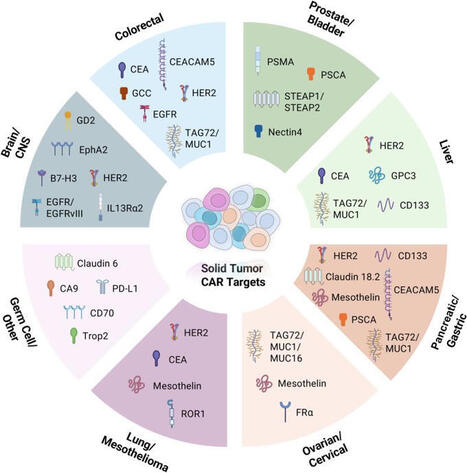
💡𝗧𝗮𝗸𝗲 𝗵𝗼𝗺𝗲 𝗺𝗲𝘀𝘀𝗮𝗴𝗲 • Clinical efficacy: While response rates in solid tumors remain modest overall, clear “pockets of promise” exist in neuroblastoma (GD2), sarcoma (HER2), and glioblastoma (IL-13Rα2), with some trials reporting complete response rates up to ~31%. • Biological barriers: Major challenges include antigen heterogeneity, on-target off-tumor toxicity, poor T cell trafficking, and an immunosuppressive tumor microenvironment. The field is moving toward armored CARs (for example IL-12 or IL-15 secreting cells) and logic-gated circuits such as SynNotch to improve specificity and persistence. • Manufacturing innovation: New ex vivo strategies — including metabolic priming with L-arginine and shortened vein-to-vein production (24–72 h) — aim to preserve T cell stemness and reduce exhaustion. • Emerging platforms: Allogeneic “off-the-shelf” CAR-T products and in vivo CAR engineering using lipid nanoparticles are being explored to overcome scalability and manufacturing complexity.
🔥𝗜𝗺𝗽𝗮𝗰𝘁 • Future progress will likely come from integrated cell engineering and tumor-specific clinical strategies, not receptor design alone.
❓𝗢𝗽𝗲𝗻 𝗾𝘂𝗲𝘀𝘁𝗶𝗼𝗻𝘀 • Which antigen combinations best balance tumor coverage and safety? • Which armored CAR payloads enhance efficacy without systemic toxicity? • How should conditioning, delivery route, and combinations differ by tumor type?
You’ve heard of CAR-T. But you might not know about CAAR-T - a newer, more targeted twist on the same technology:
So what is it? - CAAR-T (Chimeric AutoAntibody Receptor T cells) are designed to eliminate only the B cells producing harmful autoantibodies, while sparing the rest. - Instead of using an antibody fragment to find targets (like CAR-T does), CAAR-T cells display an autoantigen on their surface, tricking autoreactive B cells into binding and revealing themselves.
Here’s how they compare:
CAR-T Cells Advantages: - Targets all B cells via markers like CD19 - Proven success in cancer and autoimmune diseases (e.g., lupus) Disadvantages: - Destroys healthy B cells too, leading to broader immune impact - Can cause CRS, especially with large-scale immune activation
CAAR-T Cells Advantages: - Precisely targets only B cells producing harmful autoantibodies - Spares healthy B cells, preserving immune function Disadvantages: - Requires known autoantigen (e.g., Dsg3, MuSK) - Limited clinical experience, still early in development
In short: CAR-T is broad and proven. CAAR-T is precise and emerging.
Now, I don't see CAAR-T replacing CAR-T.
But for autoantibody-driven diseases, it could offer something we’ve never had before: A precise strike against the root cause, without wiping out the entire immune arsenal.
Anything else you'd add? Drop it in the comments. | 31 comments on LinkedIn
To get content containing either thought or leadership enter:
To get content containing both thought and leadership enter:
To get content containing the expression thought leadership enter:
You can enter several keywords and you can refine them whenever you want. Our suggestion engine uses more signals but entering a few keywords here will rapidly give you great content to curate.




 Your new post is loading...