Your new post is loading...

|
Rescooped by
michel verstrepen
from L'eVeille
January 28, 2024 2:50 PM
|
LiteratIA est une communauté d'intérêt pour tous les membres de l'enseignement supérieur intéressés par l'intelligence artificielle. Elle vise à échange
Via Sandrine Decamps
|
|
Rescooped by
michel verstrepen
from L'eVeille
January 28, 2024 2:46 PM
|
Dans cet article, nous allons vous présenter 5 outils d'intelligence artificielle qui vous permettront de créer des présentations avec diapositives rapidement et efficacement. Ces outils facilitent grandement le processus de création et vous aident à gagner du temps. 1. Gamma 0:00/1× Gamma est une plateforme de présentation qui
Via Sandrine Decamps
To ensure that the tool would not falsely flag genuine responses, we also tested the tool on assessment results collected from 512,084 respondents prior to the emergence of ChatGPT. The results? Hogan’s tool detected 100 percent of ChatGPT responses and flagged zero percent of genuine responses.
Aside from being easily detectable, asking a computer program with no personality for help with a personality assessment is misguided. This type of dishonest candidate behavior is likely to be detectable during other stages of the hiring process too.
Via James Schreier, Ricard Lloria, juandoming
Juan Domingo Farnós El término "Educación 5.0" dentro de la Educación disruptiva fue acuñado por Juan Domingo Farnós y se refiere a un escenario educativo que integra la educación disruptiva y la inteligencia artificial. Esta visión educativa busca adaptarse a los cambios acelerados en la sociedad y la tecnología, promoviendo un enfoque multidimensional y personalizado…
Via juandoming
If you’re reading this, you might have AI anxiety.A recent survey from EY research shows that 71 percent of employees with knowledge of artificia
Via EDTECH@UTRGV, juandoming
|
|
Rescooped by
michel verstrepen
from Educación a Distancia y TIC
January 26, 2024 3:29 PM
|
Los EduGPTs se definen como asistentes personalizados impulsados por la Inteligencia Artificial Generativa (GenIA) específicamente diseñados para el ámbito educativo. Imagina tener a tu lado un colaborador que no solo entiende tus desafíos como educador, sino que además te ofrece soluciones creativas y efectivas. Eso es exactamente lo que los EduGPTs pueden hacer por ti. Desde enriquecer tu práctica docente, hasta apoyar tu bienestar personal, estos asistentes de IA están aquí para revolucionar la manera en que enseñamos y aprendemos en cualquier modalidad.
Via Edumorfosis, LGA
Schools have spent billions on online tutoring services to address pandemic learning loss. So far, there’s no good evidence that they are helping many students catch up.
Via Yashy Tohsaku, juandoming
|
|
Rescooped by
michel verstrepen
from Educational Technology News
January 24, 2024 2:09 AM
|
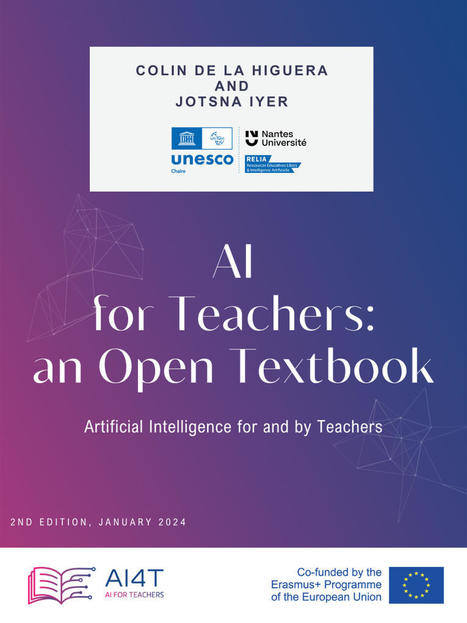
A new study uncovers the importance of closing the AI knowledge gap for teachers, who want to use AI in education but need more support.
Via EDTECH@UTRGV
|
|
Rescooped by
michel verstrepen
from Educational Technology News
January 24, 2024 2:08 AM
|
What better way to learn about AI in a controlled, supportive environment than in the classroom?
Via EDTECH@UTRGV
|
|
Rescooped by
michel verstrepen
from Educación a Distancia y TIC
January 23, 2024 6:33 AM
|
Explorando la singularidad en la educación superior: innovar para adaptarse a un futuro incierto Enviar por correo electrónicoEscribe un blogCompartir con TwitterCompartir con FacebookCompartir en Pinterest...
Via LGA
Learn 10 best practices that instructors can use for AI assignments or preparing students for the impact AI will have on their career.
Via heather dawson, LGA, juandoming
|
|
Rescooped by
michel verstrepen
from Educación a Distancia y TIC
January 22, 2024 4:37 PM
|
One school has got this exactly right in my opinion. Meredith Joy Morris has implemented ChatGPT into the teaching process. The teacher does their thing and the chatbot picks up where the teacher stops, augmenting and scaling the teaching and learning process, passing the baton to the learners who carry on. This gives the learner a more personalized experience, encouraging independent learning by using the undoubted engagement that 1:1 dialogue provides.
There’s no way any teacher can provide this carry on support with even a handful of students, never mind a class of 30 or a course with 100. Teaching here is ‘extended’ and ‘scaled’ by AI. The feedback from the students was extremely positive.
This is what she reported:
Via Edumorfosis, LGA
|
|
|
Rescooped by
michel verstrepen
from Educación a Distancia y TIC
January 28, 2024 2:49 PM
|
Conceptos claves para la calidad de la educación superior online Enviar por correo electrónicoEscribe un blogCompartir con TwitterCompartir con FacebookCompartir en Pinterest...
Via LGA
|
|
Rescooped by
michel verstrepen
from L'eVeille
January 28, 2024 2:46 PM
|
Il n’existe à peu près pas de données sur l’utilisation de la microcertification numérique (les badges numériques, vous connaissez?) en contexte de formation continue chez les personnes enseignantes au Québec. Marie-Noëlle Marineau, dans le cadre d’une maîtrise à la TELUQ, a voulu faire un état des connaissances sur ce type de reconnaissance.
Via Sandrine Decamps
The recent hyperbole around artificial intelligence (AI) has impacted on our ability to properly consider the lasting educational implications of this technology. This paper outlines a number critical issues and concerns that need to feature more prominently in future educational discussions around AI. These include: - the limited ways in which educational processes and practices can be statistically modelled and calculated.
- the ways in which AI technologies risk perpetuating social harms for minoritized students.
- the losses incurred through reorganizing education to be more ‘machine readable’.
- the ecological and environmental costs of data-intensive and device-intensive forms of AI.
The paper concludes with a call for slowing down and recalibrating current discussions around AI and Education – paying more attention to issues of power, resistance and the possibility of reimagining Education AI along more equitable and educationally beneficial lines.
Via Edumorfosis, LGA, juandoming
|
|
Rescooped by
michel verstrepen
from Educación a Distancia y TIC
January 28, 2024 2:45 PM
|
With the release of new AI toolkits, Michigan Virtual set an encouraging example of what it looks like to create localized resources for rapidly reskilling a teacher workforce towards AI adoption.
Via Vladimir Kukharenko, juandoming, LGA
AI is a guiding force in offering tailored eLearning experiences that captivate learners and engage them actively throughout their learning journey.
Via EDTECH@UTRGV, juandoming
|
|
Rescooped by
michel verstrepen
from Learning & Technology News
January 26, 2024 3:29 PM
|
Have you ever asked yourself,
How can artificial intelligence impact learning and teaching in my classroom?
Can it help me do what I want to do with my students?
How can it change the dynamics and interactions I have with my students?
How do I even know when it is being used correctly or incorrectly?
And, what should I be aware of if I want to put it to good use?
Via Nik Peachey
|
|
Rescooped by
michel verstrepen
from Educación a Distancia y TIC
January 26, 2024 3:28 PM
|
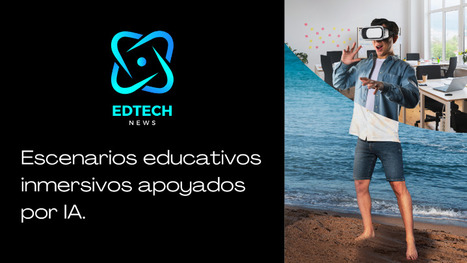
Como parte de mi contribución, diseñé una presentación inspirada en seis partes. Considero importante explicar el contexto donde nos encontramos y cómo llegamos a lo que hoy estamos viviendo, sobre todo para evitar reforzar el pensamiento que "mucho de lo que hoy vemos son inventos recientes" y darle fuerza a que "estamos cosechando aquello que fue innovador hace 10 o 20 años". Lo cierto es que, para hablar de educación inmersiva, coloqué a la Inteligencia Artificial (IA) como uno de sus principales catalizadores en la actualidad. A continuación la estructura de mi presentación:
Via Edumorfosis, LGA
The two main trends in the development of higher education worldwide are universal access and digital transformation. These trends are bringing about an increase in class sizes and the growth of online higher education. Previous studies indicated that both the large-class setting and online delivery threaten the quality, and the exploration of strategies to ensure quality teaching and learning in the large-class setting was in face-to-face or blended learning mode. This study contributes to this topic by exploring the quality of teaching and learning in a new scenario: the fully online large university class. Furthermore, it proposes to use student engagement as a new means to explore the quality of teaching and learning in a large-class setting as it offers evidence on quality from the in-itinere perspective rather than the more commonly ex-post perspective offered by existing studies, collected, for example, from student feedback or course grades. This study was conducted in a mandatory course at an Italian university. Both the Moodle log data and students’ reflective diaries are collected to analyze the presence of students’ behavioral, emotional, and cognitive engagement. Tableau and NVivo handle the quantitative and qualitative data, respectively. By confirming the presence of all three types of engagement, the result indicates quality teaching and learning happens in the fully online large university class. Since we select both “high-grade” and “low-grade” students as representative samples, the Tableau visualization also indicates that only using behavioral engagement to predict students’ academic performance is unreliable.
Via Vladimir Kukharenko, juandoming
|
|
Rescooped by
michel verstrepen
from Educational Technology News
January 24, 2024 2:09 AM
|
Generative AI can have many beneficial applications for institutions of higher education, helping to personalize and optimize the learning experience
Via EDTECH@UTRGV
|
|
Rescooped by
michel verstrepen
from Educación a Distancia y TIC
January 24, 2024 2:08 AM
|
The article explores how ChatGPT revolutionizes higher education, shaping a future of interactive, adaptable, and student-centered learning.
Via LGA
|
|
Rescooped by
michel verstrepen
from Veille CDI
January 23, 2024 4:17 AM
|
Les intelligences artificielles, pour quoi faire ? Et surtout lesquelles ? Pour éviter une uniformisation des pensées, il est nécessaire que la France s'empare sérieusement du sujet. Et s'en donne les moyens.
Via cdi
|
|
Rescooped by
michel verstrepen
from eLearning and research
January 22, 2024 4:37 PM
|
"Guest post by @MattRhoads1990 Matthew Rhoads, Ed.D. Dr. Matt Rhoads is a Tech and Instructional Leader and Innovator with hands in Adult Ed, K-12, and Higher Education. He is the author of several books and is the host of Navigating Education – The Podcast ..."
Via Leona Ungerer, GRIAL Univ Salamanca. Aprendoenred.
|