Depuis peu, Meta, la société mère de Facebook et Instagram, a annoncé une modification de sa politique de confidentialité. À partir du 26 juin 2024, vos données issues de ces plateformes pourront être utilisées pour entraîner ses intelligences artificielles (IA). Si cela vous inquiète, sachez qu’il est possible de s’y opposer. Cet article vous explique comment procéder pour protéger vos informations personnelles.
Une vidéo pédagogique pour simplifier la compréhension de l'intelligence artificielle : Qu'est-ce que l'IA ? Différents types d'IA. Comment fonctionne l'IA générative ? D'où viennent les données de l'IA ?
Il suffit de se rendre sur le site et de commencer à rentrer l’une après l’autre les différentes variables pour votre tirage au sort. Vous voulez choisir au hasard un élève dans votre classe. Rentrez l’un après l’autre leurs prénoms sur Fluky.
"When Tiffin University decided to integrate artificial intelligence tools directly into its courses and curriculum, the Center for Online and Extended..."
Il est vrai que les étudiants pourraient être tentés d'utiliser un outil comme moi pour tricher lors de leurs travaux. Cependant, je suis avant tout un outil pédagogique qui peut aider les étudiants à comprendre les sujets sur lesquels ils travaillent et à développer leurs propres idées.
Un support animé et très bien conçu pour s'initier à l'IA en éducation, avec de nombreuses ressources pour apprendre l'IA et apprendre ou enseigner avec l'IA.
"[I]t includes powerful features like real-time video processing, a key feature that could finally allow the creation of powerful virtual assistants that support our daily life in real time."
"This article highlights how generative AI can revolutionize education by personalizing learning experiences, automating administrative tasks, and creating dynamic content."
Generative AI is significantly transforming education by personalizing learning experiences, aiding in content creation, and enhancing language learning and creative expression. It supports academic research and provides valuable tools like AI-powered tutoring systems and virtual classrooms. While the benefits are substantial, challenges such as data protection, bias, and ensuring equitable access must be addressed. Generative AI should complement, not replace, teachers, enhancing their ability to inspire and mentor students.
Selon une étude* réalisée par l’EdTech Diplomeo, l’intelligence artificielle impacte de plus en plus le quotidien des jeunes, qui sont 79 % à l’utiliser dans leurs études. Certains l’intègrent même à leurs pratiques liées à l’orientation (40 %) et la rédaction de lettres de motivation. 79 % des jeunes ont déjà utilisé un outil d’intelligence artificielle.
Like many of our colleagues, the emergence of ChatGPT and other generative artificial intelligence sites initially created a mild panic. Out of the panic, an emerging field of practical, practitioner-based research has begun to emerge. The call for calm, patient reflection has been noted (Naidu 2023, para 10). Others argue that AI, in various forms, […]
We often talk about the need for students to have voice and choice in their learning. We want them to engage in meaningful, productive struggle as they do projects and engage in problem-solving. But where
While tools like ChatGPT can help with writing, they also make it easier for students to cheat. Educators are frustrated and trying different strategies, such as going back to traditional methods or integrating AI ethically. The key is to teach students how to use AI as a co-creation tool and understand the research process, promoting responsible use and minimizing cheating. Modeling ethical AI use and incorporating it into the writing process can help uphold academic integrity.
With AI being so prevalent, it is important to use appropriately for students. In doing so, students will find better outcomes during their education. Leveraging technology like AI can help students find more success!
La integración de la IA en el aprendizaje basado en proyectos (ABP) ofrece oportunidades significativas para la co-creación y la resolución de problemas, permitiendo a los estudiantes tener una mayor voz y elección en sus proyectos. Sin embargo, la cuestión de la integridad académica se vuelve crucial en este contexto. Promover la integridad académica en la era de la IA generativa requiere enfoques que incluyan la educación sobre el uso ético de estas herramientas, la implementación de políticas claras sobre el plagio y la atribución, y el diseño de tareas que fomenten el pensamiento crítico y la originalidad. Así, se puede aprovechar el potencial de la IA sin comprometer los valores académicos fundamentales.
In today's rapidly evolving world of online education, integrating empathy into eLearning is essential for crafting impactful and effective learning experiences. This article outlines seven empathy-based techniques that eLearning developers can use to transform online learning. By employing these strategies, developers ensure they maintain a strong connection with their audience. Embracing empathy in eLearning unlocks new levels of learner engagement and motivation.
Matilda est un moteur de recherche académique visant à améliorer l'accès aux données de références et citations souvent négligées dans la recherche. Il se
Via Sandrine Decamps
Since the emergence of ChatGPT in November 2022 there has been a huge shift towards the production of apps and tools powered by AI and large language models. These tools offer teachers and students a confusing range of options and opportunities and educators are faced with complex decisions around how, when and whether to implement this technology.
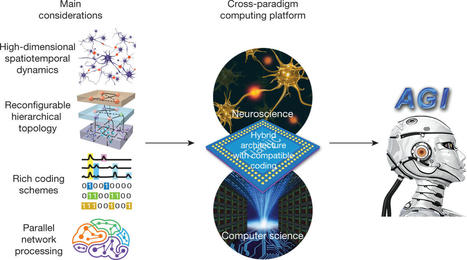
Juan Domingo Farnós La interacción de la Educación disruptiva y la IA (AGI) con los procesos de creación de una AGI puede abordarse en dos niveles: técnico (algorítmico) y de implementación real en modelos transdisciplinarios. La intersección de la innovación disruptiva y la Inteligencia Artificial General (AGI) en la creación de AGI puede abordarse en…
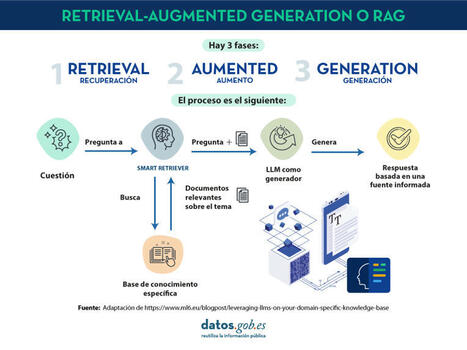
Juan Domingo Farnós Uno de los conceptos que utilizo en mis investigaciones en Educación disruptiva & IA (AGI) es el soporte RAG (Retrieval-Augmented Generation) dentro de la inteligencia artificial general (AGI) en el contexto educativo. Retrieval-Augmented Generation (RAG): RAG es una técnica de inteligencia artificial que combina la capacidad de recuperación de información con la…
"Generative AI will bring innovations, efficiencies, creativity and effectiveness to most who work at our colleges and universities in the coming year."
"Let’s take a look at how AI will facilitate the work of the instructional designers, researchers, administrators and other nonteaching professionals in colleges and universities this fall."
Ayer, seguramente a más de uno, os sorprendió que dejara que una inteligencia artificial (IA) escribiera el artículo cuasi diario por mí. Ese artículo (enlace) tenía una doble vertiente: la primera satisfacer la necesidad de escribir alguna cosa por aquí (algo que a mí me encanta hacer) y la segunda, después de llevar un poco
Este artículo muestra la rápida evolución de la IA y la creciente necesidad de integrarla de manera efectiva en la educación, lo cual preocupa al escritor del artículo, ya que fundamenta que esto puede crear, lo cual es una gran verdad, dependencia excesiva de la IA. De ahí radica la importancia de equilibrar su uso para que su uso no afecte negativamente en el aprendizaje de los estudiantes.
Me suscribo a las palabras del artículo, la IA ya está aquí y su presencia en la educación es innegable, planteando tanto nuevas oportunidades como imporantes desafíos. Por un lado, la IA puede enriquecer el proceso educativo, personalizando el aprendizaje, ofreciendo recursos innovadores y provocando una mayor difusión de la educación. Sin embargo, , si no se regula adecuadamente, puede fomentar la dependencia a ella, llevando al pobre enriquecimiento de habilidades educativas fundamentales como la comprensión lectora y la expresión escrita.
Por todo esto, es crucial encontrar un equilibrio, asegurando que la IA sea una herramienta complementaria que potencie el aprendizaje, sin reemplazar las habilidades esenciales que el alumnado debe desarrollar. La colaboración entre expertos y el diseño de estrategias para su uso por parte de los deocentes marcan el camino para integrar la IA de manera efectiva y responsable en la educación.
Beltrán, J. E. P., Rojas, P. L. V., & Caballero, D. A. R. (2014). Tendencias y dificultades para el uso de las TIC en educación superior. Entramado, 10(1), 279-295.
"What will tomorrow bring for AI in learning? Let's look at how you can tap into the power of Artificial Intelligence to enhance immersion and L&D personalization."
The OECD Digital Economy Outlook 2024, Volume 1: Embracing the Technology Frontier provides new insights on key technologies that underpin the digital technology ecosystem and their impacts. Using big data and machine-learning techniques, Volum
Dans le cadre du Hackathon transversal autour des enjeux sociétaux de l’IA, une étude a été réalisée par le Pôle Léonard de Vinci et Talan auprès de 1 600 étudiants de 4ème année d’études supérieures. Ce sondage a pour but de révéler la vision et l’utilisation des IA génératives (Chat GPT, Midjourney etc.) par les étudiants [...]
Juan Domingo Farnós El término "TOPS" (Tera Operations Per Second) se refiere a la capacidad de procesamiento de un sistema en términos de operaciones realizadas por segundo, siendo un indicador clave en el rendimiento de hardware para inteligencia artificial (IA) y aplicaciones de aprendizaje profundo. Es una forma de cuantificar el poder de procesamiento de…
To get content containing either thought or leadership enter:
To get content containing both thought and leadership enter:
To get content containing the expression thought leadership enter:
You can enter several keywords and you can refine them whenever you want. Our suggestion engine uses more signals but entering a few keywords here will rapidly give you great content to curate.


 Your new post is loading...