


gpmt
67.1K views |
+8 today
Filter by date
Tags
 Your new post is loading...
 Scoop.it! We updated the Stages of Personalized Learning Environments (PLE) to version 4 from information we learned from our new book, the How to Personalize Learning … Via Michael Wünsch, Edumorfosis, juandoming
Scoop.it!
Michael Matera (@mrmatera) is a middle school teacher, author of Explore Like a Pirate and speaker. As a gamification guru and moonshot thinker, Michael transforms the traditional classroom into a high-energy environment where active student engagement is paramount. Helping educators learn about the power of a gamified immersive learning environment is Michael’s passion. In today’s […]
Scoop.it!

Beyond the investments in kits such as Makey-Makey or robotics or Lego, the heart of the MakerSpace is in the consumables. The paper cups, tape, cardboard and straws that not only inspire some serious creativity and ‘outside the box’ thinking but also are the great equalizer – accessible to all students and teachers. Via John Evans
Scoop.it!
.@mikepotter So glad you're a fan. Please continue to enjoy kids programming and content on newly redesigned https://t.co/ikB0AGnxXK Via Club de TeleMatique
Scoop.it!
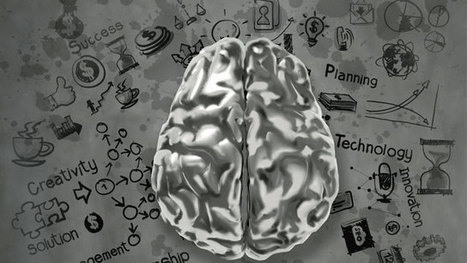
— Breaking up and spacing out study time over days or weeks can substantially boost how much of the material students retain, and for longer, compared to lumping everything into a single, nose-to-the-grindstone session.
Learn more / En savoir plus / Mehr erfahren:
https://gustmees.wordpress.com/2016/03/14/time-the-most-important-factor-neglected-in-education/
http://www.scoop.it/t/21st-century-learning-and-teaching/?tag=Brain
Via Gust MEES, T@T lab 
Gust MEES's curator insight,
September 21, 2016 8:40 AM
— Breaking up and spacing out study time over days or weeks can substantially boost how much of the material students retain, and for longer, compared to lumping everything into a single, nose-to-the-grindstone session.
Learn more / En savoir plus / Mehr erfahren:
https://gustmees.wordpress.com/2016/03/14/time-the-most-important-factor-neglected-in-education/
http://www.scoop.it/t/21st-century-learning-and-teaching/?tag=Brain
Scoop.it!

Greetings. Globally one topic is generating discussions from texts to tweets to blogs to policy: jobs. In a world were job and careers are going through a transition in many industries at once j… Read all: The Education and Jobs Formula – Global Academic and Industry Collaboration Zone
Scoop.it!
"Here they are: My six favorite ed tech tools for this year. Each one has the potential to make a big difference in your teaching and your students' learning ..."
Via Leona Ungerer, Jim Lerman 
igabrielleprr@gmail.com's curator insight,
January 27, 2025 12:11 AM
This article mentions the newest feature on Nearpod-- a virtual reality feature. The author mentions the use of this feature allows the teacher to take the students on a virtual field trip. I think this is an excellent addition to Nearpod as many kids don't get to travel often or ever. Imagine the experiences the students can have from the safety of the classroom.
Scoop.it!

This event is open for everyone. Click here to RSVP. UNAOC’s Media and Information Literacy program and United Nations Academic Impact’s “Unlearning Intolerance” program have organized this side event as part of UNAI’s “Prevention Forum” discussion series. The event will also be an occasion for the presentation of the most recent UNAOC-UNESCO-NORDICOM publication “Opportunities for … Via Manuel Pinto
Scoop.it!
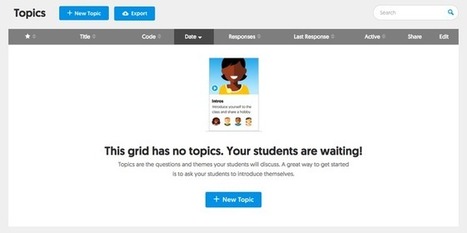
Here you can find the Round Up's collection of in-depth reviews on the latest programs, apps, websites, and more. Make sure to click the review's title or the Read More link for the complete review! Via Dr. Tom D'Amico (@TDOttawa) 
Katie Swanson Sathre's curator insight,
February 2, 2017 11:52 AM
This is a cool edtech tool! In my masters program we are using something similar called VoiceThread to reflect on case studies collaboratively. 
paul rayner's curator insight,
February 2, 2017 3:54 PM
No integration with GAFE for login, but you can work with kids without having them login. Worth playing with to learn more...
Scoop.it!

Les 24 et 25 janvier 2017 a eu lieu le salon iLearning Forum, qui est devenu au fil des années un rendez-vous pour découvrir les nouveautés du e-learning. Des dizaines de présentations ont permis de dégager une image des grandes orientations et des stratégies des éditeurs de plateformes de formation à distance (LMS pour learning management system). Via Claude Tran 
Claude Tran's curator insight,
February 2, 2017 12:50 AM
Alors, qu'est-ce qui change avec les plateformes ? Sont-elles condamnées à disparaître. Au contraire, semble nous dire Jérôme Bruet. Ce qui importe, c'est le parcours, l'architecture, l'articulation des contenus plus que les contenus eux-mêmes... Et c'est justement le rôle des LMS que d'assurer cette coordination.
Autre point essentiel : l'émergence des modules très courts, et du micro-learning. Les neurosciences montrent que la répétition régulière est préférable à une séance intensive. Les grains pédagogiques se réduisent, mais on peut imaginer des parcours plus longs.
Scoop.it!

Dans le cadre d’EIDOS 64 – Le forum des pratiques numériques pour l’éducation – à Lons et Lescar, sur le thème « L’élève hacker de so Via Michelle Laurissergues |
Scoop.it!

Et si l’avenir de la consommation ne passait plus par L’AVOIR, mais par le « FAIRE » ? C’est à cette question que répond une étude menée fin 2016 et publiée la semaine dernière par l’Observatoire Société et Consommation (Obsoco) auprès d’un panel de 5000 français. De quoi se pencher sur ce que les Français fabriquent durant leur temps libre. Via Bernard BRUNET
Scoop.it!

Chaque année, la prestigieuse revue en ligne Edge.org (@edge) demande à des dizaines de collaborateurs, pour la plupart de fameux artistes, penseurs ou scientifiques, de répondre à une même question. InternetActu.net a plusieurs fois couvert ce rendez-vous annuel : sur les idées scientifiques à abandonner, sur la façon dont l’internet change nos manières de penser, sur les raisons d’être optimistes ou encore sur les idées dangereuses. 
Bruno De Lièvre's curator insight,
February 5, 2017 11:03 AM
Chaque année, la prestigieuse revue en ligne Edge.org (@edge) demande à des dizaines de collaborateurs, pour la plupart de fameux artistes, penseurs ou scientifiques, de répondre à une même question. InternetActu.net a plusieurs fois couvert ce rendez-vous annuel : sur les idées scientifiques à abandonner, sur la façon dont l’internet change nos manières de penser, sur les raisons d’être optimistes ou encore sur les idées dangereuses.
Scoop.it!
REPÉRÉ DANS LA PRESSE AMÉRICAINE. Pour inciter les élèves de Mooc à aller au bout des cours, des chercheurs de Stanford et du MIT ont proposé à un public cible un exercice d
Scoop.it!

Innovation in education should not be a luxury, but is now a necessity. The world is changing so rapidly and it is not longer about schools “embracing change”, but creating it. You can wait for it to happen, or you can make it happen; either way change will continuously head our way. Via Edumorfosis, juandoming
Scoop.it!

Scoop.it!

Online learning, new media, connectivism, MOOCs, personal learning environments, new literacy, and more from Stephen Downes Via juandoming, Jim Lerman
Scoop.it!

What is the difference between Piaget's constructivism and Papert’s “constructionism”? Beyond the mere play on the words, I think the distinction holds, and that integrating both views can enrich our understanding of how people learn and grow. Piaget’s constructivism offers a window into what children are interested in, and able to achieve, at different stages of their development. The theory describes how children’s ways of doing and thinking evolve over time, and under which circumstance children are more likely to let go of—or hold onto— their currently held views. Piaget suggests that children have very good reasons not to abandon their worldviews just because someone else, be it an expert, tells them they’re wrong. Papert’s constructionism, in contrast, focuses more on the art of learning, or ‘learning to learn’, and on the significance of making things in learning. Papert is interested in how learners engage in a conversation with [their own or other people’s] artifacts, and how these conversations boost self-directed learning, and ultimately facilitate the construction of new knowledge. He stresses the importance of tools, media, and context in human development. Integrating both perspectives illuminates the processes by which individuals come to make sense of their experience, gradually optimizing their interactions with the world
Scoop.it!

Pour lui, à chaque fois que les technologies se développent la question qui se pose est « qu’est-ce que cela change dans les situations d’enseignement ? ».
Via Franck Rykaczewski 
Pascal Choteau's curator insight,
February 5, 2017 9:23 AM
Analyse rapide de 9 mythes circulants sur internet ou des auteurs
Scoop.it!

I wanted to take a moment to share some of the thoughts I often hear from educators as I travel the country providing PBL Professional Development. I really believe it might be a helpful read for those wanting to make that PBL possibility in their school or district. Before continuing, I would appreciate having you… Via Dr. Tom D'Amico (@TDOttawa) , Jim Lerman 
Lucia Boettjer's curator insight,
September 15, 2020 7:51 AM
Explains misconceptions of PBL. It also provides details of how to overcome the misconceptions.
Scoop.it!

Le Monde a décidé de s’engager dans l’éducation à l’information. Notre objectif est de participer à l’effort déployé par l’éducation nationale depuis la rentrée 2016 et de donner aux élèves les clés pour une lecture critique et distanciée de ce qu’ils lisent ou consultent tous les jours à la télévision ou sur leur smartphone via Facebook, Twitter, Snapchat et autres réseaux sociaux. Via Manuel Pinto
Scoop.it!

The post Apprentissages informels et écosystème pédagogique appeared first on La Digital Learning Academy .
Via Xavier Van Dieren |






