Réforme de la formation professionnelle - Episode 2 : l'apprentissage Objectif : s’informer sur les changements du contrat d'apprentissage apportés par la lo...
Best practices now suggest that instead of cocooning students, we teach them to be good digital citizens, confident and competent. Here are eleven projects to teach kids authentically, blended with your regular lessons, the often complicated topic of becoming good digital citizens, knowledgeable about their responsibilities in an Internet world.
Today, I am incredibly excited to share we have acquired Express Logic, a leader in real time operating systems (RTOS) for IoT and edge devices powered by microcontroller units (MCUs). Express Logic’s ThreadX RTOS has over 6.2 billion deployments, making it one of the most deployed RTOS in the world per VDC Research.
RETOUR SUR LA CONFÉRENCE: « APPRENDRE ! » L’APPORT DES SCIENCES COGNITIVES Que signifie vraiment « apprendre » ? M. Stanislas Dehaene, neuroscientifique et président du Conseil scientifique de l’Education nationale, professeur au Collège de France, a évoqué l’apport des sciences cognitives dans l’apprentissage lors de sa présentation : « Apprendre ! : l’apport des sciences cognitives» Cette conférence a eu lieu le mardi 4 décembre 2018 à Lausanne Master dans le cadre du Cycle de conférences « Enseigner à l’ère numérique » organisé par le Centre e-learning HES-SO Cyberlearn, DEVPRO et le SADAP, sous l'égide des dicastères Enseignement et Qualité de la HES-SO. Une centaine de personnes ont assisté à cette conférence, parmi elles, Mme Luciana Vacarro, Rectrice de la HES-SO, M. Yves Rey, Vice-recteur Enseignement et Mme Geneviève Le Fort, Vice-rectrice Qualité. Cette conférence est la troisième du Cycle de conférences « Enseigner à l’ère numérique » et clos ainsi la thématique des sciences cognitives. Lors de l’apéritif, les participants ont pu tester des réalisations de réalité virtuelle et de réalité augmentée produites par Cyberlearn, le Centre de e-learning de la HES-SO. L’espace conférence est ouvert à tous-toutes : https://cyberlearn.hes-so.ch/course/view.php?id=10483 Vous trouverez à votre disposition : - une synthèse des recherches pédagogiques de Mme Anne-Dominique Salamin, responsable du Centre Cyberlearn. - les photos de la soirée « Apprendre ! » l’apport des sciences cognitives - la vidéo de l’intervention de M. Stanislas Dehaene Auteur : admin Catégories : Actualités, Pédagogie & Didactique, VR Tag : cyberlearn, neurosciences, Stanislas Dehaene le Mardi 11 décembre 2018 à 16:16.
Thales inaugure aujourd’hui un Cyberlab à Tubize, dans le sud de la région bruxelloise, en présence de Jean-Claude Marcourt, vice-président du Gouvernement wallon, ministre de l’Economie, de l’Industrie, de l’Innovation et du Numérique. Unique en Belgique, ce centre permet dès aujourd’hui de répliquer de façon réaliste les réseaux et les systèmes informatiques d’entreprises et d’acteurs publics, afin de les préparer aux cyberattaques.
Son utilisation vise également à former les étudiants et à renforcer l’entraînement des spécialistes en cybersécurité. En 2017, Thales prévoit de recruter environ 400 collaborateurs dans le domaine de la cybersécurité au niveau mondial. En Belgique, 50 recrutements sont prévus dans les quatre prochaines années pour soutenir le développement rapide de l’activité.
Positionné au cœur de l’écosystème des institutions situées en Belgique, le Cyberlab de Tubize s’insère dans l’offre globale de sécurité des systèmes d’information de Thales, leader européen de la cybersécurité et leader mondial de la protection des données. Il répond aux besoins croissants des entreprises, des opérateurs de services essentiels et des institutions publiques face à la montée des cybermenaces.
Comme l’illustre la récente cyberattaque mondiale baptisée WannaCry, qui a notamment impacté le fonctionnement opérationnel de services essentiels comme les hôpitaux ou le transport ferroviaire, les administrations et les entreprises doivent se préparer et s’entraîner pour assurer la sécurité de leurs systèmes d’informations et la protection de leurs données. Avec ce nouveau Cyberlab, Thales peut reproduire les réseaux informatiques d’une organisation, grâce à une plateforme dédiée, pour tester sa résistance aux dernières formes de cyberattaques.
La plateforme propose trois applications :
valider le niveau de sécurité des architectures des systèmes d’informations et des données de nos clients ; former les spécialistes de la cybersécurité dans un environnement représentatif des systèmes réels ; accompagner les entreprises belges dans le développement de produits intégrant la cybersécurité dès leur conception (« secure by design ») en les soumettant aux tests de cybersécurité les plus exigeants.
En outre, cette plateforme contribuera aux activités de recherche et développement en cybersécurité de Thales en Belgique. On estime qu’il manquera environ 2 000 experts en cybersécurité en Belgique d’ici à 2020. C’est pourquoi Thales a également décidé de renforcer son soutien au « Master en cybersécurité [1]» en lui ouvrant son Cyberlab de Tubize. Ce cursus, premier du genre créé en Belgique, pourra s’appuyer sur la plateforme pour mettre les étudiants dans des conditions réalistes d’attaques et ainsi renforcer leur capacité à y faire face.
Pour réaliser ce Cyberlab, Thales s’est associé à l’entreprise Diateam, fournisseur d’outils de ce type depuis plus de quinze ans.
Jean-Claude Marcourt, vice-président du Gouvernement wallon, ministre de l’Economie, de l’Industrie, de l’Innovation et du Numérique, souligne l'importance décisive d'avoir une politique intégrée au niveau de la cybersécurité :
« Aujourd’hui, nous devons nous donner les moyens de garantir aussi bien la sécurité des données sensibles que celle des biens et des personnes. Après avoir lancé un master unique en cybersécurité en Fédération Wallonie-Bruxelles, nous sommes heureux de voir se développer en Wallonie le leader européen de la cybersécurité et le leader mondial de la protection des données. En plus d’un rôle de formation de spécialistes et d’accompagnement des entreprises, la plateforme inaugurée aujourd’hui contribuera à des activités de recherche et développement en cyber sécurité, des ingrédients à même de contribuer au perfectionnement de notre écosystème numérique. »
Recrutement et formation en cybersécurité En 2017, Thales prévoit de recruter environ 400 collaborateurs dans le domaine de la cybersécurité au niveau mondial. Le marché en forte croissance (+10 % par an en moyenne) alimente un besoin permanent de nouveaux spécialistes. Thales s’attache à faire travailler ensemble le monde universitaire et l’industrie afin de former les professionnels de demain. [1]Cursus universitaire créé à l’initiative de six institutions : l’Ecole Royale Militaire, l’Université Libre de Bruxelles, l’Université Catholique de Louvain, l’Université de Namur, la Haute Ecole de Bruxelles et la Haute Ecole Libre de Bruxelles
Google, en partenariat avec Anker, a présenté un adaptateur à brancher sur l'allume-cigares de la voiture qui intègre Google Assistant. Il permet d'utiliser tous les services offerts pa...
What does it take to design good eLearning assessments? Read this blog to gain insights on the design considerations for 4 types of eLearning assessments.
Thompson said he’s an outlier among his military colleagues, few of whom maintain outside jobs while deployed. But in distance education, he’s far from alone. Online courses are often discussed in terms of opening opportunities for students in disparate locations. But instructors are increasingly seizing opportunities to teach from their homes or other locations convenient to their needs, if their institutions let them.
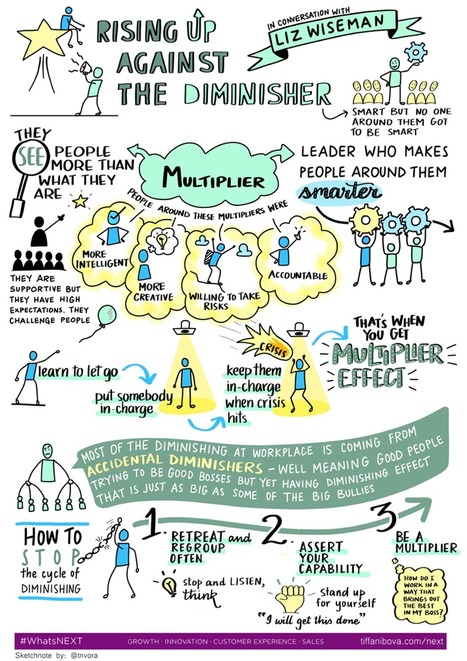
I created a series of sketch notes for Tiffani Bova’s “What’s Next” podcast where she meets brilliant people to discuss customer experience, growth and innovation. Tiffani Bova is a Globa
La formation se joue à distance, en dehors des salles de classes. En matière de digital learning, les initiatives sont nombreuses et les évolutions rapides. E-learning, blended-learning, classes virtuelles...
Le groupe industriel a créé les « CMI Awards » qui distinguent chaque année les meilleurs projets innovants dans ses cinq branches d’activité. Sa branche défense aide l’armée américaine à développer ses blindés du futur et fournit des outils de simulation embarquée à l’armée française.
Un effort annuel de recherche et de développement équivalent à 12 % de son chiffre d'affaires (1,2 milliard d'euros) et 2.700 collaborateurs sur 5.000 employés dans ses bureaux d'études : le groupe Cockerill Maintenance & Ingénierie (CMI) parie résolument sur l'innovation et la diversification. En quinze ans, « cette stratégie a fondamentalement remodelé CMI en lui donnant l'envergure d'un groupe international d'ingénierie et de service », explique le français Bernard Serin, qui a racheté l'ETI belge au sidérurgiste Arcelor en 2002 et en détient toujours 80 % du capital. Désormais présent sur les cinq continents, dans plus de 20 pays, dont la France avec 1.500 collaborateurs, le groupe affiche un résultat avant impôts et taxes (Ebit) de 123 millions d'euros. Pas si mal pour cette vieille dame industrielle. Miser sur l'innovation
Pour inciter ses troupes à se surpasser, l'entreprise a créé les « CMI Awards ». Ce concours interne distingue chaque année les meilleurs projets innovants dans ses cinq branches d'activité. La branche Energy fait la course en tête. Ses équipes construisent au Chili leur version améliorée et brevetée de centrale thermo-solaire fonctionnant au sel fondu. La maîtrise du stockage de cet élément porté à haute température par les rayons du soleil rend possible la production d'une électricité quasi propre 24 heures sur 24.
Le département Environnement n'est pas en reste. Il a mis au point un système de pompage de l'eau à partir d'énergie solaire pour les zones rurales non raccordées au réseau électrique ; le Kenya lui a passé commande d'une cinquantaine de puits profonds. « En couplant nos différentes technologies, nous nous ouvrons de nouveaux marchés, en particulier sur le continent africain », confie Jean-Luc Maurange, l'un des dirigeants du groupe CMI. Deux cents ans d'histoire industrielle
Cette stratégie est conforme à l'ADN de l'entreprise, héritière de deux cents ans d'histoire industrielle. Son aventure commence en 1817 à Seraing, en Wallonie, quand l'ingénieur anglais John Cockerill réalise le premier métier à tisser mécanique ; capable de remplacer dix métiers manuels, sa machine entraînée par une chaudière à vapeur révolutionne le secteur.
En mutant, CMI ne tourne pas le dos à son métier originel de concepteur et de fabricant de technologies industrielles. En attendant le rebond de la sidérurgie, sa filière Industry recycle ses savoir-faire au profit de l'aéronautique. Sa filiale Defence, elle, invente les tourelles de demain pour les petits véhicules blindés : légères, numérisées, modulaires (pouvant recevoir des canons de 30 à 105 mm), tirant au-delà de la vue directe (grâce à un angle de 42 degrés et un couplage avec un drone). CMI Defence aide l'armée américaine à développer ses blindés du futur. Agueris, son département dédié à la simulation, situé à Vélizy, en région parisienne, fournit à l'armée de terre française des outils de simulation embarquée qui permettent aux équipages de s'entraîner au plus près du réel.
Peu connu en France, le nom CMI est apparu récemment dans les médias. L'entreprise est candidate au rachat du spécialiste français des véhicules blindés légers et moyens, la société RTD. Son propriétaire, le suédois Volvo Group, l'a mis en vente. Si les activités de RTD et de CMI sont très complémentaires, cette dernière devra néanmoins écarter les autres prétendants. A commencer par Nexter. Le fabricant du char Leclerc et du canon Caesar est donné favori au nom de l'axe industriel franco-allemand ; il opère sa fusion avec KMW, son homologue d'outre-Rhin, qui produit le char Léopard. Ronan Cotten
Permettre de commander sa box vocalement semble être devenu un nouvel enjeu pour les opérateurs : après Ok Freebox sur la Freebox Delta et l’enceinte (...)...
Microsoft has today announced it is expanding the intelligence of Microsoft Teams with a new feature. Specifically, users to the work collaboration service are getting the Inline message translation ability.
With this feature, people who speak different languages can connect and communicate. This is achieved through the Inline message translation, while translates posts in chat and Microsoft Teams channels. Importantly, this happens in real time, allowing fluid translated conversations.
The release is part of Microsoft’s deeper artificial intelligence integrations in Teams. Announced in March, Inline message translation is part of an AI packages that will roll out in stages.
In terms of other AI improvement Microsoft is making in Teams, here’s the list:
“Cloud recording—Will provide one-click meeting recordings with automatic transcription and timecoding. Enabling all team members the ability to read captions, search within the conversation, and playback all or part of the meeting. In the future, it will also include facial recognition, so remarks can be attributed to specific meeting attendees.
Inline message translation—People who speak different languages will be able to fluidly communicate with one another by translating posts in channels and chat.
Cortana voice interactions for Teams-enabled devices—Will enable you to easily make a call, join a meeting, or add other people to a meeting in Teams using spoken, natural language. This functionality will extend to IP phones and conference room devices.
Background blur on video—The ability to blur your background during video calls will allow other meeting attendees to focus on you, not what’s behind you.
Proximity detection for Teams Meetings—This feature will make it easy for you to discover and add a nearby and available Skype Room System to any meeting.
Mobile sharing in meetings—Meeting attendees will be able to share a live video stream, photos, or the screen from their mobile device.”
Free Teams
Away from this feature, this month has been an important one for Microsoft Teams. Last week, the company announced a free version of the platform, a more direct competitor with Slack.
However, free Microsoft Teams has some benefits over Slack. For example, he app offers unlimited searchable messages versus Slack’s maximum of 10,000. It also has 140+ free integrations versus Slack’s 10. Teams also gives each user 2 GB of storage and each organization 10 GB of shared space.
Luke has been writing about all things tech for more than five years. He is following Microsoft closely to bring you the latest news about Windows, Office, Azure, Skype, HoloLens and all the rest of their products.
To get content containing either thought or leadership enter:
To get content containing both thought and leadership enter:
To get content containing the expression thought leadership enter:
You can enter several keywords and you can refine them whenever you want. Our suggestion engine uses more signals but entering a few keywords here will rapidly give you great content to curate.


 Your new post is loading...


 Scoop.it!