Your new post is loading...
Des études relèvent que 85 % des emplois de 2030 n'existent pas encore. Même si ce pourcentage devait être surestimé, il n’en demeure pas moins qu’il pointe l’incertitude du temps, et de l’indispensabilité, pour les entreprises, de construire une solide politique d’upskilling et de reskilling pour rester à flot. Notre Dossier met en évidence la diversification des approches, intégrant intelligence artificielle, environnements immersifs, coaching personnalisé et maîtrise linguistique. Par-delà les technologies, c'est l'établissement d'une véritable culture d'apprentissage permanent qui constitue le facteur déterminant pour les organisations (apprenantes) notamment déterminées à préparer leurs talents aux métiers émergents.
Via Canadian Vocational Association / Association canadienne de la formation professionnelle, juandoming
Ever sift through endless amounts of information without finding what you are looking for? Wish a program could help you? Let’s talk about chatbots and how they can do just that.
Via EDTECH@UTRGV
Author: Anastasia Bojanowski, University of Central Florida Editor: Dr. Denise Lowe, University of Central Florida Dear ADDIE, Some of my colleagues are leveraging Generative AI for content creation. I have content that needs to be updated and would like to use AI platforms. However, I soon became overwhelmed when I searched for options. Further, I … Continue reading "Considerations of Generative AI for Content Creation (Issue 32)"
Via Ana Cristina Pratas, juandoming
"A study by Michael Gerlich at SBS Swiss Business School has found that increased reliance on artificial intelligence (AI) tools is linked to diminished critical thinking abilities. It points to cognitive offloading as a primary driver of the decline."
Via EDTECH@UTRGV

|
Rescooped by
michel verstrepen
from Digital Delights
March 17, 2025 12:48 PM
|
Hamilton & Middlebrook: Educators can use artificial intelligence to make tests more learner-centered and personalized, with a whole-child emphasis.
Via Ana Cristina Pratas
Blog de la "RIED. Revista Iberoamericana de Educación a Distancia". La Revista Iberoamericana de la Educación Digital.
Via LGA
|
|
Rescooped by
michel verstrepen
from Veille CDI
March 17, 2025 3:31 AM
|
Derrière les prouesses, des limites bien réelles : comment naviguer avec l’IA sans se laisser tromper par les promesses exagérées ?
Via cdi
"As artificial intelligence (AI) reshapes the academic landscape, two professors of educational technology have examined its potential to transform learning while bringing challenges including fair use, plagiarism, and the digital divide.
A new book, Teaching and Learning in the Age of Generative AI, edited by Joseph Rene Corbeil and Maria Elena Corbeil, provides a critical examination of AI’s influence on education."
Via EDTECH@UTRGV
If you work in L&D, you've likely seen the viral videos this week: Manus and other agentic AI tools completing asynchronous training courses in minutes. These AI agents don’t just assist learners, they autonomously complete courses by responding to questions, submitting assignments and even contributing meaningfully to online discussions.
Via Edumorfosis, juandoming
|
|
Rescooped by
michel verstrepen
from Veille CDI
March 17, 2025 3:29 AM
|
Vous vous souvenez du fameux bug de l'an 2000 ? Désormais, un autre problème informatique du même genre pointe à l'horizon : le bug de 2038.
Via cdi
“Over the past three years, I have seen my students’ gaps in knowledge regarding internet use and other basic digital skills as a serious an
Via EDTECH@UTRGV
|
|
|
Rescooped by
michel verstrepen
from Les outils du Web 2.0
March 19, 2025 4:03 PM
|
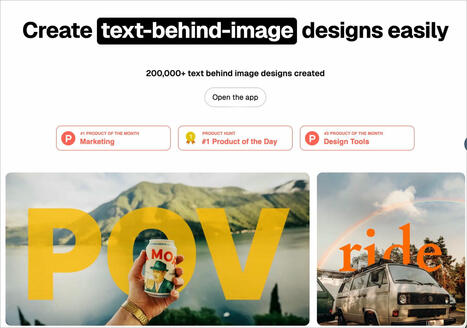
Vous avez déjà tenté d'insérer du texte derrière le premier plan d'une image avec un logiciel classique ? Pas évident, hein ? Découpage fastidieux,
Via Fidel NAVAMUEL
Blog de la "RIED. Revista Iberoamericana de Educación a Distancia". La Revista Iberoamericana de la Educación Digital.
Via LGA
"When technology fails in education, we blame the tools. The platform is outdated. The AI tutor doesn’t work. Students are distracted by their devices. But these failures are not the root cause of the problem; they are symptoms of a deeper dysfunction in how we approach learning."
Via EDTECH@UTRGV
Create a unique online presence with Typelink, the ultimate bento-style no-code website builder. Perfect for designing portfolios, bio links, and professional business pages
Via Ana Cristina Pratas
S'appuyant sur la concurrence de la Chine, OpenAI a affirmé, en s'adressant à la Maison-Blanche, que « la course à l'IA est effectivement terminée » si les entreprises américaines d'IA générative ne peuvent pas utiliser les contenus copyrightés dans le cadre du « fair use » (usage raisonnable). Google plaide pour la reconnaissance d'exemptions pour l'entrainement des IA sur les données privées publiquement disponibles
Via Intelligence Economique, Investigations Numériques et Veille Informationnelle
Moi aussi, je me pose la question. Professeure de FLE depuis des années, j’ai bâti ma carrière en accompagnant des étudiants du monde entier. J’ai vu les tendances évoluer, les outils pédagogiques se multiplier, et aujourd’hui, une nouvelle révolution est en marche : les modèles d’intelligence artificielle.Vont-ils nous remplacer ?
Via Elena Pérez
Felo est un moteur de recherche intelligent, multilingue et gratuit qui facilite votre veille professionnelle au quotidien. A tester !
Via Elena Pérez
Transform Wikipedia articles into beautiful, interactive timelines. Compare historical events, explore connections, and discover history in a new way. Free, open-source timeline visualization tool.
Via Ana Cristina Pratas
As GenAI is used by almost nine in 10 students, these practical strategies help educators to rethink assessment and integrate AI as a collaborative tool in academic work
Via Vladimir Kukharenko, Yashy Tohsaku, juandoming
Noteey is a visual note-taking tool that helps you to think, create, publish on canvas
Via Nik Peachey
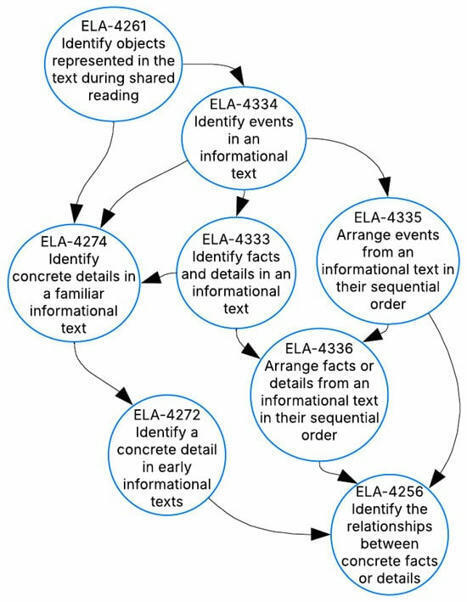
This paper describes large, fine-grained, intentionally inclusive, research-based cognitive models called learning maps. Learning maps are the product of an intensive research synthesis process to develop formal learning models that better reflect the diversity of how learners can learn and be assessed on academic content. Students begin at different places and learn at different rates, and they may have cognitive disabilities or may face a variety of barriers that pose challenges when learning content. Learning maps provide numerous starting points and pathways by which students can acquire and demonstrate knowledge, skills, and understandings. Our work in developing learning maps relies on principles of Universal Design for Learning (UDL), which provides a foundation of flexibility and inclusivity to accommodate students with a wide range of cognitive, linguistic, physical, and sensory profiles. In this paper, we describe learning map design, development, and both qualitative and quantitative methods for the evaluation of map structure. In addition, we offer reflections on our experiences with implementing learning maps as the cognitive architecture for assessments and educational interventions through our work on a variety of projects. With examples from these projects, we describe evidence that shows how learning maps can be useful tools for improving instruction and assessment for all learners. We identify areas where further research and inquiry could prove fruitful and conclude with a discussion of potential areas of extension and offer suggestions for the ongoing refinement of learning maps.
Via Vladimir Kukharenko, juandoming
Juan Domingo Farnós Prólogo: La Evolución de la Educación Inclusiva en la Era de la Inteligencia Adaptativa El futuro de la educación se encuentra en una encrucijada, una donde la inteligencia artificial (IA) no solo promete transformar los procesos de enseñanza y aprendizaje, sino redefinir el mismo concepto de inclusividad en los entornos educativos. En…
Via juandoming
|