gpmt
67.1K views | +8 today
gpmt
infos utiles aux gpmt (formation blended learning)
Your new post is loading...
Rescooped by michel verstrepen from Veille CDI
January 11, 2021 8:34 AM
Scoop.it!

Réseaux sociaux. De Whatsapp à Signal, comment ça fonctionne ? On a testé pour vous

Réseaux sociaux. De Whatsapp à Signal, comment ça fonctionne ? On a testé pour vous | gpmt | Scoop.it
Depuis quelques jours, de nombreux utilisateurs de WhatsApp migrent sur Signal suite à la modification des conditions d'utilisations de WhatsApp concernant les données personnelles. Mais comment fonctionne Signal ?

Via cdi
No comment yet.
Rescooped by michel verstrepen from Les outils du Web 2.0
January 11, 2021 3:13 AM
Scoop.it!

Flourish. Un outil de datavisualisation et de narration avec des données

Flourish. Un outil de datavisualisation et de narration avec des données | gpmt | Scoop.it
Flourish est un formidable outil de datavisualisation. Il est assez facile à prendre en main et il est gratuit. Que demander de plus.

Via Fidel NAVAMUEL
No comment yet.
Rescooped by michel verstrepen from iGeneration - Humane Use of Technology in an AI world (Pedagogy & Digital Innovation)
January 10, 2021 6:46 PM
Scoop.it!

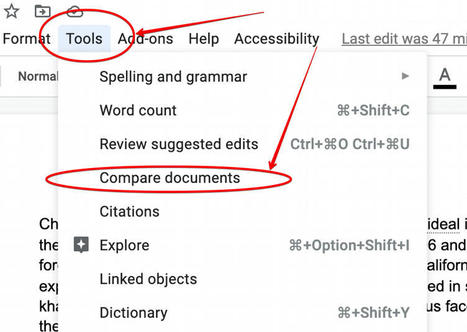
An Excellent Google Docs Feature to Help Teachers compare student development/process in their work - Compare Documents via Educators' technology

An Excellent Google Docs Feature to Help Teachers compare student development/process in their work - Compare Documents via Educators' technology | gpmt | Scoop.it
compare documents in Google docs

Via Dr. Tom D'Amico (@TDOttawa)
No comment yet.
Rescooped by michel verstrepen from Art of Hosting
January 9, 2021 5:20 AM
Scoop.it!

Mindmapping software that generates wiki entries? : mindmapping

Mindmapping software that generates wiki entries? : mindmapping | gpmt | Scoop.it
It doesn't have to be a wiki per se. What I want is a mindmap where each node connects to a larger text entry, with links to other mindmap nodes.It …...

Via F. Thunus
No comment yet.
Rescooped by michel verstrepen from L'eVeille
January 9, 2021 5:20 AM
Scoop.it!

La notion de présence dans la formation en ligne

La notion de présence dans la formation en ligne | gpmt | Scoop.it
La notion de présence dans la formation en ligne est un élément crucial de l'animation de votre communauté apprenante et de l'engagement de vos apprenants.
Via Sandrine Decamps
No comment yet.
Scooped by michel verstrepen
January 8, 2021 12:33 PM
Scoop.it!

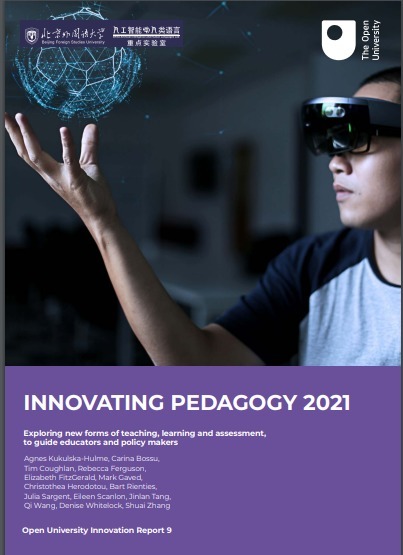
Innovating Pedagogy 2021

Innovating Pedagogy 2021 | gpmt | Scoop.it

Read our latest report in our annual series exploring new forms of teaching, learning and assessment. The reports are intended for teachers, trainers, policy makers, education consultants, academics, students, researchers, instructional designers, educational software developers – and indeed for anyone who is interested in pedagogical innovation and how education is changing.


Via Elizabeth E Charles, Nik Peachey, juandoming
Nik Peachey's curator insight, January 8, 2021 9:36 AM

Must find time to read this.

Marco Bertolini's curator insight, January 10, 2021 9:07 AM

The 9th Open University report on Innovating Pedagogy is out.  With very interesting chapters on Virtual & Augmented Reality but also on co-creation, evident-based teaching, etc.

Rescooped by michel verstrepen from Les outils du Web 2.0
January 8, 2021 6:05 AM
Scoop.it!

Keevi. Enregistrer son écran et sa webcam pour pouvoir les partager

Keevi. Enregistrer son écran et sa webcam pour pouvoir les partager | gpmt | Scoop.it
Keevi est un autre outil en ligne simple et gratuit pour enregistrer facilement l'écran de son ordinateur pour pouvoir ensuite le partager.

Via Fidel NAVAMUEL
No comment yet.
Rescooped by michel verstrepen from E-Learning-Inclusivo (Mashup)
January 7, 2021 1:35 PM
Scoop.it!

Importance Of Microinteractions In Digital Learning

Importance Of Microinteractions In Digital Learning | gpmt | Scoop.it
What are microinteractions? How can you use them to deliver better, effective, and engaging learning experiences? Today, we talk about the importance of user experience, user engagement, and user interaction in learning. But, why do we usually limit them to a website or a web-based product? Why do we not use them in digital learning? 

Via Stewart-Marshall, juandoming
No comment yet.
Rescooped by michel verstrepen from Educational Technology News
January 6, 2021 5:27 PM
Scoop.it!

The Pandemic Has Revealed What Really Matters in Education. (Spoiler: It’s Not Tests.)

The Pandemic Has Revealed What Really Matters in Education. (Spoiler: It’s Not Tests.) | gpmt | Scoop.it

"This pandemic may be unprecedented in its nature and scale. But the problems it has exposed are not."


Via EDTECH@UTRGV
No comment yet.
Rescooped by michel verstrepen from iGeneration - Humane Use of Technology in an AI world (Pedagogy & Digital Innovation)
January 6, 2021 5:27 PM
Scoop.it!

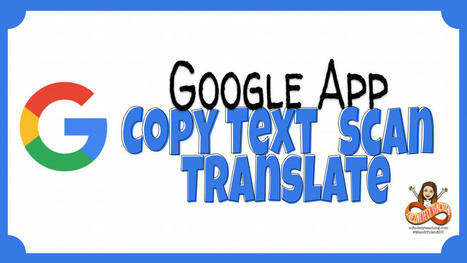
Google App – Scan, Translate, and Read Text  via @MandiTolenEDU

Google App – Scan, Translate, and Read Text  via @MandiTolenEDU | gpmt | Scoop.it
Teacher TikTok is a great source of information. It's a little but dangerous because it's addictive and not always a "healthy" doses of information depending on the rabbit holes you travel down. I saw this tip from many educators on TikTok and thought it might be something you all would find helpful. It's the Google…

Via Dr. Tom D'Amico (@TDOttawa)
No comment yet.
Rescooped by michel verstrepen from iGeneration - Humane Use of Technology in an AI world (Pedagogy & Digital Innovation)
January 6, 2021 12:14 PM
Scoop.it!

8 of The Best Chrome Extensions for Teachers via Educators' technology 

8 of The Best Chrome Extensions for Teachers via Educators' technology  | gpmt | Scoop.it
Free resource of educational web tools, 21st century skills, tips and tutorials on how teachers and students integrate technology into education

Via Dr. Tom D'Amico (@TDOttawa)
No comment yet.
Rescooped by michel verstrepen from Educational Psychology, AI, & Emerging Technologies: Critical Thinking on Current Trends
January 5, 2021 8:04 PM
Scoop.it!

Why students should be allowed to keep their cameras off during remote learning // Parent Coalition for Student Privacy

Why students should be allowed to keep their cameras off during remote learning // Parent Coalition for Student Privacy | gpmt | Scoop.it
Published by Parent Coalition for Student Privacy 
 
"December 2020

Endorsed by Access Living, ACLU of Illinois, Brighton Park Neighborhood Council, Chicago Lawyers’ Committee for Civil Rights, Children’s Screen Time Action Network, Civitas ChildLaw Center, Hartlieb & Horste, LLC, Illinois Families for Public Schools, Parent Coalition for Student Privacy, Raise Your Hand for Illinois Public Education  

Adapted from IFPS here; see the one-page Summary here.


Many US public schools have been operating remotely since March, either full-time or part-time as a result of the Covid pandemic.  And with infection rates steeply increasing in the US, the timing of any return to fully in-person schooling remains uncertain.

The use of technology was widespread even before this Spring. Now its use is nearly universal. But tech use should not impinge on students’ right to privacy and access to schooling.

In a recent national survey, 60% of educators said students would face negative consequences for having cameras off.   However, students should never be forced to choose between maintaining their privacy and receiving an education .  Moreover, surveillance does not equal safety.

Surveillance can be especially stressful for disadvantaged students,  students of color; those with disabilities; undocumented students; students in temporary living situations and/or those from low-income families, living in crowded homes or apartments.

There are many other ways teachers can check if students are paying attention, such as calling on them verbally, asking them to use the chat function or polling function.

We have assembled a set of best practice policy recommendations on tech use during remote learning:

  • Camera optional: Students should always be permitted to participate in class without turning on video. And if live-video streaming is used during synchronous learning, schools should obtain written consent from parents explaining the risks and benefits of their children opting in to having their cameras on.
  • Recording video conference sessions: Recording should never be obligatory for students, including for one-on-one sessions of a sensitive nature, e.g. counseling and therapy. Families must receive clear information about their rights to inspect, correct, receive copies of and, for children 13 and under, delete recordings.
  • Observers in the virtual classroom: Schools/districts should issue clear guidelines to allow parents, guardians or other participants, for example childcare workers or family members, to assist their child in participating and/or to observe live video-conference sessions.
  • Use of surveillance software to monitor devices: Students and families should be informed of the role of any browser in monitoring online activity and physical location, especially for the use of non-school owned devices. No third party provider of a computer hardware or software should be able to collect, use, generate or retain student data without explicit parental “opt in” permission.
  • Use of surveillance software for proctoring tests remotely: Rather than subjecting students to highly invasive monitoring in pursuit of test security, schools and teachers should implement methods of assessment during remote learning that do not require surveillance spyware.
  • Policy transparency for families: Schools should not only establish clear policies for tech use and privacy, but also make information about these policies accessible to all families (e.g. providing paper copies, translating all documents).

These recommendations are intended as a resource to assist students and families, teachers, administrators, and school board members, whether they are writing, revising or advocating for improvement of policies covering the role of tech in students’ remote learning experiences. Technology is  crucial to accessing education during remote learning, but policy makers must be thoughtful in addressing its potential risks as well.


Much thanks for Cassie Creswell of IFPS for taking the lead on drafting this guidance."


Note: Version above has been slightly edited for clarity on recommended practices. 

https://www.studentprivacymatters.org/how-students-should-be-protected-from-surveillance-during-remote-learning/ 


Via Roxana Marachi, PhD
Amanda Mirabella's curator insight, January 25, 2021 5:52 PM
This is an interesting perspective. In my higher ed classrooms, we prefer students to keep their videos on for the teachers' convenience, however, research is coming out to support the need for breaks from being on camera.
Rescooped by michel verstrepen from Educational Technology News
January 5, 2021 8:02 PM
Scoop.it!

6 eLearning Trends Currently Shaping the Industry

6 eLearning Trends Currently Shaping the Industry | gpmt | Scoop.it

"Learning is an essential part of teaching in the 21st-century. Having different strategies to administer lessons can benefit students and maximize learning potential. Below you will find trends that are currently shaping the industry."


Via EDTECH@UTRGV
No comment yet.
Rescooped by michel verstrepen from Educación a Distancia y TIC
January 11, 2021 8:34 AM
Scoop.it!

Intégration efficace de l'appareil mobile dans l'éducation et l'apprentissage

Intégration efficace de l'appareil mobile dans l'éducation et l'apprentissage | gpmt | Scoop.it

Intégration efficace de l'appareil mobile dans l'éducation et l'apprentissage


Via LGA
No comment yet.
Rescooped by michel verstrepen from Into the Driver's Seat
January 10, 2021 6:47 PM
Scoop.it!

Study Less, Study Smart: A Longtime Psych Professor Explains How to Study (or Do Any Intellectual Work) Effectively

Study Less, Study Smart: A Longtime Psych Professor Explains How to Study (or Do Any Intellectual Work) Effectively | gpmt | Scoop.it

The unfortunate fact is that few of us ever really come to grips with what it means to study, apart from sitting by oneself with a textbook for hours on end. Despite its obvious inefficiency as a learning method, we’ve all found ourselves doing that kind of “studying” at one time or another. Having taught psychology classes for 40 years, Pierce College professor Marty Lobdell has seen thousands of students laboring, indeed suffering, under similar studying-related assumptions, and in his 8.7-million-times-viewed talk “Study Less, Study Smart,” he sets out to correct them. He has also dispensed his wisdom in a book by the same title.


Via Elizabeth E Charles, Dennis Swender, Jim Lerman
No comment yet.
Rescooped by michel verstrepen from iGeneration - Humane Use of Technology in an AI world (Pedagogy & Digital Innovation)
January 10, 2021 3:09 AM
Scoop.it!

Explore your future Kindergarten classroom – Calling all 3-5 year olds ... ask your parent to check out #ocsb - we'd love to welcome you to our community! 

Explore your future Kindergarten classroom – Calling all 3-5 year olds ... ask your parent to check out #ocsb - we'd love to welcome you to our community!  | gpmt | Scoop.it

Via Dr. Tom D'Amico (@TDOttawa)
No comment yet.
Rescooped by michel verstrepen from Educación a Distancia y TIC
January 9, 2021 5:20 AM
Scoop.it!

The Art and Science of Teaching Online - Azusa Pacific University

The Art and Science of Teaching Online - Azusa Pacific University | gpmt | Scoop.it
Teaching online effectively means understanding how to use digital tools and their place in remote education. Here’s what to know.​

Via Nik Peachey, LGA
Nik Peachey's curator insight, January 9, 2021 12:51 AM

A useful short article.

LGA's curator insight, January 9, 2021 4:13 AM

A useful short article.

Rescooped by michel verstrepen from Learning & Technology News
January 8, 2021 12:34 PM
Scoop.it!

How to teach critical thinking

How to teach critical thinking | gpmt | Scoop.it

When we think of critical thinking, we think of something bigger. When I teach students how to evaluate the argument in a set of newspaper editorials, I am hoping that they will learn to evaluate arguments generally, not just those that they read, and not just those that they would find in other editorials.


Via Nik Peachey
Rescooped by michel verstrepen from Freewares
January 8, 2021 7:22 AM
Scoop.it!

Photogramio : une mine d'outils gratuits pour éditer, convertir vos photos, vidéos et documents

Photogramio : une mine d'outils gratuits pour éditer, convertir vos photos, vidéos et documents | gpmt | Scoop.it
Photogramio est une application en ligne gratuite et sans inscription qui propose plusieurs outils répartis dans différentes catégories pour éditer, convertir et manipuler principalement des photos, mais aussi des documents PDF ou des vidéos.

Via Freewares&Tutos
No comment yet.
Rescooped by michel verstrepen from Educational Technology News
January 7, 2021 4:16 PM
Scoop.it!

If Learners Were Patients, How Would You Measure Our Success?

If Learners Were Patients, How Would You Measure Our Success? | gpmt | Scoop.it
What's the role of a learning designer? Should they measure and evaluate learning success and outcomes? Read on to learn more.

Via EDTECH@UTRGV
EDTECH@UTRGV's curator insight, January 7, 2021 3:08 PM

Excellent question. Reminds me of a colleague who once told me, "If students fail my class, it's on them. I taught, they didn't learn."

Rescooped by michel verstrepen from Culture numérique {C2i1 2.0 ?}
January 7, 2021 1:35 PM
Scoop.it!

Webinaire des TutoAmate – DoRANum

Webinaire des TutoAmate – DoRANum | gpmt | Scoop.it

Données et propriété intellectuelle 
  
Webinaire avec Lionel Maurel, juriste, bibliothécaire et Directeur Adjoint Scientifique du CNRS (InSHS), répondant aux interrogations sur le droit de la propriété intellectuelle et l’exploitation des données numériques.

Lionel Maurel s’attache à définir les différentes caractéristiques des données de recherche et leur « libre » exploitation néanmoins soumise à certaines conditions quand s’exerce par exemple le droit d’auteur.

Deux modes d'accès au webinaire sont possibles, la lecture intégrale de l'enregistrement (2 h) avec supports de présentation téléchargeables et la consultation spécifique individuelle des 26 questions posées :


Via CECI Jean-François
No comment yet.
Rescooped by michel verstrepen from Educational Technology News
January 6, 2021 5:27 PM
Scoop.it!

Importance Of User-Generated Content In eLearning

Importance Of User-Generated Content In eLearning | gpmt | Scoop.it

"There is a lot of work in the field of eLearning content management. The content in this field is given by a Subject Matter Expert. After that, the content is used by the Instructional Designer to give it the form of eLearning."


Via EDTECH@UTRGV
No comment yet.
Rescooped by michel verstrepen from L'eVeille
January 6, 2021 12:15 PM
Scoop.it!

ABC LD - Présentation et outil de construction par Melissa Johnen sur Genially

Présentation et mise à disposition de l'outil de scénarisation pédagogique ABC Learning Design (en ligne et collaboratif)

Via Sandrine Decamps
No comment yet.
Rescooped by michel verstrepen from Veille Usages numériques
January 6, 2021 3:11 AM
Scoop.it!

Tutoriels simples et pratiques pour outils numériques — Enseigner avec le numérique

Tutoriels simples et pratiques pour outils numériques — Enseigner avec le numérique | gpmt | Scoop.it

Au sein de son domaine Canoprof, Alain Michel, médiateur de ressources et services pour l'Atelier Canopé de l'Aude, alimente une rubrique intitulée « Tutos express ». Ces mémos sont regroupés en une seule image et présentent des actions simples et pratiques à réaliser pour mieux connaître et manipuler les outils fréquemment utilisés comme le système d'exploitation, le navigateur web, le lecteur multimédia, voire certaines applications en ligne…


Via Tice Doc Reims
No comment yet.
Rescooped by michel verstrepen from Educational Technology News
January 5, 2021 8:03 PM
Scoop.it!

What Are We Learning From the World's Big EdTech Initiatives?

What Are We Learning From the World's Big EdTech Initiatives? | gpmt | Scoop.it

"Over the past few months, a remarkable experiment has been taking place. With almost every school in the world moving to remote learning, educational technology has increased. In fact, at one point, over 90% of the world was using some type of EdTech.  Though this was challenging for the parents, students, and the faculty of schools across the globe, the EdTech companies had the opportunity to let everyone see just what they were capable of. With this, many of those companies were given free access to their platforms for a limited time."


Via EDTECH@UTRGV
No comment yet.