Comment être plus efficace avec l'apprentissage multimédia en ligne ? Quelques éléments théoriques, mais surtout des conseils pour mieux enseigner à distance.
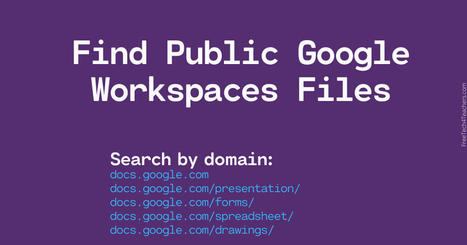
Being able to search for specific topics on Google Docs, Slides, Sheets, or Drawings can save to time. This allows to pinpoint a topic in the format you may be looking for. As we know teachers are pressed for time and knowing this cool way to search for what you need is great. This can also be quite useful to teach to students as they are researching topics.
« Zone de non droit », « cour des miracles numérique », « supermarché du crime », « continent secret » … : ces métaphores dont la presse raffole désignent avec terreur et délectation une réalité aussi fascinante que fantasmée, le darknet.
Après vous avoir présenté récemment 5 logiciels méconnus mais utiles, voici une autre sélection de programmes gratuits qui peuvent vous servir et vous aider dans votre quotidien informatique.
After canceling controversial online events organized by colleges and universities, Zoom faced a backlash. Now the videoconferencing provider has pledged to let institutions moderate their own content -- with some important exceptions.
Spread the loveCreativity, critical thinking, collaboration, and communication are essential skills that students should be taught in school. There are various ways educators can introduce the 4 C’s of education to their students, including via video. We will discuss why these skills are so critical and how you can use video to stimulate them. Creativity Students should be able to take a problem and look at it from different perspectives to find a solution. When they can do this, they will develop excellent problem-solving skills. For this reason, educators need to teach their students about creativity. So, how can you […]
Though less used, storytelling in eLearning can create powerful, engaging experiences, leading to sticky learning. In this article, I outline how microlearning, gamification, scenarios, and branching simulations can help you unleash its power.
Custom eLearning is now back in the leaner, faster avatar of rapid eLearning. Rapid eLearning cuts down the time and cost associated with traditional custom eLearning by adhering to the basics of Instructional Design, leveraging authoring tools, and following an agile project management process.
A few weeks ago, I had a wonderful opportunity to share a Saturday morning Zoom webinar (for me in Oklahoma) with language teachers in the United Kingdom, as part of a webinar series hosted by the …
Via Felix Jacomino
It’s tempting to say that no matter how much technology pushes on education, every teacher will always need to know iconic teacher practices like assessment, curriculum design, classroom management, and cognitive coaching.
This may end up being true–how education changes in the next 20 years is a choice rather than the inevitable tidal wave of social and technological change it’s easy to sit back and wait for. Think of the very limited change in education since 2000 compared to the automotive industry, computer industry, retail consumer industry, etc. Huge leaps forward are not a foregone conclusion.
But it’s probably going to be a bit different than that. There are certain areas where significant change is more probable than others. It doesn’t seem likely that eLearning–as we now understand and use the term–will replace schools and teachers. Online courses are inferior to in-person teaching in too many important ways to completely supplant teachers and schools. (Blended learning is more likely to be the norm in the next decade.)
We’ve written before about the kinds of ‘things’ modern teachers must be able to do. Below are 15 tasks that are less skill-based–and some a bit more conceptual, collectively representing how teaching is changing.
The sudden outbreak of COVID-19 has shaken the entire world severely, forcing the global shutdown of several activities. And educational activities are no exception. The centuries-old traditional classroom-based education industry witnessed a paradigm shift, and online learning became the new normal overnight. Many academic institutions and training centers that were earlier reluctant to change their traditional approach of imparting learning had no option other than transitioning entirely to online platforms. Though the novel coronavirus brought new challenges for educators, it has opened new avenues for eLearning and online teaching.
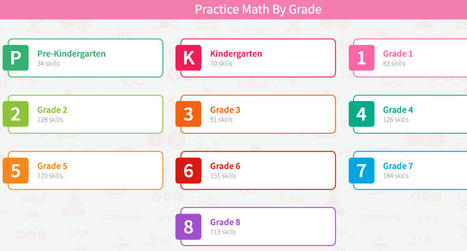
This site enables teachers to set up class profiles, tailoring student profiles to their personal needs. It has work options from pre-school to grade 8, and allows the teacher to set assignments with a due date and also can see student process.
When you hold a pencil, you hold the world in your hands. Its raw ingredients make a far-reaching journey around the globe, from Sweden to South Africa, Estonia, Brazil and beyond. To understand the creation of the pencil is to understand countries and commerce, global trade and transport networks, markets and manufacturing, production and politics, exports and economies.
In the right teacher’s hands, the humble pencil can be a lesson in geography, and can inspire students to explore compelling questions: What are the environmental impacts to South Africa’s softwood forests that are logged to create the pencil shaft? What are the working conditions in the paint factories in Kazakhstan to produce the classic yellow casing? How has the COVID-19 pandemic impacted the rubber industry in Thailand, used to make the erasers?
The Captions Editor in YouTube Studio which makes it easier to create and edit captions for your videos. When you add in captions, you may be able to reach a wider audience, including deaf or hard-of-hearing viewers and viewers who speak another language. On average, videos that are captioned see an increase in watch time compared to videos that don’t have them.
Solid learning outcomes are essential when planning a curriculum. If they are so important, what is the secret to make these learning outcomes performance-oriented?
Mistakes are a natural part of learning, but students cannot develop into critical thinkers if they regularly freeze out of the fear of making a mistake. As educators, we can shift the culture of our classrooms to embrace mistakes, and one way to do this is through mistake analysis, one of several powerful but practical strategies I share in my book, Thinking Like a Lawyer: A Practical Framework to Teach Critical Thinking to All Students. As a math-teacher-turned-attorney, I wrote this book and started my organization, thinkLaw, to help educators seamlessly incorporate critical thinking into their curriculum.
Est-ce que la motivation est le moteur de la réussite ou l'inverse? Comment motiver les élèves les moins persévérants? Steve Masson, chercheur en neuroéducation fait toute la lumière sur la motivation scolaire.
To get content containing either thought or leadership enter:
To get content containing both thought and leadership enter:
To get content containing the expression thought leadership enter:
You can enter several keywords and you can refine them whenever you want. Our suggestion engine uses more signals but entering a few keywords here will rapidly give you great content to curate.


 Your new post is loading...