Your new post is loading...

|
Rescooped by
michel verstrepen
from Into the Driver's Seat
October 25, 2021 3:16 AM
|
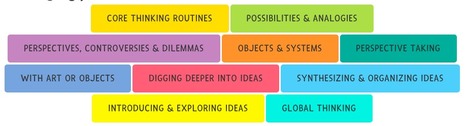
Welcome to Project Zero’s Thinking Routines Toolbox. This toolbox highlights Thinking Routines developed across a number of research projects at PZ. A thinking routine is a set of questions or a brief sequence of steps used to scaffold and support student thinking. If you're new to thinking routines and PZ's research, please click here to explore more about thinking routines.
Via Jim Lerman
|
|
Rescooped by
michel verstrepen
from Art of Hosting
October 23, 2021 8:35 AM
|
The use of Theory U provided the Innovation Lab with the necessary structure. It promoted the cooperation of participants with totally different backgrounds and made sure that there was a logical sequence of activities. The quality of and variety in Citizen Sciences projects designed by the groups, proves that the collaboration of such a diverse group can ensure that results are achieved. The contribution of every single participant was valued and used in the end products of the groups.
Via F. Thunus
As higher-ed institutions navigate a new pandemic-driven reality, they must change their marketing strategies to attract prospective students
Via EDTECH@UTRGV, juandoming
|
|
Rescooped by
michel verstrepen
from Educational Technology News
October 22, 2021 12:40 PM
|
You may interact with hundreds of students (and a handful of colleagues) every week.
You may send dozens of emails, and return piles of carefully graded student work.
But it’s very difficult to know whether your efforts are actually making a difference, isn’t it?
Via EDTECH@UTRGV
Alyssa Rodriguez expected a rocky readjustment this school year. The Chicago social worker figured she’d see more students who felt anxious, frustrated by their schoolwork, or disoriented by unfamiliar routines.
A month into school, she says she underestimated the challenge ahead. Student behavior referrals are up, as middle schoolers hurt each others’ feelings with comments they’d usually only be bold enough to say online. She and other social workers have seen more verbal and physical fights, and worried parents are calling with concerns about their child’s shorter-than-usual temper.
“It’s definitely a lot more than I think any of us were mentally prepared for, even though we tried to prepare for it,” Rodriguez said.
Via John Evans
Scenarios in eLearning enable learners to get a hands-on experience of what they are required to do on the job and learn from the consequences. Read on to understand the benefits, and how to design eLearning scenarios to offer engaging learning experiences.
Via CommLab India, juandoming
|
|
Rescooped by
michel verstrepen
from Daily Magazine
October 22, 2021 11:21 AM
|
You don’t have to be a professional designer to create engaging, educational infographics with attention-grabbing icons.
"Infographics are a key tool in the arsenal of any designer, marketer, brand or research firm. No matter what you’re using an infographic to explain, the methods you use are at the crux of good design — breaking complex ideas down into a visually pleasing, quickly digestible format. Whether you’re helping people understand the complexities of cryptocurrency, or simply want a more visually engaging way to explain an apple pie recipe, understanding the basics of infographic design will give you a leg up in visual communications of any kind."
Jim Lerman's insight: Excellent tutorial on effective use of icons in, not just infographics, but many types of visual communication.
Via Jim Lerman, michel verstrepen, THE OFFICIAL ANDREASCY
|
|
Rescooped by
michel verstrepen
from Educational Technology News
October 21, 2021 2:55 PM
|
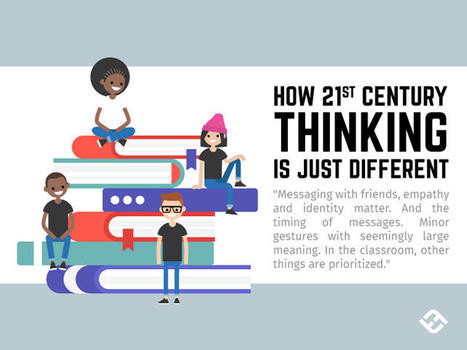
In an era dominated by constant information and the desire to be social, should the tone of thinking for students be different?
Via EDTECH@UTRGV
|
|
Rescooped by
michel verstrepen
from Into the Driver's Seat
October 21, 2021 2:54 PM
|
"In a previous post, Make Learning Accessible for All Students: Accommodation, Modification, and Intervention, I shared the differences between accommodation, modification, and intervention. Specific examples were also provided to help clarify and shed light on ways to accomplish these means of support for your students. Today, we’ll identify a few technology tools that can be used by the teacher and the student for accommodation, modification, and intervention. These tools are not necessarily designed as “assistive technology” as defined by special education, but can be used to varying degrees. Some of the tools mentioned below can also be found in our free, downloadable ebook 51 Fun Tech Tools and Resources for Busy Educators. After looking through the list, please be sure to comment below if you have ideas or tools to share."
Via Jim Lerman
Learning Hub is being presented as an LXP with a slew of new and cool features. What it actually is though, is just a set of new features placed within LinkedIn Learning. And most fail to deliver their true potential.
Via Marta Torán, juandoming
|
|
Rescooped by
michel verstrepen
from Daily Magazine
October 20, 2021 5:06 PM
|
Our predictive eye tracking platform helps you create your best ad, brochure or design. Design your best creative, today.
Via THE OFFICIAL ANDREASCY
|
|
Rescooped by
michel verstrepen
from Educational Technology News
October 20, 2021 4:58 PM
|
Read on to see who we think is worth a follow in the edtech world these days, and follow them and take a look at their groundbreaking work in education
Via EDTECH@UTRGV
|
|
Rescooped by
michel verstrepen
from Daily Magazine
October 20, 2021 12:23 PM
|
|
The pressure for businesses to develop and reskill their employees, however, continues to increase. As businesses emerge from the pandemic, more than 80 percent of them face critical gaps in the skills needed to build resilience amid ongoing uncertainty. Learning and development will continue to play a crucial role in keeping pace with change, but only 42 percent of employees are taking up employer-supported reskilling and upskilling opportunities in their organizations. 1 As remote work increases, teams become more diverse and geographically distributed, further straining a manager’s ability to meet individual employee needs. In short, there is simply too much to learn and not enough time for formal learning to meet all of an organization’s reskilling needs.
Via Edumorfosis, juandoming
|
|
Rescooped by
michel verstrepen
from Daily Magazine
October 23, 2021 8:35 AM
|
I hope all is going well with you in your education world. I have definitely been behind on my posts because…Well, to be honest, the world of education is a bit discouraging at the moment and it can be hard to find the motivation in times like these. I figured a lot of other educators are probably feeling the same way, so I wanted to bring a super fun and easy post for all of you on game-based learning websites.
Via Gerhard Bless, THE OFFICIAL ANDREASCY
It turns out that students do have digital skills, but not necessarily the digital literacy they need to do their schoolwork. Sometimes what they know from using consumer sites transfer—like Zoom, for instance—but not always.
Via EDTECH@UTRGV, John Evans
|
|
Rescooped by
michel verstrepen
from L'eVeille
October 22, 2021 11:44 AM
|
La créativité et l’esprit critique sont des compétences essentielles dans des sociétés et des économies complexes, mondialisées et de plus en plus numériques. Si les enseignants et les dirigeants politiques considèrent la créativité et l’esprit critique comme des objectifs importants de l’enseignements, beaucoup éprouvent des difficultés à concevoir comment développer ces compétences dans le cadre scolaire. Afin de rendre les choses plus visibles et tangibles pour les professionnels, l’OCDE a travaillé avec des réseaux d’écoles et d’enseignants dans 11 pays pour développer et tester un ensemble de ressources pédagogiques qui illustrent l’enseignement, l’apprentissage et la progression de la créativité et de l’esprit critique dans l’enseignement primaire et secondaire. Grâce à un portfolio de référentiels de compétences et d’exemples de plans de cours, les enseignants sur le terrain ont fait part de leur retour d’expérience, mis en place les stratégies d’enseignement proposées et rendu compte de leur travail. Des instruments de suivi de l’efficacité de l’expérience pour une étude de validation ont aussi été testés, y compris un retour qualitatif sur le terrain fourni par les coordinateurs d’équipe. Quels sont les composantes principales de la créativité et de l’esprit critique ? Quelles stratégies et approches pédagogiques peuvent adopter les enseignants pour les développer ? Comment les chefs d’établissement peuvent-ils soutenir la formation professionnelle des enseignants ? Dans quelle mesure les enseignants ayant participé au projet ont-ils changé leurs méthodes d’enseignement ? Comment peut-on savoir si cela fonctionne et pour qui ? Ce sont certaines des questions abordées dans cet ouvrage, qui présente les résultats et les leçons de ce projet international.
Via Sandrine Decamps
Experience Ingenium’s museums on a virtual field trip! Students can meet with museum educators from the comfort of their home or classroom.
Via Dr. Tom D'Amico (@TDOttawa)
As universities and colleges begin to contemplate the post-COVID reality and their strategic intentions, new realities are emerging which will change both the policy and financial landscape in which they operate. Facing reduced revenues, enveloped funding and demanding performance measures, higher education institutions will look to educational technology and its potential for transforming their business models. They should be cautious, since the EdTech transformation litany comes with consequences. As is already the case, not all institutions will survive, some will shrink and others will change. This paper explores both the content and conditions of emerging change patterns for colleges and universities.
Via Edumorfosis, juandoming
|
|
Rescooped by
michel verstrepen
from Daily Magazine
October 22, 2021 10:19 AM
|
The pandemic has caused many problems, as well as amplifying existing issues that England’s higher education system already faced. The numbers of young people entering HE has been increasing, and following the turbulence of 2020, there was a further increase in offers and acceptances. This additionally emphasizes the importance of high-quality provision so that this cohort do not miss out on the rich student experience their predecessors gained.
At the same time, many students do not believe they are getting value for money from the HE experience; young people are not getting adequate access to up to date and impartial information of wider post-18 opportunities, and incidences of mental health problems are rising to worrying levels. Furthermore, there is a disconnect between what employers say they want from graduates and the skills and capabilities graduates are developing. Beyond this, the modern workplace is rapidly changing and students will need the adaptability, confidence and creativity to be successful in the 21st Century world of work.
As higher education learns to adapt to a world with COVID and beyond, opportunities arise to rethink its curriculum, delivery, and priorities. This report draws on five HE case studies which offer examples of non-traditional HE provision. Some of the key characteristics include a clear link between theory and practice, external stakeholders meaningfully engaging with teaching staff and students at various levels, emphasis on the development of student employability and where the ‘university campus’ is understood in the broadest sense. All these offer varied and engaging student experiences.
The five case studies are:
1. Cardiff University’s National Software Academy
2. Dyson Institute of Engineering
3. Minerva Schools at KGI
4. Eden Project Learning
5. The University of Salford
This report draws out some of the key features we can learn from the case studies.
Via Edumorfosis, Dennis Swender, Ines Bieler, THE OFFICIAL ANDREASCY
|
|
Rescooped by
michel verstrepen
from Educational Technology News
October 21, 2021 2:55 PM
|
Technology and education are pretty intertwined these days and nearly every teacher has a few favorite tech tools that make doing his or her job and connecting with students a little bit easier and more fun for all involved. Yet as with anything related to technology, new tools are hitting the market constantly and older ones rising to prominence, broadening their scope, or just adding new features that make them better matches for education, which can make it hard to keep up with the newest and most useful tools even for the most tech-savvy teachers.
Via EDTECH@UTRGV
|
|
Rescooped by
michel verstrepen
from Daily Magazine
October 20, 2021 5:12 PM
|
A chatbot is a type of software that can automate conversations and interact with people through messaging platforms like WhatsApp, Messenger, Slack, etc.
Via EDTECH@UTRGV, THE OFFICIAL ANDREASCY
|
|
Rescooped by
michel verstrepen
from Daily Magazine
October 20, 2021 12:29 PM
|
|