Your new post is loading...
15Five’s VP of People and Culture maintains that these skills can ground us and allow us to redirect our energy toward helping colleagues and our organization during challenging periods.
Via John Evans
As 2022 turns into 2023, EdSurge asked educators and education leaders to share reflections on learning “lost” and “gained.”
Via John Evans

|
Rescooped by
michel verstrepen
from Educación a Distancia y TIC
December 30, 2022 9:34 AM
|
El 2022 fue un año sin precedentes. Vivimos cambios a nivel social, nos adaptamos a nuevos hábitos y comportamientos. El regreso a la “normalidad” marcó un antes y después en la vida de todos. Así, la virtualidad planteó una nueva forma de enseñar, junto a nuevas herramientas tecnológicas y educativas, que llegaron para quedarse.
Entonces, podemos afirmar que el 2023 será más tecnológico que el año que estamos dejando ir. La transformación digital y la innovación en educación viene acompañada de nuevas tendencias.
Gracias a la tecnología, el futuro del trabajo y habilidades que demanda el mercado, dan lugar a nuevos espacios y realidades que desafían a las EdTech.
Via Edumorfosis, LGA
There are so many free courses you can take online with Canadian universities that are actually interesting and will teach you something useful.
You can find these online courses with post-secondary schools all over the country including at the University of Toronto, the University of British Columbia and the University of Alberta.
Via John Evans
|
|
Rescooped by
michel verstrepen
from Educación a Distancia y TIC
December 29, 2022 1:26 AM
|
ChatGPT, Artificial Intelligence, and UDL. Discover how to harness the future of innovation and AI to your students' benefit and reach all students
Via Yashy Tohsaku, LGA
|
|
Rescooped by
michel verstrepen
from Educational Technology News
December 28, 2022 6:04 PM
|
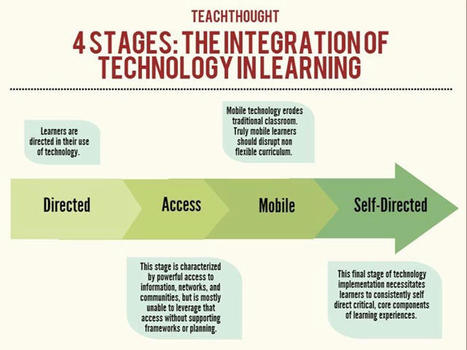
Technology can be used in the learning process in a variety of ways.
Some are supplementary, serving the original design of the classroom and usually automate some previously by-human task or process–grading multiple choice assessments, searching for a source of information, or sharing messages and other data across large groups.
Via EDTECH@UTRGV
|
|
Rescooped by
michel verstrepen
from Educational Technology News
December 28, 2022 4:24 AM
|
As more K–12 schools invest in immersive technologies, experts discuss the implications for bandwidth.
Via EDTECH@UTRGV
|
|
Rescooped by
michel verstrepen
from Educational Technology News
December 28, 2022 4:24 AM
|
Think back to your favorite lesson at school. Did it involve a teacher standing at the front telling you what to learn? Or was it more collaborative, with group work and questions being asked of the class as a whole? We humans learn in many different ways, and lecture-type training has its place in the learning process. But so too does peer learning, especially as more corporate learning opportunities move online.
Via EDTECH@UTRGV
"Today’s students are the first generation to grow up in a world with artificial intelligence. But many don’t realize it. To prepare students for an AI-powered future, educators need to pull back the curtain on AI and help kids understand where and how it influences their lives. But AI can be a tricky concept to pin down. What is it, really? What makes it different from all the other technologies they take for granted? If AI doesn’t look like they expected, what does it look like?"
Via Edumorfosis, John Evans
|
|
Rescooped by
michel verstrepen
from Educational Technology News
December 27, 2022 4:01 AM
|
Mobile learning solutions which provide JIT learning can help a business make workers more productive with improved performances.
Via EDTECH@UTRGV
When I was growing up, I assumed that my teachers knew everything, including all of the “right answers.” Now that I’ve been a teacher for 15 years, I know this simply isn’t true. In fact, some of t…
Via Yashy Tohsaku, juandoming
|
|
Rescooped by
michel verstrepen
from Educación a Distancia y TIC
December 22, 2022 11:47 PM
|
Revista Iberoamericana de Educación a Distancia”>
Via LGA
|
|
Rescooped by
michel verstrepen
from Art of Hosting
December 22, 2022 6:07 AM
|
There are numerous reasons to utilise logical thinking exercises. When you improve your logical thinking skills, you become better at problem-solving, and begin to think more critically. Additionally, some jobs and career paths require strong logical thinking skills, so improving one’s ability in this area may make them more competitive in the job market. In this article, we have 5 logical thinking exercises to help you make the most of your mind to let you in on the methods helpful for improving your logical reasoning! What is logical thinking? Logical thinking is the process of making sense of information and ideas in order to solve problems. It involves breaking down information into smaller pieces, understanding how those pieces fit together, and using that knowledge to solve problems. There are several characteristics of logical thinkers. Why is logical thinking important? Logical thinking is important because it helps you to see things in a clear, step-by-step way. This can be helpful in solving problems and making decisions. Here are 5 logical thinking exercises to help you improve your logical thinking skills: 1. Practice mindmapping and create brainstorms Take some time to think about the issue at hand and coming up with creative solutions! Some people like to start with a central idea and then branch out, while others like to start with a blank canvas and see where their thoughts take them. There are a few reasons why making mindmaps or brainstorms is a good exercise to improve your logical reasoning skills. First, it forces you to organize your thoughts in a logical manner. This can help you see the connections between different ideas and see how they fit together. Second, it helps you generate new ideas by forcing you to think creatively. This can help you come up with new solutions to problems or find new ways to approach a task. Finally, it helps you practice your problem-solving skills by giving you a chance to try out different solutions to a problem and see which one works best. 2. Solve logic puzzles such as Sudoku, crosswords, or nonograms Puzzles like Sudoku can make you a better logical thinker by teaching you to think in a more linear fashion and to look for patterns. More specifically, these puzzles can help improve your skills in abstraction, deduction, and problem solving. Improving linear thinking can help you become a better logical thinker by improving your ability to think through problems and see the connections between different ideas. Solving logic puzzles helps improve your logical thinking by forcing you to think critically about a problem and come up with a creative solution. 3. Watch or take part in debates The first logical thinking exercise is to identify the premises and conclusions of an argument. Then, try to break the argument down into smaller parts and identify which statements are the premises and which is the conclusion. Arguments and debates are good for working on logical reasoning skills because they force people to think critically and to consider all sides of an issue. Additionally, arguments can be a way to learn new information and to challenge existing beliefs. Debates forces you to think on your feet and to articulate your thoughts clearly and concisely. They also allow you to consider other points of view and to consider the evidence and reasoning behind them. Finally, they help you to learn how to construct a strong argument and to identify flaws in arguments. All of these skills are important in developing strong logical reasoning. 4. Challenge your own viewpoints When you challenge your own views, you are forced to examine them more closely. This process can improve your logical thinking skills by helping you to identify any flaws in your reasoning and to develop more sound arguments in support of your views. Challenging your own skills is also important for strengthening your inductive and deductive thinking, both of which are important for logical thinking skills. Inductive reasoning involves making observations and coming up with a hypothesis to explain what you have observed. You can use deductive reasoning to test your hypothesis by looking for evidence that either supports or disproves your hypothesis. Forcing oneself to critically examine one’s own beliefs and preconceptions can help one become more adept at spotting flaws in one’s own logic, and also at considering alternative viewpoints that may lead to new insights. 5. Play mathematical games or solve equations Solving mathematical problems can help you to develop your problem solving and analytical skills, as well as your ability to think abstractly and creatively. Solving equations can help you with logical thinking because it requires you to think about what the equation is saying and what steps you need to take to solve it. This can help you develop problem-solving and critical thinking skills. A more fun method however is playing mathematical games such as Kakuro and Hitori. These help improve logical thinking skills as they require the player to think about the relationships between numbers and how they can be used to get the desired result. Conclusion We hope this article was helpful on your journey to becoming a more logical thinker! Logical thinking exercises are a great way to boost your reasoning, logic, and problem solving skills. By taking the time to work on these exercises, you can improve your ability to think critically and solve problems more effectively.
Via F. Thunus
|
|
|
Rescooped by
michel verstrepen
from Les outils du Web 2.0
January 2, 2023 3:57 AM
|
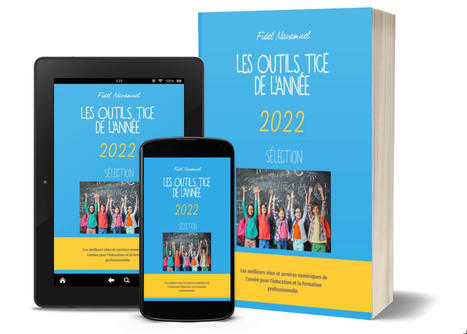
Quels ont été les meilleurs outils et services pour l'éducation et la formation professionnelle de l'année ? Comme chaque année, j'ai essayé de répondre
Via Fidel NAVAMUEL
|
|
Rescooped by
michel verstrepen
from Educación a Distancia y TIC
December 30, 2022 9:34 AM
|
Por Eduardo Fernández Fernández[i] Departamento de Filología Clásica Universidad Complutense de Madrid Palabras clave: REP, historia de la educación, enseñanza y ejercicios de retórica, retórica en Roma La historia es maestra de la vida y también en el caso de la educación el testimonio de las antiguas aportaciones de griegos y latinos resulta hoy … Continuar leyendo "La Retórica como motor de la educación"
Via LGA
|
|
Rescooped by
michel verstrepen
from Educación a Distancia y TIC
December 29, 2022 6:28 AM
|
Over the last week, millions of people have tried the new AIchat release from OpenAI, built on an upgrade to GPT3 (Generative Pre-trained Transformer). The tool uses a neural network to generate responses from data sources from the internet. OpenAI, supported by Microsoft, also built and released the currently free DALL-E – AI-generated art. By creating an easy user interface, the ChatGPT likely has many educators wondering about the future of learning. This platform, based on GPT3 models, will be rapidly improved when next-generation GPT4 models emerge in the next 1-2 years – meaning, it’s only going to get better
Via Edumorfosis, LGA
L’enceinte Merlin propose un répertoire audio très diversifié L’enceinte Merlin s’appuie les meilleurs contenus audio de Bayard et Milan, ainsi que sur ceux de Radio France, téléchargeables via une application. Ainsi, elle offre aux petits enfants de 3 à 10 ans une expérience d’écoute déconnectée avec un répertoire de plus de 200 titres audio comprenant : - des récits ;
- des contes musicaux ;
- des podcasts ;
- des documentaires ;
- des actualités ;
- du yoga ;
- des comptines en anglais,
Via Bibliothèques-Médiathèques de Metz
|
|
Rescooped by
michel verstrepen
from Educational Technology News
December 28, 2022 6:04 PM
|
Mobile learning has gained increased popularity due to the pandemic. Employees no longer work from the office; hence, companies can't rely on classroom training.
Via EDTECH@UTRGV
|
|
Rescooped by
michel verstrepen
from Educación a Distancia y TIC
December 28, 2022 6:04 PM
|
Over the course of the COVID-19 pandemic, higher education institutions shifted from emergency response to long-term adaptation and strategically planning for what's next. Many institutions have already implemented hybrid/remote work and learning arrangements, supported by a variety of innovative technologies and tools. Institutions are now focused on designing and implementing needed policies and initiatives, creating new positions, committees, and workgroups, and expanding and upgrading their technology. This focus on adapting and planning can also be seen in some additional trends this year, such as Focus on increasing institutional resilience and Expansion of the digital transformation of higher education.
While institutions are preparing in these ways for a sustainable future, leaders still need to consider and plan for significant challenges, including retention and recruitment (students, faculty, staff, and leaders), costs and budgets, varying and changing expectations and preferences when it comes to teaching, learning, and work modality, and broader cultural issues such as DEI, digital literacy, and the perceived value of higher education.
Via Edumorfosis, LGA
|
|
Rescooped by
michel verstrepen
from Educational Technology News
December 28, 2022 4:24 AM
|
In late 2021, Gartner analyst Melind Govekar said in a presentation to the Gartner IT Symposium that he expects by 2025, most business applications will be developed in-house using low-code or no-code software. The low-code/no-code software movement is relatively recent and is increasing in acceptance, including for development of eLearning applications.
Via EDTECH@UTRGV
|
|
Rescooped by
michel verstrepen
from Educación a Distancia y TIC
December 27, 2022 9:24 AM
|
Experiential technologies continue to gain momentum in higher education, transforming teaching, learning and research.
Via LGA
|
|
Rescooped by
michel verstrepen
from Educational Technology News
December 27, 2022 4:01 AM
|
What edtech trends will take top billing in schools and districts in the new year?
Via EDTECH@UTRGV
|
|
Rescooped by
michel verstrepen
from Educational Technology News
December 27, 2022 4:01 AM
|
These bite-sized courses can facilitate accessible education and help students and workers further their knowledge and skill development
Via EDTECH@UTRGV
|
|
Rescooped by
michel verstrepen
from Educational Technology News
December 22, 2022 11:49 PM
|
How we learn is changing, and technology is at the forefront of this. What can we expect next year in the eLearning industry? More AI and gamification?
Via EDTECH@UTRGV
|
|
Rescooped by
michel verstrepen
from Educación a Distancia y TIC
December 22, 2022 6:09 AM
|
Revista Iberoamericana de Educación a Distancia”>
Via LGA
|