Your new post is loading...
Juan Domingo Farnós (Encontrareis multitud de links para utilizar en UNIVERSIDADES y CENTROS EDUCATIVOS) El empoderamiento del aprendizaje es debido a un principio de naturalidad, actividad, e intermediación mediado tecnologías, pares…, dentro de un proceso de consecución de metas personales, sociales y significativas… ¿Realmente alguien se ve capaz de saberlas si ni tan solo sabemos…
Via juandoming

|
Rescooped by
michel verstrepen
from L'eVeille
May 1, 2023 4:02 AM
|
Le concept de micro-learning a le vent en poupe dans les entreprises puisqu’il contribue à soutenir et ancrer les savoirs de façon
Via Sandrine Decamps
When it comes to technology in education, there is a natural tendency to see it as just another thing that somebody must do. In other cases, it is viewed as being more work. Let me tackle the second issue first. When we try implementing anything new, there is always a learning curve. It is important to remember, though, that the time and effort put forth will reap the rewards when it comes to improving practice and, in turn, learning outcomes. I have learned from firsthand experience that figuring out how to use a new digital tool is the easy part. The more difficult mental hurdle is that using any digital tool is just another thing added to an already crazy workload.
Via EDTECH@UTRGV
Juan Domingo Farnós La inteligencia artificial aplicada en la investigación del aprendizaje se centra en el desarrollo de algoritmos y sistemas que permitan a las máquinas aprender de la experiencia y mejorar su desempeño en tareas específicas La inteligencia artificial se está aplicando en una amplia variedad de campos, desde la medicina y la salud…
Via juandoming
Television and video programs are important educational resources for young children, especially those from under-resourced households. These programs’ potential can be amplified if children are given the opportunity to meaningfully interact with media characters during their video watching. In this project, we partnered with PBS KIDS to develop interactive science- focused videos in which the main character, powered by artificial intelligence, engaged in conversation with children by asking them questions and providing responsive feedback. The children who watched the interactive video performed better in a science posttest compared to their peers who watched the non-interactive or pseudo-interactive videos. This paper sheds light on the feasibility and effectiveness of using conversational technologies to support children’s active learning from video watching.
Via Vladimir Kukharenko, juandoming
As debate rages over the possibilities and risks to higher education of artificial intelligence (AI) tools such as ChatGPT, evaluators are also asking what role AI and machine learning can play in their field.
Via EDTECH@UTRGV
As more higher education stakeholders discover and use generative AI, intentional staffing and governance will ensure that institutions adopt these technologies effectively and appropriately.
Via EDTECH@UTRGV
|
|
Rescooped by
michel verstrepen
from L'eVeille
April 26, 2023 3:54 PM
|
Débats, tutoriels, témoignages sur les thèmes de l'école, de l'éducation, de l'enseignement, de la pédagogie, de la recherche - Educavox vous propose des outils, des témoignages, des débats, des conseils sur le sujet
Via Sandrine Decamps
La creatividad pareciera ser la respuesta a este nuevo mundo en el que nos toca vivir...
Via LGA
There is a lot of discussion right now in learning and development circles about the potential—and deficiencies—of ChatGPT. But despite criticisms of its inaccuracies and "lack of humanity," these will not prevent it—or its imminent successors—from challenging the field of instructional design.
This may seem alarmist and like a knee-jerk reaction to a product that only launched at the very end of November 2022—but hear me out. Near-future iterations of ChatGPT—and its like—could offer a more comprehensive solution to the needs of L&D leaders than decades of instructional design.
Via Edumorfosis, LGA
Advances in AI are not necessarily the enemy – in fact, they should prompt long overdue consideration of assessment types and frequency, says David Carless
Via Yashy Tohsaku, juandoming
Juan Domingo Farnós La educación ha experimentado una transformación significativa en los últimos años debido a la rápida evolución de la tecnología y los cambios en la forma en que accedemos y compartimos información. Los entornos disruptivos, como la educación en línea, el aprendizaje a distancia o el uso de tecnología en el aula, han…
Via juandoming
Las tecnologías basadas en inteligencia artificial como ChatGPT pueden convertirse en nuestras mejores aliadas para la educación.
Via LGA
|
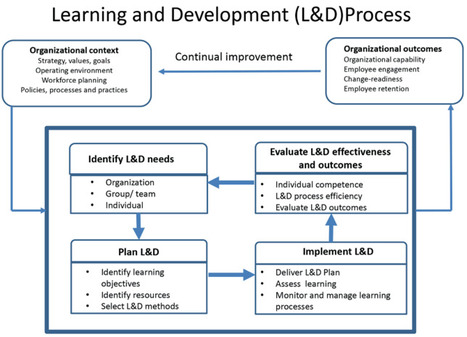
Juan Domingo Farnós ¿Cómo integaremos el deesarrollo y el aprendizaje (L&D) en una sociedad en red, abierta, inclusiva y ubicua? (Educación Disruptiva) No podemos pretender cambiar el mundo con el soporte de la educación (mejorando el desarrollo) por medio de diplomados, formaciones…, lo único que se puede hacer es transformarla y eso lo hacemos a…
Via juandoming
Ask your students, What do you know or have you heard about ChatGPT? Have you experimented with it yourself? What did you think of it? What questions do you have?
Depending on their responses, they may need a broad introduction to the tool. If so, we recommend an episode of The Daily called “Did Artificial Intelligence Just Get Too Smart?” (Students can follow along via the transcript.)
Via Edumorfosis, Gust MEES
If AI is here to stay, can ChatGPT be used responsibly in education – how do we ensure best practice and damage control any limitations to learning?
ChatGPT in Education: The Future or a Fad? Four key avenues ChatGPT has the potential to transform education.
Via EDTECH@UTRGV, juandoming
Découvrez 5 sites de presse incontournables pour l'éducation aux médias et à l'information. Apprenez à déjouer les fake news. Cliquez pour en savoir plus.
Via Bibliothèques-Médiathèques de Metz
In a recent survey by Tyton Partners, nearly one in three college students reported being a regular user of generative AI. And 51% of students said they will continue to use generative AI writing tools, even if prohibited by their instructor or institution.
Via EDTECH@UTRGV
Aider les enseignants à adopter des pratiques fondées sur des données probantes pour améliorer les apprentissages des élèves … oui mais comment ? Voici un guide à destination des acteurs de l'éducation sur l'implémentation d'innovations pédagogiques
Via CECI Jean-François
We highlight a very recent further paradigm shift in AI capabilities that we call generative programming, which concerns connecting instances of Large Language Models (LLMs) like GPT-4 with other instances, and tools. In an experiment called Smallville, researchers demonstrated the integration of memory and agency with a language model, which lead to emergent behaviour and opens the door for applications beyond writing and dialogue.
Via EDTECH@UTRGV
The concept of “digital transformation” is one that’s been in the cultural zeitgeist for over a decade, as digital technologies such as cloud computing have quickly risen to prominence. Today, many organizations understand the importance of digital transformation. Pluralsight research shows that 85% of organizations are actively engaged in, or are planning to launch, a digital transformation project in 2023.
However, research from McKinsey shows that when organizations undertake a large-scale transformation, their efforts fail about 70% of the time.
Via EDTECH@UTRGV
This learning guide features content relevant to emerging artificial intelligence (AI) technology in schools.
Via Dr. Tom D'Amico (@TDOttawa)
Students should study to become something, not just to pass tests, take more classes, and eventually get jobs
Via EDTECH@UTRGV
|