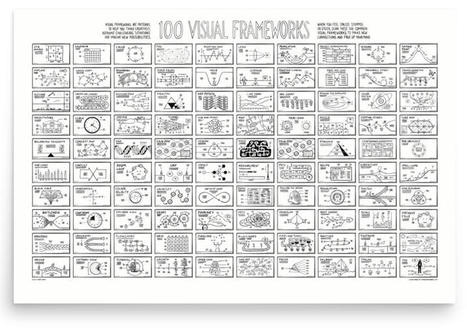
Visual frameworks are patterns to help you think creatively, reframe challenging situations, and imagine possible strategies and solutions. Think of a situation or challenge that’s on your mind right now, and click an image below.
Via Jim Lerman

 Your new post is loading...
 Scoop.it! Visual frameworks are patterns to help you think creatively, reframe challenging situations, and imagine possible strategies and solutions. Think of a situation or challenge that’s on your mind right now, and click an image below. Via Jim Lerman No comment yet.
Sign up to comment
Scoop.it!

Por Nelly Ramírez Vásquez Y María Del Rosario Rosas Escalona ¿Recuerdas la película de ciencia ficción de Indiana Jones cuando su misión ... Via LGA
Scoop.it!

Education Development Center’s second edition of "Distance Education for Teacher Training: Modes, Models and Methods" is a go-to guide in the world of bilateral and multilateral donor-funded education projects. It connects the lessons of COVID-19 with the promise of future distance technologies. Via EDTECH@UTRGV 
EDTECH@UTRGV's curator insight,
May 29, 2023 1:13 PM
Where do you envision distance learning will go to next?
Scoop.it!

Dr. Sarah Elaine Eaton sur l'avenir du plagiat et de l'intégrité académique
Via Sandrine Decamps
Scoop.it!

«AI: UNESCO Mobilizes Education Ministers from around the World for a Co-Ordinated Response to ChatGPT | UNESCO». Accedido 29 de mayo de 2023.Ver artículo En respuesta a la rápida aparición de nuevas y potentes herramientas generativas de IA, la UNESCO celebró la primera reunión mundial de Ministros... Via LGA, juandoming
Scoop.it!

"What are the implications of artificial intelligence for media educators, and for the media themselves? Last weekend, a letter by a group of British headteachers was published in the Times newspaper, with the front page headline ‘AI is clear and present danger to education’ ..." Via Leona Ungerer, juandoming
Scoop.it!

Given the growth in doctoral graduate numbers, not all graduates can be accommodated in traditional academic or research careers. Doctoral educatio Via LGA
Scoop.it!
From
tech

The U.S. Department of Education Office of Educational Technology’s new policy report, Artificial Intelligence and the Future of Teaching and Learning: Insights and Recommendations, addresses the clear need for sharing knowledge, engaging educators, and refining technology plans and policies for artificial intelligence (AI) use in education. The report describes AI as a rapidly-advancing set of technologies for recognizing patterns in data and automating actions, and guides educators in understanding what these emerging technologies can do to advance educational goals—while evaluating and limiting key risks. Via Inovação Educacional, juandoming
Scoop.it!
Artificial Intelligence (AI) has taken the world by storm, with new AI-powered tools such as ChatGPT opening up new opportunities in higher education for content creation, communication, and learning, while also raising new concerns about the misuses and overreach of technology. Our shared humanity has also become a key focal point within higher education, as faculty and leaders continue to wrestle with understanding and meeting the diverse needs of students and to find ways of cultivating institutional communities that support student well-being and belonging.
For this year’s teaching and learning Horizon Report, then, our panelists’ discussions oscillated between these seemingly polar ideas: the supplanting of human activity with powerful new technological capabilities, and the need for more humanity at the center of everything we do. This report summarizes the results of those discussions and serves as one vantage point on where our future may be headed. Via Edumorfosis, EDTECH@UTRGV 
nikabrand's curator insight,
October 20, 2023 4:59 PM
Comprar Mounjaro sin receta en España puede ser tentador, pero es crucial comprender las implicaciones. Mounjaro es un medicamento que generalmente se receta para tratar afecciones médicas específicas, acquista subutex online koop ozempic Nederland https://ozempickopen.com/
Scoop.it!

La educación implica factores no tradicionales como intereses individuales y espacios más allá del salón de clases. Via LGA
Scoop.it!

If there are three “buzzword” topics that have certainly been responsible for a fair amount of hype over the past few years, they would be digital twins, generative AI, and the metaverse. Via Edumorfosis, juandoming
Scoop.it!
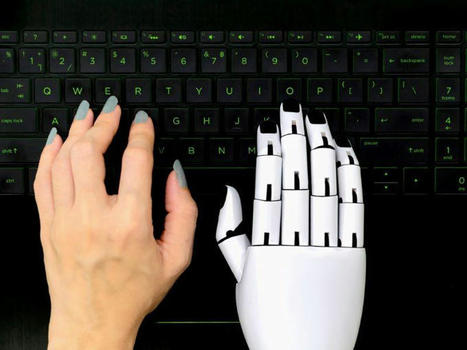
ChatGPT may make it a little easier for students to cheat, but the best ways of thwarting cheating have never been focused on policing and enforcement, says Danny Oppenheimer Via EDTECH@UTRGV |
Scoop.it!

With the rise of AI, higher ed leaders are looking to find ways to embrace technology in the classroom. Via EDTECH@UTRGV
Scoop.it!

From
conker
Fast and easy to use tools for creating quizzes and formative assessments in a flash. Via Nik Peachey 
Raúl De La Cruz's curator insight,
June 5, 2023 6:04 PM
Here is a great resource that will help alleviate that burden of creating quick assessments for our kiddos. This can help create quick and efficient quizzes to check student progress thru a unit.

Peter Lakeman's curator insight,
November 12, 2024 3:46 PM
Toetsen maken met Conker.ai; een platform dat quizzen maakt met behulp van AI. Wat me opviel:
Hoewel ik nog niet alle functies heb uitgeprobeerd, lijkt Conker.ai een nuttig hulpmiddel voor docenten die hun werk willen vereenvoudigen. Het is de moeite waard om eens te bekijken.
Scoop.it!

Microlearning is the new cool in the corporate learning and development sphere. Wondering why? Well, it is easy to design and deliver and drives the desired results. This is not all. Read the blog to find out why microlearning is becoming an evolving trend. Via EDTECH@UTRGV
Scoop.it!

The AI e-learning space is growing quickly and expanding beyond the walls of academia. AI and behavioral science are transforming online learning by unlocking higher engagement, enabling creators to create high-performing online courses and continually improve and optimize curriculums. Via EDTECH@UTRGV
Scoop.it!

A report last week from the education website Intelligent.com analyzed survey responses from 3,017 high school and college students between the ages of 16 and 24, and 3,234 parents of school-age children under 16. Most of those surveyed indicated that they had not used both methods, so the detailed results are based only on the 10 percent of student respondents and 15 percent of parent respondents who had used both methods within the past academic year. Via Nik Peachey
Scoop.it!

Alongside sustainable development, higher education digitalisation is a shared priority across Asia, Europe and globally and is increasingl Via LGA
Scoop.it!

S’il est un sujet qui est sur toutes les lèvres, les claviers et les écrans depuis quelques mois, c’est bien celui de l’intelligence artificielle (IA). L'École branchée vous propose un nouveau dossier pour faire le tour du sujet. Attention, ce dossier n'a pas été rédigé par une IA!
Via Sandrine Decamps, juandoming
Scoop.it!

Por Francesc Pedró[i] Director del Instituto Internacional de la UNESCO para la Educación Superior en América Latina y el Caribe (UNESCO IESALC) Palabras clave: PIXEL-BIT, educación superior, educación a distancia, tecnología educativa, universidades, política educativa Considerar las plataformas digitales como un avance novedoso en la educación superior puede parecer hoy fuera de lugar debido … Continuar leyendo "La plataformización de la educación superior: desafíos e implicaciones" Via LGA
Scoop.it!

The introduction of digital technologies into learning, as in children’s lives overall, brings with it new risks and new pathways to familiar risks. Risks may be introduced simply because the EdTech products and their terms and conditions have not been designed with children’s rights in mind. Via EDTECH@UTRGV
Scoop.it!

On the first day of every class I teach, I make it clear to my students that I’m not interested in wasting their time. I want every class to be valuable and relevant to their personal goals. Values-driven teaching is all about starting with what matters and building out from there. To do it right, our teaching toolbox needs to include critical thinking. Via EDTECH@UTRGV
Scoop.it!

From
www
Artificial intelligence can help prepare students for the real world by encouraging critical thinking—with a few caveats. Via EDTECH@UTRGV, LGA |