gpmt
64.1K views | +13 today
Follow
 
gpmt
infos utiles aux gpmt (formation blended learning)
Your new post is loading...
Rescooped by michel verstrepen from iGeneration - Humane Use of Technology in an AI world (Pedagogy & Digital Innovation)
Today, 7:59 AM
Scoop.it!

New study found that 8 in 10 AI Tools supported users asking about inflicting violence on others ... K-12 needs Tech Companies to solve this issue now

New study found that 8 in 10 AI Tools supported users asking about inflicting violence on others ... K-12 needs Tech Companies to solve this issue now | gpmt | Scoop.it

Via Dr. Tom D'Amico (@TDOttawa)
No comment yet.
Rescooped by michel verstrepen from Educational Technology News
March 13, 2:12 PM
Scoop.it!

Student Intention: What Motivates In Choosing Online Courses

Student Intention: What Motivates In Choosing Online Courses | gpmt | Scoop.it
Understanding student intention in enrolling in online courses is more likely to ensure that scalable online learning ecosystems are built.

Via EDTECH@UTRGV
EDTECH@UTRGV's curator insight, March 13, 11:16 AM

"Students’ performance expectancy, ease of use, engagement, flexibility and institutional trust influence their decisions."

Marco Bertolini's curator insight, March 13, 12:16 PM

What attract your future students to your online courses? Here are some insights!

Rescooped by michel verstrepen from Educational Technology News
March 13, 8:27 AM
Scoop.it!

The Value of Structured Think-Aloud Methodologies in the Age of AI

The Value of Structured Think-Aloud Methodologies in the Age of AI | gpmt | Scoop.it
Learn how structured think-aloud methodologies help faculty assess higher-order critical thinking, metacognitive skills, and AI use in higher education.

Via EDTECH@UTRGV
EDTECH@UTRGV's curator insight, March 12, 10:44 AM

"[I]f AI can generate essays and solutions, the focus of educators needs to shift from evaluating their final products to equipping and assessing students on critical thinking, self-regulation, and motivational skills. Effective assessment techniques need to provide insight into a learner’s thought processes in real time."

Rescooped by michel verstrepen from Educational Technology News
March 13, 8:27 AM
Scoop.it!

AI Tips For Teachers New To The Technology

AI Tips For Teachers New To The Technology | gpmt | Scoop.it
How can teachers use AI in practical, low-risk ways that will save them time and reduce their workload – without compromising their professional judgement?

Via EDTECH@UTRGV
EDTECH@UTRGV's curator insight, March 12, 10:50 AM

“Your ability to ‘get good outcomes using AI’ tracks with your ability to ‘get good outcomes without AI.' AI does not replace strong teaching; it amplifies it. The educators who benefit most are those who use AI as a second thinker, a teaching assistant, or a proofreader – not as a decision-maker."

Rescooped by michel verstrepen from Educational Technology News
March 9, 6:07 PM
Scoop.it!

Teaching in the age of AI shortcuts

Teaching in the age of AI shortcuts | gpmt | Scoop.it
Students will use AI. Here’s what it takes to ensure it strengthens their thinking instead of replacing it.

Via EDTECH@UTRGV
EDTECH@UTRGV's curator insight, March 9, 5:40 PM

"[I]f we integrate AI thoughtfully — anchored in pedagogy, aligned with course content and designed to promote cognitive effort — we can help students build the skills that will matter most in an AI-integrated world: critical thinking, problem-solving and the ability to verify and challenge AI itself."

Rescooped by michel verstrepen from E-Learning-Inclusivo (Mashup)
March 7, 6:03 AM
Scoop.it!

Learning in the AI age: Education 5.0

Learning in the AI age: Education 5.0 | gpmt | Scoop.it
Learning in the AI age: Education 5.0 Patrick Blessinger Learning is for human flourishing, but only if we can see flourishing as something more than economic productivity, something more than employability, something more than credentials, though these things are very important.

Via EDTECH@UTRGV, juandoming
EDTECH@UTRGV's curator insight, March 5, 3:11 PM

"[K]nowledge is now universally abundant and available to everyone, but it is fragmented, contested, and increasingly filtered through algorithms.

The aim of learning today should be to move from survival to meaning, from authority to participation, from control to co-creation, from power to rights, and from fragmentation to coherence."

Rescooped by michel verstrepen from Educational Technology News
March 6, 4:19 PM
Scoop.it!

Lisa Nielsen: The Innovative Educator: Could the Future of AI Reconnect Us to What Mattered Most?

Lisa Nielsen: The Innovative Educator: Could the Future of AI Reconnect Us to What Mattered Most? | gpmt | Scoop.it

"Much of the conversation around artificial intelligence (AI) is framed in fear. White-collar professionals are increasingly anxious about AI replacing cognitive work once thought untouchable, a concern captured in The Atlantic’s piece on the worst-case future for white-collar workers. Blue-collar workers have their own version of this fear as employers test automation that shows up in the real world as robots and drones doing physical jobs once reserved for people, including delivery and warehouse work, like Amazon’s reported testing of humanoid delivery robots.


The anxiety is real. But what if we are asking the wrong question?"


Via EDTECH@UTRGV
EDTECH@UTRGV's curator insight, March 6, 2:49 PM

"Instead of asking how we preserve jobs as they exist today, what if we ask whether working less might actually be progress?"

Rescooped by michel verstrepen from Educational Technology News
March 6, 2:46 PM
Scoop.it!

Supporting Knowledge Construction in a World With Generative AI

"Publicly accessible generative artificial intelligence (AI) is predicted to transform how learners construct knowledge and the skills needed for professional success across industries...[T]his article explores learning through dialogue, supporting knowledge construction, leveraging AI tools, and implications for instructional designers and educators."


Via EDTECH@UTRGV
EDTECH@UTRGV's curator insight, March 6, 2:43 PM

"In a world where access to information is practically endless, the mark of an expert educator will be the ability and the humility to embrace AI to 1) center learners throughout a learning experience; 2) facilitate knowledge construction with and among AI, learners, and other stakeholders; 3) support learners in applying what they know and identifying what they do not know; and 4) nurture critical thinking and problem-solving skills across all modalities."

Rescooped by michel verstrepen from Digital Delights for Learners
March 6, 10:55 AM
Scoop.it!

Productize Your Mind — Turn Your Expertise Into AI Agents

Productize Your Mind — Turn Your Expertise Into AI Agents | gpmt | Scoop.it
The community for coaches, consultants, and educators who want to turn their frameworks and expertise into AI agents and workflows their clients can actually use.

Via Ana Cristina Pratas
No comment yet.
Rescooped by michel verstrepen from Eformation : de la pédagogie à l'outil
March 5, 2:50 PM
Scoop.it!

Réfléchir à l’enseignement avec le canevas de cohérence pédagogique : une méthode visuelle pour analyser et concevoir des dispositifs d’apprentissage 

Réfléchir à l’enseignement avec le canevas de cohérence pédagogique : une méthode visuelle pour analyser et concevoir des dispositifs d’apprentissage  | gpmt | Scoop.it
Ce webinaire propose une réflexion structurée sur la conception pédagogique à partir du canevas de cohérence pédagogique, un outil visuel inspiré (…)

Via Vedrenne Guy
No comment yet.
Scooped by michel verstrepen
March 4, 6:26 PM
Scoop.it!

Geo-Strategy #8: The Iran Trap

In his May 29, 2024 class, Jiang Xueqin explains that an American invasion of Iran would be a catastrophic mistake:

If Trump were to win a second term, he would likely contemplate invading Iran. While an initial invasion would seem successful, American forces would quickly become bogged down in Iran's mountainous terrain.

The American invasion would be similar to Athens' invasion of Sicily in 415 BCE, as described in Thucydides' The Peloponnesian War. Despite its initial successes, the Athenians couldn't re-supply themselves, and their entire expedition was wiped out.

This disastrous defeat turned the war in Sparta's favor, and spelled the downfall of the Athenian empire.

Could the American empire in Iran suffer the same fate as the Athenian empire in Sicily?
No comment yet.
Rescooped by michel verstrepen from Educational Technology News
March 4, 1:06 PM
Scoop.it!

With Teens Comfortable Confiding in AI, Should Schools Embrace It for Mental Health Care?

With Teens Comfortable Confiding in AI, Should Schools Embrace It for Mental Health Care? | gpmt | Scoop.it
Why are students so comfortable using AI for emotional support?

Via EDTECH@UTRGV
EDTECH@UTRGV's curator insight, March 4, 12:27 PM

"Navigating budget shortfalls and limited mental health staff, Interlachen Jr.-Sr. High School, where Phillips works, is using an AI platform to vet students’ mental health needs."

Nik Peachey's curator insight, March 5, 6:00 AM

Interesting article about the use of AI to support teens’ mental health - With Teens Comfortable Confiding in AI, Should Schools Embrace It for Mental Health Care? https://www.edsurge.com/news/2026-03-03-with-teens-comfortable-confiding-in-ai-should-schools-embrace-it-for-mental-health-care

Rescooped by michel verstrepen from Educational Technology News
March 3, 4:23 PM
Scoop.it!

I tested 200 edtech tools. These are the ones worth using

"From AI study assistants to presentation builders, these free tools can help teachers, students, and parents work smarter."


Via EDTECH@UTRGV
EDTECH@UTRGV's curator insight, March 3, 10:15 AM

"The top-tier tools have consistently been super valuable for me—in my teaching, in my job at the City University of New York, and as a dad of two daughters. To save you the time and effort of sifting through the chaff, I’m sharing the ones I find most useful."

Rescooped by michel verstrepen from Educational Technology News
March 13, 2:12 PM
Scoop.it!

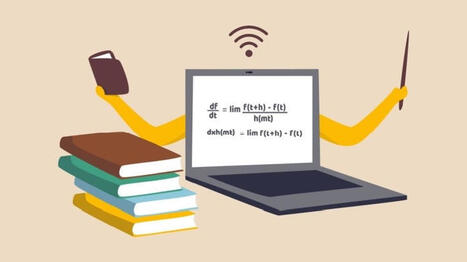
Where traditional education falls short in an increasingly digital world

Where traditional education falls short in an increasingly digital world | gpmt | Scoop.it
Teaching students essential technology skills at an early age ensures that they master critical thinking skills for the future of work.

Via EDTECH@UTRGV
EDTECH@UTRGV's curator insight, March 13, 11:15 AM

"A new generation of students and shifting workplaces are ushering in new education needs"

Rescooped by michel verstrepen from iGeneration - Humane Use of Technology in an AI world (Pedagogy & Digital Innovation)
March 13, 8:27 AM
Scoop.it!

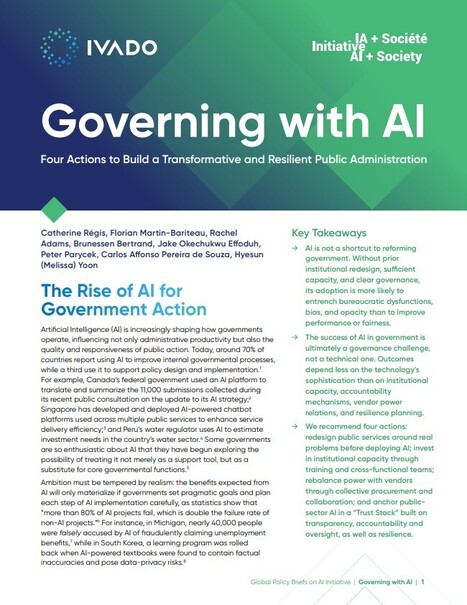
Governing with AI - key message for K-12 is that AI will amplify, not correct, poor processes (ie. weak pedagogy or weak assessment & evaluation practices)

Governing with AI - key message for K-12 is that AI will amplify, not correct, poor processes (ie. weak pedagogy or weak assessment & evaluation practices) | gpmt | Scoop.it

Via Dr. Tom D'Amico (@TDOttawa)
No comment yet.
Rescooped by michel verstrepen from Educational Technology News
March 13, 8:27 AM
Scoop.it!

We designed an AI tutor that helps college students reason rather than give them answers

We designed an AI tutor that helps college students reason rather than give them answers | gpmt | Scoop.it
A 2025 study shows that an AI-based tutor improves learning when it prompts reasoning and is paired with peer discussion.

Via EDTECH@UTRGV
EDTECH@UTRGV's curator insight, March 12, 10:47 AM

"[W]hen AI is designed as a tutor that asks questions instead of simply giving answers – and when students are also required to explain their reasoning to classmates – the technology can support learning rather than replace it."

Rescooped by michel verstrepen from iGeneration - Humane Use of Technology in an AI world (Pedagogy & Digital Innovation)
March 13, 8:26 AM
Scoop.it!

New March 2026 report from Common Sense Media - Cognitive and Safety risks of AI highlight the need to move beyond trying to catch the use of AI to the intentional teaching of AI Literacy in K-12

New March 2026 report from Common Sense Media - Cognitive and Safety risks of AI highlight the need to move beyond trying to catch the use of AI to the intentional teaching of AI Literacy in K-12 | gpmt | Scoop.it

Via Dr. Tom D'Amico (@TDOttawa)
Tania Maria Rebolledo Sierra's curator insight, Today, 1:10 PM
la ia como herramienta digital es necesaria
Rescooped by michel verstrepen from Educational Technology News
March 9, 6:07 PM
Scoop.it!

Empirical validation of a generative AI framework for personalized education assessment

"The tension between personalized learning demands and standardized evaluation mechanisms presents a persistent challenge in contemporary education. This study proposes a comprehensive personalized education assessment framework driven by generative artificial intelligence technologies. The framework adopts a five-layer hierarchical architecture integrating data collection, processing, intelligent analysis, assessment generation, and feedback optimization components."


Via EDTECH@UTRGV
EDTECH@UTRGV's curator insight, March 9, 5:37 PM

"Experimental participants exhibited significantly higher learning gains (Cohen’s d = 0.56), with particularly pronounced effects among initially lower-performing students. The framework also enhanced learner engagement and satisfaction compared to conventional assessment approaches. These findings suggest that generative AI can effectively operationalize personalized assessment at scale while maintaining pedagogical quality and transparency."

Rescooped by michel verstrepen from Educational Technology News
March 6, 4:19 PM
Scoop.it!

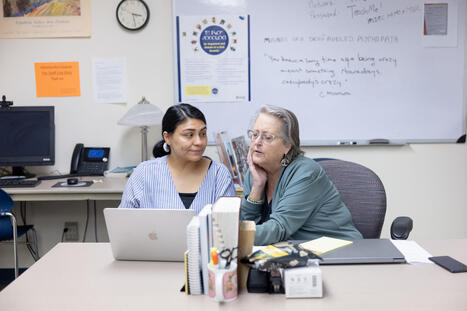
The hidden cost of the experience gap

The hidden cost of the experience gap | gpmt | Scoop.it
For any student finding their footing in a completely new environment, technology should steady the path--not widen the digital experience gap

Via EDTECH@UTRGV
EDTECH@UTRGV's curator insight, March 6, 2:47 PM

"When technology creates barriers, it’s harder for students to succeed–and that technology may undermine an institution’s own mission."

Rescooped by michel verstrepen from Educational Technology News
March 6, 4:19 PM
Scoop.it!

I Stopped Trying to Catch AI Plagiarism. Here’s What I Do Instead.

"Dealing with students who plagiarize now seems like a piece of cake compared to ones who use AI to write their papers. I could usually deter students from plagiarizing by demonstrating how easy it is for teachers to find it...However, the rise of AI has completely changed that approach."


Via EDTECH@UTRGV
EDTECH@UTRGV's curator insight, March 6, 2:55 PM

"Discouraging students from using AI involves a two-prong approach. First, they should see that it won’t help them pass the course. And second, they must realize they are missing opportunities for the teacher to help them actually improve their writing."

Rescooped by michel verstrepen from Educational Technology News
March 6, 2:46 PM
Scoop.it!

You’re still designing for an architecture that no longer exists

"Last Tuesday, I asked Claude to prepare a competitive analysis. Not in a chat window. Not through a prompt. I opened Cowork, pointed it to a folder on my desktop, and said what I needed. It read my files. It cross-referenced data from Slack through a connector. It pulled calendar context. It produced a document — formatted, structured, sourced — and saved it to my working folder. I didn’t open a single application. I didn’t navigate a single menu. I didn’t click through a single interface."


Via EDTECH@UTRGV
EDTECH@UTRGV's curator insight, March 6, 2:38 PM

"Cowork reads files on your desktop, modifies documents, creates deliverables, and operates within your working folder — asking for confirmation before significant actions, working autonomously within defined boundaries."

Rescooped by michel verstrepen from Eformation : de la pédagogie à l'outil
March 5, 2:50 PM
Scoop.it!

Guide d’éco-conception de ressources pédagogiques

Guide d’éco-conception de ressources pédagogiques | gpmt | Scoop.it
Ce guide, destiné à toute personne en mesure de produire une ressource pédagogique (communauté enseignante, communauté étudiante, services supports, etc.), vise à vous accompagner sur le cycle de vie d’une ressource et de voir, pour chaque étape, comment limiter son impact environnemental, tout en conservant la qualité pédagogique de la ressource et son accessibilité.

Via Vedrenne Guy
No comment yet.
Rescooped by michel verstrepen from Digital Delights
March 5, 2:50 PM
Scoop.it!

When Machines Fill In the Blanks - by Michael G Wagner

When Machines Fill In the Blanks - by Michael G Wagner | gpmt | Scoop.it
Why “Hallucination” Is the Wrong Word for the Right Phenomenon

Via Ana Cristina Pratas
No comment yet.
Rescooped by michel verstrepen from Educational Technology News
March 4, 1:07 PM
Scoop.it!

Since E-rate expansion cuts, schools make difficult choices on hotspots

"After the FCC pulled back coverage for school bus Wi-Fi and hotspots, K-12 leaders are scrambling to connect students without home internet."


Via EDTECH@UTRGV
EDTECH@UTRGV's curator insight, March 4, 12:19 PM

"[L]ow-income urban school districts are also feeling the brunt of the E-rate expansion reversal — from both an infrastructure and affordability perspective."

Rescooped by michel verstrepen from Digital Delights
March 4, 8:12 AM
Scoop.it!

Why (and How) Teachers Should Use Generative AI in the Classroom

Why (and How) Teachers Should Use Generative AI in the Classroom | gpmt | Scoop.it
Learn why and how teachers can use generative AI to streamline lesson planning, personalize explanations, and automate retrieval practice—without losing instructional control.

Via Ana Cristina Pratas
Richard Platt's curator insight, March 7, 1:32 PM

Learn why and how teachers can use generative AI to streamline lesson planning, personalize explanations, and automate retrieval practice—without losing instructional control.