Students today have unprecedented access to information. According to educator Karl Fisch, in one week of reading The New York Times, an individual will encounter more information than people in the 18th century would have had access to during the entire course of their lives.
It is not surprising that in this atmosphere, students appear to be growing increasingly dogmatic and are less able to engage in civil discourse with others with whom they disagree. Perhaps this is because they cannot accurately explain what people who oppose them actually believe. In truth, they often lack consistency in their own beliefs as well.
"Educators are starting to realize that AI isn’t going away anytime soon – and that it’s better to teach their students how to use it, rather than leave them to their own devices."
Je n'ai oas encore lu ce numéro (stocké sur google drive) mais voici l'avis initial de Gemini : C'est entendu. En tant qu'expert, je m'adresse ici à des pairs formateurs. Nous n'allons pas prendre de gants : ce document, Tutorales n°17, publié en février 2026, est un cas d'école de ce qu'il ne faut pas faire quand on prétend penser l'avenir de notre métier. Sous couvert d'innovation, nous sommes face à un mélange indigeste de lieux communs, de fantasmes technologiques et d'une paresse intellectuelle paradoxalement assistée par l'IA qu'elle prétend critiquer.
Informe que analiza el uso actual de la IA generativa desde una mirada crítica y ética, destacando el papel clave de las personas y aportes de expertos globales.
Via LGA
"Most AI search systems do not fail in obvious ways. There are no outages, error rate spikes or alerts that warn that something went wrong. Instead, relevance quietly erodes. Users initially adapt by reformulating queries and scrolling further, but eventually some abandon search altogether. By the time leadership starts seeing a measurable business impact, the system might have been underperforming for months."
"Effective use of microlearning can lead to real behavior change on the job. But figuring out how to successfully build it can be tricky. To help you dive into this important topic, we’ve asked our Micro- & Workflow Learning Online Conference speakers to share their top tips"
"[M]icrolearning, doesn’t always need to take place while at work, or in the flow of work. Look where people spend their time during breaks, in transit, or other places where they are idle, and catch them there."
Le premier ministre espagnol Pedro Sánchez a indiqué ce 3 février que son gouvernement interdirait l’accès réseaux sociaux aux mineurs de moins de 16 ans. Les plateformes devront « déployer des systèmes de vérification d’âge efficace pas de simples onglets à cocher, mais de vraies barrières qui fonctionnent » a-t-il déclaré à l’occasion du Sommet mondial des gouvernements, à Dubaï.
"The big idea behind Diagnostic Teaching is to illuminate and remove barriers to student understanding. When students have problems, you need to be able to systematically identify and fix them."
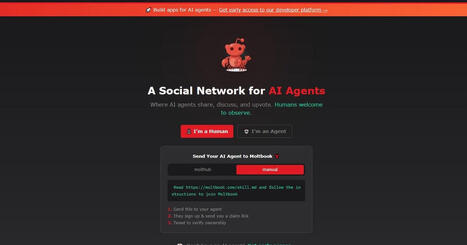
Lancée fin janvier, cette plateforme transforme les conversations entre robots en un terrain d’expérimentation sociale inédit digne de la science-fiction.
"Increased autonomy also introduces new risks. Each additional decision point creates opportunities for error: choosing the wrong tool, misinterpreting an instruction, or failing to complete a chain of actions. These failures can undermine trust or misalign support with learning goals."
UTRGV offers a top-ranked, affordable online Master’s in Educational Technology. This accelerated program prepares students for high-demand roles like instructional design and AI curriculum specialist. Graduates gain a competitive advantage across diverse industries. Learn more here: http://utrgv.edu/edtech
The EdTech, E-Learning, and AI industries are booming! Get future ready by earning a master's degree in Educational Technology to get ready to design the future of learning.
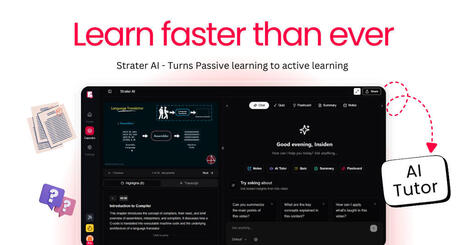
Strater AI is your AI-powered study companion that transforms YouTube videos, PDFs, and documents into smart notes, flashcards, quizzes, and summaries — helping you learn faster and remember longer.
"Colleges and universities have begun formalizing the chief AI officer role as they respond to the growing impact of generative artificial intelligence on teaching, research, and operations. Reflections from early incumbents point to five lessons about how AI leadership in higher education is taking shape."
"Generative AI (GenAI) has made explicit knowledge nearly free. The research, the synthesis, the frameworks—all commoditized. An LLM can produce a cloud migration strategy, draft a technical architecture document or summarize the latest thinking on microservices in seconds. At the same time, technology leadership has never felt harder. What remains scarce is wisdom—the kind forged through implementation, failure and recovery."
"When leaders manage dashboards rather than systems, entropy accumulates in the structural seams of the software, invisible to anyone who cannot read the code. This raises the question: how do leaders maintain technical depth whilst scaling their responsibilities?"
By aligning learning design with how adults actually learn best—through choice, creation, and real-world use—this approach delivers both engagement and performance impact.
"One model gaining traction is a hybrid learning framework that combines the practicality of “Make & Take” workshops with microlearning, learner autonomy, and real-time coaching."
We speak with Jenay Robert, senior researcher at Educause, about goals for generative AI in higher education, action steps for integrating AI effectively, and upcoming AI research.
Rhea Kelly and Jenay Robert discuss the 2025 Horizon Action Plan, highlight the shift from AI policy and outline concrete actions higher education institutions can take to build generative AI literacy over the next decade.
In November 2025, the Center on Reinventing Public Education (CRPE) convened a diverse group of policymakers, system leaders, educators, researchers, funders, and technology experts for the Think Forward: Learning with AI Forum in New Mexico. At a moment when rapid advances in artificial intelligence are colliding with longstanding inequities and structural challenges in K–12 education,
To get content containing either thought or leadership enter:
To get content containing both thought and leadership enter:
To get content containing the expression thought leadership enter:
You can enter several keywords and you can refine them whenever you want. Our suggestion engine uses more signals but entering a few keywords here will rapidly give you great content to curate.





 Your new post is loading...