Your new post is loading...

|
Scooped by
Kim Flintoff
June 23, 2012 5:07 AM
|
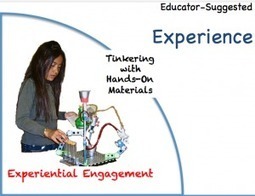
Please cite as: Owen, H. (2008). Learners re-shaping learning landscapes: New directions for old challenges? [Electronic Version]. Hello! Where are you in the landscape of educational technology: ASCILITE 2008 from www.ascilite.org.au/conferences/melbourne08/procs/owen.pdf. KF: Like all teaching eLearning tends to operate best when there is a sound pedagogical framework informing the process. This is one model.
|
|
Scooped by
Kim Flintoff
June 22, 2012 11:41 PM
|
Between the two growth sectors, middle class jobs -- the ones that created two-car-garage suburban American -- are disappearing. Learning is the entry ticket to the idea economy. "Schools that blend the best of online learning and onsite support have the potential to customize learning for every student, to boost motivation, and double academic time on task -- and do it without spending more. Building blended models and supporting their adoption will take some investment. But kids aren't waiting for us; where states allow it, students are taking online courses and blending their own education." KF: The reality seems to be that universities are starting to encounter students who have defined their own learning pathways for more than a decade. The great challenge arises for higher education to meet these learners in their model of the world rather than some crusty artefact of the 20th century.
|
|
Rescooped by
Kim Flintoff
from Open Educational Resources
June 22, 2012 10:57 PM
|
KF: The rise of new information resources allows teachers and students to engage with exisitng knowledge in very different ways to the past. Monolithic tomes with equally impressive price tags are no longer (if they ever were) a prerequisite for quality information and learning activities.
|
|
Scooped by
Kim Flintoff
June 22, 2012 9:41 PM
|
The New Media Consortium (NMC) is launching a new site with a social sharing and collaboration platform, a move intended to improve member services, encourage collaboration, and support the production of the NMC Horizon Report series.
|
|
Scooped by
Kim Flintoff
June 22, 2012 9:22 PM
|
"Faculty members are far less excited by, and more fearful of, the recent growth of online education than are academic technology administrators, according to a new study by Inside Higher Ed and the Babson Survey Research Group. But professors are hardly the luddites many still assume them to be. Nearly half of the 4,564 faculty members surveyed, three-quarters of whom are full-time professors, said the rise of online education excites them more than it frightens them. And while more than two-thirds of instructors said they believe that students currently learn less in online courses than they do in the classroom, other findings suggest that their estimation of online education quality stands to rise as the technology improves and more professors get firsthand experience with the medium." KF: Doesn't seem to address the fact that many subject specialists do not necessarily have an informed pedagogical framework.
|
|
Rescooped by
Kim Flintoff
from :: The 4th Era ::
June 22, 2012 9:10 PM
|
by Harold Jarche Jarche posits that in an era predominantly characterized by human networks, voluntary cooperation is more valuable than the collaboration found in hierarchical bureaucracies. -JL
Via Jim Lerman
This is the first post in a triplet series on how to create effective discussions in an online learning environment. This post discusses how course instructors can shape and create robust and rich ... KF: Quite a clear intro to the topic with soime clear points for consideration. Useful for subject specialists who find them selves needing to teach.
Via Mark Smithers

|
Scooped by
Peter Mellow
June 22, 2012 9:36 AM
|
Education is currently at a crossroads as traditional methods and tools are changing as a result of advances in technology and learning theory. We are beginning to see some schools across the country take the lead in merging sound pedagogy with the effective integration of technology.
|
|
Scooped by
Peter Mellow
June 22, 2012 1:38 AM
|
If you have been following my blog series on The Flipped Classroom: The Full Picture, you know that I am using this opportunity, given all the press on flipped classroom, to discuss a model of teac...
|
|
Scooped by
Peter Mellow
June 21, 2012 9:42 PM
|
Most education technologists will argue that our work is not about the tools, but about what the tools will allow educators and learners to do. However, very often it is the tool that becomes the obstacle. Yet another account to set up. Yet more functions to figure out. And there’s always more tools after that…It can be discouraging.
|
|
Rescooped by
Peter Mellow
from Tools for Teachers & Learners
June 21, 2012 8:31 PM
|
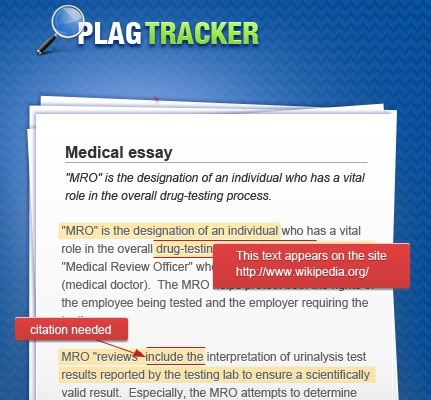
This is a useful free plagiarism checker. It's always good to check your assignments, just in case you missed referencing a quote.
Via Nik Peachey
Overall, educators need to understand some basics about technology and that it is not a be-all-end-all solution to everything in a classroom. Technology can help teachers differentiate and provide new experiences for their students. Technology can also help students better understand a concept and provide extra help for them. Educators need to start with good pedagogy and lesson objectives and activities and then look for technology that can enhance those lessons, improve teaching and learning, and help students learn.
Via Mark Smithers
|
|
Scooped by
Peter Mellow
June 20, 2012 8:29 PM
|
What technology enthusiasts forget, neglect, stumble over — pick a verb – are the multiple purposes of tax-supported schools in a democracy. They and many others futurists err in equating access to information with becoming educated.
|
|
|
Scooped by
Kim Flintoff
June 23, 2012 4:35 AM
|
According to disruptive innovation expert Clayton Christensen, half of North American higher education will move online in the next ten years, followed by half of k-12 education by 2019. "Online education is on a tear. Every few weeks or so, it seems like yet another startup offering online classes announces a multimillion dollar funding round. This week, San Francisco-based UniversityNow, which provides affordable higher education degrees online, said it raised $17.3 million. In the past three months, at least seven online course startups have launched or announced funding."
|
|
Scooped by
Kim Flintoff
June 22, 2012 11:41 PM
|
Digital Learning Now! is a national (US) campaign to advance policies that will create a high quality digital learning environment to better prepare students with the knowledge and skills to succeed in college and careers. Digital Learning Now! is building support for the 10 Elements of High Quality Digital Learning, which provides a roadmap for reform for lawmakers and policymakers to integrate digital learning into education.
|
|
Scooped by
Kim Flintoff
June 22, 2012 9:59 PM
|
Educause has released the recordings and resources from their Webinar on “Making Web Accessibility Work for Your Institution.” Part 1 is aimed at administration, Part 2 is aimed at content developers (discussion on web techniques to make things more...
|
|
Scooped by
Kim Flintoff
June 22, 2012 9:29 PM
|
A guide on 20 selected Web 2.0 tools for research purposes by Mohamed Amin Embi. KF: Some clear guidelines on how to apply some of the more common online tools to support data collection, bibliographical needs, presentation. Very useful reminder of available tools - and a great kickstart if you're not already operating in this space.
|
|
Rescooped by
Kim Flintoff
from :: The 4th Era ::
June 22, 2012 9:11 PM
|
Alan November speaking to the Asia Society global education conference in 2011. This 21-minute video highlights the importance of empathy as a 21st century skill and of global tech literacy as equally important. Excellent presentation. -JL
Via Jim Lerman
|
|
Scooped by
Kim Flintoff
June 22, 2012 9:05 PM
|
“Peers can be the best teachers, because they're the ones that remember what it's like to not understand.” — Peter Norvig... In the fall of 2011 Peter Norvig taught a class with Sebastian Thrun on artificial intelligence at Stanford attended by 175 students in situ -- and over 100,000 via an interactive webcast. He shares what he learned about teaching to a global classroom. Peter Norvig is a leading American computer scientist, expert on artificial intelligence and the Director of Research at Google Inc.
|
|
Scooped by
Kim Flintoff
June 22, 2012 9:37 AM
|
Curtin University seeks to harness the power of portable devices without overwhelming its wireless network, according to the university’s acting chief information officer, Ian Hill. "BYOD from 45,000 students has put strain on the university's network"
|
|
Scooped by
Peter Mellow
June 22, 2012 9:33 AM
|
Universities need to take note of what is happening here. Their role might be about to change significantly.
|
|
Rescooped by
Peter Mellow
from Online Learning Design
June 22, 2012 1:18 AM
|
What is it like to teach a free online course to tens of thousands of students? Dozens of professors are doing just that, experimenting with a format known as Massive Open Online Courses.
Via Rebecca Scriven
|
|
Scooped by
Peter Mellow
June 21, 2012 8:56 PM
|
Building quality eLearning can seem daunting because it’s both science and art. Many proven design and development tools, models, pedagogies, and tactics exist to help the process along. In addition, if you answer these seven questions each time you begin a development project, you will substantially increase the likelihood of a much better product.
|
|
Scooped by
Peter Mellow
June 21, 2012 8:27 PM
|
In this manner– libraries are just a philosophy too. Learning Commons. Institutional Repositories. Special Collections. Information Literacy. All that stuff is just a theory. It’s a set of beliefs that we are attempting to translate into a tangible form. I think sometimes (most times?) we get caught up in (obsessed with?) the materiality —but it’s really about what the materiality enables, not the other way around.
|
|
Scooped by
Kim Flintoff
June 20, 2012 8:39 PM
|
Many districts are realizing the potential that YouTube learning can have in the classroom. There are lots of great videos and channels out there on 1000's of topics. I have put together a list of some of my favorite tools to use with YouTube. Some are for the creation end, while some are for the consumption end. Overall they hopefully will give you a good start on getting more out of your favorite video service.
|