Your new post is loading...

|
Scooped by
Kim Flintoff
June 29, 2012 9:52 AM
|
Social Media in Higher Education: New social dimensions to learning A presentation from the Socal Media in Higher Education conference Sydney, June 26/27 2012. The presentation was focussed on considering the effect of social media engagement on teacher - student relations. Does Social Media affect perceptions of authority? Is anywhere, anytime support possible?
|
|
Rescooped by
Kim Flintoff
from Digital Curation in Education
June 29, 2012 3:45 AM
|
A Readlist is a group of web pages—articles, recipes, course materials, anything—bundled into an e-book you can send to your Kindle, iPad, or iPhone. KF: There are several terrific uses for this type of tool in an eLearning context. Collect all your favourite articles and webpages then export as an eBook. Develop a pathway thourgh a collection of sites that will guide your learners in a meanigful way. Have your students develop and share lists around key topics in your course. Have students construct a course review by way of a focussed eBook. Once you start playing with this the ideas will start flowing.
|
|
Rescooped by
Kim Flintoff
from :: The 4th Era ::
June 29, 2012 1:08 AM
|
by Jeff Selingo "Other information industries, from journalism to music to book publishing, enjoyed similar periods of success right before epic change enveloped them, seemingly overnight. We now know how those industries have been transformed by technology, resulting in the decline of the middleman — newspapers, record stores, bookstores and publishers. "Colleges and universities could be next, unless they act to mitigate the poor choices and inaction from the lost decade by looking for ways to lower costs, embrace technology and improve education."
Via Jim Lerman
|
|
Rescooped by
Kim Flintoff
from :: The 4th Era ::
June 29, 2012 12:59 AM
|
A white paper-type guidebook from Contact North, Ontario's Distance Education & Training Network, designed to support teachers who are teaching, or planning to teach, online. Nicely done. -JL
Via Jim Lerman
|
|
Rescooped by
Kim Flintoff
from Digital Curation in Education
June 29, 2012 12:49 AM
|
From the website "Evernote is a great web service and software application that we can use in education. A lot of ink has been shed on this topic and just one click in a search engine is enough to get hundreds of links to guides and tutorials about Evernote. I have been going through so many of these resources and have collected ideas, videos, notes and many more. If you are a loyal reader to my blog ( I am glad most of you are ) you would clearly notice that guides I write here are different in that they are simple. to the point, address teachers and students direct need, and most of all written in an easy and simple language. In this regard, I am working on an ebook that will contain all the guides I have posted here so far but will be available for free only to my subscribers. Without any further ado, let us get back to our guide."
Via Jim Lerman, Kim Flintoff
|
|
Rescooped by
Kim Flintoff
from Eclectic Technology
June 28, 2012 11:12 PM
|
"Microsoft 365 is an online version of Microsoft's well known Office suite. Office 365 for Education is free for schools and is already being used by many public school districts and colleges. Office 365 is cloud based and includes Microsoft Office Web Apps, Exchange Online, SharePoint Online, and Lync Online. This is Microsoft's answer to Google Apps for Education. It can be a good option for schools that are heavily invested in Microsoft apps as there would be almost no learning curve or training required. It includes Word, PowerPoint, Excel, Email, Calendars, web sites, and much more, including the ability to collaborate online with others and even run an online course."
Via Beth Dichter

|
Scooped by
Peter Mellow
June 27, 2012 12:23 AM
|
The current structure of education. It’s currently seeing an insanely fast evolution in terms of technology. But all that evolved technology is being shoe-horned into a very old model.
|
|
Scooped by
Peter Mellow
June 27, 2012 12:20 AM
|
In this post the importance of providing students with a structure for learning online and setting appropriate learning activities is discussed. Indeed, I will argue that this is probably the most important and yet the least understood of all the steps towards quality online learning. By Tony Bates
|
|
Scooped by
Kim Flintoff
June 26, 2012 9:49 AM
|
"EPIC 2020, stands for the proposition that the education of the world will change dramatically for the better during this decade. The two movies that follow and this site hope to provide tools that shatter the paradigm that the future will be anything like the past as well as facilitate discussion and accelerate actions to bring about the transformation of the education of the world"
KF: with the rise of the MOOC, open access, badges, personal learning networks and other shifts in the ways people access/create learning opportunities this site offers some challenging vision of what may lie ahead.
|
|
Rescooped by
Peter Mellow
from Higher Education Reform
June 26, 2012 7:57 AM
|
|
|
Rescooped by
Peter Mellow
from The 21st Century
June 25, 2012 11:49 PM
|
In the last decade in particular, the promotion, sharing and use of open educational resources (OER) have been growing exponentially. However, as with any new phenomenon or paradigm, our knowledge of OER’s ramifications and achievements to date necessarily lags behind actual developments.
Via Dr. Susan Bainbridge
|
|
Rescooped by
Peter Mellow
from Educational Technology News
June 24, 2012 10:04 PM
|
"Massively open online courses, or MOOCs, are not credit-bearing. But a pathway to college credit for the courses already exists -- one that experts say many students may soon take. That scenario combines the courses with prior learning assessment -- a less-hyped potential 'disruption' to traditional higher education -- which is the granting of credit for college-level learning gained outside the traditional academic setting."
Via EDTECH@UTRGV
|
|
Scooped by
Kim Flintoff
June 23, 2012 10:53 PM
|
KF: This article discusses a simple strategy for starting, developing and maintaining a sound professional learning network (PLN). Useful advice for academics and students alike. The First Year Experience really ought to include connecting new students with the profession they seek to enter.
|
|
|
Scooped by
Kim Flintoff
June 29, 2012 9:48 AM
|
"Today saw the launch of Microsoft’s Office 365 cloud collaboration and communication suite that is specifically aimed at schools and universities, replacing Live@edu. Office 365 for Educationincludes the familiar Office desktop applications, as well as Exchange Online, SharePoint Online and Lync Online. It also provides educators, Microsoft says, with the ability to create anytime, anywhere learning opportunities across multiple devices, in addition to e-mail, calendars, Office Web Apps, video and online meetings." KF: Several changes with the Office 365 suite make it an appealing option for organisations not wanting to host their own email and enterprise solutions.
|
|
Scooped by
Kim Flintoff
June 29, 2012 1:19 AM
|
An action plan for educators to learn to use the Web for personal and professional growth. This is a virtual version of my Teacher 2.0 all-day workshop, and all-told should take 6 - 8 hours for you to become “Teacher 2.0!
|
|
Rescooped by
Kim Flintoff
from :: The 4th Era ::
June 29, 2012 1:07 AM
|
A manifesto of sorts from the Connected Learning website; working to define Connected Learning from the point of view of Reimagining the Experience of Education in the Digital Age. They break Connected Learning down into: -Learning Principles 1. Interest-powered 2. Peer-supported 3. Academically oriented -Design Principles 1 Production-centered 2.Openly networked 3. Shared purpose -Core Values 1. Equity 2. Social connection 3. Full participation This is ambitious work. See a full statement on the website.
Via Jim Lerman
|
|
Rescooped by
Kim Flintoff
from :: The 4th Era ::
June 29, 2012 12:55 AM
|
From the website "Online education is quickly becoming a major phenomenon around the world. The ease and convenience it offers learners appeal to people just about everywhere, especially those who are trying to balance work, family, and other obligations with completing a degree or certification program. Yet certain nations have embraced online education more than others, leading the way both in terms of the number and variety of programs and new innovations to online learning itself. Here, we’ve highlighted some of the nations that are really stepping up the game when it comes to online education, though with the proliferation of high-speed nternet connections and a growing need for highly educated candidates in technical positions around the world, other nations likely aren’t far behind."
Via Jim Lerman
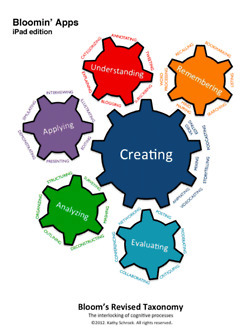
Bloom is a free app for iPhone that integrates a lot of handy functions in one application... You can use Bloom in a number of ways including as a reminder app, alarm clock, for note sharing and to create multimedia presentations which can be instantly shared with anyone on the go.
Via Baiba Svenca
|
|
Rescooped by
Peter Mellow
from Online Teaching
June 27, 2012 7:15 PM
|
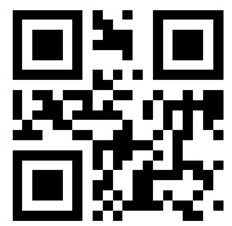
What are QR Codes
What Do I need to Start Using QR Codes ?
Why QR Codes in Education ?
Ways to Use QR Codes in Education ?
List of QR Codes Generators for Teachers
List of QR Code Readers
Webliography
Via Nancy O'Sullivan
|
|
Scooped by
Peter Mellow
June 27, 2012 12:22 AM
|
I came across this great blog post by George Siemens just littered with great quotes and ideas. How does he do it? I want to focus on just a few things. First is this great paragraph: Educators are...
|
|
Scooped by
Peter Mellow
June 26, 2012 8:00 AM
|
Check out this in-depth infographic all about Blended Learning. Learn what it is, why it's spreading, and how it works in real and virtual classrooms. A nice infographic!
|
|
Scooped by
Peter Mellow
June 26, 2012 1:53 AM
|
Sarah Emily Duff makes the case for using ebooks to carry out academic research...
|
|
Rescooped by
Peter Mellow
from phd informal learning research
June 24, 2012 10:29 PM
|
For the past decade, I have been exploring about the effective use of learning theories in formal, informal and non-formal education and learning. What is fundamental in learning and teaching, espe...
Via texasstate.phd
|
|
Rescooped by
Peter Mellow
from Educational Technology News
June 24, 2012 10:02 PM
|
"When Bilal Shah got his doctorate in computer science from the University of Southern California back in 2010, the job market wasn't exactly welcoming... Around that time, he heard about a free massive online open course (MOOC) on machine learning -- a branch of artificial intelligence related to the design of certain computer algorithms -- taught by Stanford's Andrew Ng. Since Shah had plenty of spare time, he gave it a try... Soon after getting certification from the class, he landed a job interview with ID Analytics, the San Diego-based identity fraud and credit risk modeling company."
Via EDTECH@UTRGV
|