Your new post is loading...

|
Rescooped by
Learning Futures
from eLearning 21C
April 16, 2012 9:44 PM
|
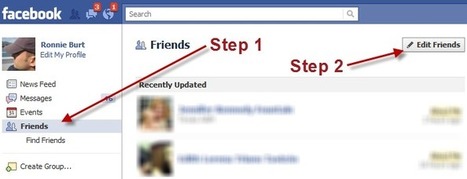
A friend of mine recently graduated with his BS degree in Finance. He had a great lead on a job at a high tech company and things felt promising. But the feedback he received was, "Spend some time developing your social network profile and then our recruiters will consider you." That's not something he learned in college. But, arguably, it should have been. Why? Because in a participatory culture, what others say about you is more important than what you say about yourself. Step up, folks. It's time to join in.
Via Jim Lerman, Kim Flintoff
|
|
Rescooped by
Learning Futures
from eLearning 21C
April 16, 2012 9:43 PM
|
When this project started many schools had adopted locking and blocking by default. But just saying "open them up" obviously isn't enough - schools need policy guidance, the confidence that others have already tried with success, an evolutionary model, and authentic advice by teachers for teachers, by school for schools, that they might build from, with trust. Thus the aim of the "cloudlearn" research project was (and is) to source, collate, reflect on and publish proven effective practice from experienced classroom teachers and practitioners - building forward from what worked for them, in their cultural and educational context, to offer a portfolio of general and proven approaches. As phase one of the research, itself largely conducted within the very social media it embraces, comes to an end, the papers and details will appear indexed from here at www.cloudlearn.net - and many of you are anticipating them already of course.
Via Kim Flintoff
|
|
Rescooped by
Learning Futures
from eLearning 21C
April 16, 2012 9:40 PM
|
Technology enhanced learning has failed but there is still a role for technology to create personal learning spaces writes Gerry White in this research review on DERN.
Via Kim Flintoff
|
|
Rescooped by
Learning Futures
from eLearning 21C
April 16, 2012 9:36 PM
|
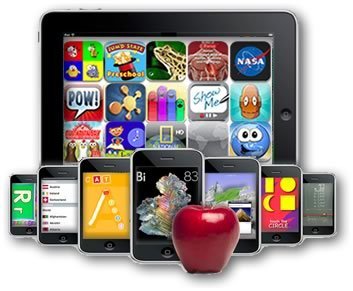
an directory of apps by education by Apple Distinguished Educators (ADEs) to help you transform teaching and learning. (apps, education, educacion, primaria, preescolar, educativos.
Via Kim Flintoff
|
|
Rescooped by
Learning Futures
from eLearning 21C
April 16, 2012 9:36 PM
|
This paper focuses on the confluence between globalised economic process, the Digital Education Revolution, and the discourse of the digital native; and describes the way in which students’ use of digital technologies is identity forming.
Via Kim Flintoff
|
|
Rescooped by
Learning Futures
from eLearning 21C
April 16, 2012 9:35 PM
|
|
|
Rescooped by
Learning Futures
from eLearning 21C
April 16, 2012 9:34 PM
|
The e-Enhanced Learning and Teaching project (e-ELTP) is a three year program (2009-2011) to improve the student experience via electronically enhanced flexible teaching options in selected first and final/later year courses. The enhancements will provide more flexible course delivery options, more timely student feedback and consistent access to online course content. Topics include: Assessment, Key concepts, Managing large classes, Worked Examples and Virtual environments.
Via pru, Kim Flintoff
|
|
Rescooped by
Learning Futures
from eLearning 21C
April 16, 2012 9:32 PM
|
The Technology Integration Matrix (TIM) illustrates how teachers can use technology to enhance learning for K-12 students. The TIM incorporates five interdependent characteristics of meaningful learning environments: active, constructive, goal directed (i.e., reflective), authentic, and collaborative (Jonassen, Howland, Moore, & Marra, 2003). The TIM associates five levels of technology integration (i.e., entry, adoption, adaptation, infusion, and transformation) with each of the five characteristics of meaningful learning environments. Together, the five levels of technology integration and the five characteristics of meaningful learning environments create a matrix of 25 cells.
Via Kim Flintoff
|
|
Rescooped by
Learning Futures
from eLearning 21C
April 16, 2012 9:31 PM
|
An important part of a professional's role will be encouraging and supporting a more self-directed and self-reliant approach to continuous learning as people do their jobs; and this is where social media can play a huge part.
Via Sue Hickton, Judy O'Connell, Kim Flintoff
|
|
Rescooped by
Learning Futures
from eLearning 21C
April 16, 2012 9:30 PM
|
|
|
Rescooped by
Learning Futures
from eLearning 21C
April 16, 2012 9:29 PM
|
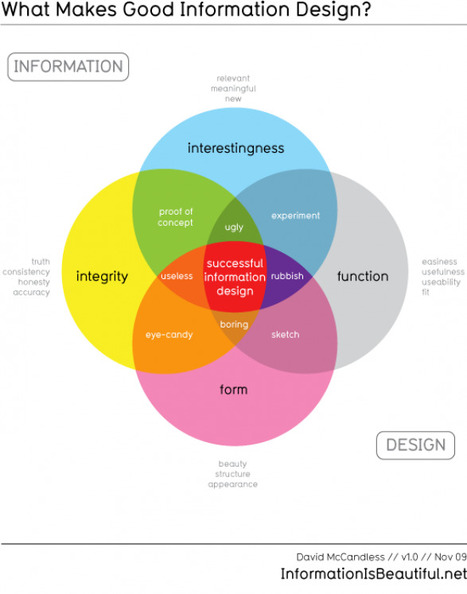
What makes a good information design or infographic? This infographic looks at all the components that make a design a visual success. Factors such as interestingness, integrity, function and form all intersect to make a successful information design. Other components to a successful design include meaningfulness, consistency, structure and usability. Check out the graph to see all of the important elements to a good information design and graphic.
Via Judy O'Connell, Kim Flintoff
|
|
Rescooped by
Learning Futures
from eLearning 21C
April 16, 2012 9:29 PM
|
|
|
Rescooped by
Learning Futures
from eLearning 21C
April 16, 2012 9:28 PM
|
A new University of Washington study found A new University of Washington study found college students – only weeks away from final exams and in the library – tend to pare use of electronics. It’s their way to manage technology that permeates their lives. Project Information Literacy
A student studying in one of the college libraries where Project Information Literacy conducted its survey.
Today’s students may often be considered “heavy multitaskers” who are unable to concentrate on one activity at a time. However, based on 560 interviews in 11 college libraries around the country near exam time last spring, researchers found most students using only one or two technology devices to support only one or two activities at a time — coursework and to a lesser extent, communication. “Our findings belie conventional wisdom about the multitasking generation – always online, always using a variety of IT devices to communicate, game and do their homework,” said Alison Head, a research scientist at the UW Information School who co-directed the study. “Our findings suggest students may be applying self-styled strategies for dialing down technology when the pressure is most on them.”college students – only weeks away from final exams and in the library – tend to pare use of electronics. It’s their way to manage technology that permeates their lives.
Via Howard Rheingold, Kim Flintoff
|
|
|
Rescooped by
Learning Futures
from eLearning 21C
April 16, 2012 9:43 PM
|
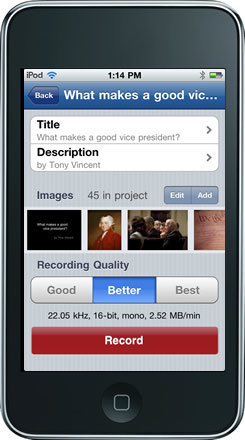
Schools are discovering that handhelds like iPod touch and iPad make great learning tools. In fact, handhelds can play a big part in project based learning. Not only do projects motivate students because they use exciting handheld technology, but they also lend themselves to student voice and choice.
Via Jim Lerman, Kim Flintoff
|
|
Rescooped by
Learning Futures
from eLearning 21C
April 16, 2012 9:42 PM
|
Output froma the Glovbal Edcuation Conference - run annually 24/7 for one week! Good collection of recordings and papers maintained on the site
Via Kim Flintoff
|
|
Rescooped by
Learning Futures
from eLearning 21C
April 16, 2012 9:37 PM
|
Abstract This paper argues that transparency promotes interactivity and participation in collaborative Web 2.0 learning environments. Teaching with transparency requires a learner–centered pedagogy for research, writing, and the production of new knowledge in open communities. Transparency is a catalyst for interaction and participation that supports open learning in multiple disciplines and institutional contexts. Transparent design influences the development of wikis, Open Educational Resources (OERs), and mobile applications. The wiki is a flexible, social, and easy to use technology for collaborative authorship and for sharing information. OERs are transparent educational materials for teaching and learning and mobile technologies expand the scope of when and how transparent learning takes place.
Via Kim Flintoff
|
|
Rescooped by
Learning Futures
from eLearning 21C
April 16, 2012 9:36 PM
|
|
|
Rescooped by
Learning Futures
from eLearning 21C
April 16, 2012 9:35 PM
|
|
|
Rescooped by
Learning Futures
from eLearning 21C
April 16, 2012 9:34 PM
|
AUSTRALIAN researchers aim to build toolkits for teachers to help them use augmented reality techniques in the classroom.
Via Judy O'Connell, Kim Flintoff
|
|
Rescooped by
Learning Futures
from eLearning 21C
April 16, 2012 9:34 PM
|
A collection of interesting and engaging infographics.
Via Kim Flintoff
|
|
Rescooped by
Learning Futures
from eLearning 21C
April 16, 2012 9:31 PM
|
There's a knowledge revolution happening online, and there are thousands of places to educate yourself. Anya Kamenetz highlights some of the best.
Via Judy O'Connell, Kim Flintoff
|
|
Rescooped by
Learning Futures
from eLearning 21C
April 16, 2012 9:31 PM
|
From doing research and taking notes to crafting a blog post and sharing photos, apps help me get the job done no matter where I am. These handy tools in the practical vein serve double duty in supporting the day-to-day work of librarians and educators as well as the activities of students, both in and out of school. And there sure are a lot of choices out there.
Via Judy O'Connell, Kim Flintoff
|
|
Rescooped by
Learning Futures
from eLearning 21C
April 16, 2012 9:30 PM
|
Create and share dynamic conversations around documents, snapshots, diagrams and videos -- basically anything there is to talk about. You can talk, type, and draw right on the screen. VoiceThread takes your conversations to the next level, capturing your presence, not just your comments. Anyone can join the discussion from their iPhone, iPad, iPod touch, Mac or PC -- anytime, anywhere..
Via Judy O'Connell, Kim Flintoff
|
|
Rescooped by
Learning Futures
from eLearning 21C
April 16, 2012 9:29 PM
|
|
|
Rescooped by
Learning Futures
from eLearning 21C
April 16, 2012 9:29 PM
|
|