Your new post is loading...

|
Rescooped by
Peter Mellow
from Everything iPads
July 8, 2012 10:06 PM
|
This post covers some of the must know tips and tricks about YouTube that teachers can use to make maximum benefit from YouTube. Educational Technology and Mobile Leaning has dedicated an entire section to how teachers and educators can leverage the power of this video platform in education, and from time to time we will add up to this section to make it more resourceful.
Via Andrea Zeitz
Abstract Open online courses (OOC) with a massive number of students have represented an important development for online education in the past years.
A course on artificial intelligence, CS221, at the University of Stanford was offered in the fall of 2011 free and online which attracted 160,000 registered students. It was one of three offered as an experiment by the Stanford computer science department to extend technology knowledge and skills to the entire world. The instructors were two of the best known experts in the subject of artificial intelligence. Although students would not get Stanford University grades or credit, 20,000 from 190 countries finished the course successfully receiving a “statement of accomplishment” from the tutors Sebastian Thrun and Peter Norvig. Udacity is a start-up from the authors of CS221 delivering similar massive free online courses. EdX, a joint partnership between The Massachusetts Institute of Technology (MIT) and Harvard University to offer online learning to millions of people around the world, is one of the most recent proposals in this realm. ... by C. Osvaldo Rodriguez [cor_ar@yahoo.com]
Universidad del CEMA, Av. Córdoba 374, (C1054AAP) Ciudad de Buenos Aires, Argentina [http://www.ucema.edu.ar]
Via Heiko Idensen, Mark Smithers

|
Scooped by
Kim Flintoff
July 8, 2012 4:15 AM
|
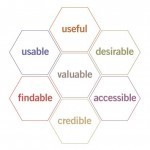
The worlds of web design and online learning are interconnected in many ways. As an instructional designer, I work to ensure that courses are effective not only in terms of online navigation and working links, but also in the presentation of meaningful content and interaction. KF: A useful reconsideration of a User Experience framework for use in designing online courses of study. It repurposes the information found in this article: http://uxmag.com/articles/content-strategy-and-ux-a-modern-love-story
|
|
Scooped by
Kim Flintoff
July 7, 2012 6:22 AM
|
Nothing is worse than having your client find an obvious error in a program that's already been released. Quality Control can fix that.
|
|
Scooped by
Kim Flintoff
July 6, 2012 9:06 PM
|
This is a list of resources that will help a newbie and advanced user of iBooks Author tool to get creating!
|
|
Scooped by
Kim Flintoff
July 6, 2012 8:21 PM
|
calibre: The one stop solution for all your e-book needs. Comprehensive e-book software. calibre is a free and open source e-book library management application developed by users of e-books for users of e-books. It has a cornucopia of features divided into the following main categories: - Library Management - E-book conversion - Syncing to e-book reader devices - Downloading news from the web and converting it into e-book form - Comprehensive e-book viewer - Content server for online access to your book collection
|
|
Rescooped by
Peter Mellow
from WCEL blower
July 5, 2012 11:00 PM
|
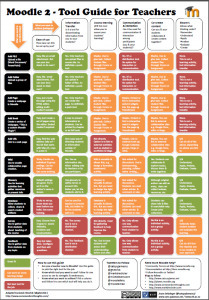
Joyce Seitzinger's Moodle Tool guide updated for Moodle 2 by Gavin Henrick.
Via Stephen Harlow
|
|
Scooped by
Kim Flintoff
July 5, 2012 10:02 PM
|
My notes on: Thinking Critically about Assessing Online Learning Johnson, Daniel. (2008). Thinking Critically about Assessing Online Learning. The International Journal of Learning, Volume 14, Issu...
|
|
Scooped by
Kim Flintoff
July 5, 2012 7:22 PM
|
Over the last two years, nearly half of faculty have moved away from a traditional lecture model and adopted a range of technology-driven teaching practices, according to new research released in the last week. KF: This seems to be echoing what began some time ago in Australia. While information transfer, sometimes via lectures, can be a useful (but always limited) strategy the scope of pedagogical understandings have shifted. With greater emphasis on assurance of learning initiatives in universities it can probably be expected that more data will arise about what approaches are most effective.
|
|
Scooped by
Kim Flintoff
July 5, 2012 8:19 AM
|
DOHERTY, Iain (eLearning Pedagogical Support Unit, Center for the Enhancement of Teaching and Learning. The University of Hong Kong) http://citers2012.cite.hku.
As we teeter on the brink of the new year, we’re left with more questions than answers. In a way, that’s a good thing, considering the makeshift nature of technology in higher education. As we sidle into 2012, the same old questions will greet us.
Via National Institute for Digital Learning, Ireland
|
|
Rescooped by
Kim Flintoff
from JUST TOOLS
July 5, 2012 6:30 AM
|
|
|
Scooped by
Peter Mellow
July 5, 2012 4:34 AM
|
Despite this, we’re still waiting. The longer Blackboard, Apple and other educational software platforms continue to resist one another, the more frustrating the digital learning experience will be. Apple has come a long way in more or less jump-starting the digital learning revolution through mobile technology, but there is still room to grow, and some of these advancements seem long overdue.
|
|
|
Rescooped by
Peter Mellow
from Educational Technology News
July 8, 2012 9:24 PM
|
"Is paper a more effective teaching medium than speech? Stupid question isn't it? It depends what you write, what you say, how you express yourself and above all what do actually do with these media. That's why I get rather tired of the endless discussions about so-called e-learning. Is it more effective than chalk and talk? Does it lead to better student grades? Again rather irrelevant questions."
Via EDTECH@UTRGV
|
|
Scooped by
Peter Mellow
July 8, 2012 7:21 AM
|
Online education continues its meteoric rise on college campuses, and many faculty members are frightened by its growth and prevalence, notes a recent study by Inside Higher Ed and the Babson Survey Research Group, which has spent more than a decade studying online education.
|
|
Scooped by
Peter Mellow
July 7, 2012 7:01 AM
|
Navigating the digital highway...
|
|
Scooped by
Kim Flintoff
July 7, 2012 6:21 AM
|
Designing for Alignment: The How and Why of the Course Alignment Process – Part 1 by Heidi Ashbaugh Many quality enhancement programs, as well as regional accreditation agencies, are starting to increase their focus on the importance of measuring learning. ... Creating strong alignment within your course can be the first step to meeting these types of measurements. ... hese next few posts will help explain what alignment is, why it is important, and how to check for and implement alignment within a course
|
|
Scooped by
Kim Flintoff
July 6, 2012 9:05 PM
|
Keeping up to date with research and managing an ever-increasing number of journal articles is skill that must be well-honed by academics. Here, Alex Hope sets out how his workflow has developed using Zotero, Dropbox, Goodreader and his iPad.
|
|
Rescooped by
Kim Flintoff
from Open Educational Resources
July 6, 2012 12:51 AM
|
This blog is about the current learning revolution and the education paradigm shift taking place globally. It is also about the role that teacherpreneurs need to play to benefit both altruistically and financially as they fully exploit the tools of the internet to meet the growing needs of the learner hungry people of the planet.
This is one of the important web2.0 tools i would highly recommend for educators .The Plagiarism Checker detects the plagiarized text or chunks of a text in your students assignments , essays, articles …ect .
Via Nicoletta Rata
|
|
Rescooped by
Kim Flintoff
from Open Educational Resources
July 5, 2012 8:09 PM
|
Universities are traditionally seen as exclusive institutions for the few, not the many. But that is changing as a new wave of online courses throws open the doors of academia to all. Led by world renowned American institutions like MIT and Harvard, this push to democratise learning is being taken up in Australia too.
Via Mark Smithers, Kim Flintoff
|
|
Scooped by
Kim Flintoff
July 5, 2012 8:21 AM
|
This annual conference serves as international forum for researches, developers and educators to discuss about technology, innovation and best practices in e-learning, distance education and new learning opportunities. This year, the eLearning-2012 conference will pay special attention to all aspects of quality assurance in e-learning and accreditation issues in higher education sector as well as other sectors. The conference covers technical and non-technical issues for this type of education.
The Texas Health and Human Services System has developed a wealth of electronic accessibility resources. These include video and print tutorials, web accessibility overviews, and the two documents ...
Via National Institute for Digital Learning, Ireland
|
|
Scooped by
Peter Mellow
July 5, 2012 4:40 AM
|
A massively open online course (MOOC) is a model for delivering learning content online to virtually any person—and as many of them—who wants to take the course. Course activities can be scheduled or asynchronous, and a fluid structure is valuable because students can choose their level of participation and many will do so in an à la carte manner.
|