New study finds that hybrid learning and traditional instruction adds value to a student’s education.
A new report published in the Higher Education Academy reveals what many in the ed-tech community have long suspected: incorporating technology in the classroom along with traditional teaching practices improves student learning.
Technology, for example, can enhance the way students perform in certain subjects by using applications such as adaptive tests which determines question difficulty based on previous answers, and innovations in education including multimedia and digital projects can help reduce cheating.
The real challenge for higher ed leaders is keeping up with the rapidly changing innovations in technology and education, while finding innovative ways to incorporate new learning methods in curricula.
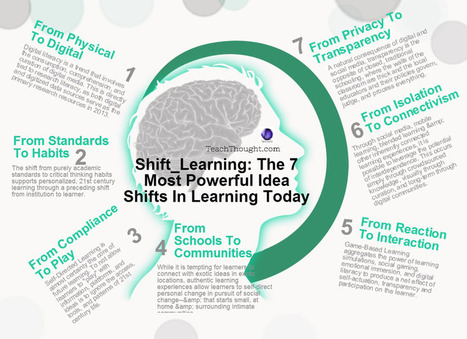
It is true that the work is subjective but at least it captures the essence of the transformational change that has befell education in the 21st century . Check it out below and share with us what you think of it. Enjoy
Check out this beautiful infographic which shows how blended learning benefits teachers and how it has redefined teacher roles and improved opportunities.
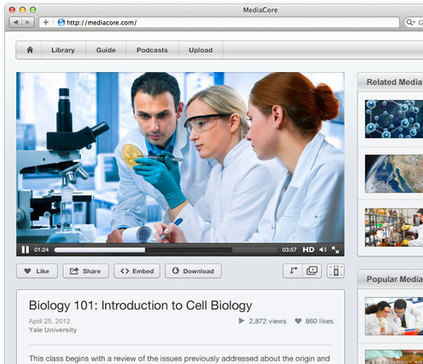
MediaCore’s powerful media library provides schools, higher ed institutions and businesses with an easy way to share and manage their educational content.
This looks like a great way for schools to host video and build learning around it. There is also a plugin for Moodle making it easier to import in video.
Anthromekagogy (or AMG) literally means “to lead the blended human / machine enabled learner”. The word is derived from the Greek Anthropos (Άνθρωπος) for human, the word machine derives from the Latin word machina, which in turn derives from the Greek (Doric μαχανά makhana) and and άγω (ágō) means "lead". The term represents a new approach to learning design where a homogeneous relationship between human and technology is leveraged for the benefit of the learner.
See the 2013 report for a full list of key messages, findings, and supporting data.
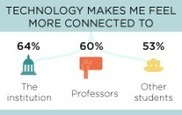
Students recognize the value of technology but still need guidance when it comes to better using it for academics.Students prefer blended learning environments while beginning to experiment with MOOCs.Students are ready to use their mobile devices more for academics, and they look to institutions and instructors for opportunities and encouragement to do so.Students value their privacy, and using technology to connect with them has its limits.ECAR Recommends
See the 2013 report for a full list of actionable results.
Students expect their instructors—not others—to train them to effectively use the technology required for coursework (e.g., use of the CMS, hardware, and software—including specialty software and common productivity software). Instructors need support, encouragement, and possibly incentives to do so.Educate your students about MOOCs; most students are unaware of them. Institutions have a fleeting opportunity to contextualize MOOCs for students in a way that will mesh with the institution’s own MOOC strategy.Create (or update) a strategy for incorporating mobile device use into the classroom. Address the IT infrastructure barriers (such as a lack of convenient charging outlets and/or charging stations and insufficient network access) that keep students from using their devices effectively while on campus.Approach learner analytics purposefully and thoughtfully by adhering to information privacy principles. Collect data for a stated and transparent purpose in order to build students’ confidence in learner analytics activities.
Unlike students in small online courses or unaffiliated students in MOOCS, distributed flip students might not use community features. If MOOCs for blended learning are to fully realize the potential of online communities, we must investigate alternative forms of community that are more loosely coupled to content sequence and more distributed in terms of power. From EDUCAUSE Review Online
"Last year we published a list of 60+ blended learning articles. With the extensive use of blended learning in classrooms and lots of shared success stories, we doubled that total. Following are 125 blogs by category. Point us to stories we missed."
A great list of blended learning resources. Just looking at the categories they have created provides a useful frame for those venturing into this space: Innovative Secondary Blends, Policy, Elementary, Tools, Competency-based Blends, Think about Space, etc.
"Can ICT redefine the way we learn in the Networked Society? Technology has enabled us to interact, innovate and share in whole new ways. This dynamic shift in mindset is creating profound change throughout our society. The Future of Learning looks at one part of that change, the potential to redefine how we learn and educate. Watch as we talk with world renowned experts and educators about its potential to shift away from traditional methods of learning based on memorization and repetition to more holistic approaches that focus on individual students' needs and self expression."
A particularly thought-provoking video due to the outstanding people chosen to speak in it. It was produced by Ericsson in 2012, so it is relatively current. Appearances by Stepehn Heppell, Sugatra Mitra, Seth Godin, Jose Ferreira, Lois Mbugua, Margaret Kositany and Dephne Koller. Well worth the time to watch. Think about what setting you can show this in and the types of conversations that it can stimulate.
why [has] technology, to date, had very little impact on improved learning outcomes? This could be because we continue to use technology to reinforce 19th century teaching practice to meet out-dated assessment models. Most of the world’s curriculum and assessment systems are based around fact recall rather than actually demonstrating that you have learned something and can deploy it within a problem-solving situation.
The technology is now good enough to allow us, finally, to move away from a one-size-fits-all model of education. Ranking students by their ability to pass exams has never been a sound educational model. It is even less relevant today but persists because it benefits institutions. Teachers, using the new technologies, can work with individual students, guiding and co-validating their learning.
In summary, we’ll have another contentious year. We’ll see big growth in higher education services from outside of the university sector, a continued gnashing of teeth from established providers. Some new services and platforms will emerge to cater for different forms of learning, MOOCs will evolve and improve and open badges will be hot. Look out for rhizomatic learning.
To survive in a time of rapidly changing technology, colleges and universities need to change their existing business models. Each higher education institution needs to develop a strategy that will take advantage of the opportunities presented by technology-enhanced learning to expand its educational mission and provide flexibility for its students. Developing such a strategy requires leaders to overcome factors that can inhibit them from taking a proactive response to technological innovation. In the end, a strategy for transforming the institution and a strategy for surviving the disruption become one and the same.
"Blended learning has taken off as one of the big trends in education over the past several years. Like flipped classrooms and 1:1 environments, it’s one of the top ways for teachers to leverage the power of technology in the classroom. It’s not a new concept, to be sure. However, there’s a new guide to understanding and implementing what’s being billed as blended learning 2.0.
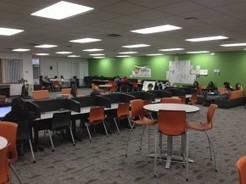
"There are a few key stages of proper implementation that you should know if you’re looking to start climbing the blended learning tree. Starting from down at the roots is the planning process. It’s about a lot more than just ‘planning’ on buying some iPads. Planning involves creating appropriate blended learning spaces. That means you have a nice place for students to gather and collaborate while using technology. Scroll down to the bottom of the graphic below to get started."
Totally relate this to MOOCs. I have been reviewing old papers as I think we often try and recreate something new out of something that we have done before. If we just practised reflective learning ourselves I think we would dig out some great ideas and we just need to update them (apply what we know today).
"If you are planning to use Google Hangout with your students then here is a very good video clip to help you learn more about the benefits of using this platform in your teaching. Though relatively new, Google Hangouts has been increasingly gaining in popularity particularly among educators and social media users.
"Google Hangout has several distinctive features that sets it apart from the crowd. First, it is integrated with other Google services like Youtube, Gmail, and Calendar and if you have a Google account then you automatically have a Google Plus account. Google Hangouts can also be recorded or streamlined live on YouTube using a generated link. The image and audio quality of hangouts are, I believe, better than the ones in Skype. Google Hangouts also supports a wide variety of third party apps that can be used to perform different tasks like adding emoticons, doodles, chat and many more."
New surveys are coming out all the time gauging the views of teachers when it comes to technology and games in the classroom, but finding trends in any individual report... more »
An ecosystem approach to ICT implementation in SA higher educational institutions was prepared for the SAICTED Flash MOOC, Managing ICTs in South African Edu...
"Why don't students participate in my online discussion forums?" It is most discouraging for instructors when students don't participate in discussions or group work in online learning environments...
There are 10 things that online teachers should unlearn before they take up teaching online. Online Education needs new and open thinkers for sustainability.
The best free screen recorders available out there have been listed by us below. You’re probably here because you want to prepare a presentation for the bo
A few new ones that I was unaware of - KRUT might be good as there are always issues creating screen recordings which already have embedded audio/video in them..
The Blended, Online Learning and Distance Education research bank is supported by :
Ako Aotearoa, National Centre for Tertiary Teaching ExcellenceDistance Education and Learning Futures Alliance, Massey University, New ZealandAustralian Digital Futures Institute, University of Southern Queensland
It contains details of books, articles, conference papers and reports on various aspects of distance and online education, from publishers in Australia and overseas. Material is drawn from the Australian Education Index, produced by Cunningham Library, with additional material sourced from a variety of international organisations and publishers. There are currently 9063 records in the research bank.
A scoop for myself here. This is a very useful guide to infomation literacy teaching. Easy to dip into and has a search function so you don't have to scroll through every page. Some very useful tips and links to tools that can be put to use in the language classroom e.g. QR codes, Prezi or social tools such as Slideshare. Examples of lesson plans are provided as are benefits and issues to consider when introducing students to digital media.
To get content containing either thought or leadership enter:
To get content containing both thought and leadership enter:
To get content containing the expression thought leadership enter:
You can enter several keywords and you can refine them whenever you want. Our suggestion engine uses more signals but entering a few keywords here will rapidly give you great content to curate.


 Your new post is loading...

















analysis of who our learner's are is the first step...