Totally relate this to MOOCs. I have been reviewing old papers as I think we often try and recreate something new out of something that we have done before. If we just practised reflective learning ourselves I think we would dig out some great ideas and we just need to update them (apply what we know today).
The diverse team of eLearning advisors provide elearning workshops, send out periodic newsletter, provide customised consultation, support the eScholar program and more.
Use the 'Filter' pull-down menu above to search for topics by keywords.
The Flexible Learning Association of New Zealand (FLANZ) works to enhance flexible learning practices across all sectors of education in New Zealand, advance current thinking and contribute to research and scholarship, in open, distance and flexible learning.
Learn for free about math, art, computer programming, economics, physics, chemistry, biology, medicine, finance, history, and more. Khan Academy is a nonprofit with the mission of providing a free, world-class education for anyone, anywhere.
I was just reminiscing on how much I enjoyed 'whiteboard art' as a teaching aid in face to face sessions, but remembered how long it took to create and how bad my whiteboard writing is! Asked my friend #AI and got this back Lickety-split! Something to consider when thinking of another way of getting your ideas across when #teaching?
The promise of artificial intelligence in higher education isn't to replace human work but to create space for the human interaction students value most.
Les Formateurs et Enseignants sont Extraordinaires...!!!
"Une machine peut faire le travail de cinquante hommes ordinaires. Aucune machine ne peut remplacer le travail d'un homme extraordinaire." de Elbert Green Hubbard
Oui, la dimension humaine que nécessite la formation restera se qui rend la prestation unique et extraordinaire... bien heureusement !
Ce qui n'empêche pas les humains extraordinaires de se faire assister pour développer encore davantage leur atouts et avantages !?
Recently (2015) Instagram announced that it now supports landscape format photos, joining the likes of SlideShare, Facebook, Vimeo and YouTube (as well as Linkedin!). 16:9 widescreen aspect ratio is fast becoming the recognised industry standard.
Students in Adelaide have been protesting to keep face-to-face lectures. But many students today work or live far from campus – making old-school lectures tricky.
Companies like Google and Microsoft have used their money, their might and their massive reach to influence nearly every step of the education supply chain.
Learning outcomes are statements that indicate what students will know, value or be able to do by the end of the course. They are the assessable ends of education, written from the students’ perspective, focused on what students can expect to achieve if they have learned successfully. In order to be assessable, they must specify things that can be observed, that are public, and not activities or states that are internal to students’ minds.
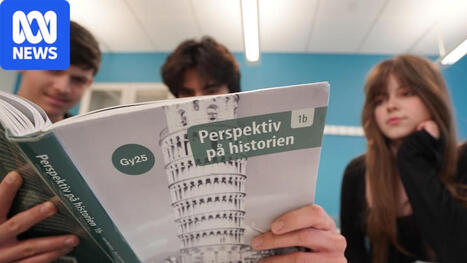
At least a dozen states have proposed or adopted policies to curb screen time, such as time limits and allowing families to opt out of virtual instruction.
Doit on appliquer une fois de plus le "balancier décisionnel"... le fameux "tout l'un, tout l'autre"... !? Oui, généraliser à 2 ans l'usage des tablettes est une extrémité difficile à soutenir... Oui, l'abstraction des écrans et des applications jusqu'à 14 ou 15 ans est largement discutable... La mesure, le compromis sont parfois plus efficace que des solutions tranchées et partisanes, qui sont souvent limitées en perspective comme en clairvoyance.
We looked into the science behind BeeLine Reader, which was recently awarded first prize in a Social Entrepreneurship competition at Stanford University, and another speed-reading app, Spritz, to find out more about how they work and if they work.
To get content containing either thought or leadership enter:
To get content containing both thought and leadership enter:
To get content containing the expression thought leadership enter:
You can enter several keywords and you can refine them whenever you want. Our suggestion engine uses more signals but entering a few keywords here will rapidly give you great content to curate.
Totally relate this to MOOCs. I have been reviewing old papers as I think we often try and recreate something new out of something that we have done before. If we just practised reflective learning ourselves I think we would dig out some great ideas and we just need to update them (apply what we know today).