By Julia Powles and Helen Nissenbaum "The rise of Apple, Amazon, Alphabet, Microsoft, and Facebook as the world’s most valuable companies has been accompanied by two linked narratives about technology. One is about artificial intelligence — the golden promise and hard sell of these companies. A.I. is presented as a potent, pervasive, unstoppable force to solve our biggest problems, even though it’s essentially just about finding patterns in vast quantities of data. The second story is that A.I. has a problem: bias.
The tales of bias are legion: online ads that show men higher-paying jobs; delivery services that skip poor neighborhoods; facial recognition systemsthat fail people of color; recruitment tools that invisibly filter out women. A problematic self-righteousness surrounds these reports: Through quantification, of course we see the world we already inhabit. Yet each time, there is a sense of shock and awe and a detachment from affected communities in the discovery that systems driven by data about our world replicate and amplify racial, gender, and class inequality.
Serious thinkers in academia and business have swarmed to the A.I. bias problem, eager to tweak and improve the data and algorithms that drive artificial intelligence. They’ve latched onto fairness as the objective, obsessing over competing constructs of the term that can be rendered in measurable, mathematical form. If the hunt for a science of computational fairness was restricted to engineers, it would be one thing. But given our contemporary exaltation and deference to technologists, it has limited the entire imagination of ethics, law, and the media as well.
There are three problems with this focus on A.I. bias. The first is that addressing bias as a computational problem obscures its root causes. Bias is a social problem, and seeking to solve it within the logic of automation is always going to be inadequate.
Second, even apparent success in tackling bias can have perverse consequences. Take the example of a facial recognition system that works poorly on women of color because of the group’s underrepresentation both in the training data and among system designers. Alleviating this problem by seeking to “equalize” representation merely co-opts designers in perfecting vast instruments of surveillance and classification.
When underlying systemic issues remain fundamentally untouched, the bias fighters simply render humans more machine readable, exposing minorities in particular to additional harms.
Third — and most dangerous and urgent of all — is the way in which the seductive controversy of A.I. bias, and the false allure of “solving” it, detracts from bigger, more pressing questions. Bias is real, but it’s also a captivating diversion.
What has been remarkably underappreciated is the key interdependence of the twin stories of A.I. inevitability and A.I. bias. Against the corporate projection of an otherwise sunny horizon of unstoppable A.I. integration, recognizing and acknowledging bias can be seen as a strategic concession — one that subdues the scale of the challenge. Bias, like job losses and safety hazards, becomes part of the grand bargain of innovation.
The reality that bias is primarily a social problem and cannot be fully solved technically becomes a strength, rather than a weakness, for the inevitability narrative. It flips the script. It absorbs and regularizes the classification practices and underlying systems of inequality perpetuated by automation, allowing relative increases in “fairness” to be claimed as victories — even if all that is being done is to slice, dice, and redistribute the makeup of those negatively affected by actuarial decision-making.
In short, the preoccupation with narrow computational puzzles distracts us from the far more important issue of the colossal asymmetry between societal cost and private gain in the rollout of automated systems. It also denies us the possibility of asking: Should we be building these systems at all?"...
Teaching Tolerance provides free resources to educators—teachers, administrators, counselors and other practitioners—who work with children from kindergarten through high school. Educators use our materials to supplement the curriculum, to inform their practices, and to create civil and inclusive school communities where children are respected, valued and welcome participants.
Data and research on education including skills, literacy, research, elementary schools, childhood learning, vocational training and PISA, PIACC and TALIS surveys., In times of growing economic inequality, improving equity in education becomes more urgent. While some countries and economies that participate in the OECD Programme for International Student Assessment (PISA) have managed to build education systems where socio-economic status makes less of a difference to students’ learning and well-being, every country can do more.Equity in Education: Breaking Down Barriers to Social Mobility shows that high performance and more positive attitudes towards schooling among disadvantaged 15-year-old students are strong predictors of success in higher education and work later on. The report examines how equity in education has evolved over several cycles of the OECD Programme for International Student Assessment (PISA). It identifies the policies and practices that can help disadvantaged students succeed academically and feel more engaged at school.Using longitudinal data from five countries (Australia, Canada, Denmark, Switzerland, and the United States), the report also describes the links between a student’s performance near the end of compulsory education and upward social mobility – i.e. attaining a higher level of education or working in a higher-status job than one’s parents.
By Emily Glassberg Sands, Head of Data Science, Coursera Today marks the release of the inaugural Coursera Global Skills Index (GSI), an in-depth look at
Consistent with its previous reports, the Commission found that sentence length continues to be associated with some demographic factors. In particular, after controlling for a wide variety of sentencing factors, the Commission found:
• Black male offenders continued to receive longer sentences than similarly situated White male offenders.
• Non-government sponsored departures and variances appear to contribute significantly to the difference in sentence length between Black male and White male offenders.
• Violence in an offender’s criminal history does not appear to account for any of the demographic differences in sentencing.
• Female offenders of all races received shorter sentences than White male offenders during the Post-Report period, as they had for the prior four periods.
Earth is old. The sun is old. But do you know what may be even older than both? Water.
It’s a mystery how the world became awash in it. But one prevailing theory says that water originated on our planet from ice specks floating in a cosmic cloud before our sun was set ablaze, more than 4.6 billion years ago.
As much as half of all the water on Earth may have come from that interstellar gas according to astrophysicists’ calculations. That means the same liquid we drink and that fills the oceans may be millions of years older than the solar system itself.
The thinking goes that some of the ancient ice survived the solar system’s chaotic creation and came to Earth. To demonstrate that, researchers analyzed water molecules in oceans for indicators of their ancient past.
The clue comes in the form of something known as “heavy water.” Water, as you know, is made up of two hydrogen atoms and one oxygen atom. But some water molecules contain hydrogen’s chunky twin, deuterium. (It contains a neutron in its nucleus, whereas regular hydrogen does not.)
U.N.Development Goals for better drinking water have already been reached, but a closer look shows that the measures fail to truly account for the lack of access to safe water...
An ambitious, important new piece of analysis by scholars Eric Hanushek (an economist) and Paul Peterson (a political scientist), plus Laura Talpey and Ludger Woessmann, concludes that “gaps in achievement between the haves and have-nots are mostly unchanged over the past half century” and that “steady gains in student achievement at the eighth grade level have not translated into gains at the end of high school.”
Spotlight takes massive amounts of data and turns it into an asset for law enforcement, improving the effectiveness of human trafficking investigations.
Species living on land make up 85% to 95% of all biodiversity on Earth today. This is especially impressive when we consider that the continents cover only 30% of our planet’s surface area. And that most land species are descendants of a small number of pioneering groups that invaded the land about 400m years ago.
Surprisingly, though, scientists strongly disagree about when land biodiversity reached modern levels. Is what we see today typical of the last several tens, or even hundreds, of millions of years? Or has diversity been increasing exponentially, with substantially morespecies alive today than ever before?
"Life. One minute at a time. A diverse series of documentaries that provide a new look into the most unique characters, expressions and practices that make up the world."
"On a typical day, you might make a call on a cell phone, withdraw money at an ATM, visit the mall, and make a purchase with a credit card.
Each of these routine transactions leaves a digital trail, logging your movements, schedules, habits, and political beliefs for government agencies and businesses to access. As cutting-edge historian and journalist Christian Parenti points out, these everyday intrusions on privacy, while harmless in themselves, are part of a relentless (and clandestine) expansion of routine surveillance in American life over the last two centuries – from controlling slaves in the old South to implementing early criminal justice and tracking immigrants. Parenti explores the role computers are playing in creating a whole new world of seemingly benign technologies – such as credit cards, Web site “cookies,” and electronic toll collection – that have expanded this trend in the twenty-first century.
The Soft Cage offers a compelling, vitally important history lesson for every American concerned about the expansion of surveillance into our public and private lives."
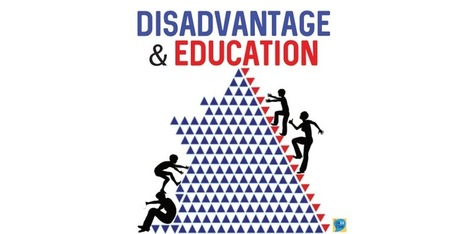
In the week when the OECD published their latest report, noting that educational disadvantage starts from the age of 10 (click here to read the story) across many countries, and widens throughout students’ lives, it is clear that many societies still have a lot to do. Whether the disadvantages are down to family circumstance, race, gender (identification), wealth and socio-economic background, or a distinct lack of opportunity and belief in oneself – what can education and educators do to help bridge the divide that allows opportunities for some, more than others?
This data will be helpful for students to exam how where a person lives influences their wellbeing (health with a focus on two Asian countries, as per curriculum descriptors). This can be a starting point for learner investigations of; reasons for, and consequences of, spatial variations in human wellbeing on a regional scale within India or another country of the Asia region (ACHGK079 - Scootle )
While Australia’s rich stocks of raw mineral resources have contributed to the nation’s wealth and given us a competitive advantage we are also one of the highest waste producing nations in the world (on a per capita basis).
In 2009-10 we dumped 21.6 million tonnes of household and industrial waste in 918 landfill sites around Australia. Of all the waste we produced we recycled only about half (52%).
But can we do things differently? Can we change our production and consumption patterns to generate wealth from what we currently designate as waste?
The potential exists
Consider e-waste, which is the old TVs, DVDs, computers, household appliances and other electrical goods that we throw away. This type of waste has emerged as one of our fastest growing waste streams but only about 10% is recovered or recycled.
But e-waste devices also include valuable metals such as copper, silver, gold, palladium and other rare materials which means they are also ending up in landfill.
By 2008 we had already sent some 17 million televisions and 37 million computers to landfill, according to the Australian Bureau of Statistics (ABS).
But if 75% of the 1.5 million televisions discarded annually could be recycled we could save 23,000 tonnes of greenhouse gas emissions, 520 mega litres of water, 400,000 gigajoules of energy and 160,000 cubic metres of landfill space.
Another way of looking at this is to compare gold yielded from an open pit mine with that from discarded electrical goods. Mining yields 1 to 5 grams of gold for every one tonne of ore. From the same quantity of discarded mobile phones and computer circuit boards, you can extract 350 grams and 250 grams respectively.
More than 9 billion tons of plastic has been produced since 1950, and the vast majority of it is still around.
A new study that tracked the global manufacture and distribution of plastics since they became widespread after World War II found that only 2 billion tons of that plastic is still in use.
Seven billion tons is stuck on Earth as garbage in landfills, recycled trash or pollution in the environment, including deep oceans, where it's been discovered in the mouths of whales and the bellies of dead seabirds that mistook it for food. A small amount is eliminated in incinerators.
As plastic becomes near-indestructible mountains of garbage on land and swirling vortexes of trash on the high seas, humans keep making more. Half of the plastic that people mostly use once and toss away was created in the past 30 years, the study says.
Plastic's most lucrative market is packaging commonly seen in grocery stores. It could be in front of you right now, in the form of a water bottle, a carryout lunch container, or an iced-coffee or tea cup with its disposable straw.
It's a miracle product that's also in your office chair, phone and computer keyboard. The pipes that move water in your building are often plastic. You probably touch plastic to switch on the car radio on the foam plastic dashboard. Plastic is pretty much everywhere humans are at any part of the day, anywhere in the world.
The typical edtech conference buzzes with gadgetry, infrastructure and new ways to engage students. Most session tend to focus on new apps or software over deep dives into pedagogy and building better relationships. There’s nothing inherently wrong with that—the world needs both. But when was the last time you hear someone talk about racism or digital equity? Where are the conversations about reaching all learners and examining our own biases as educators?
"As agencies like UNESCO call for global citizen education, in an aim to create peaceful and sustainable societies, online education is being increasingly used to boost cross-cultural dialogues and promote shared values through empathy and compassion-building."
Since higher education is, by definition, an environment where new knowledge is produced and consumed, it follows that the freedom to engage in intellectual inquiry is essential to the purpose of higher education, to the mission of higher education institutions and to the professional duties of those individuals involved in teaching, learning and research processes.
In a world where many towns and neighborhoods are insular, and where many teens (and adults) seldom leave their bubbles, OneCity Stories is an example of how a new community can come together around passion-driven learning, storytelling, and making. Not only that, it’s a testament to the power of iteration, of making an only partially successful first attempt not a failure, but a foundation for future success.
Listening to new ideas and encouraging outside-of-the-box thinking are characteristics of innovative businesses. As part of L&D, your team should be aware that innovation and training are closely connected.
To get content containing either thought or leadership enter:
To get content containing both thought and leadership enter:
To get content containing the expression thought leadership enter:
You can enter several keywords and you can refine them whenever you want. Our suggestion engine uses more signals but entering a few keywords here will rapidly give you great content to curate.


 Your new post is loading...