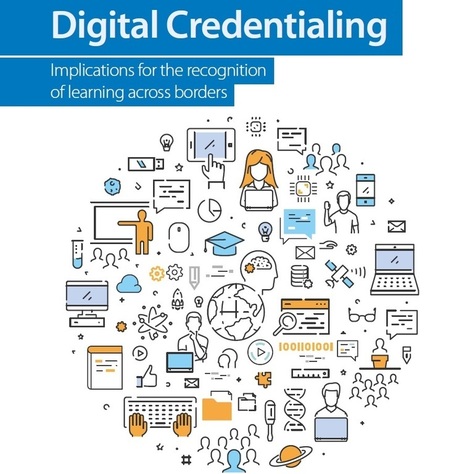
Digital credentialing and a new learning landscape is examined in recent UNESCO report Digital Credentialing – Implications for the recognition of learning across borders is a recently published report by the Education Sector at UNESCO, analysing the impact and opportunities of digital technologies on the recognition of skills and learning systems. Digital technologies are creating new opportunities for skills development and lifelong learning, and this report brings attention to how digital technologies are transforming education and training systems and building new credentialing methods and systems that can capture, recognize and validate learning outcomes in new ways. In a context where the labour market and educational and training systems are increasingly internationalised, the increased mobility of people and jobs have great implications on the ways that skills and qualifications are recognised, validated and accredited across borders. Digital learning records support and challenge the usual credential evaluation systems Borhene Chakroun, Chief of Section of Youth, Literacy and Skills Development at UNESCO, and James Keevy, CEO at JET Education Services, write that the use of digital technologies in education and training supports the development of learning materials and close monitoring of teaching and learning processes, while changing pedagogies and forms of assessment and certification. Based on a review of recent literature and a series of interviews with key actors in the field, the authors critically assess digital credentialing and highlight the increased synergies between these developments and the quality assurance systems that are closely associated with the implementation of a new generation of international qualifications frameworks. The report offers an outline of these digital credentials and shows the junction with and deviation from traditional qualifications frameworks. It finally proposes world reference levels as an important tool for advancing the recognition of skills and qualifications across borders. Download the report Digital Credentialing here Learn what UNESCO does to advance skills for work and life Learn more about UNESCO’s work on qualifications frameworks This article was prepared by UNESCO's Education Sector, Division for Policies and Lifelong Learning.
"Asians don't think of themselves as Asian, but as the new Silk Roads re-emerge and propel Asia to the center of the world economy, Asians are rediscovering their greatness and forging a new Asian identity for the 21st century."
Key Issues in Teaching and Learning - 1400 members surveyed by Educause to see the key issues in higher education. Worth your time to read and explore...
AI-generated fake images and videos can occasionally be funny, but usually they're a scary look into an all-too-near future where we can't distinguish the real from the fake. ThisPersonDoesNotExist falls firmly in the "scary" box.
We live in an age of human rights. The language of human rights has become ubiquitous, a lingua franca used for expressing the most basic demands of justice. Some are old demands, such as the prohibition of torture and slavery. Others are newer, such as claims to internet access or same-sex marriage. But what are human rights, and where do they come from? This question is made urgent by a disquieting thought. Perhaps people with clashing values and convictions can so easily appeal to ‘human rights’ only because, ultimately, they don’t agree on what they are talking about? Maybe the apparently widespread consensus on the significance of human rights depends on the emptiness of that very notion? If this is true, then talk of human rights is rhetorical window-dressing, masking deeper ethical and political divisions.
Philosophers have debated the nature of human rights since at least the 12th century, often under the name of ‘natural rights’. These natural rights were supposed to be possessed by everyone and discoverable with the aid of our ordinary powers of reason (our ‘natural reason’), as opposed to rights established by law or disclosed through divine revelation. Wherever there are philosophers, however, there is disagreement. Belief in human rights left open how we go about making the case for them – are they, for example, protections of human needs generally or only of freedom of choice? There were also disagreements about the correct list of human rights – should it include socio-economic rights, like the rights to health or work, in addition to civil and political rights, such as the rights to a fair trial and political participation?
But many now argue that we should set aside philosophical wrangles over the nature and origins of human rights. In the 21st century, they contend, human rights exist not in the nebulous ether of philosophical speculation, but in the black letter of law. Human rights are those laid down in The Universal Declaration of Human Rights (1948) and the various international and domestic laws that implement it. Some who adopt this line of thought might even invoke the 18th-century English philosopher Jeremy Bentham, who contemptuously dismissed the idea of natural rights existing independently of human-made laws as ‘rhetorical nonsense – nonsense upon stilts’.
UVA’s Weldon Cooper Center for Public Service has released its national population projections for all 50 states, reflecting the effect of the latest demographic trends on future population.
Here are some Free Speech resources for faculty concerned about academic censorship, or simply want to improve the free speech climate on their campus.
Irene Hasenberg Butter, child Holocaust survivor and professor emerita of public health at the University of Michigan, will speak about her experiences during World War II as recounted in her book, "Shores Beyond Shores: From Holocaust to Hope." Sh
"When Robert Runcie became superintendent of Broward County (FL) Public School District (BCPS) in 2011, he faced more than academic challenges. As the sixth-largest school district in the country, serving over 275,000 public and public charter school students, BCPS boasts an extremely diverse student population representing over 200 countries and over 190 languages."
Dr. James Williams strives to make the college classroom experience entertaining as well as educational, motivating students to be as passionate about their cho
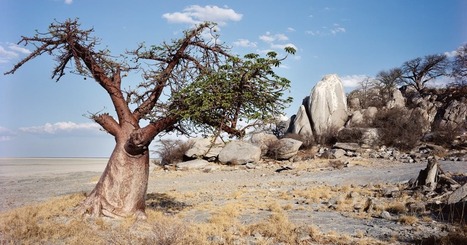
"Learn about one of the world's most iconic tree species, the baobab tree, and discover why these endangered trees might be on their way to extinction—or might outlive us all."
To get content containing either thought or leadership enter:
To get content containing both thought and leadership enter:
To get content containing the expression thought leadership enter:
You can enter several keywords and you can refine them whenever you want. Our suggestion engine uses more signals but entering a few keywords here will rapidly give you great content to curate.


 Your new post is loading...