


News, analysis and comment from the Financial Times, the worldʼs leading global business publication
Via Charles Tiayon

 Your new post is loading...
 Scoop.it! News, analysis and comment from the Financial Times, the worldʼs leading global business publication Via Charles Tiayon 
Scoop.it!
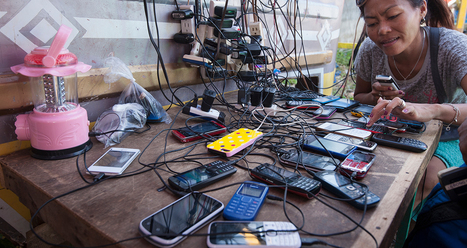
Description by the Scout Report
"Access to a smartphone is a privilege often taken for granted, and a November 2019 report from the Pew Research Center highlights the "mobile divide" faced by those who experience accessibility barriers to these devices. The report surveyed 28,122 individuals from 11 countries with "emerging economies" to better understand mobile phone access issues. The study revealed that "a median of six percent of adults do not use phones at all, and a median of seven percent do not own phones but instead borrow them from others." In addition to this finding, the study explored connectivity issues, cost prohibiting concerns, and other challenges faced by those who did have mobile phones. Other issues cited by those surveyed included fear of stolen identities and other security concerns, expensive data costs, problems charging phones, inconsistent phone signals, and linguistic barriers. In response to whether those who didn't have a phone were interested in having one, the results were extremely varied (ranging from 86 percent of those surveyed in Venezuela being interested in "get[ting] a mobile phone in the future," to only 9 percent in Lebanon). Readers interested in taking a deeper-dive into the results can click through the corresponding 10 pages (including appendices) which narrow-in on specific access issues." Via Jim Lerman
Scoop.it!

"The education reform movement that started with George W. Bush’s No Child Left Behind law is dead. It died because every strategy it imposed on the nation’s schools has failed. From Bush’s No Child Left Behind to Obama’s Race to the Top to Bill Gates’ Common Core State Standards to Trump’s push for school choice, the reformers have come up empty-handed.
Jim Lerman's insight:
It's about time a general publication such as Time magazine publicized the obvious fact of failed "education reform" in plain language the everyone can understand. Via Jim Lerman
Scoop.it!

"When discussing a student’s ability to achieve an undergraduate degree, the topic of textbooks ..." Via Leona Ungerer
Scoop.it!

New and improved digital citizenship lesson plans from Common Sense Education. The research-backed approach educators know and trust, with expanded teaching tools and student activities. Engage students with learning games and navigate tough topics, including cyberbullying, online safety, privacy, and media literacy.
Scoop.it!

Scoop.it!

"Online mobile engagement is driven by smart devices, digitization in the offline retail industry and live streaming, according to research firm QuestMobile ..." Via Leona Ungerer
Scoop.it!
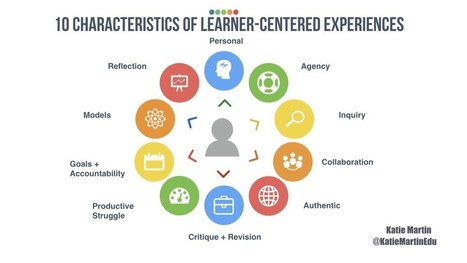
Think back to a time when you were learning something new that really stuck with you and made a lasting impact. How did you learn new skills? What were the conditions? What resources did you use? Why? Via Edumorfosis
Scoop.it!

A best-of-the-best collection of resources for social justice- and equity-focused educators. Via Dr. Tom D'Amico (@TDOttawa) , Yashy Tohsaku
Scoop.it!

As one of the northernmost settlements on earth, the Norwegian hamlet of Longyearbyen has become a magnet for adventurous souls looking to start a new life. But when an unsettling crime happened, it brought home a harsh reality: in the modern world, trouble always finds you....
The tiny town of some 2,200 residents is among the northernmost settlements in the world, situated about 800 miles from the North Pole on the island of Spitsbergen, in the isolated Norwegian archipelago of Svalbard.
Dennis Swender's insight:
The mountains of the Svalbard archipelago are the home of the world's Global Seed Vault vault, with more than 930,000 varieties of food crops, representing the "word's largest collection of agricultural biodiversity" and "13,000 years of agricultural history"
Scoop.it!
Students need to know how to have difficult conversations in order to advocate for themselves in all aspects of their lives. But how do they learn it? Ming Shelby says teachers can help by creating an atmosphere where students have the courage to raise difficult classroom-related issues. The biggest hurdle to overcome is the power imbalance between student and teacher. She suggests three steps to bring that relationship into balance. Via Edumorfosis
Scoop.it!

"EVERY MINUTE OF EVERY DAY, everywhere on the planet, dozens of companies — largely unregulated, little scrutinized — are logging the movements of tens of millions of people with mobile phones and storing the information in gigantic data files. The Times Privacy Project obtained one such file, by far the largest and most sensitive ever to be reviewed by journalists. It holds more than 50 billion location pings from the phones of more than 12 million Americans as they moved through several major cities, including Washington, New York, San Francisco and Los Angeles. Via Jim Lerman
|
Scoop.it!
When discussing a student’s ability to achieve an undergraduate degree, the topic of textbooks has increasingly come to the fore. While less significant than tuition, room, or board, textbooks and other learning materials represent an increasingly significant cost for any undergraduate student. As a solution, many educators, organizations, and some companies have proposed Open Educational Resources (OER). While OER has often been viewed as a means to make college more affordable, few have drilled deeper into the issue. A recent study, however, proposes that OER can address issues of equity in higher education by making a bigger difference in college affordability for some communities who tend to be underrepresented on campus. Via Edumorfosis
Scoop.it!

US schools have become more racially and ethnically diverse over the past few decades, but these changes have played out differently across the country. Understanding a school’s demographics can inform conversations around school segregation, redistricting, funding, and equity. Via Jim Lerman
Scoop.it!

Whether you are leaping into learning through college, university, or on your own time, there is one thing that is key. That is your mindset. Via Jim Lerman
Scoop.it!
Scoop.it!

"This unnatural dichotomy ... labels the 'diversity penalty versus the pro-white bonus'—usually ends with minoritized students being negatively impacted, when, in actuality, they should be the ones benefiting from diversity policies. Ultimately, then, how diversity is being defined and positioned in educational discourse is primarily economic in nature, though democratic in context."
Scoop.it!

<p>In her new book, The Age of Surveillance Capitalism, Harvard Business School’s <a href="https://twitter.com/shoshanazuboff/">Shoshana … Via Ana Cristina Pratas
Scoop.it!

I had a thought this morning, and saw this line from an article that completely helped untangle a puzzle in my mind: On agency vs inclusivity: “teaching a man to fish is supposed to feed him … Via Ana Cristina Pratas
Scoop.it!

"As Indigenous lives and voices become more frequently discussed and visible within traditional and social media, a trend emerges whereby any differences of Indigenous opinion is utilised to attempt to cast Indigenous activism and voice as disharmonious and untenable in terms of achieving change....
"By focusing public conversation away from the core issues of colonialism, structural violence, and oppression, and instead on what is perceived as a lack of unity among Indigenous community, politicians and media are able to continue framing Indigenous lives and existence as being deficient. This perpetuates the idea that Indigenous people are unable to achieve or manage self-determination, and argues that if within our broad and diverse communities there exists any difference of position or opinion, then it is a sign that the protests and action should be dismissed.
"But such an idea that difference must be divisive is wrong, it is a narrative which not only seeks to manipulate, and diminish the Indigenous people who are speaking up on these issues, but is also used to perpetuate the coloniser’s vision of a pan-Indigenous identity. This dismisses the deeply rich and unique cultures, languages, heritage and histories which belong to our many Nations..."
Scoop.it!

Writing publicly enables connections. Connections between people, between ideas, between action and reflection. And all of these have potential for praxis. Via Ana Cristina Pratas
Scoop.it!

"It is essentially a huge safety deposit box, holding the world’s largest collection of agricultural biodiversity....
"In an age of heightened geopolitical tensions and uncertainty, the Svalbard vault is an unusual and hopeful exercise in international cooperation for the good of humankind. Any organization or country can send seeds to it, and there are no restrictions because of politics or the requirements of diplomacy. Red wooden boxes from North Korea sit alongside black boxes from the U.S. Over on the next aisle, boxes of seeds from Ukraine sit atop seeds from Russia. “The seeds don’t care that there are North Korean seeds and South Korean seeds in the same aisle,” Lainoff says. “They are cold and safe up there, and that’s all that really matters.”"
Scoop.it!

A video cropper is a good way to remove black bars and watermarks. This post offers you 5 best free video croppers. Read this post carefully. Via MiniTool Software

nadia miles's curator insight,
March 7, 2020 9:35 AM
Buy Smartbud Online
Smartbud. Buy Smartbud Online. Inside the smart bud cans, we seal the open pop-top lid to create an air-tight and completely odorless package. That is, until you pop the lid and inhale the ripe, harvest-fresh aroma. Smartbud Re-Usable & 100% Recyclable Smartbud cans includes a plastic lid to provide the ultimate scentless package, and makes it easy to store your weed even after opening your can. Discreet and easy to store, our canned weed keeps your cannabis safe as you travel. Buy Smart buds Online Inhibits Mold, Bacteria & Microorganisms Canned weed is the best way to prevent oxidation and molding. We use a professional grade canning machine to can our cannabis, and remove any oxygen to contain freshness. 100% Food Grade & Safe Once you’ve tried our canned cannabis, you won’t be able to go back to stuffing your weed in a plastic bag, jar. buy smart buds online. The only thing growing, distributing, Organic Smart Bud Cans (Min Order 10 Cans), and selling cannabis used to lead to was prison time. Now it’s becoming just as legitimate an industry as it was when our first president George Washington cultivated it on his Mount Vernon homestead. Of course, he grew hemp for mooring ropes, clothing, and such, while today’s growers harvest it reduce cancer patients‘ nausea and your brother’s boredom, but nonetheless, it is a legitimate way to earn a living. Mostly Here are some Flavors; Crazy Glue Punch Cake Gushers Skywalker OG Sex Fruit Purple Punchsicle Grape Ape Do-si-dos Amnesia Haze Blueberry Muffin Nubie OG Jack Fruit Reckless Rainbow Punch Breath Paris OG Glookies Lambs Breath Gushers Orange Cookies Double Dream Super Sour Diesel Lemon Slushie Strawberry Shortcake Grape Cola King Louis XIII XXX OG Cookies N’ Cream Purple Punch Durban Poison Uncle Gary’s BLKWTR Chocolope Gorilla Cookies Gelato Purple Rain Jack Herer SFV OG Gorilla Glue #4 Animal Cookies Girls Scout Cookies Banana OG Mimosa Buy Smartbud Online Web Link: https://globalcannabisbay.com/product/smartbud/
Scoop.it!

The following idea is endorsed by all of these people: None of them exist. They’re constructs, built by an algorithm. Rights released, happy and smiling, but no one in particular. Fifty years… Via Ana Cristina Pratas

Ana Cristina Pratas's curator insight,
January 6, 2020 5:25 AM
"The following idea is endorsed by all of these people:
None of them exist.
They’re constructs, built by an algorithm. Rights released, happy and smiling, but no one in particular.
Fifty years ago, you couldn’t trust the endorsements in direct marketing ads for lousy products:
“A miracle!” …Bob
Because you knew there wasn’t really a Bob.
Twenty-three years ago, when I created a book with the Weekly World News (yes, this is true), I visited their tiny office in Florida. It consisted of three people and a filing cabinet. Inside the cabinet were pictures of 400 people (mostly friends and former friends of the three editors) that would be cut and pasted in the WWN any time they needed a picture of an expert, a citizen or both. They weren’t news and they weren’t the world, but they were weekly.
I knew that the Weekly World News was low-brow chicanery, but I have a hunch that not everyone did.
In 2019, and perhaps forever, we’re now at a new level, one where the polish of photography or video is no longer any clue at all about the provenance of what we’re encountering.
I don’t think we have any clue about how disruptive this shift is going to be.
Even the real celebrities we purport to trust (“influencers” deliberately in quotes) are easily bought. It used to be only Rula Lenska who we doubted.
There are people and organizations that are racing to break the fabric of community that we all depend on. Either to make a short-term profit or to atomize/vaporize widespread trust to hide from accountability and to slow change.
Like all shifts, there will be a counter-shift. But keep your eyes open, because the rules are clearly changing. Remaining trusted and consistent will become ever more valuable as it becomes more scarce. A resolution to be in higher-resolution for those you seek to serve.
In the meantime, it’s worth confirming the source before you believe what you see." |






The EU’s final words to the UK as it departed the union after nearly half a century were “thank you, goodbye, and good riddance”. The misspoken farewell, spoken by the Croatian ambassador to her UK counterpart Tim Barrow last week, perhaps sums up 47 years of the Britons being lost in translation in Brussels. Irena Andrassy, the Croatian ambassador, was chairing the UK’s final meeting of EU envoys as a member state because her country holds the six-month EU presidency. She assumed “good riddance” was akin to “good luck”, said diplomats present in the room. Despite some feelings running high towards the UK over Brexit, the goodbye was not a barb in disguise, they insisted. The meeting came two days before the UK’s formal exit from the EU at 11pm last Friday — which marked the end of Britain’s involvement in key institutions in Brussels including the European Parliament and the European Council. The two sides are now racing to agree a new trading relationship which must be signed off by the end of a standstill transition period which runs out at the end of the year. Brexit day: Tim Barrow arrives at the EU headquarters in Brussels on Friday © Olivier Matthys/AFP/Getty The comment by the Croatian envoy was taken in good part by Sir Tim. “The Brits saw the funny side and understood how it was meant. But history will show that these were the last words from the EU to the UK’s ambassador before Brexit,” said one official in the room. The UK has been a mainstay of the weekly Brussels conclave of EU ambassadors, known as “coreper”, since it joined in 1973. Its discussions have grown in importance in recent years as EU envoys have become powerful proxies for their national governments. Diplomats described the UK’s final participating meeting last Wednesday as good-humoured. Sir Tim, who has served as the UK’s permanent representative since 2017, told colleagues he would miss sitting around the table but would see them “soon” in his new role as “ambassador to the European Union”. Britain’s future relationship talks are due to begin as early as next month. The UK and Sir Tim will be outside the room when key decisions on Britain’s trading relationship will be taken by the EU27. Recommended Attend a live recording of the FT UK Politics podcast Ms Andrassy’s unfortunate slip is emblematic of the UK’s mixed linguistic legacy in Europe: Britain has bequeathed English as one of the two main working languages of the EU (alongside French) but its nuances can often be lost on non-native speakers. Richard Corbett, a former Labour MEP who served for 16 years in the European Parliament, recalls an infamous intervention from a French MEP who stood in the chamber to thank “la sagesse normande” — or the “wisdom of the people of Normandy”. The parliament’s translation service turned it into “all thanks to Norman Wisdom”. “No one of any other nationality could quite understand why the British and Irish members were in stitches!” said Mr Corbett.