

In partnership with Pearson, a global report mapping 15 approaches to AI-supported collaborative learning, drawing on emerging institutional practices and student perspectives.
Via Yashy Tohsaku


|
Scooped by
David W. Deeds
from Education 2.0 & 3.0
onto EdTech: The New Normal October 27, 10:02 PM
|
 Scoop.it!
In partnership with Pearson, a global report mapping 15 approaches to AI-supported collaborative learning, drawing on emerging institutional practices and student perspectives.

 Your new post is loading...
Scoop.it!

Explore how the science of learning can guide AI in teaching and higher education, helping instructors support student learning with evidence-based strategies. Via EDTECH@UTRGV, michel verstrepen
David W. Deeds's insight:
Thanks to Michel Verstrepen.

EDTECH@UTRGV's curator insight,
October 26, 11:00 AM
"When AI is used to scaffold learning by prompting students to explain their reasoning, offering feedback on drafts that students must then revise, or modeling problem-solving strategies, it can align well with what we know about effective learning." 
Edumorfosis's curator insight,
October 27, 1:41 PM
La educación superior necesita estudios más rigurosos sobre la enseñanza y el aprendizaje centrados en la IA y los resultados del aprendizaje. Necesitamos estudios que vayan más allá de las actitudes, las percepciones y la adopción para examinar la transferencia, la retención y el desarrollo de habilidades a largo plazo. Ese trabajo llevará tiempo, y debería hacerlo.
Pero mientras tanto, debemos resistir la tentación de dejar que la incertidumbre nos empuje hacia extremos, ya sea un entusiasmo acrítico o una prohibición total. La ciencia psicológica ofrece un camino intermedio: una forma de evaluar las prácticas de IA con respecto a lo que ya sabemos sobre cómo funciona el aprendizaje. Si los profesores y las instituciones anclan las decisiones de IA en estos principios fundamentales, pueden actuar ahora con prudencia y, al mismo tiempo, permanecer abiertos a revisar sus enfoques a medida que crece la base de evidencia.
Scoop.it!

CSEdWeek is an annual call to action to inspire K-12 students to learn computer science, advocate for equity, and celebrate the contributions of students, teachers, and partners to the field.
David W. Deeds's insight:
The most important week of the year! No exaggeration! ;)
Scoop.it!

Integrating academic learning into career and technical education comes with challenges.
David W. Deeds's insight:
Now this is what I want to do: Design the English curricula for CTE programs. I could handle the Math too.
Scoop.it!
When AI can create polished products in seconds, we must redefine high achievement and reward students for genuine intellectual curiosity, no
David W. Deeds's insight:
If you must assign grades, assess the process and not the result.
Scoop.it!
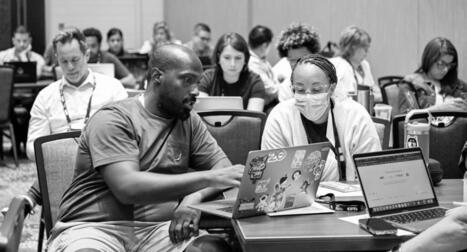
CSTA understands that teaching computer science is hard. That’s why we're focused on creating a supportive environment for K–12 educators.
David W. Deeds's insight:
Just renewed my membership in the Computer Science Teachers Association! Join us!
Scoop.it!

The workplace is heading for another major transformation. Discover 10 future of work trends that could reshape jobs, skills, recruitment and leadership in 2027. Via Yashy Tohsaku
David W. Deeds's insight:
Check this out! Thanks to Yashy Tohsaku.
Scoop.it!

More research would help schools make better decisions about AI use in classrooms, educators say.
David W. Deeds's insight:
Let's get AI to do it. ;)
Scoop.it!

From
www

More than half of the men surveyed in a new Harvard study claimed to recognize AI leaders who were, in fact, totally fictional.
David W. Deeds's insight:
Men in politics especially, right? ;)
Scoop.it!

The goal isn't to keep AI out but to control how it gets in and what rules it must follow. Via EDTECH@UTRGV
David W. Deeds's insight:
This is interesting.
EDTECH@UTRGV's curator insight,
October 2, 3:12 PM
"AI has developed something of a Dr. Jekyll and Mr. Hyde problem. The same technology that is delivering extraordinary productivity is raising very real questions about access, control and unintended actions."
Scoop.it!

As hiring falls across 20 top college majors, new LinkedIn data shows which degrees work best for versatility, with liberal arts such as English in the lead.
David W. Deeds's insight:
Wow..."liberal arts graduates may be best suited to adapt"?
Scoop.it!

This report documents the findings and methodology of the consensus research project on Generative AI's impact on learning in K-20 U.S. education. Via Dr. Tom D'Amico (@TDOttawa) , michel verstrepen
David W. Deeds's insight:
Thanks to Michel Verstrepen.
Scoop.it!

From
www
Here are four things your students don’t understand about AI—and what you can do about it.
David W. Deeds's insight:
I found that kids pretended to know all about it, but really didn't understand beyond the basics.
Scoop.it!

From
www
Every teacher has lost their cool in the classroom. It’s what happens next that matters.
David W. Deeds's insight:
It didn't happen often, but I did occasionally lose my temper in the classroom. I didn't feel shame afterward, though, I was just happy I didn't strangle the little [expletive deleted]. Joking, folks! ;)
|
Scoop.it!
In partnership with Pearson, a global report mapping 15 approaches to AI-supported collaborative learning, drawing on emerging institutional practices and student perspectives. Via Yashy Tohsaku
David W. Deeds's insight:
Thanks to Yashy Tohsaku.
Scoop.it!

From
www
Would we fire a doctor because her patient didn't quit smoking? Would we call her incompetent because a patient skipped medication and refused to change his diet? Would we judge a coach by whether every athlete made it to the Olympics or the pros? Would we blame a pastor, imam, or rabbi because ever
David W. Deeds's insight:
Thanks to Tyler Thigpen.
Scoop.it!

Google is expanding access to AI-generated STEM simulations, Deep Review document checking and Earth AI research tools. ETIH covers the pilots, access arrangements and research findings in this edtech news story. Via EDTECH@UTRGV
David W. Deeds's insight:
Geeky-cool stuff!
EDTECH@UTRGV's curator insight,
October 20, 10:17 AM
"Teachers can apply to test curriculum-specific STEM interactives, while researchers gain wider access to tools for checking technical documents and analyzing geographic data"
Scoop.it!

When students own their own learning, professional expertise becomes more important.
David W. Deeds's insight:
I never could convince admins and fellow teachers how important -- essential -- Self-Directed Learning is. They just assumed any teacher using SDL is lazy.
Scoop.it!

From
edcircuit
"What educational technology is, how schools use it, what research shows, and what leaders need to know about LMS, funding, E-Rate, privacy and security..." Via Leona Ungerer, Yashy Tohsaku
David W. Deeds's insight:
Check this out! Thanks again to Yashy Tohsaku.
Scoop.it!

Principals are using AI to help reduce student absenteeism, set teacher goals, and more.
David W. Deeds's insight:
Sure worth a try. ;)
Scoop.it!
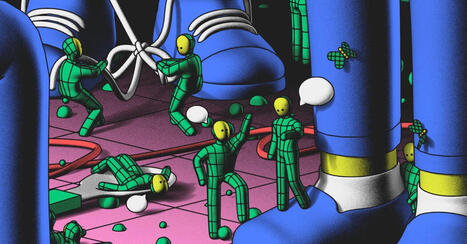
As artificial intelligence bots spread, we are increasingly glimpsing how these digital entities interact and what they talk about with one another.
David W. Deeds's insight:
"We're taking over the world at midnight...pass it on." ;)
Scoop.it!

From
www
Explore how districts can build more inclusive computer science pathways while supporting the teachers who make them possible.
David W. Deeds's insight:
Great stuff, get your free copy!
Scoop.it!

The Massachusetts Institute of Technology must revise its governance processes to allow for more rapid changes to its curriculum in response to the evolving capabilities of artificial intelligence, a university committee recommended in a report released Tuesday.
David W. Deeds's insight:
I remember using ten-year-old curricula in IB classes! Gotta tighten the update cycles!
Scoop.it!

If we make screens the villain, then we let the people who control children’s health care — Congress, insurers and health systems — off the hook for their failures.
David W. Deeds's insight:
As I've said before, we don't have a hardware/software problem, we have a MEATWARE problem. ;)
Scoop.it!

From
www
In the new book, Ending Teacher Shortages, researcher Tuan Nguyen highlights need to move from magic bullets to a more stable workforce
David W. Deeds's insight:
Some good places to start...please note: start.
Scoop.it!
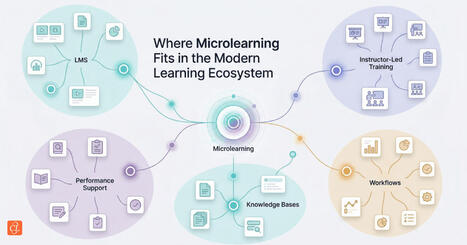
Discover how microlearning fits into blended learning, mobile learning, social learning, analytics, flow-of-work learning, and content conversion. Via EDTECH@UTRGV
David W. Deeds's insight:
Thanks to Yashy Tohsaku.
EDTECH@UTRGV's curator insight,
October 2, 2:07 PM
"To understand microlearning strategically, it helps to stop treating it as a separate training category and start seeing it as a layer within the wider learning architecture." |






Thanks to Yashy Tohsaku.